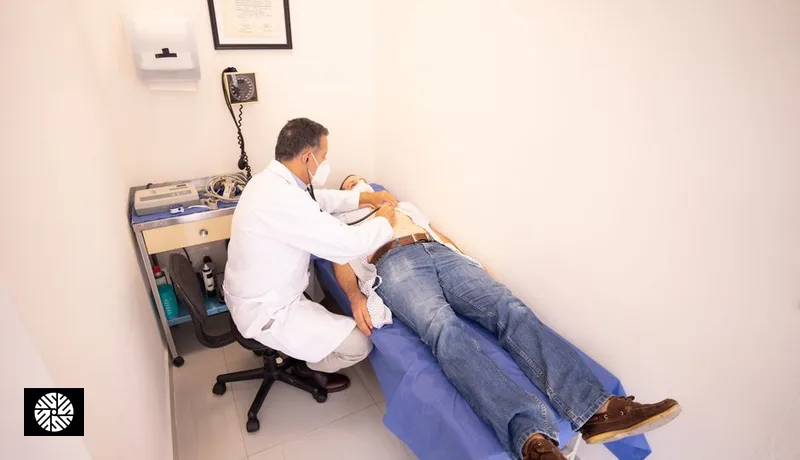

Holiday dialysis means booking your usual hemodialysis sessions at a unit near where you are staying. In Taiwan you pay for each session yourself. Medicare does not cover dialysis outside the US, and Taiwan's National Health Insurance does not cover short-term visitors. Our Kidney Dialysis booking is one four-hour hemodialysis session at iHope Clinic in Taipei.
| Question | Short answer |
|---|---|
| Who can book | People already on regular in-center hemodialysis at home, whose nephrologist approves the trip |
| How far ahead | At least six to eight weeks (National Kidney Foundation); at least three months for travel abroad (Kidney Care UK) |
| Usual schedule | Three sessions a week, about four hours each (NIDDK) |
| Medicare | Does not pay for dialysis outside the US |
| Taiwan National Health Insurance | Does not cover short-term visitors |
| Our session | Four hours of hemodialysis at iHope Clinic, Xinyi District, Taipei, for $289 |
Can a visitor get dialysis in Taiwan?
Yes. Dialysis is routine care in Taiwan. In 2023, Taiwan had the highest rate of people on dialysis of any country or region reporting to the US Renal Data System, at 3,522 per million population.
A visiting patient books into a unit's free chairs, the same way as "transient" dialysis inside the US. iHope Clinic runs a dialysis center for local patients under National Health Insurance. The clinic says the center also serves travelers from overseas.
The National Kidney Foundation (NKF) says most patients on dialysis can travel safely. NKF adds that most doctors encourage travel if your health is stable. Talk to your nephrologist before you plan anything.
Our booking is for people who are already on a dialysis schedule at home. It is not a way to start dialysis.
How does booking holiday dialysis in Taiwan work?
- Ask your nephrologist. Confirm that you are stable enough to travel, and ask how long a gap between sessions is safe for you around the flights.
- Find your unit's travel contact. NKF says many centers have a staff member who arranges dialysis away from home. Ask your social worker or primary nurse.
- Choose dates, and stay flexible. NKF advises flexible dates, because space in dialysis units may be limited.
- Get iHope Clinic's document list from us. Your home unit sends the records, and the receiving unit reviews them.
- Wait for written confirmation of every session. Kidney Care UK says not to book a holiday before confirming that there is somewhere you can dialyze. Book flights and hotels after that.
- Confirm again when you land. NKF advises checking with the center as soon as you arrive. Hand carry a copy of your records.
Start early. NKF advises starting at least six to eight weeks ahead, and longer for popular places or holiday periods. Kidney Care UK advises at least three months' notice for dialysis abroad.
What documents does your home unit need to send?
Every unit sets its own list. The items below combine NKF's list of what a visiting center needs with one published unit checklist and UK guidance. The time limits are that unit's: the international traveler checklist of University Health Network (UHN) in Toronto, revised June 2024.
| Item | Details | Example time limit (UHN) |
|---|---|---|
| Dialysis prescription, signed by your nephrologist | Dialyzer, treatment time, blood and dialysate flow, dialysate, heparin, target weight | Current orders |
| Recent treatment records | NKF asks for three to five | Three recent records |
| Recent blood work | Blood count, electrolytes, creatinine | Within 30 days before the first treatment |
| Hepatitis B surface antigen (HBsAg) | Shows whether you carry hepatitis B | Within 30 days before the first treatment |
| Hepatitis C antibody and HIV antibody | Tested if the overseas unit requires them (UK Department of Health guidance) | Not on UHN's list; set by the receiving unit |
| Hepatitis B immunity | Vaccination record or immunity check from your kidney team | Not on UHN's list; check before you travel |
| Medical history and recent physical exam | Listed by NKF | Within 3 months |
| Recent EKG | Listed by NKF | Within 3 months |
| Recent chest X-ray | Listed by NKF | Not on UHN's list; set by the receiving unit |
| Access type | Fistula, graft or catheter, with needle or catheter details | Current |
| Medication list | Medicines you take at home and during dialysis | Current |
| Other infection tests | UHN asks for MRSA, VRE, CPO and TB results | Within 30 days before the first treatment |
| Insurance details and your address in Taiwan | Listed by NKF | Current |
iHope Clinic sets its own items and time limits. Ask us for them before your home unit starts the paperwork. A 30-day limit, for example, means a blood draw in the month before your first session.
Check hepatitis B protection early. Kidney Care UK says your kidney team can check your hepatitis B immunity and arrange a vaccination before you travel. UK Department of Health guidance for dialysis abroad says to confirm hepatitis B immunization first.
Ask your home unit what it needs when you come back. The same UK guidance has returning patients tested for hepatitis B and C, with the testing schedule set by a risk assessment of where they dialyzed.
If you are on a transplant waiting list, NKF says to tell your transplant coordinator about your travel plans.
Does Medicare pay for dialysis in Taiwan?
No. Medicare's fact sheet on coverage outside the US says Medicare doesn't cover dialysis when you travel outside the US, unless you get it during a covered inpatient hospital stay. All three covered situations involve a foreign hospital that is closer than the nearest US hospital that can treat you, so they do not apply to a trip to Taiwan.
| Coverage | Dialysis or medicines in Taiwan | Source |
|---|---|---|
| Original Medicare | Does not cover dialysis outside the US | Medicare.gov |
| Medicare drug plans | Can't cover drugs you buy outside the US | Medicare.gov |
| Medigap | Most plans cover foreign travel emergency care: 80% of billed charges after a yearly deductible, up to a $50,000 lifetime limit, if the care begins in the first 60 days of the trip | Medicare.gov |
| Medicare Advantage | May cover extra services outside the US; check with your plan before you travel | Medicare.gov |
| Medicaid | Does not pay for medical care outside the US | US Department of State |
| Commercial insurance | Some plans pay for dialysis outside the US; you may need a letter from the insurer | NKF |
The Medigap benefit is for emergency care. Ask your Medigap company in writing whether it would pay anything toward planned sessions. Otherwise, plan to pay for each session yourself.
Does Taiwan's National Health Insurance cover visitors?
No. Under Article 9 of Taiwan's National Health Insurance Act, a non-citizen must hold an Alien Resident Certificate and meet one more condition to be insured. The conditions are a registered domicile in Taiwan for at least six months, a regular employer, or birth in Taiwan.
The National Health Insurance Administration (NHIA) states the same rule. Foreign nationals with an Alien Resident Certificate enroll after six months of living in Taiwan. People with a work permit enroll through their employer from their first day of work.
A visitor on a short trip meets none of these conditions. If you plan to claim from a US insurer, ask it before you go which receipts and records it needs.
What should you look for in travel insurance?
The US Department of State recommends buying travel health insurance before you go. Its reason is that Medicare and Medicaid do not pay for medical care outside the US.
Kidney Care UK warns that most standard travel policies do not cover kidney disease. That is advice for the UK market, but the method applies anywhere.
- Declare kidney failure and dialysis when you apply. Kidney Care UK says withholding health details risks invalidating the policy.
- Check that the policy covers all your current medical conditions (Department of State checklist).
- Check that it covers emergency medical care and medical transportation back to the US (Department of State checklist).
- Ask in writing whether it pays for planned dialysis sessions, or only for emergencies.
- Consider trip cancellation cover. The Department of State says it helps you get money back if you need to cancel or change travel plans.
- Find out whether the insurer has a 24-hour help line (Department of State).
- Buy the policy as soon as you book travel (Kidney Care UK).
How do you schedule dialysis around long-haul flights?
Plan the flights around your sessions. Kidney Care UK says you should not miss a treatment in order to travel. If you must fly on a certain day, your home unit may be able to move your regular session.
- Count your sessions. In-center hemodialysis is usually three times a week, and each session lasts about four hours (NIDDK). A one-week stay usually means three sessions in Taiwan.
- Dialyze close to departure. Ask your home unit for a session as near to your flight as your nephrologist advises.
- Count hours, not calendar days. Flights between the US and Taiwan cross the International Date Line, so the calendar misleads. Measure the gap from your last session in hours, using one time zone.
- Book your first Taiwan session soon after landing. Your nephrologist sets how long a gap is safe for you.
- Keep sightseeing for non-dialysis days. NIDDK says standard hemodialysis can leave you tired or washed out for several hours after each treatment.
- Close the loop at home. Book your last Taiwan session close to your flight home, and your next home session soon after you land.
Our booking calendar for iHope Clinic offers Monday to Friday. If your home schedule includes Saturday, tell us before you book flights.
On the plane, NKF suggests asking for a special meal, such as low-salt, when you make your reservation.
Which medicines should you bring, and can you take them into Taiwan?
- Bring enough of every medicine for the whole trip, plus extra in case of delays (NKF; Kidney Care UK).
- Include injections you normally get at your unit. Kidney Care UK names EPO specifically.
- Hand carry your medicines, supplies and medical records (NKF).
- Carry written prescriptions and a list of all your medicines (NKF; Kidney Care UK).
- Refill before you leave. Medicare plans can't cover drugs you buy outside the US.
- Be careful with pain relievers sold over the counter. The American Society of Nephrology advises avoiding nonsteroidal anti-inflammatory drugs (NSAIDs) in people with chronic kidney disease.
Taiwan limits how much medicine a traveler brings in. The Taiwan Food and Drug Administration (TFDA) limits prescription medicine to a two-month supply if you have no doctor's prescription or supporting document. With a valid prescription, you may bring the prescribed quantity, up to a six-month supply.
Controlled drugs, such as zolpidem or morphine, need extra care. TFDA advises carrying a diagnosis certificate or a doctor's prescription from a medical institution.
How should you manage fluid and diet on the trip?
Your limits do not change on holiday, and NKF reminds travelers to watch diet and fluid. NIDDK explains why each limit matters between sessions.
| What to watch | Why it matters (NIDDK) | On the trip |
|---|---|---|
| Fluid | Excess fluid can cause swelling, weight gain, blood pressure changes, strain on the heart and fluid in the lungs. Hemodialysis can remove only so much fluid safely at a time. Arriving at a session with too much fluid can lead to cramps or a sudden drop in blood pressure. | Count soup, and foods with a lot of liquid such as gelatin, pudding and ice cream. |
| Salt | Salt makes you thirsty, so you drink more. | Avoid salty snacks. Ask for a low-salt meal on the plane. |
| Potassium | Potassium can rise between sessions and affect your heartbeat. | Keep portions of high-potassium foods very small. Do not use salt substitutes, because they contain potassium. |
| Phosphorus | Too much phosphorus pulls calcium from your bones. | Follow the dairy limit your dietitian sets. |
Which symptoms need help right away?
| Symptom | What it can mean | What to do |
|---|---|---|
| Very fast or pounding heartbeat, chest pain, shortness of breath, nausea or vomiting | Sudden, severe high potassium, which NKF calls life-threatening | Call 119 (the local equivalent of 911) |
| Hard to breathe, with swelling or weight gain | Fluid building up in the body and lungs (NIDDK) | Call 119 if breathing is hard |
| Bleeding from the access site; redness, swelling, soreness, pain, warmth or pus around it; or a fever of 100.3°F (38.0°C) or higher | Bleeding or infection at the access (MedlinePlus) | Contact a doctor right away. If bleeding does not stop, call 119 |
| The thrill in your fistula or graft slows down or stops; the catheter arm swells and that hand feels cold; or a hand turns cold, numb or weak | A problem with the access or its blood flow (MedlinePlus) | Contact a doctor right away |
In Taiwan, call 119 for an ambulance. It is Taiwan's equivalent of 911.
When you first arrive, NKF advises finding out how to contact the doctor at the visiting unit. Carry your home nephrologist's number and a copy of your records.
iHope Clinic is a clinic, not a hospital. Taiwan's Medical Care Act defines clinics as institutions with only outpatient facilities. A hospital admission, if you needed one, would be at a hospital.
What if you are on peritoneal dialysis?
Our booking at iHope Clinic is a hemodialysis session. NKF says traveling is often easier on peritoneal dialysis (PD), because you do not depend on a dialysis center.
- Arrange backup care. NKF says PD patients still need to plan backup medical care, usually with a dialysis center near where they stay. Ask us whether iHope Clinic can be that center.
- Short trip on manual exchanges (CAPD). Carry enough supplies for the trip, plus extra in case of problems (NKF).
- Longer stay. NKF says APD patients traveling for a week or longer can arrange delivery to their destination. Kidney Care UK suggests booking the fluid to arrive two days before you do. Ask your supplier whether it delivers to an address in Taiwan.
- Cycler. NKF says smaller cyclers are easy to carry on airplanes. Check your airline's rules for medical equipment (Kidney Care UK).
- Where to do exchanges. Kidney Care UK says exchanges can be done anywhere clean with a sink.
- Warning signs. MedlinePlus lists cloudy or unusually colored used fluid, fever, nausea or vomiting, redness or pus around the catheter, and being unable to pass gas or have a bowel movement. Contact a doctor right away.
Can you combine dialysis with a health screening in Taiwan?
Yes, on a non-dialysis day of the same trip. Ask your nephrologist first which tests are worth doing, then choose from our health screening options.
- Ask whether cancer screening helps you. The American Society of Nephrology's Choosing Wisely list advises against routine cancer screening for dialysis patients with limited life expectancy and no signs or symptoms.
- Tell the clinic you are on dialysis before any scan with contrast. RadiologyInfo says gadolinium contrast for MRI can rarely cause nephrogenic systemic fibrosis in people with kidney disease. It may be withheld in severe kidney disease.
- Keep screening off dialysis days. NIDDK says you may need to rest after each in-center treatment.
- Ask how fasting fits your plan. iHope Clinic asks for a six-hour fast before health checks and blood work, unless told otherwise.
How much does a dialysis session cost with New Dawn Health?
| Item (ours) | Our price |
|---|---|
| Kidney Dialysis at iHope Clinic, Xinyi District, Taipei: one four-hour hemodialysis session | $289 |
| Three sessions, the usual week | $867 |
| Concierge video call before your visit | Included |
Our listing does not itemize what the session price covers. Ask before you book whether it includes the dialyzer, bloodlines, needles and anticoagulant, and whether injections or lab work cost extra.
Dr. Yeh Shu-Ching is the clinic's director and a nephrologist. Taipei Medical University Hospital's doctor page lists him as an attending physician in its nephrology division. The clinic says he does rounds in the dialysis center himself.
The clinic also says a cardiovascular surgeon from Taiwan Adventist Hospital checks fistula care on a regular schedule. It says it uses dialyzers made with a Japanese process and a double reverse-osmosis water purification system.
A refundable deposit of $50 holds each booking. You get a full refund if you cancel 14 or more days ahead, and 50% if you cancel 7 to 13 days ahead. There is no refund within 7 days. Rescheduling is free 7 or more days ahead. After you pay the deposit, you can book a 10-minute video call with our concierge team.
Book a dialysis session at iHope Clinic.
What should you ask iHope Clinic before you book?
These questions come from NKF's list for visiting patients and from gaps in our own listing. Ask us to put them to the clinic, and get the answers in writing before you book flights.
- Which documents does the clinic need, and how recent must the hepatitis B, hepatitis C and HIV results be?
- Does it accept patients who test positive for hepatitis B, hepatitis C or HIV?
- Does the clinic reuse dialyzers or bloodlines?
- Can it give your prescribed treatment time and use your type of dialyzer?
- Can it give EPO or your other in-center medicines, or do you bring your own?
- Which days and chair times are free?
- Can you eat or drink during treatment?
- Will a nurse who speaks English be on the floor?
- Will you get a written record of each session, in English, to take home?
- Does it accept patients with a central venous catheter?
- Whom do you call if you feel unwell between sessions?
Sources
- National Kidney Foundation — Travel Tips: A Guide for Kidney Patients (accessed 2026-10-18)
- National Kidney Foundation — High Potassium (Hyperkalemia) (accessed 2026-10-18)
- Kidney Care UK — Dialysis away from base (DAFB) (accessed 2026-10-18)
- UK Department of Health — Good Practice Guidelines for Renal Dialysis/Transplantation Units, Addendum: Guidelines for Dialysis Away from Base, October 2010 (accessed 2026-10-18)
- University Health Network, Toronto — Checklist: International Travel Hemodialysis Patient, revised June 2024 (accessed 2026-10-18)
- Medicare.gov (Centers for Medicare & Medicaid Services) — Medicare Coverage Outside the United States, CMS Product No. 11037, April 2026 (accessed 2026-10-18)
- US Department of State — Travel Insurance (accessed 2026-10-18)
- Laws and Regulations Database of the Republic of China (Taiwan) — National Health Insurance Act, Article 9 (accessed 2026-10-18)
- National Health Insurance Administration (Taiwan) — Foreign Nationals Who Reside in Taiwan with an Alien Resident Certificate (ARC) (accessed 2026-10-18)
- Laws and Regulations Database of the Republic of China (Taiwan) — Medical Care Act, Article 12 (accessed 2026-10-18)
- US Renal Data System — 2025 Annual Data Report, Chapter 11: International Comparisons (accessed 2026-10-18)
- National Institute of Diabetes and Digestive and Kidney Diseases — Hemodialysis (accessed 2026-10-18)
- National Institute of Diabetes and Digestive and Kidney Diseases — Eating & Nutrition for Hemodialysis (accessed 2026-10-18)
- MedlinePlus (US National Library of Medicine) — Taking care of your vascular access for hemodialysis (accessed 2026-10-18)
- MedlinePlus (US National Library of Medicine) — Dialysis - peritoneal (accessed 2026-10-18)
- National Immigration Agency (Taiwan), Taiwan Immigrants' Global News Network — Taiwan Food and Drug Administration Reminds: Understanding Medication Import Regulations, 2024-07-04 (accessed 2026-10-18)
- Taiwan Food and Drug Administration — Be careful when traveling with controlled drugs for personal use (accessed 2026-10-18)
- American Institute in Taiwan — Local Emergency Numbers (accessed 2026-10-18)
- Williams AW et al. — Critical and honest conversations: the evidence behind the "Choosing Wisely" campaign recommendations by the American Society of Nephrology, Clinical Journal of the American Society of Nephrology 2012 (accessed 2026-10-18)
- RadiologyInfo.org (ACR and RSNA) — Patient Safety: Contrast Material (accessed 2026-10-18)
- iHope Clinic — Dialysis Center page, in Chinese (accessed 2026-10-18)
Frequently asked
Can a tourist get dialysis in Taiwan?
Yes, at a unit that accepts visiting patients. Your home unit sends your records first, and you pay for each session because Taiwan's National Health Insurance does not cover short-term visitors. Our Kidney Dialysis session at iHope Clinic in Taipei is $289 for four hours.
Does Medicare cover dialysis in Taiwan?
No. Medicare.gov says Medicare doesn't cover dialysis when you travel outside the US, except during certain covered inpatient stays that do not apply to a trip to Taiwan. Medicare plans also can't cover drugs you buy outside the US.
How far in advance should I book holiday dialysis abroad?
The National Kidney Foundation advises starting at least six to eight weeks ahead, and longer for holiday periods. Kidney Care UK advises at least three months' notice for dialysis abroad. Do not book flights until the unit confirms your sessions.
Which blood tests do I need before dialysis abroad?
Usually hepatitis B surface antigen and recent routine blood work, and some units also want hepatitis C and HIV antibody results. Each unit sets its own time limit; University Health Network in Toronto, for example, wants labs from within 30 days before the first treatment. Ask for iHope Clinic's list before your home unit draws blood.
Can I bring my dialysis medicines into Taiwan?
Yes, for personal use. The Taiwan Food and Drug Administration limits prescription medicine to a two-month supply without a prescription, and up to a six-month supply with one. Carry the prescription and a list of your medicines in your hand luggage.
I am on peritoneal dialysis. Do I need to book a session?
No. Our session at iHope Clinic is hemodialysis. Carry or ship your supplies, and arrange backup care with a dialysis center near where you stay, as the National Kidney Foundation advises.