Blog
Blog
A Complete Taipei Travel Guide for First-Time Visitors

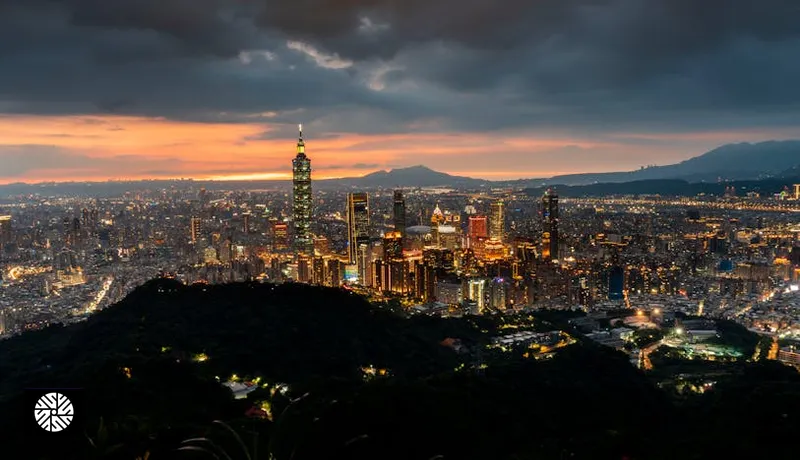
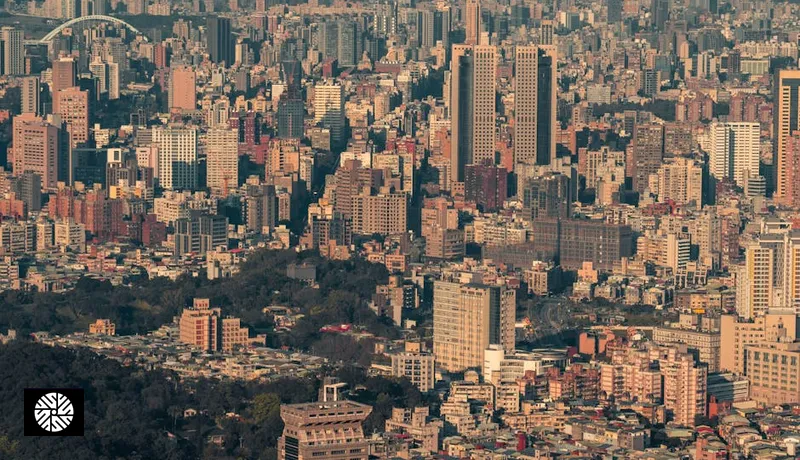
Taipei is one of those rare capitals that feels both intensely modern and deeply lived-in. You can ride a sleek MRT line under the city, surface in a 1920s alley smelling of star anise, eat the best soup dumplings of your life for under NT$300, and end the night soaking in a sulphur hot spring on the slope of an active volcano — all in the same day. For first-time visitors, the question isn't whether you'll like Taipei. It's whether four days will be enough.
This guide is the version we wish someone had handed us before our first trip: practical, honest about what's worth your time, and grounded in how Taipei actually works. We'll cover districts, sights, food, transport, day trips, and where to stay — plus a small section at the end for travelers who are pairing sightseeing with a health screening, because that's increasingly why people come.
First-time arrival: from TPE airport to your hotel
Taoyuan International Airport (TPE) sits about 40 km west of central Taipei. There are four ways into the city, and the right choice depends on luggage, time of day, and how much sleep you got on the plane.
- Taoyuan Airport MRT (purple line): The default. NT$160 to Taipei Main Station, ~50 minutes on the express, ~70 minutes on the commuter. Trains run roughly 06:00–23:00. Clean, quiet, English announcements.
- Taoyuan HSR shuttle + High Speed Rail: Useful if you're heading straight to Taichung, Tainan, or Kaohsiung. Take the airport bus to HSR Taoyuan, then ride the bullet train south.
- Taxi: ~NT$1,200–1,500 to most central hotels, 40–50 minutes if traffic cooperates. Worth it if you arrive after 23:00, are traveling with kids, or have multiple suitcases.
- Private transfer: Pre-booked sedans run NT$1,400–2,200 with a driver waiting at arrivals holding your name. Lowest friction option after a long-haul flight, and what most concierge bookings include by default.
If you're connecting through other cities or unsure which terminal you're landing at, our getting around Taiwan guide covers the full transport landscape.
Taipei's neighborhoods explained
Taipei is geographically compact but its districts have very distinct personalities. Picking the right base saves hours of commute time over a short trip.
| District | Character | Best for |
|---|---|---|
| Xinyi | Financial & luxury, Taipei 101, malls | First-timers, shopping, skyline views |
| Da'an | Lifestyle, Da'an Park, leafy streets | Repeat visitors, café-hoppers, slow mornings |
| Zhongshan | Cosmopolitan, art galleries, Japanese-era streets | Design lovers, mid-range hotels |
| Wanhua | Heritage, Longshan Temple, Bopiliao Old Street | Old Taipei, temple culture, street food |
| Songshan | Domestic airport, Raohe Night Market | Short stays, foodies, easy access to TSA flights |
| Beitou | Hot springs, top-tier hospitals | Health screening + recovery, wellness travelers |
| Shilin | Largest night market, Shilin Residence gardens | Families, first-time night-market visitors |
| Tamsui | Waterfront, sunsets, end of red MRT line | Half-day trips, seafood, river walks |
Beitou deserves special mention. It's where Taipei's serious medical infrastructure quietly lives — facilities like the Beitou Health Management Hospital draw international patients precisely because you can step out of a comprehensive screening, walk fifteen minutes, and be soaking in a sulphur spring by lunchtime. We come back to this in the final section.
Top sights ranked by what's worth your time
Taipei's headline attractions are all genuinely good, but they're not all equally good. Honest ranking, in the order we'd send a first-timer:
- Longshan Temple (free) — The most atmospheric place in the city. Active Taoist-Buddhist temple from 1738, still full of locals praying with incense and divination blocks. Go in the early evening when chanting starts. Twenty minutes is enough; pair with Bopiliao Old Street next door.
- Taipei 101 Observatory (NT$600) — The view, especially at sunset, is the postcard. The wind damper exhibit is genuinely interesting engineering. Skip the queue by booking online; arrive 45 minutes before sunset to catch both day and night views in one ticket.
- National Palace Museum (NT$350) — One of the world's great Chinese-art collections, smuggled out of Beijing in 1949. The jadeite cabbage and meat-shaped stone are tiny and overhyped; the bronzes and Song-dynasty ceramics are world-class. Half a day, weekday morning if possible.
- Chiang Kai-shek Memorial Hall (free) — Vast plaza, hourly changing-of-the-guard ceremony on the upper floor. The architecture and the history (good and bad) are the point. One hour.
- Beitou Hot Springs Museum (free) + public bath (NT$40) — The museum is a beautifully restored Japanese-era bathhouse. The Beitou Public Hot Spring next door is the cheapest legitimate hot-spring experience in Taipei. Bring a swimsuit; it's gender-mixed, no tattoos restriction, locals only kind of vibe.
For natural scenery beyond the city, see our piece on Taiwan's best natural spots.
Night markets — which one for what
Every guidebook says "go to a night market." That's correct but unhelpful — there are dozens, and they're not interchangeable.
| Market | Nearest MRT | What it's known for |
|---|---|---|
| Shilin | Jiantan | Largest, most touristed, broad food + games + clothing |
| Raohe | Songshan | Specialty foods — pepper buns at the entrance are the move |
| Ningxia | Shuanglian | Traditional, compact, beloved by locals — taro balls, oyster omelets |
| Tonghua (Linjiang) | Liuzhangli / Xinyi Anhe | Lifestyle, less crowded, Da'an locals' pick |
Specific orders worth queuing for: Fuzhou pepper buns at Raohe's east entrance (Fuzhou Shizu Hujiao Bing — there's always a line, that's the right one); oyster vermicelli at Ay-Chung in Ximending (technically not a night market but the nearest equivalent); flame-torched beef cubes at Shilin; stinky tofu with pickled cabbage at any vendor where locals are queuing — the smell is the quality control. End any night-market run with mango shaved ice in summer or peanut-cilantro ice cream rolls year-round.
Eating in Taipei beyond night markets
Taipei's deepest food culture isn't at the night markets. It's at breakfast.
Breakfast (06:00–10:30): Find a dou jiang dian (soy-milk shop). Order 蛋餅 (egg-stuffed savory crepe), 豆漿 (fresh soy milk, hot or cold, sweet or salty), 飯糰 (sticky-rice ball wrapped around pickles and pork floss), and 燒餅油條 (sesame flatbread with fried dough). Fu Hang Dou Jiang near Shandao Temple MRT is the famous one; lines start at 6 AM. Yong He Dou Jiang Da Wang is the 24-hour fallback.
Soup dumplings: Din Tai Fung's original branch is on Xinyi Road (Dongmen MRT). Yes, it's touristy. Yes, it's still excellent. The mall branches at Taipei 101 and Sogo Fuxing have shorter waits and identical food. Order the classic pork xiaolongbao, the truffle-and-pork special, and the shrimp-and-pork wontons in spicy sauce.
Beef noodle soup top three (consensus picks): Lin Dong Fang for the clear-broth version, Yong Kang Beef Noodle for the spicy red-braised, and Liu Shandong for the old-school Shandong-style. NT$220–320 a bowl. The annual Taipei Beef Noodle Festival in November is a fun way to taste-compare.
Hidden lunch spots: Yongkang Street (Dongmen MRT) is the obvious one — mango ice at Smoothie House, scallion pancakes at Tian Jin, and quiet ramen joints in the side alleys. For something less discovered, walk the lanes off Fujin Street in Songshan.
Dessert: Mango shaved ice in summer is non-negotiable. Ice Monster is the polished version; Yongkang 15 is the local one. In winter, switch to tang yuan (glutinous rice balls in ginger soup) or red bean soup.
For a deeper dive into Taiwan-wide food culture see our wellness in Taiwan piece, which spends time on the food-as-medicine angle.
Getting around Taipei — practical transport
Taipei is one of the easiest cities in Asia to navigate without speaking the language.
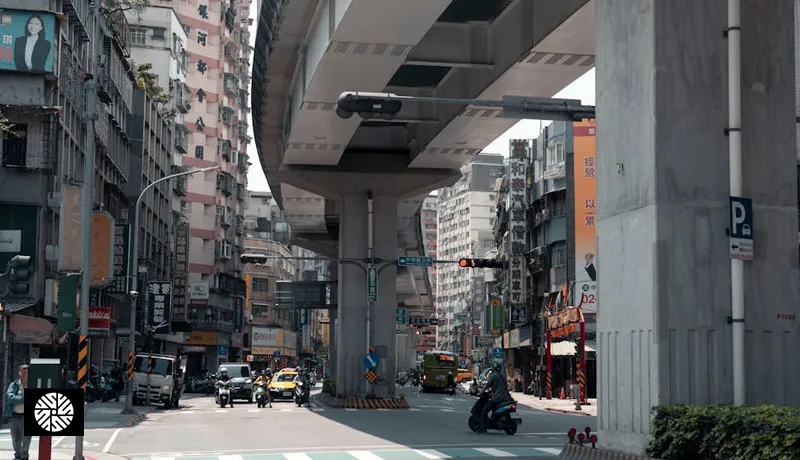
- MRT: Six lines, color-coded, signed in English, NT$20–65 per ride. Trains every 4–8 minutes. Operates roughly 06:00–24:00. No food or drink on the trains — the rule is enforced.
- EasyCard: Buy at any MRT station for NT$100 (refundable deposit), top up as needed. Works on MRT, buses, YouBike, and most convenience stores. You'll use it more than your wallet.
- Buses: NT$15 per segment, paid by tapping EasyCard on entry and exit. Useful for hills (Yangmingshan, Maokong) and the airport.
- YouBike 2.0: Stations everywhere, unlock with EasyCard. NT$10 for the first 30 minutes, NT$10 per 30 minutes after. The riverside bike paths are genuinely beautiful at sunset.
- Taxis: Yellow, metered, honest. Flag fall NT$85, then NT$5 per 200m. A cross-town ride is rarely more than NT$300.
- Uber: Works the same as everywhere, similar pricing to taxis. Useful when it's raining hard or you have heavy bags.
Day trips from Taipei worth taking
Three days in Taipei proper, then add one of these:
- Jiufen + Shifen: Take the TRA train to Ruifang (~50 min, NT$76), then a bus or taxi up to Jiufen for the lantern-lit teahouse alleys. Combine with Shifen for sky lanterns and a 20-meter waterfall. Full day. Crowded on weekends — go on a Tuesday if you can.
- Pingxi sky lanterns: Same TRA route, branch onto the Pingxi Line. Write a wish on a paper lantern, release it, then watch the train clatter past. Touristy in the best way.
- Yangmingshan National Park: Bus 260 from Taipei Main Station, ~50 minutes. Volcanic geology, hot-spring streams, calla-lily fields in spring, silver-grass meadows in autumn. Half day with a hot-spring soak afterward.
- Beitou hot springs: 30 minutes by MRT (red line, transfer at Beitou to Xinbeitou). Cheapest, easiest hot-spring experience, plus the museum and a clutch of Japanese-era bathhouses.
Where to stay by budget
Taipei's hotel market has clear bands.
- Under NT$2,000/night (budget): Star Hostel Taipei Main Station, Flip Flop Hostel, Meander Taipei. Clean, central, social-leaning. Best in Ximending and around Taipei Main Station.
- NT$3,000–6,000 (mid-range): Hotel Quote Taipei, Amba Songshan, Just Sleep Linsen. Solid 4-star quality, English-speaking staff, walkable to MRT. Da'an, Zhongshan, and Songshan are the sweet-spot neighborhoods.
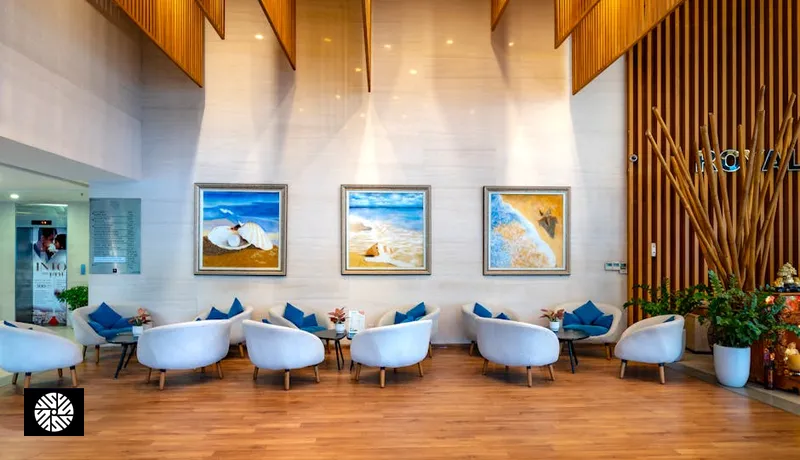
- NT$8,000–20,000+ (premium): Mandarin Oriental Taipei, Grand Hyatt, W Taipei, Palais de Chine, Kimpton Da An. Xinyi for skyline views and shopping; Zhongshan for boutique elegance.
- Beitou hot-spring stays: Villa 32, Grand View Resort, Solo Singer Inn. NT$5,000–25,000+. Worth one night even on a short trip.
Our wider best spas and hot springs in Taiwan guide goes deeper on the premium tier.
Practical Taipei: SIM, tax refund, etiquette, drinkable water
- 4G/5G eSIM and SIM: Chunghwa Telecom is the default for coverage; Taiwan Mobile and FarEastern are similar. Tourist SIMs run NT$300 for 5 days unlimited up to NT$1,000 for 30 days. Buy at the airport — every carrier has a counter in the arrivals hall.
- Tax refund: Foreign passport holders can claim a 5% VAT refund on purchases over NT$2,000 from a single tax-refund-registered store on the same day. Do it at TPE before security, not after.
- Tipping: Not expected. Anywhere. Hotels, restaurants, taxis. A 10% service charge is sometimes added at sit-down restaurants — that's it.
- Public bathrooms: Plentiful and free. Every MRT station has clean ones. Convenience stores (7-Eleven, FamilyMart) will let you use theirs.
- Water: Tap water is technically safe in Taipei, but locals universally boil it or filter it before drinking — old building plumbing is the reason. Bottled water is cheap (NT$20). Hotels provide kettles.
- Etiquette: Taiwanese politeness is real. Queue properly. Don't talk loudly on the MRT. Stand on the right of escalators. Take shoes off when entering homes and some restaurants. Hand things with two hands when you can.
If you're combining sightseeing with a health screening morning
A growing share of our American and Southeast-Asian visitors aren't here only for sightseeing. They're here because Taipei is, quietly, one of the best cities in the world to do a comprehensive health screening — and then recover in a hot-spring suite with mountain views the same afternoon.
The way it usually works: you arrive on a Sunday, settle into a hotel in Beitou or Xinyi, and complete your screening at Beitou Health Management Hospital on Monday morning (fasted, ~3–4 hours, English-speaking coordinator throughout). By lunchtime you're done. The afternoon is yours — soak in a private hot-spring tub, walk the Beitou library and museum loop, then head into central Taipei for dinner. Tuesday is sightseeing. Wednesday is the consult, where a physician walks you through results in plain English. Thursday onward you're a tourist — Jiufen, Yangmingshan, the National Palace Museum, Din Tai Fung.
What our concierge handles end-to-end: airport pickup, hospital booking and pre-screening forms, hot-spring hotel selection (we've vetted them), the post-screening consult, English translation of results, and any follow-up imaging or specialist visits. You can see the screening packages and price bands on our services page, and the medical teams behind them on the providers page.
It's not a complicated combination — Taipei is small enough that "world-class hospital" and "world-class hot spring" can be a fifteen-minute walk apart. That's a thing you cannot say about many capitals.
Final thoughts
Taipei rewards travelers who pace themselves. Don't try to do five neighborhoods a day. Eat a long breakfast. Take a midday break in a café when the heat hits. Save the night markets for after dark, when the city actually wakes up. And leave one day completely unplanned — you'll find the best meal of your trip in an alley you didn't know existed, ordered by pointing at what the person next to you got.
For broader context on the country, our where is Taiwan primer covers geography, visas, and culture; getting around Taiwan handles the wider transport network beyond Taipei.
Sources & Further Reading
FAQ
Three to four days covers the essentials: one day for Xinyi and Taipei 101, one day for old Taipei (Longshan Temple, Bopiliao, Ximending), one day for the National Palace Museum and a night market, and one day for either Beitou hot springs or a Jiufen/Pingxi day trip. Add a fifth day if you want a slower pace or are pairing the trip with a health screening morning.
Shilin is the largest and the easiest first-timer pick. Raohe is the most rewarding for serious eaters — the Fuzhou pepper buns at the east entrance are worth the queue. Ningxia is the most traditional and beloved by locals. Tonghua/Linjiang is the lower-key Da'an pick. There is no single best — pick by what you want that night.
For most visitors a day trip is enough — TRA to Ruifang (~50 minutes) plus a bus or taxi up the hill, three to four hours in the lantern-lit alleys, then back. An overnight only makes sense if you want to see Jiufen empty after the tour buses leave around 6 PM, which is genuinely magical but requires booking ahead. Combine with Shifen and Pingxi for a fuller day.
No. Tipping is not expected anywhere — restaurants, taxis, hotels, spas. A 10% service charge is sometimes added automatically at sit-down restaurants, and that is the entirety of it. Tipping a hotel porter or a private driver is welcome but never required.
Beitou is the natural choice — top-tier facilities like Beitou Health Management Hospital are walking distance from the hot-spring hotels. Villa 32, Grand View Resort, and Spring City Resort are the most-requested. Visitors who want to combine the screening with central-Taipei sightseeing often split the trip: one or two nights in Beitou around the screening, then move to Xinyi or Da'an for the rest of the week.
Officially yes — Taipei's tap water meets safety standards. In practice, locals universally boil it or filter it before drinking because older building plumbing can affect taste and trace mineral content. Bottled water is cheap (NT$20 at any convenience store) and most hotels provide a kettle and complimentary bottles.
The Taoyuan Airport MRT express is the default — NT$160, about 50 minutes to Taipei Main Station, runs roughly 06:00 to 23:00. Taxis cost NT$1,200–1,500 and take 40–50 minutes depending on traffic, which is the better choice late at night or with heavy luggage. Pre-booked private transfers run NT$1,400–2,200 and are the lowest-friction option after a long-haul flight.