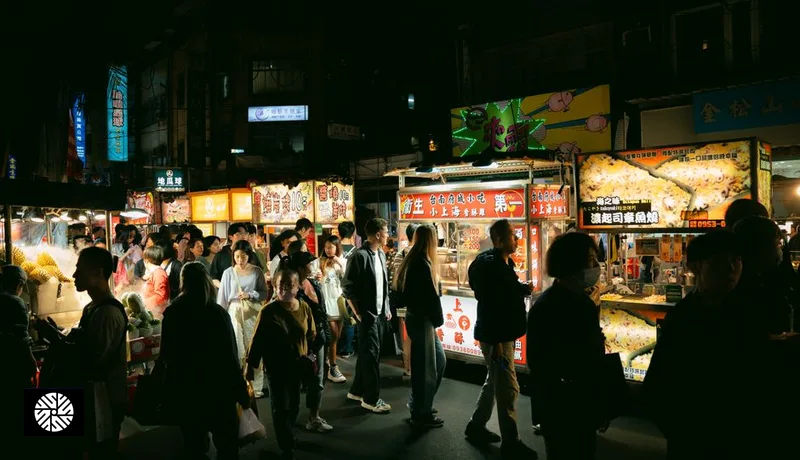

Quick answer: Computex 2026 (June 2–5) is themed "AI Together" and is the biggest edition yet — 1,500 exhibitors, 6,000 booths, 80,000+ professional visitors. Headline keynotes include Jensen Huang (NVIDIA), Cristiano Amon (Qualcomm), Matt Murphy (Marvell), and Rafael Sotomayor (NXP). The startup track is InnoVEX (~500 startups in TaiNEX 2). New for 2026: the Robotics Zone and TechXperience Zone in TWTC Hall 1. Build a 4-day itinerary that splits keynotes, show floor, InnoVEX, and private events.
If the venue guide answers "where," this article answers "what to do once you are inside." Computex 2026 is the largest single edition since the show's founding in 1981 — and the densest. With 1,500 exhibitors packed across four buildings, 80,000+ professional visitors, and four days of keynote-grade content, you cannot see everything. You have to pick.
This guide breaks down the 2026 program by track, surfaces the must-see additions, and ends with a suggested 4-day itinerary that protects your time and energy for what matters.
The 'AI Together' Theme — 3 Pillars
Computex 2026 organizes its 6,000 booths under three top-level pillars. Knowing which pillar each company sits in saves hours of wandering. Most exhibitors self-identify primarily with one, secondarily with another.
| Pillar | Primary Venue | Typical Exhibitors | What to Look For |
|---|---|---|---|
| AI & Computing | TaiNEX 1 (Hall 1) | NVIDIA, Intel, ASUS, Acer, MSI, GIGABYTE, ASRock, Marvell, Qualcomm | AI PC and Copilot+ silicon, integrated AI systems, inference platforms, data center accelerators |
| Robotics & Mobility | TWTC Hall 1 (new Robotics Zone) | YUAN, Solomon, Texas Instruments, embedded robotics startups, EV component makers | Embodied AI, humanoid robotics demos, autonomous mobility components, vision systems |
| Next-Gen Tech | TaiNEX 2 + TWTC TechXperience Zone | E Ink, immersive computing startups, XR hardware, photonics, sustainable computing | XR/AR devices, novel display tech, energy-efficient AI hardware, sustainable manufacturing |
"AI Together" is not just marketing — TAITRA and TCA explicitly designed the 2026 program around the thesis that no single layer of the AI stack (silicon, system, software, data, application) wins alone. Expect a heavy emphasis on partnership announcements rather than solo product launches.
Confirmed Keynote Speakers
Keynotes are the highest-density way to spend a Computex morning — 60 minutes of executive-level vision from people who decide where billions of dollars in capex flow next. All keynotes are at TICC (Taipei International Convention Center), a 4-minute walk from MRT Taipei City Hall.
| Speaker | Title / Company | Why It Matters |
|---|---|---|
| Jensen Huang | Founder & CEO, NVIDIA | The most anticipated keynote. Expect Blackwell-successor architecture updates, sovereign-AI partnership announcements with Taiwanese OEMs, and the now-annual "AI factory" narrative push. |
| Cristiano Amon | President & CEO, Qualcomm | Snapdragon X-series roadmap for the Copilot+ PC category, automotive Snapdragon Digital Chassis traction, and edge AI inference positioning vs NVIDIA. |
| Matt Murphy | Chairman & CEO, Marvell | Custom AI silicon, optical interconnect, and the data-center infrastructure layer that the GPU narrative often hides. |
| Rafael Sotomayor | President & CEO, NXP | Automotive, industrial IoT, and the embedded edge — where Taiwan's component ecosystem has the deepest manufacturing relationships. |
Pro tip on keynote logistics: Reserved seating for press and analyst-level passholders is allocated 90 minutes before doors open. General-admission visitors queue from 30 minutes before — expect to stand or sit on the floor for marquee sessions (Huang in particular). Live streams are available on the official Computex YouTube channel for visitors who want the content without the queue. The most valuable thing about being physically present is the 60 minutes after the keynote, when the speakers and their teams take meetings backstage.
InnoVEX — The Startup Pavilion
InnoVEX has grown from a corner of Computex into a standalone show within the show. 2026 brings nearly 500 global startups across roughly 30,000 sqm of TaiNEX 2 floor space, plus national pavilions from Japan, Korea, France, Germany, Israel, Singapore, the UK, Canada, and more.
What InnoVEX is good for
- Sourcing emerging technology — semiconductors, AI inference, robotics components, novel materials. The pavilion concentrates 12 months of early-stage announcements into 4 days.
- Country-strategy mapping — national pavilions are the fastest way to read which governments are betting on which AI verticals (e.g., the French pavilion's 2025 push on sovereign AI; the Korean pavilion's focus on humanoid robotics).
- VC and accelerator networking — InnoVEX runs a separate pitch competition (Pitch Contest) and a matchmaking program for accredited investors. Apply 4 weeks before the show.
- Recruiting — startups exhibit explicitly looking for distribution, channel partners, and post-Series-A hires.
How to navigate: Start with the national pavilion of the country whose ecosystem you know least. Walk the perimeter, note 5–8 startups per pavilion that match your thesis, then return for 15-minute deep dives. Avoid the temptation to do drive-by demos — InnoVEX rewards focus.
New Highlight Zones at TWTC Hall 1
TWTC Hall 1 has been repurposed for 2026 around two new themed zones that did not exist in prior editions. Both are worth a dedicated half-day.
Robotics Zone
The first dedicated robotics-only floor in Computex history. Anchored by embodied-AI demos from companies like YUAN, Solomon, and a wave of Taiwanese humanoid startups taking advantage of the country's component manufacturing depth. Live demos are scheduled throughout the day; the headline sessions (typically 11:00 and 14:00) draw 200-person crowds — arrive 20 minutes early.
This is also where vertical integrators (warehouse logistics, factory floor automation, surgical robotics) come to find component suppliers. If you are a buyer, bring a one-pager of your specs and watch how quickly the floor self-organizes around you.
TechXperience Zone
An immersive-experience floor that showcases AI hardware in real-world contexts rather than as standalone components: AI PCs running consumer workloads, XR headsets in productivity demos, AI-augmented creative tools. The zone is explicitly designed for non-technical visitors — press, B2B sales teams, channel partners — to walk away with a visceral sense of what the technology actually feels like.
It is also the most photogenic part of the show. Expect long lines for the marquee XR experiences from 11:00 onward; book a 09:30 slot the moment doors open if you want to skip the queue.
Major Exhibitor Lineup
The big-brand exhibitor list at Computex 2026 reads like a who's-who of global computing. Each anchor brand operates a multi-thousand-square-meter booth with structured demo schedules:
- ASUS — Annual ROG (gaming) launch event, AI PC lineup, ProArt creator series. Booth typically the largest at TaiNEX Hall 1; press conference Day 1 morning.
- Acer — Predator gaming + Swift AI PC reveals. Acer's keynote-style booth presentation happens Day 1 afternoon.
- MSI — Gaming laptops, motherboards, AI inference workstations. Watch for the Claw handheld successor.
- GIGABYTE — Server-grade AI hardware (AORUS for consumer, GIGABYTE Server for enterprise). The enterprise booth is increasingly the more interesting one.
- ASRock — Industrial PC, rack-mount AI servers, edge inference appliances.
- Intel — Core Ultra updates, Xeon roadmap, Gaudi AI accelerator positioning.
- E Ink — Color e-paper displays, large-format signage, the always-surprising "what else can you do with e-ink" demos.
- Texas Instruments — Embedded processing, sensing, and the unsexy-but-critical analog layer of the AI stack.
Networking & Side Events
The official show floor closes at 17:30 each evening. The Computex that happens after that is often more valuable than the one during business hours. Side events to look for:
- Vendor launch parties — ASUS, Acer, and MSI each host signature evening events at venues like the Grand Hyatt Taipei (Xinyi) or W Taipei. Press and channel partners are invited; check vendor PR teams for guest list access.
- InnoVEX VC matchmaking — One-on-one sessions and pavilion-hosted cocktails, usually 17:00–20:00 at TaiNEX 2.
- TSMC OIP Ecosystem Forum — Often held parallel to Computex week; technical and worth attending if you are in the silicon-design ecosystem.
- Taipei tech meetups — TechCrunch, The Verge, AnandTech, and other media outlets host informal media-and-engineering meetups in Xinyi nightlife venues throughout the week.
- Embassy and trade-office receptions — France, Germany, Israel, Korea, and others typically host evening receptions for visiting delegations from their countries. Worth knowing about even if you are not a citizen, as cross-pavilion access is common.
Suggested 4-Day Itinerary
Most first-time Computex visitors over-pack day one and burn out by day three. The itinerary below front-loads keynotes and big-brand briefings while leaving day three open for startups and day four for synthesis.
| Day | Morning | Afternoon | Evening |
|---|---|---|---|
| Tue Jun 2 | Jensen Huang keynote at TICC; queue from 08:00 | TaiNEX Hall 1 anchor booths (ASUS, Acer, MSI, GIGABYTE) | Vendor launch party in Xinyi (invite required) |
| Wed Jun 3 | Amon (Qualcomm) or Murphy (Marvell) keynote | TWTC Hall 1 — Robotics Zone + TechXperience Zone | InnoVEX investor cocktail at TaiNEX 2 |
| Thu Jun 4 | InnoVEX national pavilions (deep walk) | 15-min meetings with shortlisted startups; Sotomayor (NXP) keynote | Press & engineering meetup in Xinyi |
| Fri Jun 5 | Catch-up on missed booths; floor closes 15:30 at TaiNEX | Tea or coffee with one key partner you met earlier in the week | Off-show: dinner in Yongkang Street, return to hotel early |
The Long-Days Recovery Section
Four days of standing on the show floor, three to four hours of evening events nightly, time-zone adjustment, and the perpetual conference diet of sugar-and-coffee combine to deliver one of the more physically demanding business trips of the year. The cumulative cost shows up in resting heart rate, sleep quality scores, and the energy you have available for the week after you fly home.
A pattern emerging among returning Computex executives: extend the trip by one day and use it for a comprehensive health screening in Taipei before flying home. The economics of doing it in Taiwan versus the US are a significant lever — typically 60–70% less than equivalent US concierge clinic pricing — and the trip is already paid for. For visitors who already know the five biomarkers that actually matter for healthspan, this is a natural addition to a high-leverage week.
The Computex executive's pattern: Tuesday–Friday on the show floor, Saturday morning at a partner clinic for a half-day comprehensive screening, evening flight home. The English reports — formatted to be readable by your US primary care doctor — land in your inbox within 7 days. Explore the executive screening packages →
Cross-Links & References
- Logistics first? Read How to Get to Computex 2026: Venue Map & MRT Routes
- Related: Longevity Health Screening — An Evidence-Informed 2026 Roadmap
- Official Computex 2026 Site
- PRNewswire — Computex 2026 AI Ecosystem Announcement
- EE Times Asia — 1,500 Exhibitors Confirmed for 2026
Frequently asked
Who are the confirmed Computex 2026 keynote speakers?
Four confirmed marquee keynotes: Jensen Huang (NVIDIA), Cristiano Amon (Qualcomm), Matt Murphy (Marvell), and Rafael Sotomayor (NXP). All are held at the Taipei International Convention Center (TICC), a 4-minute walk from MRT Taipei City Hall. Live streams are available on the official Computex YouTube channel.
What is InnoVEX and is it worth visiting?
InnoVEX is Computex's startup pavilion, located inside TaiNEX 2. The 2026 edition brings nearly 500 global startups plus national pavilions from Japan, Korea, France, Germany, Israel, Singapore, the UK, Canada, and more. It is worth at least a half-day visit if you source emerging technology, scout investment opportunities, or want a fast read on which national ecosystems are betting on which AI verticals.
What is the new Robotics Zone at Computex 2026?
The Robotics Zone is a dedicated robotics-only floor at TWTC Hall 1, debuting in 2026. It features embodied-AI demos from companies including YUAN, Solomon, and a wave of Taiwanese humanoid startups. Live demos run throughout the day; headline sessions (typically 11:00 and 14:00) draw 200-person crowds, so arrive 20 minutes early.
How many exhibitors will be at Computex 2026?
Computex 2026 hosts 1,500 exhibitors across 6,000 booths, spanning 80,000 sqm across four venues (TaiNEX 1 & 2, TWTC Hall 1, TICC). Expected attendance is 80,000+ professional visitors, making it the largest single edition since the show's founding in 1981 and the second-largest ICT trade show worldwide.
What does "AI Together" mean as the Computex 2026 theme?
"AI Together" is the official Computex 2026 theme, organized around three pillars: AI & Computing, Robotics & Mobility, and Next-Gen Tech. TAITRA and TCA designed the program around the thesis that no single layer of the AI stack — silicon, system, software, data, or application — wins alone. Expect heavy emphasis on partnership announcements rather than solo product launches.
Are Computex keynotes free to attend?
Keynotes are included with a Computex visitor badge (which itself is free for pre-registered attendees and NT$200 for walk-ins). Reserved seating is allocated 90 minutes before doors open for press and analyst-level passholders. General admission visitors queue from 30 minutes prior; for marquee sessions like Jensen Huang, expect to stand or sit on the floor unless you arrive very early.
What is the best 4-day Computex itinerary?
A balanced pattern: Day 1 Jensen Huang keynote + TaiNEX Hall 1 anchor booths (ASUS, Acer, MSI, GIGABYTE); Day 2 Amon or Murphy keynote + TWTC Robotics & TechXperience Zones; Day 3 deep walk through InnoVEX national pavilions + Sotomayor keynote; Day 4 catch-up on missed booths (floor closes 15:30 at TaiNEX) + meetings with key partners. Avoid the common first-timer mistake of cramming day one and burning out by day three.