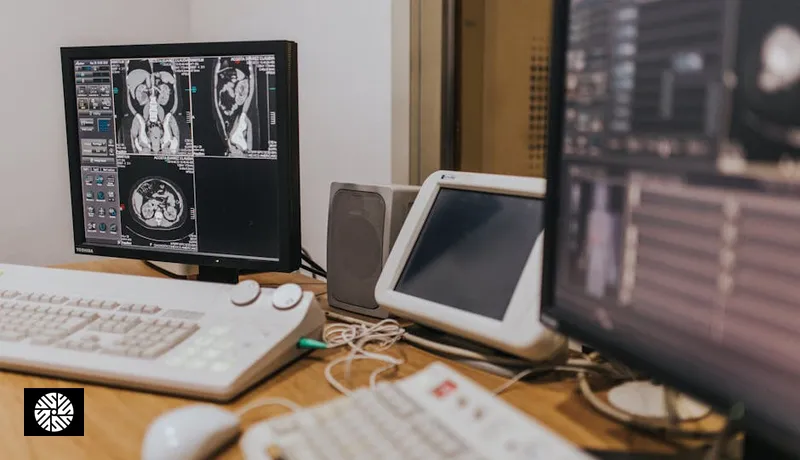
The French Assurance Maladie (Sécu) is generous on diagnostic care but selective on prevention. The bilan de santé tous les 5 ans offered through the Centres d'Examens de Santé (CES) covers basic biology, BMI, vision, hearing, dental review, and ECG — explicitly not advanced imaging. Imagerie médicale (IRM, scanner) is reimbursed when prescribed by a physician for symptoms; routine screening for asymptomatic adults sits outside the convention. Mutuelle top-up policies vary widely but most do not cover preventive screening abroad, and the cash-pay options at Paris private centers (American Hospital of Paris, Hôpital Européen Georges-Pompidou private wing, BMC Bilan Médical Complet, Hôpital Foch) typically run €2,400–€4,800.
For French patients comparing those numbers with a 12.5-hour Air France direct from Paris CDG to Taipei (TPE) at €1,200–1,800 round-trip in premium economy, the math has been quietly shifting toward Taiwan. This is a deeper look at how the HAS shapes what gets reimbursed, what your mutuelle actually pays for, and how a Parisian executive, a retired Lyonnais couple, or a Marseille indépendant each navigate the trip differently.
The Haute Autorité de Santé (HAS) is France's medical-economic gatekeeper, the analogue of NICE in the UK or the G-BA in Germany. It evaluates every service the Sécu reimburses on two axes: service médical rendu (SMR — clinical benefit) and amélioration du service médical rendu (ASMR — incremental benefit over existing alternatives). For an act to be reimbursed, the HAS must judge that the population-level cost-effectiveness justifies inclusion in the Classification Commune des Actes Médicaux (CCAM) at a tariff the CNAM (Caisse Nationale d'Assurance Maladie) is willing to fund.
For chronic disease — what the French call Affection Longue Durée (ALD) — this calculus is generous. Cancers, diabetes, cardiovascular disease, and 30 other ALD categories receive 100% reimbursement of the tarif conventionnel, including imaging, biology, and follow-up. But for preventive screening of asymptomatic adults, the HAS has consistently judged that population-level evidence does not support routine reimbursement of advanced imaging — full-body MRI, coronary calcium score, low-dose chest CT, AI-augmented retinal scans. Cost-per-life-year-saved estimates rarely meet the implicit French threshold (around €30,000–50,000 per QALY for routine inclusion).
This is why a Parisian cardiologist will happily order a score calcique if you arrive with chest pain, but cannot prescribe one as a preventive screen for a 47-year-old executive without symptoms. Both physician and patient know the test is informative; the system simply isn't structured to fund it at scale outside clinical indication.
Ce que la Sécu rembourse réellement en prévention
The actual preventive package the Sécu funds is narrower than most French patients realize:
- Bilan de santé tous les 5 ans (CES): free at one of ~85 Centres d'Examens de Santé run by the CPAM. Includes blood panel (NFS, glycemia, cholesterol), urine analysis, BMI, vision, hearing, dental review, ECG, and a clinical exam. Duration ~3 hours. No imaging beyond the ECG.
- Mammographie tous les 2 ans (50–74 ans): organized screening through the Programme National de Dépistage du Cancer du Sein, fully reimbursed
- Dépistage colorectal (50–74 ans): immunological FIT test every 2 years, free; coloscopie covered when FIT positive or for at-risk patients
- Frottis cervical (25–65 ans): every 3 years after two normal results; HPV-based testing for women 30+
- Dépistage cardiovasculaire en consultation: blood pressure, cholesterol, ECG when prescribed by your médecin traitant; covered with co-payment
- IRM/scanner sur prescription: covered with co-payment when ordered for symptoms
- IRM corps entier préventif: non remboursé — patient pays cash
- Score calcique coronaire: non remboursé hors indication clinique
- DEXA/ostéodensitométrie: covered for women post-menopause with risk factors; otherwise patient pays
The CES bilan is genuinely useful for population-level early detection, but it is not designed to answer the question a 50-year-old executive most often asks: "Is there anything silently growing inside me right now?" That question requires advanced imaging that France's system does not reimburse outside clinical indication.
Coûts du privé en France — par établissement
The French private market for preventive imaging is concentrated in Paris and a handful of regional centers. Pricing varies by hospital and by whether the bilan is bundled or à la carte:
| Provider | Service | Cost (EUR) |
|---|
| American Hospital of Paris (Neuilly) | Comprehensive executive bilan | €2,400–€4,800 |
| Hôpital Américain (Neuilly) | Bilan corps entier with IRM | €2,800–€4,200 |
| Hôpital Européen Georges-Pompidou (HEGP private wing, AP-HP) | Score calcique + IRM ciblé | €1,400–€2,000 |
| BMC Bilan Médical Complet (Paris 16e) | IRM corps entier seul | €1,800–€2,400 |
| BMC Bilan Médical Complet | Bilan complet avec biomarqueurs | €2,400–€3,800 |
| Hôpital Foch (Suresnes) | Check-up exécutif avec imagerie | €2,200–€3,600 |
| Centre Médical Européen Paris | Bilan préventif modulaire | €1,600–€3,200 |
| Hôpital de la Pitié-Salpêtrière (private suites) | Bilan oncologique ciblé | €2,800–€4,500 |
| New Dawn Health (Taiwan) | Core to Executive (everything bundled) | €370–€3,250 |
The American Hospital of Paris remains the gold standard for many wealthy expatriates and Parisian executives, but the price reflects Neuilly real estate as much as clinical depth. HEGP's private wing offers AP-HP (public hospital network) clinical resources at a more moderate premium. BMC and Foch occupy the middle market. None of these include the kind of bundled blood panel + IRM + DEXA + cardio workup that Taiwan partners deliver in 2–3 days for under half the cost.
"Le bilan corps entier à l'American Hospital de Paris coûtait €4,200. Mon mutuelle Allianz n'en couvrait rien. À Taipei j'ai payé €1,400 pour la même IRM plus le panel sanguin et le DEXA. Vol direct Paris-Taipei sur Air France, escale d'une nuit avant l'examen." / "Full-body MRI workup at American Hospital cost EUR 4,200. My Allianz mutuelle covered nothing. In Taipei I paid EUR 1,400 for the same MRI plus blood panel and DEXA. Direct Paris-Taipei on Air France, one night before the exam." — Catherine D., 47, gestionnaire de patrimoine, Paris
Mutuelle vs complémentaire — qui paie quoi à l'étranger ?
The French insurance landscape has three layers, and understanding which one matters for foreign elective screening is critical:
- Assurance Maladie (Sécu) — universal public coverage. Pays the tarif conventionnel minus your ticket modérateur. For preventive imaging abroad, generally pays nothing.
- Mutuelle obligatoire — since the ANI (Accord National Interprofessionnel) of 2016, every employer must offer a mutuelle d'entreprise covering at least the panier de soins minimum. Top providers: MGEN (education sector), Harmonie Mutuelle, Mutuelle Bleue, AG2R La Mondiale, MAIF.
- Complémentaire / surcomplémentaire — optional individual top-up. Premium tiers: AXA Santé Premium, Allianz Santé Privilège, Generali Privilège, Swiss Life Prevoyance Plus.
For foreign elective preventive screening, the picture is sobering:
| Insurer | Tier | Foreign elective preventive |
|---|
| MGEN | Référence / Initial / Équilibre | Not covered |
| Harmonie Mutuelle | Standard tiers | Not covered (urgent care abroad only) |
| Mutuelle Bleue | Standard | Not covered |
| AG2R La Mondiale | Santé Premium | Partial — up to €1,000–€1,500/year on documented preventive imaging if prescribed |
| AXA Santé | Premium / Excellence | Partial — case-by-case, requires devis in advance |
| Allianz Santé | Privilège / Excellence | Partial — typically €800–€1,200/year for foreign elective |
| Generali Privilège | Top tier | Up to 100% of frais réels on documented procedures with prescription |
The pattern: standard mutuelles d'entreprise almost never reimburse foreign elective preventive screening, while top-tier individual complémentaires from AXA, Allianz, AG2R, and Generali sometimes do — but only with a French physician's prescription and a pre-trip devis (quotation) submitted to the insurer. The realistic recovery is €500–€1,500 against a €1,400–€3,000 Taipei bill, leaving most of the saving versus French private intact.
Sécu vs Mutuelle premium vs Taïwan — comparaison directe
| Element | Sécu (CES) | Mutuelle premium + private | Taïwan (concierge bundled) |
|---|
| Out-of-pocket cost | €0 | €2,400–€4,800 (partial reimbursement possible) | €1,400–€3,250 + €1,400 flight |
| Wait time for slot | 6–12 months at Paris CES | 4–8 weeks American Hospital, HEGP | 3–4 weeks |
| Full-body 3T MRI | Not included | Included if specifically chosen | Bundled in Premium and Executive tiers |
| Coronary calcium score | Not included | €400–€700 add-on | Bundled |
| DEXA bone density | If risk factors only | €150–€250 add-on | Bundled |
| Blood biomarkers (advanced) | Basic NFS/glycemia/cholesterol | Comprehensive optional | Bundled — including tumor markers, hormones, micronutrients |
| Same-day debrief | No (results posted) | Variable | Yes — physician debrief at end of visit |
| Total time commitment | 3 hours + months of waiting | 1–2 days, multiple sites | 2 days, one location |
TNS, Loi Madelin et déductibilité fiscale
For salaried employees, individual frais de santé are generally not deductible from French impôt sur le revenu. The system assumes the Sécu + mutuelle obligatoire cover the bulk, and any further out-of-pocket spending is personal consumption. There is no equivalent of the German Vorsorgeaufwendungen or US HSA for individuals.
For Travailleurs Non Salariés (TNS — self-employed professionals, liberal professions, gérants majoritaires), the picture is more favorable. The Loi Madelin (1994) allows TNS to deduct premiums paid to qualifying health, retirement, and prévoyance contracts from their professional income. A Loi Madelin contrat santé with AXA, Allianz, Generali, or Swiss Life can include foreign elective coverage in its tableau de garanties, and the premiums are deductible up to a ceiling roughly indexed to the Plafond Annuel de la Sécurité Sociale (PASS).
What a Loi Madelin contract does not do is make the medical bill itself deductible — only the insurance premium. So the TNS path is: pay a slightly higher annual premium for a contract that includes foreign elective, deduct that premium from BIC/BNC professional income, then submit the Taipei bill for partial reimbursement. The net effect for a €60,000 BNC freelancer can be a 30–40% reduction in the effective cost of an annual preventive bilan abroad — meaningful, though not transformative.
Disclaimer: this is general information, not tax advice. Consult an expert-comptable or your AGA before structuring a Loi Madelin contract around foreign medical care.
Vol direct Air France et alternatives EU
Air France AF188 runs CDG-TPE daily, approximately 12.5 hours nonstop. Premium economy round-trip €1,200–1,800 in shoulder seasons; full-service business €3,500–5,500. Direct flights are the main reason Paris-based patients choose Taipei over alternative Asian hubs — a 12.5h direct is genuinely tolerable, while a 16-19h connecting itinerary makes the case harder.
| From | Routing | Total time | Premium economy round-trip |
|---|
| Paris CDG | AF188 direct | 12.5h | €1,200–1,800 |
| Paris CDG | via DOH on Qatar Airways | 17–18h | €1,000–1,500 |
| Paris CDG | via AMS on KLM/CI | 16–17h | €1,100–1,600 |
| Paris CDG / Lyon LYS | via IST on Turkish Airlines | 17–19h | €950–1,400 |
| Lyon LYS | LYS-CDG-TPE on AF | 15h | €1,300–1,900 |
| Marseille MRS | MRS-CDG-TPE or MRS-AMS-TPE | 15–17h | €1,400–2,000 |
| Nice NCE | NCE-CDG-TPE on AF | 15h | €1,400–1,950 |
| Toulouse TLS / Bordeaux BOD | via CDG on AF | 15.5h | €1,400–1,900 |
Patients in the south of France often find Turkish Airlines via IST competitive on price; KLM via AMS offers the smoothest connection experience. But for anyone within reasonable rail distance of Paris (TGV from Lyon, Strasbourg, Bordeaux, Marseille, Nantes), the direct AF188 from CDG remains the standard answer.
Patient personas : la dirigeante parisienne, le couple lyonnais à la retraite, l'indépendant marseillais
Catherine, 47, gestionnaire de patrimoine, Paris 7e. Salaried, mutuelle obligatoire MGEN through her firm, individual surcomplémentaire AXA Santé Premium. Her frame: she could go to American Hospital Paris and pay €4,200 cash with maybe €800 back from AXA. Or she flies AF188 on a Friday evening, screens Saturday-Sunday at a Taipei partner, returns Tuesday morning, and pays €1,400 + €1,500 flight = €2,900 total — sleep-tested in lie-flat premium economy, debriefed on the imaging the same day, and home before her Wednesday client meetings.
Jean-Pierre & Brigitte, 64 & 62, Lyonnais retired, ex-fonction publique. Both on MGEN Référence, no premium top-up. They have time but limited disposable income. The CES bilan is free but doesn't include the cardiovascular imaging Jean-Pierre wants given a family history of MI. Their math: combine a 14-day Taiwan trip — 2 days screening, 12 days tourism in Taipei + Tainan + Taroko Gorge — and the screening becomes a small part of a holiday they'd take anyway. Total: €2,500 each for the bilan + €1,400 each flight + accommodation = around €10,000 for the trip, of which only €5,800 is medical. Versus €8,400 cash at HEGP for both bilans alone.
Hassan, 39, indépendant marseillais (consultant IT, statut TNS). Loi Madelin contract with Allianz Santé Privilège. Premiums (~€2,400/year) fully deductible from BNC. Foreign elective preventive partially reimbursed. He flies MRS-CDG-TPE, screens at a Taipei partner for €1,800 (Premium tier), claims €900 back from Allianz, and deducts a portion of the year's premium against his BNC. Effective net cost: around €1,200–1,400, against a €2,800 Foch quote in Suresnes that his contract would have reimbursed similarly but for which he'd still face the longer waiting list and fragmented day across Paris.
Intégration avec votre médecin traitant
One concern French patients raise consistently: "What does my médecin traitant do with a report from Taiwan?" The answer is simpler than most expect.
Imaging is delivered as DICOM files on a USB drive plus encrypted cloud download, viewable in any standard French radiology PACS or in Doctolib MD-Pro, HelloMédecin pro, MonLogicielMédical, Weda, and other major French ambulatory EHRs. Your généraliste or specialist can import the imaging directly. The reports themselves are issued in clinical English, which is the working language of European radiology — most French radiologists read it fluently. A French translation of the synthesis report is available on request (€40, 3 working days), and a lettre de référence for your médecin traitant can be prepared free of charge if local follow-up investigation is needed.
For ALD-eligible findings, the workflow back into the French system is straightforward: your médecin traitant uses the foreign report as a clinical input and orders any confirmatory testing under standard Sécu pathways. The imaging itself, dated and DICOM-stamped, is medico-legally as valid as a French-origin study.
"Mon radiologue à Lyon a importé les fichiers DICOM directement dans son PACS. Il m'a dit que la qualité de l'IRM 3T était identique à ce qu'il aurait fait à la Croix-Rousse, juste obtenue en deux jours au lieu de neuf mois d'attente." / "My radiologist in Lyon imported the DICOM files directly into his PACS. He told me the 3T MRI quality was identical to what he'd produce at La Croix-Rousse, just obtained in two days instead of nine months of waiting." — Brigitte M., 62, retraitée, Lyon
Practical French considerations
- Visa: French passport holders enter Taiwan visa-free for 90 days
- Mutuelle reimbursement: most mutuelles (MGEN, Harmonie Mutuelle, Mutuelle Bleue) do not cover foreign elective screening. Some private supplementaires (AG2R La Mondiale, AXA Santé Premium, Allianz, Generali Privilège) reimburse partial; check your tableau de garanties
- Frais de santé déductibles: medical expenses generally are not deductible from French income tax for individuals. Self-employed (TNS) may use Loi Madelin contracts whose premiums are deductible. Consult an expert-comptable
- EU residents not in France: Spanish, Italian, Belgian, Dutch travelers similarly bypass home-country public coverage and find equivalent value in Taipei
- Records integration: reports in English; French translation available on request (€40, 3-day turnaround); DICOM compatible with all French PACS and ambulatory EHRs
Booking from France — typical timeline
- 4 weeks out: free 15-min concierge call (English or French), choose package on /services
- 3 weeks out: deposit secures slot at a partner hospital
- 1 week out: pre-screening protocol delivered (with French translation on request)
- Trip: typical 5-night stay — Friday Paris-Taipei on AF188, Saturday rest, Sunday-Monday screening + debrief, Tuesday return — Air France's evening departure and morning Taipei arrival align well with the screening fasting window
Further reading
Sources & Further Reading
Frequently asked questions
 Blog
Blog