
Picosecond laser and microneedling are different procedures. Either may be unsuitable for a particular diagnosis, skin type, medicine, or health condition. Combining them or scheduling them close together is a clinical decision, not a standard package.
What should you do before pico laser or microneedling?
- Ask the clinician to confirm the diagnosis and explain why the proposed procedure is appropriate.
- Provide a complete list of medicines, supplements, allergies, prior procedures, active skin conditions, cold sores, bleeding problems, immune conditions, pregnancy or breastfeeding, and recent isotretinoin use. The U.S. FDA lists isotretinoin use in the past 6 months as a reason not to have microneedling.
- Expect to be told to pause some products. The American Academy of Dermatology (AAD) advises stopping retinoid or glycolic acid skin care for 2 to 4 weeks before laser scar treatment and quitting smoking for at least 2 weeks before it. Which medicines or supplements to pause, and for how long, is the clinician's call.
- If you are prone to cold sores, ask about preventive medication; the AAD lists this as standard preparation for laser treatment.
- Avoid tanning. The AAD states you cannot be treated with a tan or sunburn, and the FDA lists a tan, or planned sun exposure in the two weeks after the procedure, as a reason not to have microneedling. Tell the clinic about infection, rash, open wounds, or a recent change in health, and let the clinic decide whether to postpone.
- Ask for the exact device model, treatment area, operator, anesthesia plan, disposable-item policy, expected benefits, common side effects, serious risks, alternatives, and after-hours contact method.
- Obtain clinic-specific written instructions for skin products, makeup, cleansing, sun protection, and medicines. Timing is not interchangeable between devices or patients.
What are the risks of microneedling and pico laser?
The U.S. FDA lists dryness, rough skin, tightness, redness, itching, peeling, discomfort, burning, bruising, bleeding, and crusting as common effects of microneedling, and pigment change, cold-sore reactivation, swollen lymph nodes, and infection as less common ones. Some effects can persist. The FDA has authorized microneedling devices only for facial acne scars, facial wrinkles, and abdominal scars in patients aged 22 or older, and has not approved them to deliver cosmetics, topical medicines, vitamin solutions, drugs, or blood products such as PRP into the skin. Radiofrequency microneedling has additional heat-related risks.
The FDA also lists conditions that make microneedling unsuitable, including bleeding or clotting disorders, a weakened immune system, uncontrolled diabetes, active infection, eczema, psoriasis or vitiligo in the area, an active rash or cold sore, keloid history, pregnancy or breastfeeding, and cancer in the area. Bring every one of these up at the consultation.
Laser outcomes also vary with diagnosis, wavelength, settings, skin type, and operator experience. Burns, prolonged redness, darkening or lightening of the skin, infection, scarring, incomplete improvement, and recurrence are possible. A normal or uncomplicated early recovery does not guarantee the desired cosmetic result.
What should aftercare look like?
Use only the written aftercare provided for the exact procedure. Do not copy a fixed restart schedule from another person or from this article. Ask when to cleanse, use moisturizer or sunscreen, apply makeup, exercise, swim, travel, and restart each active or prescribed product.
Two parts of aftercare are consistent across dermatology guidance, and both are about the sun:
- Sunscreen every day on the treated skin. The AAD recommends a broad-spectrum, water-resistant sunscreen with SPF 30 or higher, applied 15 minutes before going outdoors, because sun exposure can darken treated skin.
- A sun-avoidance window. The FDA warns against sun exposure in the two weeks after microneedling. For acne-scar treatments in general, the AAD advises limiting daytime time outdoors for 6 to 8 weeks, even on cloudy days. Your clinic's window may differ; follow the written one.
Expect microneedling reactions to clear in a few days to a week, and wait at least 24 hours before makeup, according to the AAD. Contact the clinic promptly if symptoms are worse than the written expected course. Seek urgent care for severe or increasing pain, spreading redness, pus, fever, eye symptoms, blistering, breathing difficulty, or rapidly worsening symptoms.
How much does pico laser cost at New Dawn Health?
Picosure Pro is USD $400 per session when booked through New Dawn Health. Two higher-energy variants are also listed: Platinum Picosure Pro with the Focus lens at $733 and Provenir Clinic's Platinum Picosure Pro at $766. All three are on the package list. New Dawn does not currently list a standalone microneedling session; the texture treatment we book is Stellar M22 ResurFX at $600. For what each Picosure Pro variant treats, how the sessions run, and how the price compares abroad, see the Taipei pico laser 2026 guide.
What should you ask before combining procedures?
- What evidence supports combining these procedures for my diagnosis?
- Will they be performed on the same area and on the same day?
- Does combination treatment change infection, burn, scarring, or pigment risk?
- Who is responsible for follow-up and complication management after I leave Taiwan?
- What is included in the quoted price, and what could create an additional charge?
Pico laser vs microneedling: which first, and how far apart?
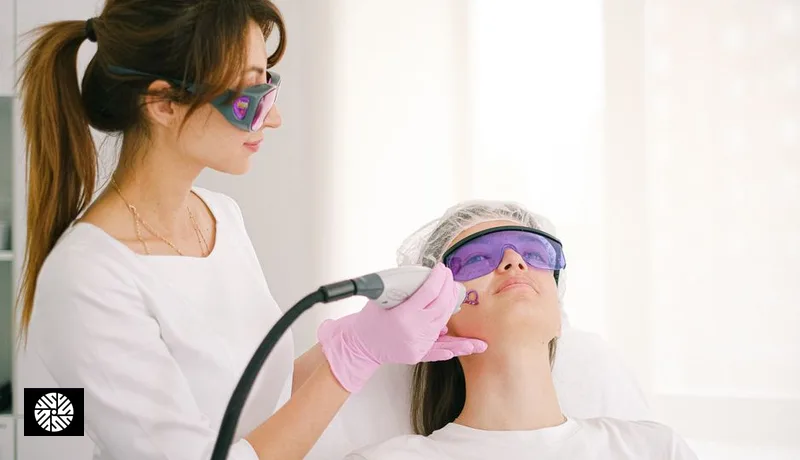
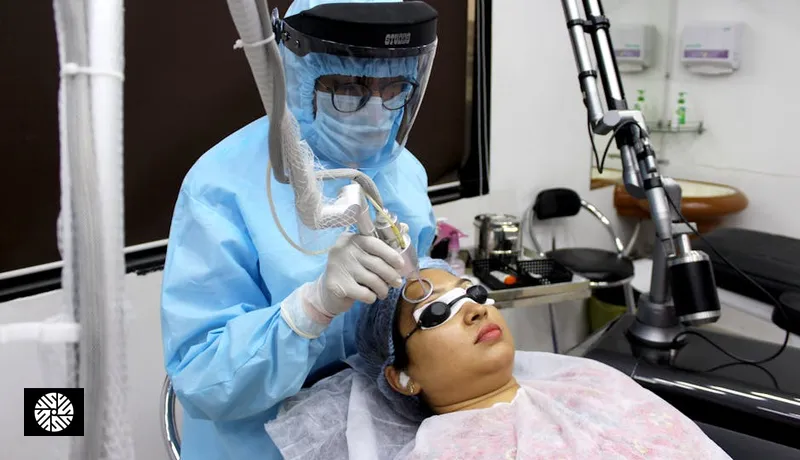
The two treatments address different problems. A picosecond laser delivers very short pulses of light that break up pigment and prompt a controlled repair response, so it is usually chosen for sunspots, melasma, tattoo ink and uneven tone. Microneedling makes many small punctures with fine needles; the injury itself is the treatment, and the collagen laid down while it heals is what softens acne scarring, enlarged pores and fine lines. Neither replaces the other, and skin with both pigment and scarring often needs both.
Dermapen is a brand of motorised microneedling pen rather than a separate category of treatment, so "Dermapen vs pico laser" is the same comparison as the one above: the pen is a microneedling device aimed at texture, the picosecond laser is aimed at pigment, and the choice follows the concern, not the brand name.
Most clinics treat pigment first. Pico sessions are shorter and settle faster, and clearing pigment makes it easier to judge how much textural work is left. Microneedling then follows in a later session. Same-day combined protocols do exist, but they raise the total inflammatory load on the skin; whether one suits a particular patient is a decision for the treating clinician, not a rule to read off an article.
On spacing, there is no published standard interval between a pico session and a microneedling session. The usual principle is that redness, crusting and barrier disruption from the first procedure should have resolved before the second. Darker skin types, active acne, or a strong reaction to the first session usually mean waiting longer. Ask the clinic performing both to set the interval and to say what would make them postpone.
| Pico laser | Microneedling | |
|---|---|---|
| Target concern | Pigment: sunspots, melasma, tattoo ink, uneven tone | Texture: acne scarring, enlarged pores, fine lines |
| Downtime | Mild redness; darkened spots may flake | Redness and pinpoint bleeding on the day; reactions usually clear in a few days to a week (AAD) |
| Typical spacing | 4 weeks between sessions in published acne-scar and pore trials | 3 to 5 treatments every 2 to 4 weeks for acne scars (AAD) |
What information should you send the clinic before treatment?
- Your treatment goal, diagnosis if known, recent photographs, and prior procedures or reactions.
- All prescription and non-prescription medicines, injections, creams, supplements, and allergies.
- Pregnancy or breastfeeding, bleeding or clotting problems, immune conditions, diabetes, active infection or rash, cold-sore history, keloid history, recent tanning or sunburn, and current or recent isotretinoin use.
- Your travel dates and ability to attend follow-up or obtain care after returning home.
What should the clinic confirm in writing?
- The diagnosis, proposed procedure, exact device, treatment area, operator, and reason it is suitable.
- Expected benefit, realistic limits, common side effects, serious risks, alternatives, and reasons to postpone.
- Whether topical anesthetic is planned and how allergies or sensitivities will be handled.
- Whether a new single-use needle cartridge is used for each microneedling treatment.
- Instructions for tanning, sun protection, makeup, cleansing, shaving, hair removal, skin products, prescribed creams, medicines, supplements, exercise, swimming, and travel.
- How to contact the clinic if symptoms worsen and who will manage complications.
Sources
- U.S. FDA — Microneedling Devices (accessed 2026-09-08)
- American Academy of Dermatology — Microneedling can fade scars, uneven skin tone, and more (accessed 2026-09-08)
- American Academy of Dermatology — Acne scars: How to care for your skin after treatment (accessed 2026-09-08)
- American Academy of Dermatology — 10 things to know before having laser treatment for your scar (accessed 2026-09-08)
- Frontiers in Medicine (2023) — Comparison of 1064-nm Nd:YAG picosecond laser using fractional micro-lens array vs. ablative fractional 2940-nm Er:YAG laser for atrophic acne scar in Asians (accessed 2026-09-08)
- Lasers in Surgery and Medicine (2022) — Long-term efficacy and safety of a 1064-nm picosecond laser with fractionated microlens array in the treatment of enlarged pores in Asians (accessed 2026-09-08)
- American Academy of Dermatology — Cosmetic treatment safety (accessed 2026-09-08)
Frequently asked
Can picosecond laser and microneedling be combined?
Sometimes, but not as a universal protocol. The clinician must consider the diagnosis, skin type, device, settings, treatment area, healing history, and cumulative risk before recommending the order and interval.
When can I restart retinoids or other active products?
There is no single safe interval for every procedure. Follow written instructions from the treating clinician and ask about each prescribed or active product separately. Do not restart while the skin is still open, blistered, unusually painful, or worsening.
Should I stop aspirin, ibuprofen, fish oil, or other medicines?
Do not stop or change them because of this article. Disclose every medicine and supplement to the treating clinician. Individual instructions may require coordination with the clinician who originally prescribed the medicine.