
Our record for the Upper Endoscopy and Colonoscopy package says the package includes anesthesia. It does not say which level, because that is a clinical decision made for you, not a product feature. The vocabulary below is what lets you ask the right question before you fly.
Travelers write about procedures abroad done awake that they expected to sleep through. Sedation practice really does vary between countries, it has been measured, and the numbers are in this article.
What are the four levels of sedation?
There are four, and they sit on one continuum rather than in separate boxes. The American Society of Anesthesiologists defines them, and its statement was last amended on 23 October 2024.
| Level | Responsiveness | Airway | Spontaneous ventilation |
|---|---|---|---|
| Minimal sedation, anxiolysis | Normal response to verbal stimulation | Unaffected | Unaffected |
| Moderate sedation, "conscious sedation" | Purposeful response to verbal or tactile stimulation | No intervention required | Adequate |
| Deep sedation | Purposeful response after repeated or painful stimulation | Intervention may be required | May be inadequate |
| General anesthesia | Unarousable even with painful stimulus | Intervention often required | Frequently inadequate |
The ASA adds a warning that matters more than the table. "Because sedation is a continuum, it is not always possible to predict how an individual patient will respond."
That is why the ASA says practitioners aiming at one level must be able to rescue a patient who drifts deeper. A footnote is worth knowing too. Reflex withdrawal from a painful stimulus does not count as a purposeful response.
One more term appears on consent forms. Monitored anesthesia care describes who is delivering the service, not how deep you go.
Why does sedation practice differ so much between countries?
Because there is no international standard, and surveys of endoscopists have measured the spread repeatedly. This is the honest answer to the traveler's anxiety about waking up mid-procedure.
| What was surveyed | Finding | Source |
|---|---|---|
| Routine diagnostic upper endoscopy, 34 national societies | In 47% of countries, under 25% of patients are sedated | Digestion 2006 |
| Sedation for GI endoscopy across five regions | Use "varies considerably" outside North America and Australia | Digestion 2010 |
| Screening colonoscopy, 84 endoscopists in 29 countries | Propofol 45%, benzodiazepine plus opioid 31%, benzodiazepine alone 14% | Dig Liver Dis 2012 |
| Post-sedation discharge criteria, Japan | Implemented in 56% of facilities for colonoscopy | DEN Open 2025 |
Regulation drives part of the difference. The Japanese survey notes that propofol, "which is commonly administered abroad, is restricted under Japanese medical insurance, limiting sedation options to benzodiazepines".
Who may give the drug is contested even inside Europe. A 2010 joint guideline on non-anesthesiologist administration of propofol described the practice as one that "remains highly controversial", and the European Society of Anaesthesiology formally retracted its endorsement in 2012.
Taiwan has published its own data. A Chang Gung Memorial Hospital cohort of 614 patients undergoing screening endoscopy under anesthesiologist-delivered propofol deep sedation describes target-controlled infusion, capnography, and oxygen at 6 litres per minute throughout.
What monitoring does sedation require?
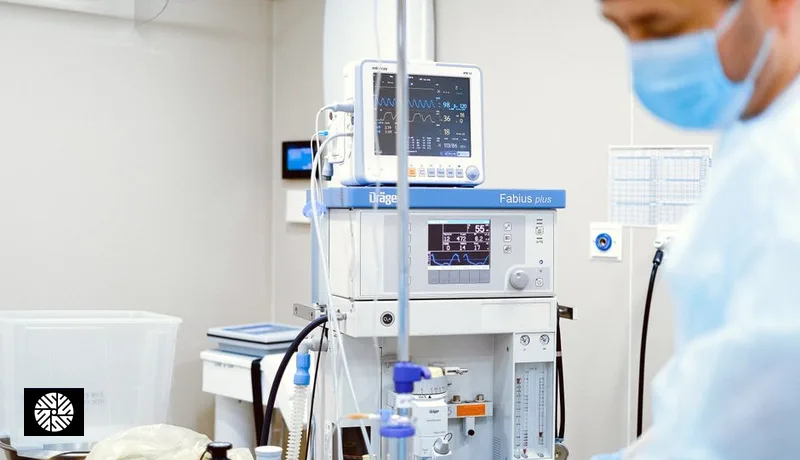
Continuous monitoring of four things, under the ASA's basic standards, which apply to monitored anesthesia care as well as to general anesthesia. The standard was last amended on 15 October 2025.
| What is monitored | What the ASA standard says |
|---|---|
| Oxygenation | A quantitative method such as pulse oximetry shall be employed |
| Ventilation | Exhaled carbon dioxide monitoring during moderate or deep sedation |
| Circulation | ECG continuously displayed throughout |
| Blood pressure and heart rate | Determined and evaluated at least every five minutes |
Endoscopy gets its own ASA statement. "Continuous qualitative monitoring for exhaled carbon dioxide should be conducted during endoscopic procedures in which sedation is provided especially during procedures on the upper gastrointestinal tract."
Propofol changes the staffing question. The ASA states that "Even if moderate sedation is intended, patients receiving propofol should receive care consistent with that required for deep sedation", with a trained practitioner dedicated to monitoring and nothing else.
Recovery has a rule rather than a checklist. The ASA requires that discharge criteria exist and be locally approved, and that "A PHYSICIAN IS RESPONSIBLE FOR THE DISCHARGE OF THE PATIENT FROM THE POSTANESTHESIA CARE UNIT". It does not publish the criteria themselves, so do not expect a universal list.
How risky is sedation for an endoscopy?
Common minor events, rare serious ones. A 2025 systematic review pooled 73 studies covering 967,238 procedural sedations with propofol given by non-anesthetists.
| Event | Rate per 1,000 sedations |
|---|---|
| Hypoxia | 40 |
| Hypotension | 38 |
| Bradycardia | 9 |
| Severe desaturation below 80% | 6 |
| Severe event requiring emergency intervention | 0.12 |
Your own physiology moves those numbers. In the Taiwanese cohort, hypoxemia occurred in 13.5% of patients overall. Among those scored at high risk of obstructive sleep apnea it was 24.8%, against 7.3% in the low-risk group.
That study also excluded patients in ASA physical status classes III to V, and those with significant heart or lung disease. Eligibility for a sedated outpatient procedure is not automatic, which is exactly why the pre-procedure questions are asked.
The ASA's own patient-facing page is blunt about the framing. "In fact, surgery and anesthesia are inherently dangerous." It lists sleep apnea, smoking, obesity, diabetes and heart or lung disease among the factors that raise risk.
How long must you fast beforehand?
Longer than most people plan for, and the intervals depend on what you ate rather than when you last ate. The widely applied intervals come from the ASA's 2017 preoperative fasting guideline.
| What you consumed | Minimum fasting time |
|---|---|
| Clear liquids | 2 hours |
| A light meal | 6 hours |
| Fried food, fatty food or meat | 8 hours or more |
We are citing those intervals as restated in the peer-reviewed literature, because the ASA's own guideline page is not publicly readable. The ASA's 2023 update covers different ground, namely carbohydrate-containing clear liquids, chewing gum and pediatric fasting.
Reality tends to overshoot the rule. One 2024 review notes that more than two decades after the two-hour clear-liquid limit was introduced, "patients still fast for a median of up to 12 h before anaesthesia", largely for scheduling reasons.
Follow the instructions your clinic gives you, not this table. Bowel preparation for a colonoscopy adds its own timetable on top.
Who has to take you home after sedation, and what if you are traveling alone?
Published guidance says a responsible adult. What any particular facility requires is a separate question, and our records do not answer it.
The ASA's ambulatory statement is unambiguous. "Patients who receive other than unsupplemented local anesthesia must be discharged with a responsible adult."
That is a professional society's standard for general practice. It is not a term of ours, and it does not tell you what the clinic performing your procedure will do at the door.
The NHS puts a clock on the driving part for colonoscopy patients. "You cannot drive for 24 hours if you have sedation. Someone will need to pick you up from hospital in a car or taxi." That page's own stated review date has passed, so treat it as guidance rather than current policy.
The ASA's patient site is softer but points the same way. It advises having someone with you for at least the first several hours after sedation, and at least 24 hours after general anesthesia.
| Who is speaking | What it says about an escort | What it is |
|---|---|---|
| ASA, ambulatory statement | Discharge with a responsible adult | Professional standard |
| ASA, patient site | Someone with you for the first several hours | Patient guidance |
| NHS, colonoscopy page | No driving 24 hours; someone collects you | Guidance, review date passed |
| Our provider records | Nothing stated, for any item | You must ask before booking |
No record in our catalogue states an escort rule for any procedure. So the only reliable answer is the one the treating facility gives you, in writing, before you book.
None of that guidance is written for someone who flew in alone. If you are traveling solo, sort these before you book.
- Ask the facility, in writing, whether it will discharge you without a named escort.
- Ask what it accepts instead, because policies differ and some do not bend.
- Book a hotel within a short taxi ride, not across the city.
- Arrange the ride in advance rather than on the day.
- Keep the following day free of anything you would not want to do half asleep.
- Tell the clinic you are alone when you book, not when you arrive.
Can you fly after a sedated procedure?
The published guidance is about gas, not about the sedative, and it is addressed to clinicians rather than to you. The UK Civil Aviation Authority states that "intestinal gas will expand by approximately 30% by volume at a cabin altitude of 8,000 feet".
Its guidance names the procedure directly. "Following other procedures, such as colonoscopy where a large amount of gas has been introduced into the colon, it is advisable to avoid travel by air for 24 hours." The same page advises avoiding travel for ten days after abdominal surgery.
Read what that does and does not say. It addresses insufflated gas, not how long a sedative takes to clear, and it is not clearance for any individual person. Whether you personally are fit to fly is a decision for the clinician who performed your procedure.
Build the itinerary with room in it. Our guide to planning a trip around bowel prep and flying covers the scheduling side.
What do our own records say about sedation, and what do they not say?
Two records mention it, and only two. Everything else in our catalogue is silent on the subject, and we are not going to invent a protocol to fill the gap.
| Item | Price | What the record states |
|---|---|---|
| Upper Endoscopy and Colonoscopy | $499 | "Package includes Anesthesia"; gastroenterologist debrief included |
| Hair Restoration PRP (BaM) | $1,600 | Many patients are awake; optional IV sedation available |
| Optional IV sedation, Hair Restoration PRP | $500 | Priced separately in the same record |
The endoscopy record also names what is excluded. "Polyp and gastric ulcer biopsy fees not included." A same-visit H. pylori biopsy is a separate add-on at $25.
Note what that record does not say. It does not name a drug, a depth, a monitoring setup or who administers it. If those matter to you, and for some medical histories they very much do, ask before booking rather than after.
The Hair Restoration PRP record is the one place in our catalogue where sedation carries its own price. It states that while many patients are awake, "optional IV sedation by the anesthesiologist is available for maximum comfort", and it lists that option at $500.
That $500 sits on top of the $1,600 treatment price. Nowhere else does a record put a number on sedation. It is either bundled into the item price, as with the $499 endoscopy, or not mentioned at all.
Several other items carry no description at all in our catalogue, including Custom Dental Consultation and Scans at $195 and Comprehensive Breast Imaging at $619. For those, the price and the appointment length are firm and nothing about comfort or anesthesia is recorded. The current list is on the packages page.
The bottom line
Ask for a level, not for a feeling. "Will I be sedated" is a question nobody can answer in writing, while "what depth of sedation is planned, who administers it, and what monitoring is used" is a question a clinic can answer before you fly.
Sort the escort question at the same time, because it is the one that strands solo travelers. Then leave slack in the itinerary rather than planning to fly out the same evening.
The decision about what is safe for you belongs to you and the physician performing the procedure. If you want the local context first, read our guide to seeing a GI doctor in Taiwan.
Sources
- American Society of Anesthesiologists - Statement on Continuum of Depth of Sedation, amended 23 October 2024 (accessed 2026-09-09)
- American Society of Anesthesiologists - Standards for Basic Anesthetic Monitoring, amended 15 October 2025 (accessed 2026-09-09)
- American Society of Anesthesiologists - Statement on Respiratory Monitoring During Endoscopic Procedures, amended 23 October 2024 (accessed 2026-09-09)
- American Society of Anesthesiologists - Standards for Postanesthesia Care, amended 23 October 2024 (accessed 2026-09-09)
- American Society of Anesthesiologists - Statement on Safe Use of Propofol, amended 23 October 2024 (accessed 2026-09-09)
- American Society of Anesthesiologists - Statement on Ambulatory Anesthesia and Surgery, amended 18 October 2023 (accessed 2026-09-09)
- American Society of Anesthesiologists - Made for This Moment, Recovery (accessed 2026-09-09)
- American Society of Anesthesiologists - Made for This Moment, Anesthesia Risks (accessed 2026-09-09)
- NHS - Colonoscopy, What happens on the day (accessed 2026-09-09)
- UK Civil Aviation Authority - Surgical conditions, guidance for health professionals (accessed 2026-09-09)
- UK Civil Aviation Authority - Physiology of flight (accessed 2026-09-09)
- Ladas SD and colleagues - Use of sedation for routine diagnostic upper gastrointestinal endoscopy, an ESGE survey, Digestion 2006 (accessed 2026-09-09)
- Ladas SD and colleagues - Sedation practices for gastrointestinal endoscopy in Europe, North America, Asia, Africa and Australia, Digestion 2010 (accessed 2026-09-09)
- Riphaus A and colleagues - Propofol, the preferred sedation for screening colonoscopy, is underused, Digestive and Liver Disease 2012 (accessed 2026-09-09)
- Dumonceau JM and colleagues - ESGE, ESGENA and ESA Guideline on non-anesthesiologist administration of propofol for GI endoscopy, Endoscopy 2010 (accessed 2026-09-09)
- Pelosi P - Retraction of endorsement, ESA withdrawal from the non-anesthesiologist propofol guideline, Endoscopy 2012 (accessed 2026-09-09)
- Pigo F and colleagues - The Incidence of Adverse Events in Adults Undergoing Procedural Sedation with Propofol Administered by Non-Anesthetists, Diagnostics 2025 (accessed 2026-09-09)
- Liou SC and colleagues - Berlin Questionnaire and hypoxemia risk in deep sedation for screening gastrointestinal endoscopy, Chang Gung Memorial Hospital, Therapeutics and Clinical Risk Management 2018 (accessed 2026-09-09)
- Jo YY and Kwak HJ - Sedation Strategies for Procedures Outside the Operating Room, Yonsei Medical Journal 2019, restating the ASA fasting intervals (accessed 2026-09-09)
- Joshi GP and colleagues - 2023 ASA Practice Guidelines for Preoperative Fasting, a modular update, Anesthesiology 2023 (accessed 2026-09-09)
- Marsman M and colleagues - Preoperative fasting and the risk of pulmonary aspiration, a narrative review, BJA Open 2024 (accessed 2026-09-09)
- Imagawa A and colleagues - Post-sedation discharge criteria and time-out in endoscopy, a nationwide survey in Japan, DEN Open 2025 (accessed 2026-09-09)