How much does a colonoscopy cost without insurance in the U.S.?
There is no single U.S. price, because a colonoscopy is not a single bill. The only figures anyone can check are the ones providers actually submit, and Medicare publishes them.
In the 2024 Medicare claims data, the national average submitted charge for a diagnostic colonoscopy (CPT 45378) was $1,419 in a facility setting. That is the gastroenterologist's professional fee on its own — not the room, not the sedation, not the lab. A cash payer has no negotiated rate behind that charge: it is the opening position, and the facility, anesthesia and pathology bills arrive separately.
This article breaks down what those separate bills are, why insurance often doesn't rescue you even when you have it, and what the same exam costs if you fold it into a trip to Taiwan — where a sedated session covering both a colonoscopy and an upper endoscopy costs $499.
Why does one colonoscopy become four separate bills?
Four different entities invoice you independently:
- The physician fee — billed under CPT 45378 for a diagnostic colonoscopy, 45380 if a biopsy is taken, 45385 if a polyp is removed. The code switch matters more than it sounds: with some insurance plans it changes how the whole claim is processed. National average submitted charges in the 2024 Medicare data were $1,419 (45378), $1,793 (45380) and $1,839 (45385).
- The facility fee — the room, equipment and nursing staff, billed by the hospital outpatient department or ambulatory surgery center. This is the largest and most variable line item, and it is not included in any of the physician figures above.
- Anesthesia — when an anesthesiologist or CRNA administers sedation, they bill separately. National average submitted charges were $950 for anesthesia for a screening colonoscopy (CPT 00812) and $1,021 when a procedure was performed during the exam (CPT 00811).
- Pathology — any polyp or tissue sample goes to a lab, which sends its own bill.
Cash payers usually can't see these four numbers in advance. Quoted "self-pay packages" sometimes bundle them, sometimes don't — and the pathology bill by definition can't be finalized until the physician sees what's inside your colon.
When does insurance not cover a colonoscopy?
Under the Affordable Care Act, most plans must cover screening colonoscopies without cost-sharing, following the USPSTF recommendation that average-risk adults begin colorectal cancer screening at age 45. In practice, three groups routinely fall through:
- You're under 45. With symptoms, a family history you can't fully document, or simple peace-of-mind motivation, your colonoscopy generally isn't a USPSTF-recommended screening — so the no-cost-sharing rule doesn't apply, and the procedure runs through your deductible.
- Your procedure is coded diagnostic, not screening. If you go in because of symptoms — bleeding, pain, changed bowel habits — the exam is diagnostic (CPT 45378/45380 territory), and diagnostic procedures are subject to your plan's normal deductible and coinsurance. "Covered" can still mean "you pay all of it."
- You're uninsured or on a short-term plan. Then every line item above is yours at whatever rate the facility sets.
There's also a quirk worth knowing: some patients start with a "free" screening colonoscopy, a polyp is found and removed mid-procedure, and the claim's character changes. Federal guidance has largely closed this loophole for ACA-regulated plans, but grandfathered plans and coding disputes still generate surprise bills. The safest assumption for anyone under 45, symptomatic, or uninsured is that you're a cash payer — which makes the actual cash price the number that matters.
What does a colonoscopy and gastroscopy cost in Taiwan?
Through New Dawn Health, an Upper Endoscopy & Colonoscopy exam — both a gastroscopy and a colonoscopy, performed in one sedated session at a partner hospital — costs $499. You can see it, and how it sits inside the larger screening days, on the packages page.
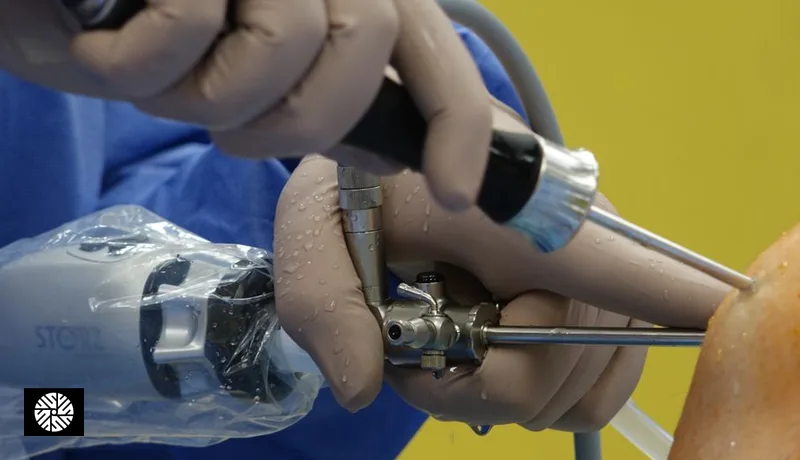
Note what that includes that the U.S. version doesn't: the upper endoscopy. In the U.S. an upper endoscopy (EGD, CPT 43235) is a separate procedure with its own physician fee, facility fee and anesthesia bill; the national average submitted physician charge alone was $962 in the 2024 Medicare data. In Taiwan, doing both scopes under one round of sedation is routine, and here it is a single $499 price.
If the physician sees something worth sampling in your stomach, a same-visit H. pylori biopsy adds $25. Reports are written in English, and a coordinator confirms your preparation instructions and visit specifics when you book.
The combined endoscopy is also built into New Dawn Health's larger screening days: the Premium ($1,699) and Advanced ($3,499) holistic packages both list Digestive: Gastro & Colonoscopy alongside imaging and blood work — a reasonable route if you're flying across the Pacific anyway and want the full picture in one visit.
A stand-alone gastroscopy is quoted per clinic rather than sold at a published market rate — Taiwan hospitals set self-pay endoscopy prices individually. A price you can rely on states the currency, whether it covers one procedure or a combined session, sedation, pathology, polyp removal, the facility and an as-of date; the live catalogue and your written quotation control if they differ from any article, including this one.
FIT and colonoscopy answer the screening question differently
The USPSTF lists both as screening strategies for average-risk adults from age 45, on different schedules: FIT annually, or colonoscopy every 10 years. An abnormal stool test still needs a colonoscopy to evaluate it.
| Method | Advantages | Limits and harms |
|---|
| FIT | Stool-based, no bowel preparation and no instrumentation; the USPSTF review found no reported harms from the test itself. | Has to be repeated annually to match the recommended strategy, and its harms arrive through the follow-up colonoscopy an abnormal result triggers — an estimated 17.5 serious bleeding events and 5.4 perforations per 10,000 of those colonoscopies. |
| Colonoscopy | Directly visualises the colon and can remove polyps during the same procedure. | Requires bowel preparation, which can cause dehydration or electrolyte imbalances. Across 67 observational studies, screening colonoscopy carried 14.6 major bleeding events and 3.1 perforations per 10,000 procedures. |
Taiwan runs FIT as its national programme rather than colonoscopy: the government funds a faecal occult blood test every 2 years for residents aged 45 to under 75, and from age 40 for those with a family history. That is a residents’ subsidy, not a visitor benefit — flying in for a scope is a private purchase either way.
The 10-year interval also belongs to a specific group. The USPSTF recommendation applies to asymptomatic adults at average risk: no prior colorectal cancer, adenomatous polyps or inflammatory bowel disease, and no genetic disorder carrying a high lifetime risk. If a polyp is found and removed, you are outside that group, and your next interval is a clinical decision rather than a fixed ten-year horizon.
Gastroscopy is not routine for everyone
Upper endoscopy may be appropriate for symptoms, alarm features, surveillance of a known condition, or selected risk situations. A country's gastric-cancer programme does not automatically apply to an international visitor with a different risk profile. Colonoscopy and gastroscopy should not be bundled as a universal pair solely for convenience.
How do U.S. cash pay and Taiwan compare, line by line?
| Line item |
U.S. — national average submitted charge, 2024 Medicare data |
Taiwan via New Dawn Health |
| Colonoscopy, physician fee (CPT 45378) |
$1,419 — doctor's fee only |
$499 — one sedated session covering both colonoscopy and gastroscopy, sedation included |
| Colonoscopy with polyp removal, physician fee (CPT 45385) |
$1,839 — doctor's fee only |
| Anesthesia / sedation (CPT 00812) |
$950, billed separately |
| Upper endoscopy, physician fee (CPT 43235) |
$962 — separate procedure, with its own facility and anesthesia bills |
| Facility fee |
Separate bill from the hospital or surgery center; not included in any figure above |
Included |
| H. pylori biopsy + pathology |
Separate lab bill |
+$25 same-visit add-on |
| Price known before you book |
Rarely — multiple entities bill independently |
Yes — fixed price at booking |
The U.S. column is the physician's charge on its own; the Taiwan column is the whole session. That is the same arithmetic driving the trend covered in why many Americans now fly to Taiwan for a full-body MRI. The economics work best when the scope is one stop in a trip you wanted to take anyway.
How do you plan the trip around bowel prep and flying?
A colonoscopy abroad requires more calendar thought than an MRI, for two reasons.
Bowel prep happens the day before. The general standard is the same as in the U.S.: a low-residue diet, then a prescribed prep solution the evening and morning before the exam, which keeps you close to a bathroom. Practically, that means one quiet hotel day before your appointment — plan it, don't fight it. Your coordinator confirms the exact prep instructions and timing for your partner hospital when you book; the specific protocol always belongs to the attending physician.
Schedule the exam early in your trip. New Dawn Health flags a 7-day flight restriction on the digestive exam in every package that contains it, because cabin pressure changes carry a bleeding risk after polyp removal. The exact window is set by your physician on the day, based on what was done. Booking the scope in the first days of the trip means a polypectomy changes nothing about your flight home; booking it the day before departure means it might.
Sedation also means no driving and a calm rest-of-day after the procedure — easy in Taipei, where you weren't going to drive anyway. For the broader logistics of screening as a U.S. visitor — booking, hospitals, what an exam day looks like — see the health screening guide for U.S. travelers, and the gastroscopy & colonoscopy exam page for what the procedure itself involves.
Can you use HSA or FSA money for care in Taiwan?
Often, yes. IRS Publication 502 defines a qualified medical expense by what the care is, not by where it was received, and a diagnostic colonoscopy plainly fits that definition. Travel costs are far more restricted and mostly don't qualify.
Keep your itemized receipt and English report, as you would for any HSA/FSA claim. And the standard caveat applies: this is general information, not tax advice — confirm your specific situation with your plan administrator or a tax professional before relying on it.
What should you do next?
If you're 45 or older, insured, and asymptomatic, start by asking your insurer for an in-network screening colonoscopy — that path should cost you nothing out of pocket, and it's the system working as designed.
If you're under 45, symptomatic, uninsured, or staring at a deductible bigger than the procedure — the group this article is really for — get a written cash quote from a local ambulatory surgery center first, and make sure it includes the facility fee, anesthesia and pathology. Then compare it honestly against $499 for both scopes plus a flight you might have wanted to take anyway. Browse the screening packages to see how the endoscopy fits into a fuller check-up, or start with the U.S. travelers' screening guide to understand how booking works. When you book, a coordinator walks you through prep, timing, and everything your travel dates need to account for.
Sources
- Centers for Medicare & Medicaid Services — Medicare Physician & Other Practitioners, by Geography and Service (2024 data year; national average submitted charges for CPT 45378, 45380, 45385, 43235, 00811 and 00812) (accessed 2026-09-08)
- U.S. Preventive Services Task Force — Colorectal Cancer: Screening (age 45 start; annual FIT and 10-year colonoscopy intervals; bleeding and perforation rates per 10,000 colonoscopies; average-risk population definition) (accessed 2026-09-08)
- Taiwan Health Promotion Administration, Ministry of Health and Welfare — Introduction to Cancer Screening (government-funded faecal occult blood test: ages 45 to under 75, and 40–44 with a family history, every 2 years) (accessed 2026-09-08)
- Internal Revenue Service — Publication 502, Medical and Dental Expenses (accessed 2026-09-08)
 Blog
Blog