
Two people can weigh exactly the same, wear the same size, and carry completely different levels of health risk. The difference is not on the scale — it is in where the fat sits. And the most consequential fat in the body is the kind you cannot see or pinch at all.
What is the difference between visceral and subcutaneous fat?
Subcutaneous fat is the layer under the skin — the fat you can pinch at the waist or thigh. It is the majority of most people's body fat, and metabolically it is relatively benign; some research suggests hip and thigh subcutaneous fat may even be protective.
Visceral fat is different. It accumulates deep in the abdominal cavity, packed around the liver, pancreas, and intestines. It behaves less like passive storage and more like an active endocrine organ: it releases inflammatory signaling molecules and free fatty acids directly into the circulation that feeds the liver. That is why visceral fat — far more than total weight — is linked to insulin resistance, type 2 diabetes, high blood pressure, cardiovascular disease, fatty liver, and several cancers.
The International Diabetes Federation makes the point structurally: central obesity, measured by waist circumference, is the prerequisite for a metabolic syndrome diagnosis. Blood pressure, glucose, triglycerides and HDL are what you check afterwards.
What do most people get wrong about belly fat?
1. "Normal weight" does not mean low visceral fat
People with a normal BMI can still carry high visceral fat — a pattern sometimes called TOFI, "thin outside, fat inside." It is especially common in people who are sedentary but not overweight. Body-shape risk also starts earlier in Asian populations: the IDF sets the raised-waist threshold for Chinese and South Asian men at 90 cm, against 94 cm for men of European descent. For women the cut-off is 80 cm in both groups. These are precisely the people the bathroom scale reassures falsely — the number looks fine while metabolically active fat accumulates around the organs.
2. The reverse is also true — heavy does not automatically mean high-risk
Some people who look heavy carry most of their fat subcutaneously, with comparatively little around the organs. Their metabolic labs can look better than a slimmer colleague's. This is why judging health — your own or anyone else's — by silhouette is genuinely unreliable in both directions. Weight is a poor proxy for the thing that matters, which is fat distribution.
3. Visceral fat responds to exercise faster than the scale does
Here is the encouraging one: visceral fat is the first fat to go. It is more metabolically active than subcutaneous fat, which makes it more dangerous when it accumulates — and quicker to mobilize when you intervene. A meta-analysis of 15 exercise trials covering 852 overweight adults found that aerobic training without any calorie restriction cut visceral fat by more than 30 cm² in women and more than 40 cm² in men, in as little as 12 weeks. Body weight is a lagging indicator of that. If you have ever exercised for a season, seen the scale refuse to budge, and quit in frustration, you may well have been winning the fight that counts and reading the wrong scoreboard.
How is visceral fat measured?
Since you cannot see or pinch it, measurement runs from rough proxy to precise imaging:
| Method | What it tells you | Limitation |
|---|---|---|
| Waist circumference | Free, and the measurement the IDF definition is built on: raised is 90 cm for Chinese and South Asian men, 80 cm for women. | Cannot separate visceral from subcutaneous fat. |
| Body-composition scales (BIA) | Convenient trend tracking at home. | Visceral-fat "scores" are estimates; hydration swings the numbers. |
| DEXA scan | Accurate regional body-fat measurement including a visceral estimate, plus bone density from the same scan. | Small radiation dose; less soft-tissue detail than MRI. |
| CT / MRI | The reference standard — directly visualizes and quantifies visceral fat, and MRI does it with no radiation. Also assesses liver fat, the closely related condition most people don't know they have. | Cost and access — which is where screening packages come in. |
In practice, abdominal imaging in a comprehensive screening does double duty: the same scan that evaluates your organs shows your visceral fat and liver fat plainly. Many visitors to Taiwan see their own fat distribution for the first time during a full-body MRI screening — and physicians tell us it changes behavior more reliably than any lecture, because it is your abdomen on the screen, not a statistic.
Which New Dawn package shows visceral fat?
Body composition and abdominal imaging sit in our Full-Body Scans line. The question that separates the three is whether the DEXA body-composition scan is bundled or added on:
| Package | Our price | DEXA — body composition & bone density | Abdominal MRI + abdomen ultrasound |
|---|---|---|---|
| Light | $1,399 | Available as an add-on | Included |
| Complete | $1,699 | Included | Included |
| Plus | $3,099 | Included | Included |
Complete, at $1,699, is our cheapest package that bundles both halves of the picture — the DEXA body-composition scan plus a full-body MRI whose abdomen and pelvis series show visceral and liver fat, alongside an abdomen ultrasound. If you already have imaging and only want the body-composition number, the DEXA Scan is $109 as an a-la-carte item. Full inclusion lists are on our packages page.
What actually reduces visceral fat?
- Aerobic exercise is the best-evidenced tool. The CDC recommends 150 minutes of moderate-intensity activity a week, plus muscle-strengthening on 2 or more days. In the meta-analysis above, moderate-to-high-intensity aerobic training was the regime that moved visceral fat most.
- Modest caloric deficit beats extreme dieting. Visceral fat responds well to sustained modest deficits; crash diets lose muscle along with fat and are rarely sustained.
- Limit alcohol and sugary drinks. Both preferentially promote central and liver fat accumulation. The "beer belly" stereotype has real physiology behind it.
- Sleep and stress are not optional extras. Chronic short sleep and elevated cortisol are both associated with visceral fat accumulation independent of diet.
- You cannot spot-reduce it — but you don't need to. Crunches strengthen muscle under the fat; they do not burn the fat above it. Whole-body interventions preferentially drain the visceral compartment anyway.
So what should you do about it?
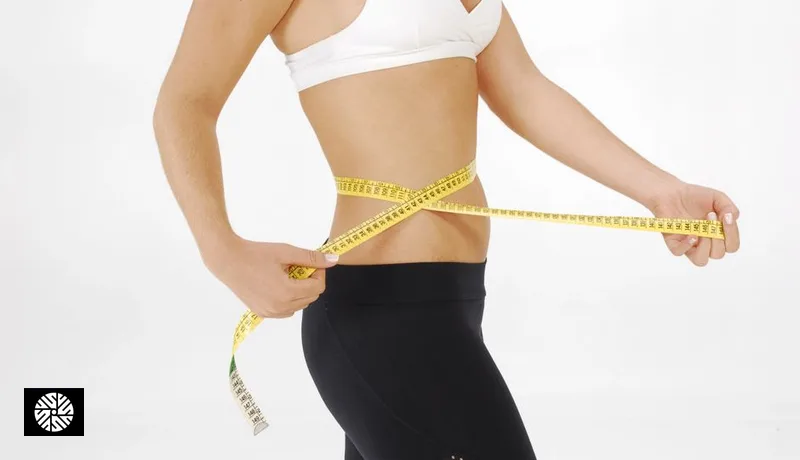
The scale answers "how much of me is there?" The question that predicts your metabolic future is "where is it?" — and for that, the scale is nearly blind. Start with a tape measure: 90 cm for men and 80 cm for women is the line the IDF draws. If your waist is over it, or your activity level or family history worries you, it is worth actually looking. A metabolic panel plus abdominal imaging settles in one morning what years of scale-watching cannot.
Our health screening packages include the metabolic labs and imaging that make visceral fat visible, reviewed with an English-speaking physician. Talk to our concierge team if you want help choosing the right depth of screening for your situation.
This article is for general education and is not medical advice. Interpretation of body composition and metabolic risk belongs with a physician who knows your history.
Sources
- International Diabetes Federation — The IDF Consensus Worldwide Definition of the Metabolic Syndrome (accessed 2026-09-08)
- PLOS ONE — Vissers D et al., "The Effect of Exercise on Visceral Adipose Tissue in Overweight Adults: A Systematic Review and Meta-Analysis" (2013) (accessed 2026-09-08)
- US Centers for Disease Control and Prevention — Adult Activity: An Overview (accessed 2026-09-08)