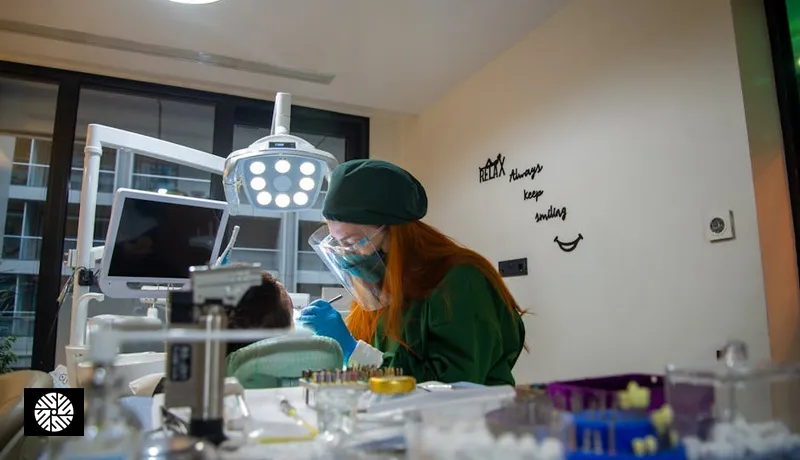

A routine dental cleaning removes plaque, tartar and surface stain from the teeth. A deep cleaning, called scaling and root planing, treats gum disease by cleaning the roots below the gumline, and it may need numbing and more than one visit. Air polishing, which EG Dental calls “sandblasting”, lifts surface stain and soft plaque but does not replace scaling.
- Method: ultrasonic and hand instruments remove tartar; an air polisher removes surface stain and soft plaque.
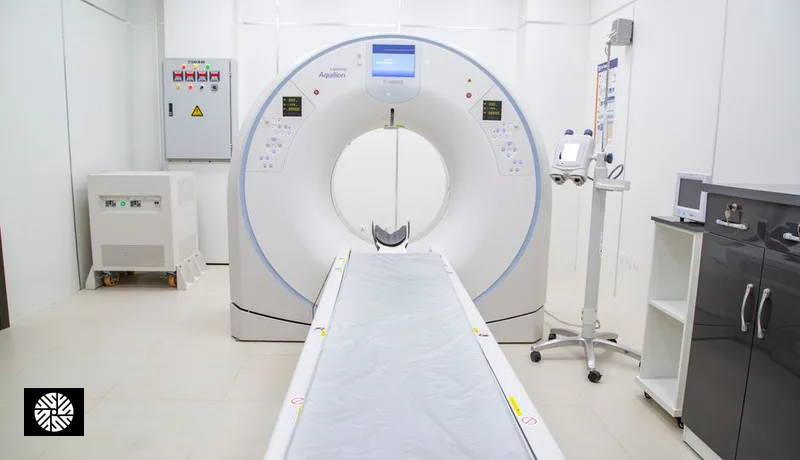
- Radiation: none from the cleaning itself; X-rays or a dental CT only when the appointment includes them.
- Time: our appointments take 30 minutes to 1 hour.
- Best use: a routine cleaning for healthy gums or early gum disease; scaling and root planing for periodontitis.
What is the difference between a routine cleaning, a deep cleaning and air polishing?
| Routine cleaning (scale and polish) | Deep cleaning (scaling and root planing) | Air polishing (“sandblasting”) | |
|---|---|---|---|
| What it does | Removes plaque, tartar, debris and stain from the tooth surfaces above the gumline | Removes plaque and tartar above and below the gumline, then smooths the roots so the gums can reattach | Sprays a slurry of pressurized air, abrasive powder and water that lifts surface stain and soft plaque |
| Who it is for | Healthy gums, or gum disease caught early | Periodontitis with gum pockets too deep for a routine cleaning | Surface stain on the enamel |
| What to expect | One appointment | May need a local anesthetic and more than one visit, then a check-up to re-measure the pockets | One session, alone or as part of a cleaning |
| What it does not do | Root planing below the gumline | Remove the need for regular maintenance cleanings afterwards | Replace scaling for hard tartar, or change the tooth’s inner color |
One of our appointment names can mislead. Signature Deep Cleaning & Stain Removal is a thorough routine cleaning plus air polishing. Its package description calls it a full American-style prophylaxis, the formal term for a routine cleaning. It is not scaling and root planing, and none of our fixed-price appointments is.
Which Taipei appointment fits you, and what does it cost?
All four are booked through us, in US dollars, per person. Times are the appointment lengths on each booking page.
| Appointment (ours) | Our price | Clinic | What is included | Time | Who it suits |
|---|---|---|---|---|---|
| Standard Dental Check & Teeth Cleaning | $130 | EG Dental, Da'an District | Panoramic dental X-ray, dental CT scan, professional scaling and cleaning | 45 minutes | A first visit, or anyone without recent dental X-rays |
| Comprehensive Teeth Cleaning | $175 | Arena Stone Dental Clinic, Songshan District | Oral examination, scaling, digital oral scan, polishing, fluoride treatment | 1 hour | A full routine cleaning with polishing and fluoride, without X-rays |
| EG Dental - Sandblasting | $280 | EG Dental, Da'an District | Air polishing only | 30 minutes | Surface stain on teeth that were scaled recently |
| Signature Deep Cleaning & Stain Removal | $299 | EG Dental, Da'an District | Plaque-disclosing dye, ultrasonic scaling with flossing, hand scaling between the teeth, air polishing, enamel polishing, fluoride varnish; X-rays are an optional add-on | 1 hour | Coffee, tea or wine stain plus a thorough cleaning in one visit |
Signature Deep Cleaning & Stain Removal already includes air polishing, so you do not need EG Dental - Sandblasting as well. Both clinics are on our providers page.
How do I know if I need a deep cleaning?
The dentist measures the pocket between each tooth and the gum with a thin probe marked in millimeters. The US National Institute of Dental and Craniofacial Research (NIDCR) says healthy pockets are usually 1 to 3 millimeters deep, and deeper pockets can be a sign of gum disease. An X-ray shows whether bone has been lost.
Gingivitis, the mildest form, means red, swollen gums that bleed easily. Periodontitis means the ligaments and bone that hold the teeth are inflamed and infected. The American Academy of Periodontology (AAP) grades periodontitis in four stages, set first by attachment loss, the support a tooth has already lost.
| AAP stage | Attachment loss at the worst site | Pocket depth and other signs |
|---|---|---|
| Stage I | 1–2 mm | Deepest pocket 4 mm or less |
| Stage II | 3–4 mm | Deepest pocket 5 mm or less |
| Stage III | 5 mm or more | Pockets of 6 mm or more, or other complex bone loss |
| Stage IV | 5 mm or more | As stage III, plus a need for complex rehabilitation, for example fewer than 20 teeth left |
The American Dental Association (ADA) says a regular professional cleaning is generally enough when gum disease is caught early. When the pockets are too deep, scaling and root planing may be needed.
Periodontitis is common. A US national survey found it in 42% of adults aged 30 or older who had teeth, and severe periodontitis in 7.8%.
Scaling and root planing helps, but the average gain is modest. An ADA expert panel recommends it as the first nonsurgical treatment for chronic periodontitis. Its review found, with moderate certainty, an average gain of about 0.5 mm in clinical attachment level, a measure of how much gum support a tooth has.
Why can a deep cleaning take more than one visit?
The ADA says scaling and root planing may take more than one visit and may need a local anesthetic. The dentist then books another visit to check healing and measure the pockets again. If they have got deeper, more treatment may be needed.
The AAP says most patients then need ongoing maintenance therapy. MedlinePlus says people with periodontitis should have a professional cleaning every 3 months.
If the dentist finds deep pockets during your cleaning in Taipei:
- Ask for your pocket measurements and any X-rays in writing.
- Ask how many visits the treatment needs and when the check-up would be.
- If the check-up falls after your flight home, decide with the dentist whether to start in Taiwan or at home.
What does air polishing remove, and what does it not replace?
An air polisher sprays a slurry of pressurized air, abrasive powder and water at the tooth. Some clinics call it “Airflow”, after a device brand. A 2013 literature review in the Journal of Dental Hygiene found it more effective than traditional rubber-cup polishing at removing stain and plaque above the gumline.
It does not replace scaling. A 2021 review says hard tartar is removed mainly with ultrasonic instruments, while air polishers are used for soft plaque. A 2024 trial of one air-polishing protocol still followed the air polishing with ultrasonic tartar removal.
It does not whiten either. The ADA says surface stains can be reduced mechanically, but reducing stains inside the enamel or dentin takes a chemical reaction, which is what whitening does.
Who should tell the clinic something before a cleaning?
- A prosthetic heart valve or a past heart-valve infection (infective endocarditis): the ADA says antibiotics before dental procedures that manipulate the gum tissue are reasonable for these patients. Arrange this with your own doctor before you travel. The ADA does not generally recommend them for joint replacements.
- A sodium-restricted diet, high blood pressure or a respiratory illness: the 2013 air-polishing review lists these as reasons not to use sodium bicarbonate powder. Ask which powder the clinic uses; other powders, such as glycine, exist.
- Veneers or tooth-colored fillings: the same review reports a small but noticeable loss of composite and porcelain veneer material during air polishing.
- Recent dental X-rays from home: bring them. The ADA’s 2026 imaging recommendations say earlier images should be reviewed.
How often should you get your teeth cleaned?
There is no single interval for everyone; it depends on your gums.
| Source | What it says |
|---|---|
| NICE (England’s guideline body) | Adults should have check-ups every 3 to 24 months, with the interval set by the dentist from the patient’s risk of disease |
| Cochrane review, 2018 | In 1,711 adults without severe periodontitis who saw a dentist regularly, scale and polish every 6 or 12 months made little or no difference to gum inflammation, pocket depth or quality of life over 2 to 3 years, compared with no scheduled cleaning (high-certainty evidence). It reduced tartar slightly, of unclear clinical importance. |
| MedlinePlus (US National Library of Medicine) | People with periodontitis should have a professional cleaning every 3 months |
If your home dentist has you on a set schedule, a cleaning in Taipei can count as one of those visits.
Do I need X-rays or a dental CT with a cleaning?
Not at every visit. The 2026 recommendations from the ADA and the American Academy of Oral and Maxillofacial Radiology base imaging on your history, exam findings and risk of disease. They say cone-beam CT, usually called a dental CT, should be used judiciously. The ADA adds that there is currently no evidence to support cone-beam CT for managing gum disease, except when planning complex cases.
| Scan | Approximate effective dose | Same as natural background radiation for about |
|---|---|---|
| Dental X-ray | 0.005 mSv | 1 day |
| Panoramic X-ray | 0.025 mSv | 3 days |
| Cone-beam CT | 0.18 mSv | 22 days |
Doses are from RadiologyInfo, run by the Radiological Society of North America and the American College of Radiology. The Standard Dental Check & Teeth Cleaning includes a panoramic X-ray and a dental CT, which suits a first visit or anyone without recent images. The Comprehensive Teeth Cleaning lists no X-rays. On the Signature appointment, X-rays are an add-on you choose when booking.
Will my teeth be sensitive afterwards?
After scaling and root planing, the ADA says pain may last a day or two and tooth sensitivity up to a week. The gums may be swollen and tender, and may bleed. MedlinePlus says bleeding and tenderness should go away within 3 to 4 weeks of periodontitis treatment. See a dentist if symptoms last longer.
The Comprehensive and Signature appointments both finish with fluoride. The ADA recommends professionally applied fluoride varnish for people at risk of cavities.
Should I get a cleaning before teeth whitening?
Our Teeth Whitening at EG Dental ($500) already starts with an examination, scaling and sandblasting before the whitening agent goes on, so do not book a separate cleaning for the same visit. If stain is your only concern, ask the dentist whether it sits on the surface or inside the tooth; surface stain may respond to a cleaning with air polishing alone.
The ADA says only natural teeth whiten; crowns and other tooth-colored restorations do not change color. Temporary tooth sensitivity and gum inflammation are the most common side effects. Our guide to professional teeth whitening in Taiwan compares in-office and take-home systems, and our veneers and crowns guide covers restorations.
What should I take home after a cleaning in Taiwan?
- An itemized receipt. IRS Publication 502 counts teeth cleaning, fluoride treatment and dental X-rays as medical expenses, and excludes teeth whitening. Our dental cost guide covers HSA, FSA and tax rules.
- Copies of any X-ray or CT images, so your home dentist can compare them with future ones.
- Your pocket measurements and the dentist’s findings, so your home dentist can plan the next visit.
If a tooth problem starts during your trip, our guide to seeing a dentist in Taiwan covers walk-in care and emergencies.
Sources
- American Dental Association (MouthHealthy) — Scaling and Root Planing for Gum Disease (accessed 2026-10-18)
- Smiley CJ et al., American Dental Association — Evidence-based clinical practice guideline on the nonsurgical treatment of chronic periodontitis by means of scaling and root planing with or without adjuncts, JADA 2015 (accessed 2026-10-18)
- Smiley CJ et al., American Dental Association — Systematic review and meta-analysis on the nonsurgical treatment of chronic periodontitis by means of scaling and root planing with or without adjuncts, JADA 2015 (accessed 2026-10-18)
- American Academy of Periodontology — Staging and Grading Periodontitis (accessed 2026-10-18)
- American Academy of Periodontology — Gum Disease Information (accessed 2026-10-18)
- American Academy of Periodontology — Non-Surgical Treatments (accessed 2026-10-18)
- National Institute of Dental and Craniofacial Research (NIH) — Periodontal (Gum) Disease (accessed 2026-10-18)
- MedlinePlus (US National Library of Medicine) — Periodontitis (accessed 2026-10-18)
- Eke PI et al. — Periodontitis in US Adults: National Health and Nutrition Examination Survey 2009–2014, JADA 2018 (accessed 2026-10-18)
- Lamont T et al., Cochrane — Routine scale and polish for periodontal health in adults, Cochrane Database of Systematic Reviews 2018 (accessed 2026-10-18)
- NICE — CG19 Dental checks: intervals between oral health reviews, recommendations (accessed 2026-10-18)
- Benavides E et al., American Dental Association and American Academy of Oral and Maxillofacial Radiology — Patient selection for dental radiography and cone-beam computed tomography: clinical recommendations, JADA 2026 (accessed 2026-10-18)
- ADA News — New ADA recommendations confirm dental imaging most effectively used in moderation, 2026-01-05 (accessed 2026-10-18)
- RadiologyInfo.org (RSNA and ACR) — Radiation Dose from X-Ray and CT Exams (accessed 2026-10-18)
- Graumann SJ, Sensat ML, Stoltenberg JL — Air Polishing: A Review of Current Literature, Journal of Dental Hygiene 2013 (accessed 2026-10-18)
- Bastendorf KD et al. — Mechanical Removal of the Biofilm: Is the Curette Still the Gold Standard?, Monographs in Oral Science 2021 (accessed 2026-10-18)
- Mensi M et al. — Air-polishing followed by ultrasonic calculus removal for the treatment of gingivitis: a 12-month randomized controlled trial, International Journal of Dental Hygiene 2024 (accessed 2026-10-18)
- American Dental Association — Whitening (accessed 2026-10-18)
- Weyant RJ et al., American Dental Association — Topical fluoride for caries prevention, JADA 2013 (accessed 2026-10-18)
- American Dental Association — Antibiotic Prophylaxis Prior to Dental Procedures (accessed 2026-10-18)
- Internal Revenue Service — Publication 502, Medical and Dental Expenses (accessed 2026-10-18)
Frequently asked
Is the Signature Deep Cleaning the same as scaling and root planing?
No. Signature Deep Cleaning & Stain Removal at EG Dental is a thorough routine cleaning with air polishing and fluoride varnish. Scaling and root planing treats periodontitis below the gumline, may need a local anesthetic and more than one visit, and is planned by the dentist after measuring your gum pockets.
How often should I get my teeth cleaned?
It depends on your gums. NICE advises check-ups every 3 to 24 months for adults, set by the dentist from your risk. A 2018 Cochrane review of adults without severe periodontitis found that scheduled 6-monthly or 12-monthly cleanings made little or no difference to gum inflammation or pocket depth, compared with no scheduled cleaning. MedlinePlus advises a cleaning every 3 months for people with periodontitis.
Does air polishing replace a normal cleaning?
No. Air polishing lifts surface stain and soft plaque, and a 2013 review found it beats rubber-cup polishing at that job. Hard tartar is still removed with ultrasonic or hand instruments, so air polishing works alongside scaling, not instead of it.
Do I need X-rays every time my teeth are cleaned?
No. The 2026 ADA recommendations say imaging should be based on your history, exam findings and risk, and that earlier images should be reviewed. Bring recent dental X-rays from home. A panoramic X-ray is about 0.025 mSv and a cone-beam CT about 0.18 mSv, according to RadiologyInfo.
Does a deep cleaning hurt?
The ADA says scaling and root planing may need a local anesthetic. Afterwards, pain may last a day or two and tooth sensitivity up to a week, and the gums may be swollen, tender and bleed.
Can I use my HSA or FSA for a teeth cleaning in Taiwan?
IRS Publication 502 counts teeth cleaning, fluoride treatment and dental X-rays as medical expenses, and excludes teeth whitening. Keep the itemized receipt and check with your plan administrator before you travel.