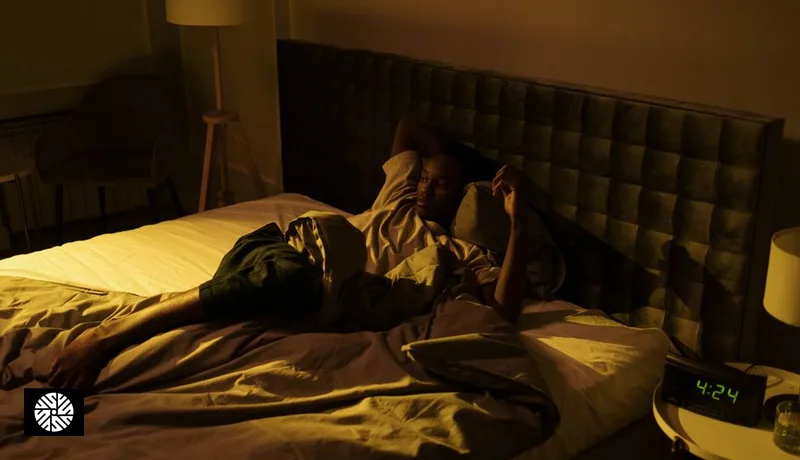
What is obstructive sleep apnea?
In obstructive sleep apnea (OSA), the upper airway becomes blocked many times while you sleep. The throat muscles relax, the airway narrows or closes, and airflow drops or stops. The brain then briefly rouses you to reopen it, usually without you remembering.
It is common. A 2019 analysis estimated that 936 million adults aged 30–69 worldwide have OSA, and 425 million have moderate to severe disease. That estimate was funded by a maker of breathing devices, and it counts test results, not symptoms.
Signs worth taking seriously
The main events happen while you are asleep, so a bed partner often notices first. The US National Heart, Lung, and Blood Institute (NHLBI) lists these signs:
- At night: breathing that stops and starts, frequent loud snoring, and gasping for air.
- During the day: sleepiness and tiredness that make it harder to focus and react.
- On waking: a dry mouth or a headache.
- Less obvious: waking often to urinate, insomnia, and lower sex drive.
NHLBI notes that loud snoring is more common in men, while fatigue, headache and insomnia are more common in women.
What raises the risk
- Body: older age, male sex, and obesity, which adds fat around the neck and tongue.
- Anatomy: large tonsils, a large tongue or neck, and inherited jaw and airway shape.
- Habits: alcohol, which relaxes the throat muscles, and smoking.
- Other conditions: a family history, hormone disorders, and heart or kidney failure.
Why it matters: the heart and the road
Each blocked breath makes the body work harder to breathe. Over years, NHLBI says this strain can damage organs and blood vessels. Untreated sleep apnea may raise the risk of:
- High blood pressure that is hard to control
- Atrial fibrillation, an irregular heart rhythm
- Heart attack, heart failure and stroke
- Type 2 diabetes
Whether treatment prevents heart attacks or deaths is less settled. The US Preventive Services Task Force found the evidence on those outcomes inadequate.
How sleep apnea is diagnosed
A diagnosis needs a sleep study that measures breathing during sleep. Severity is the apnea-hypopnea index (AHI): the number of times per hour breathing stops or becomes shallow. The USPSTF uses these bands:
A ladder like this is the general pattern, not a rule your case must obey. Reporting conventions differ between hospitals, and two experienced clinicians can read the same finding and reasonably advise differently. Where your report or your doctor differs from this table, go with them — they are looking at your actual result.
In-lab study or home test?
| Test | What it records | Who it suits |
|---|---|---|
| In-lab polysomnography | Breathing, oxygen and sleep stages overnight, in a sleep center | Anyone; required with significant heart or lung disease, prior stroke, chronic opioid use or severe insomnia |
| Home sleep apnea test | Airflow, breathing effort and blood oxygen at home, usually without sleep stages | Adults without those conditions whose symptoms suggest moderate to severe OSA |
The American Academy of Sleep Medicine (AASM, 2017) adds two rules. Questionnaires and prediction tools must not be used to diagnose OSA on their own. And if a home test is negative, inconclusive or technically inadequate, the next step is an in-lab study.
A home test can undercount events, because it usually cannot tell sleep from lying awake. That is why a normal home result does not close the question when symptoms are strong.
What a multi-day wearable patch can and cannot show
Some sleep studies use a small patch worn on the chest for several days and nights. A typical patch records the heart's electrical signal and body movement. Breathing is then estimated from small changes in that signal, not measured at the nose and chest.
The AASM defines a technically adequate home test by its sensors. It needs nasal airflow pressure, chest and abdominal effort bands, and blood oxygen — or an alternative set built on a finger sensor (peripheral arterial tonometry), oxygen and movement. Your coordinator confirms which sensors your booked device carries.
- Heart rhythm across several days and nights, including irregular rhythms
- An estimate of breathing patterns and sleep position overnight
- Night-to-night variation that a single-night test cannot show
- A reason to seek a formal sleep study, if the pattern is abnormal
- A formal OSA diagnosis or AHI. Without the AASM sensor set, that needs a qualifying home sleep apnea test or in-lab polysomnography.
- Ruling sleep apnea out. A reassuring result with ongoing symptoms calls for in-lab polysomnography.
- Measured oxygen levels and sleep stages. In-lab polysomnography records both directly.
How it is treated
Treatment is chosen by a clinician from the sleep study result, your symptoms and your other health conditions. NHLBI describes these options:
| Option | How it works |
|---|---|
| Breathing device (CPAP) | A mask delivers air pressure that holds the airway open; the most common treatment |
| Oral appliance | A dentist-fitted mouthpiece holds the jaw or tongue forward; for people who cannot use CPAP |
| Lifestyle changes | A healthy weight, less alcohol, no smoking, good sleep habits and sometimes side-sleeping |
| Surgery or implant | Removing tonsils or throat tissue, moving the jaw forward, or an implanted nerve stimulator |
| Medicine (US) | An FDA-approved injected weight-loss medicine for moderate to severe OSA with obesity |
Approval in the US does not mean the same medicine is available for this use in Taiwan. A sleep specialist can advise on what applies to you.
What to do now
-
1Notice the patternAsk a bed partner about loud snoring, pauses or gasping. Note daytime sleepiness, especially while driving.
-
2Get a real sleep studyA questionnaire can flag risk but cannot diagnose. A home sleep apnea test or in-lab polysomnography can.
-
3Read the result with a clinicianThe AHI and your symptoms decide treatment. A negative home test with strong symptoms leads to an in-lab study.
-
4Tell your doctorsMention sleep apnea before any surgery or sedation, and before starting sleep or pain medicines.
New Dawn Health offers a multi-day home heart-rhythm patch. It is not a diagnostic sleep study. Ask your coordinator whether a qualifying sleep test can be arranged.