Blog
Blog
Snoring Loudly and Tired Anyway? Sleep Apnea Is the Most Underdiagnosed Condition in Plain Sight

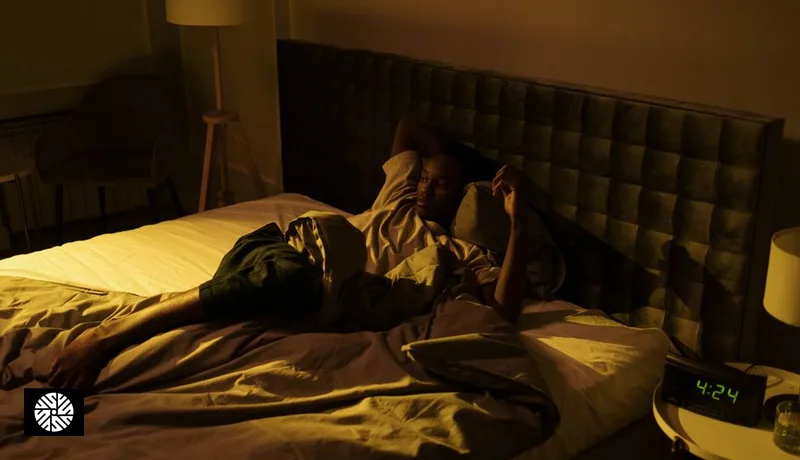
Here is a strange fact about modern medicine: a condition that affects hundreds of millions of people, that raises the risk of high blood pressure, heart disease, stroke and car accidents, and that has effective treatment — goes undiagnosed in most of the people who have it. A 2019 analysis in The Lancet Respiratory Medicine estimated that 936 million adults aged 30 to 69 have mild to severe obstructive sleep apnoea worldwide, and 425 million have moderate to severe disease. In the Wisconsin cohort that first quantified the gap, 82% of men and 93% of women with moderate to severe sleep apnea syndrome had never been clinically diagnosed.
The reason is simple: the symptoms happen while you're unconscious. You cannot notice what you sleep through. And the daytime signs — fatigue, poor focus, irritability — are so easy to blame on work, age or stress that people carry them for years without connecting the dots.
What actually happens to your airway during sleep apnea?
In obstructive sleep apnea (OSA), the muscles that hold the throat open relax too far during sleep, and the airway repeatedly narrows or collapses. Each episode ends the same way: oxygen dips, the brain registers the emergency, and it briefly jolts you toward wakefulness to restore muscle tone and reopen the airway. You almost never remember these arousals. Your sleep is shattered into fragments all night; your morning memory of it is "I slept through."
Severity is counted as events per hour of sleep — the apnea-hypopnea index (AHI). The US Preventive Services Task Force uses these bands:
| Severity | Apnea-hypopnea index |
|---|---|
| Mild | 5 to 15 events per hour |
| Moderate | 16 to 30 events per hour |
| Severe | More than 30 events per hour |
The damage runs on two tracks. The oxygen dips and stress-hormone surges strain the cardiovascular system all night — which is why the American Heart Association puts OSA prevalence at 40% to 80% in patients with hypertension, heart failure, coronary artery disease, pulmonary hypertension, atrial fibrillation and stroke. And the fragmented sleep quietly degrades everything sleep is for: memory consolidation, metabolic regulation, and the brain's overnight waste clearance we described in our brain aging article.
Which signs of sleep apnea are worth taking seriously?
- Loud, chronic snoring — especially with pauses, gasps or choking sounds a bed partner notices. A partner's report is one of the most valuable diagnostic clues in medicine; take it seriously rather than defensively.
- Unrefreshing sleep — a full night in bed, exhausted anyway.
- Daytime sleepiness — dozing in meetings, in front of the TV, or dangerously, at the wheel.
- Morning headaches and dry mouth.
- Waking at night to urinate repeatedly — an underappreciated apnea sign, often misattributed to age or prostate.
- Hard-to-control blood pressure — the American Heart Association recommends screening for OSA in patients with resistant or poorly controlled hypertension, pulmonary hypertension, and recurrent atrial fibrillation after cardioversion or ablation.
Two misconceptions to retire. First, this is not a rare condition of the very obese: the American Heart Association reports that approximately 34% of middle-aged men and 17% of middle-aged women meet the diagnostic criteria for OSA, and notes that prevalence varies by race and ethnicity, sex and obesity status — jaw structure, neck anatomy and age matter too. Second, it is not just "annoying snoring": snoring is the sound, apnea is the airway actually closing.
How is sleep apnea diagnosed now?
The old picture of sleep testing — a night in a lab wired with electrodes — is no longer the only path. The American Academy of Sleep Medicine's 2017 diagnostic guideline recommends polysomnography or home sleep apnea testing with a technically adequate device for uncomplicated adults whose signs and symptoms point to an increased risk of moderate to severe OSA. If a single home test comes back negative, inconclusive or technically inadequate, the guideline recommends polysomnography instead.
The same guideline draws a hard line on questionnaires: clinical tools, questionnaires and prediction algorithms should not be used to diagnose OSA in adults in the absence of polysomnography or home sleep apnea testing. They triage, they do not diagnose — and the numbers show why. The Task Force's evidence review found the STOP-BANG questionnaire had good sensitivity, 87% to 94%, but specificity of 0% to 38%. It is good at not missing people and bad at ruling anyone out.
Treatment is guided by the resulting AHI, and the average effect sizes are real but modest. Pooling the trial evidence, the Task Force found positive airway pressure reduced the apnea-hypopnea index by 15.57 events per hour, cut Epworth Sleepiness Scale scores by 2.30 points, and lowered blood pressure by 2.63 mm Hg.
- CPAP remains the mainstay, and the AHA advises offering it to everyone with severe OSA.
- Oral appliances fitted by a dentist are a reasonable option for mild to moderate cases, and for people who cannot tolerate CPAP.
- Weight loss, side-sleeping and limiting evening alcohol each help; alcohol relaxes exactly the throat muscles that need tone.
- For selected anatomy, surgical and nerve-stimulation options exist — a specialist call.
- Whatever the treatment, the AHA advises repeat sleep testing to confirm it is working.
How much does a sleep study cost at New Dawn Health?
We sell sleep testing as two stand-alone bookings built on the Rooti ECG patch — a waterproof chest sensor you wear continuously, including while sleeping, working and showering. It records single-lead ECG plus movement and sleep position, and the RootiCare platform derives your breathing pattern from the shape of the ECG signal, so it can flag apnea events alongside arrhythmias such as atrial fibrillation.
| Study | Wear time | Price |
|---|---|---|
| Rooti 3 Day Sleep Study & Analysis | 3 days and nights | $210 |
| Rooti 7 Day Sleep Study & Analysis | 7 days and nights | $380 |
Be clear about what this is: a multi-night screening study that answers "is something happening at night that deserves a sleep physician?" — not a polysomnogram. Under the AASM guideline, a formal OSA diagnosis is made by polysomnography or a technically adequate home sleep apnea test, and our concierge team can route a positive or ambiguous result to an ENT or sleep medicine department. Its advantage over a single lab night is the window: several nights in your own bed, your own evening habits, your own sleeping positions.
Where does sleep testing fit in a screening visit?
Sleep apnea sits at the junction of several things a comprehensive health screen already measures: blood pressure, metabolic markers and cardiovascular status. If your screening turns up hypertension or metabolic syndrome and you recognize the symptom list above, that combination is exactly when to raise sleep with the reviewing physician. Our full-body screening packages cover the cardiovascular and metabolic side, our guide to heart and lung screening in Taiwan covers that work-up in more detail, and our concierge team can point a specific concern to the right department.
One caveat worth stating plainly: the US Preventive Services Task Force gives population-wide screening of asymptomatic adults for OSA an I statement — the evidence is insufficient to weigh benefits against harms. That is an argument against testing everyone, not against testing you if you snore, wake unrefreshed and have blood pressure that will not come down.
The one-sentence takeaway: if you snore loudly and you're tired anyway, that is not a personality trait — it is a testable, treatable medical condition, and the test now fits in your shirt pocket.
This article is for general education and is not medical advice. Diagnosis of sleep disorders belongs with a physician; if you have severe daytime sleepiness, please avoid driving until evaluated.
Sources
- Benjafield AV et al., The Lancet Respiratory Medicine (2019) — Estimation of the global prevalence and burden of obstructive sleep apnoea: a literature-based analysis (accessed 2026-09-08)
- Young T, Evans L, Finn L, Palta M, Sleep (1997) — Estimation of the clinically diagnosed proportion of sleep apnea syndrome in middle-aged men and women (accessed 2026-09-08)
- US Preventive Services Task Force — Obstructive Sleep Apnea in Adults: Screening (accessed 2026-09-08)
- Kapur VK et al., Journal of Clinical Sleep Medicine (2017) — Clinical Practice Guideline for Diagnostic Testing for Adult Obstructive Sleep Apnea: An American Academy of Sleep Medicine Clinical Practice Guideline (accessed 2026-09-08)
- American Heart Association, Circulation (2021) — Obstructive Sleep Apnea and Cardiovascular Disease: A Scientific Statement From the American Heart Association (accessed 2026-09-08)