
Forgetting where you left your keys at 45 feels different from forgetting where you left your keys at 25. The lapse is probably the same — but the worry attached to it is new. Is this normal aging, or the start of something?
The honest answer is reassuring in one direction and demanding in the other: most of the changes people notice in midlife are a normal, well-documented part of brain aging — and at the same time, the habits that protect the brain have to start decades before symptoms would ever appear. This article walks through what actually changes, what deserves a doctor's attention, and what the evidence says you can do about it.
What does normal brain aging look like?
The National Institute on Aging describes the physical pattern plainly: certain parts of the brain shrink, including those important to learning and other complex mental activities; communication between neurons in some regions becomes less effective; blood flow in the brain may decrease; and inflammation may increase. In everyday thinking, that shows up as:
- Slower word-finding. Being slower to find words and recall names is the first item on the NIA's list of common age-related changes.
- Weaker multitasking. Problems with multitasking and mild decreases in the ability to pay attention are the other two.
- More time needed, not lost ability. Older adults may not do as well as younger ones on complex memory or learning tests — but given enough time to learn a new task, they usually perform just as well. Needing that extra time is normal.
- Vocabulary that keeps growing. Many studies have shown that older adults have larger vocabularies and a greater grasp of the depth of word meanings than younger adults. The aging brain trades speed for library size, and can still learn new skills and form new memories.
The key feature of all of these: they are annoying but not disabling. You misplace the keys; you do not forget what keys are for.
Which changes are not normal aging?
The Alzheimer's Association draws the line between a typical age-related change and a warning sign, symptom by symptom:
| Typical age-related change | Warning sign |
|---|---|
| Sometimes forgetting names or appointments, but remembering them later | Forgetting recently learned information; asking the same question over and over; increasingly relying on notes or family for things you used to handle alone |
| Getting confused about the day of the week but figuring it out later | Losing track of dates, seasons and the passage of time; forgetting where you are or how you got there |
| Making occasional errors managing finances or household bills | Trouble following a familiar recipe or keeping track of monthly bills; taking much longer to do things than before |
| Sometimes having trouble finding the right word | Stopping mid-conversation with no idea how to continue; repeating yourself; calling a watch a "hand-clock" |
| Misplacing things from time to time and retracing your steps to find them | Putting things in unusual places, being unable to retrace steps, and accusing others of stealing |
| Making a bad decision or mistake once in a while | Changed judgment about money, or noticeably less attention to grooming and hygiene |
| Sometimes feeling uninterested in family or social obligations | Withdrawing from hobbies, work and social activities |
None of these is a diagnosis. A memory workup routinely turns up something else: the NIA lists stroke, a tumour, Parkinson's disease, sleep disturbances, medication side effects, an infection and depression among the causes of memory problems that testing can identify — and notes that some of these conditions may be treatable and possibly reversible. That is precisely why the right response to a worrying pattern is evaluation, not quiet dread.
What actually protects the brain?
The World Health Organization's position is the starting point: dementia is more common after age 65, but it is not an inevitable part of ageing, and risk can be reduced. The levers are unglamorous.
- Cardiovascular health is brain health. High blood pressure in middle age, diabetes and smoking all raise dementia risk. The Alzheimer's Association points to autopsy studies in which as many as 80% of people with Alzheimer's disease also had cardiovascular disease.
- Physical exercise. In research cited by the NIA, older adults with higher levels of physical activity showed slower rates of cognitive decline than less active peers.
- Hearing and vision. WHO lists vision and hearing loss among the health conditions that raise dementia risk, and names using hearing aids where needed as a risk-reduction action. It is also the lever people most often ignore.
- Sleep. Poor sleep sits on the same WHO risk list, alongside depression and traumatic brain injury.
- Metabolic control, no smoking, limited alcohol. WHO's actions are concrete: manage blood pressure, cholesterol and blood sugar, maintain a healthy weight, avoid harmful alcohol use, do not smoke.
- Cognitive and social engagement. Staying socially and cognitively active is a WHO risk-reduction action; social isolation and low educational attainment are risk factors.
How much does stacking them matter? An NIA-funded study of almost 3,000 older adults scored five healthy behaviours — physical activity, not smoking, not drinking heavily, a Mediterranean-style diet, and mentally stimulating activities. People who followed four or five of them had a 60% lower risk of developing Alzheimer's than people who followed one or none; two or three behaviours went with a 37% lower risk. Observational results like these cannot prove cause and effect, but the direction is consistent.
Notice what is not on the list: supplements marketed as brain boosters. In the NIA's words, no vitamin or supplement is recommended at this time for preventing Alzheimer's or other forms of cognitive decline.
Where do brain MRI and MRA fit — and what do they cost?
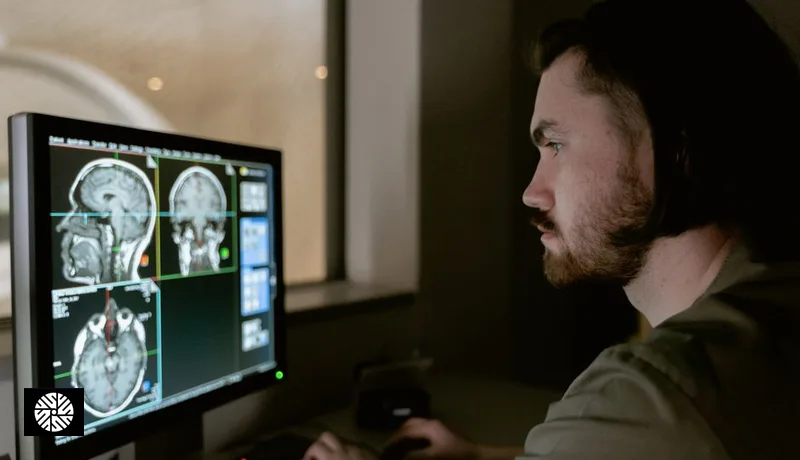
A brain MRI shows anatomy: volume, white-matter condition, silent small-vessel disease, and incidental findings such as aneurysms. A brain MRA (magnetic resonance angiography) images the vessels themselves. New Dawn Health prices both routes into that imaging on our packages page:
| What you book | Our price | What it covers |
|---|---|---|
| Brain MRA | $699 | Brain MR angiography as a stand-alone bookable add-on |
| Advanced Package with Brain MRA | $3,799 | Full-body MRI and brain MRA plus breast MRI (female) or liver MRI (male), low-dose lung CT, heart calcium score, carotid, thyroid, upper-abdomen and pelvic ultrasound, liver fibrosis scan, DEXA, urinalysis and blood panels |
Brain imaging is part of why many of our visitors build a full-body screening itinerary around a single trip. Two honest caveats, which we spell out in more detail in our brain MRI and MRA guide:
- A structural scan is not a cognitive test. In the NIA's diagnostic workup, brain scans support a diagnosis or rule out other causes of symptoms; the diagnosis itself rests on tests of memory, problem solving, attention, counting and language, plus blood and urine tests and a psychiatric evaluation. Concerns about actual cognitive symptoms belong with a neurologist.
- Screening the brain of a symptom-free person is a considered decision, not a default. It can surface findings you will then need to act on or live with knowing. Discuss that trade-off during your consultation rather than assuming more scanning is automatically better.
What should you do about it?
Slower recall and clumsier multitasking in midlife are the brain aging on schedule. Disorientation, repeated recent-memory failure and changes other people notice are not — and they warrant evaluation, often with treatable causes. The protective playbook is concrete and starts now: blood pressure, exercise, hearing, sleep, metabolic health, and staying engaged.
If you want a structured look at where you stand — cardiovascular and metabolic markers plus optional brain imaging, reviewed with an English-speaking physician — that is what a well-designed screening day in Taiwan provides. Our health screening packages page shows what's included, or talk to our concierge team about building a visit around your specific concerns.
This article is for general education and is not medical advice. If you or your family have noticed cognitive changes, please discuss them with a physician — many causes are treatable, and evaluation beats worry.
Sources
- National Institute on Aging, NIH — How the Aging Brain Affects Thinking (accessed 2026-09-08)
- National Institute on Aging, NIH — How Is Alzheimer's Disease Diagnosed? (accessed 2026-09-08)
- National Institute on Aging, NIH — Cognitive Health and Older Adults (accessed 2026-09-08)
- Alzheimer's Association — 10 Early Signs and Symptoms of Alzheimer's & Dementia (accessed 2026-09-08)
- Alzheimer's Association — Can Alzheimer's Be Prevented? (accessed 2026-09-08)
- World Health Organization — Dementia fact sheet (accessed 2026-09-08)