What is a single-region MRI?
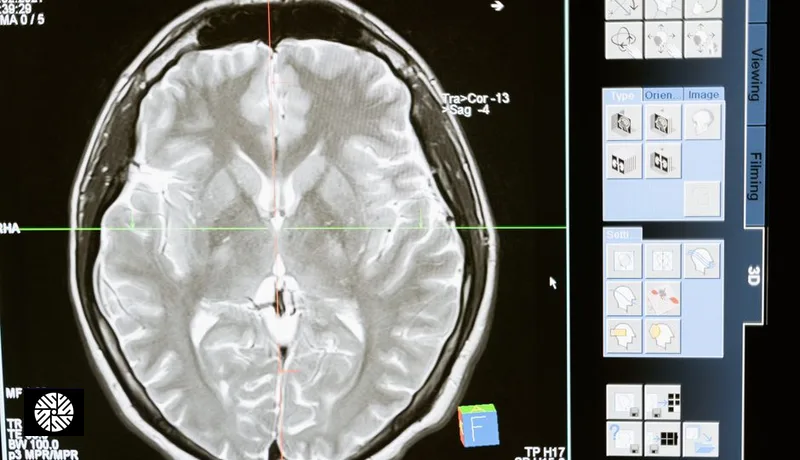
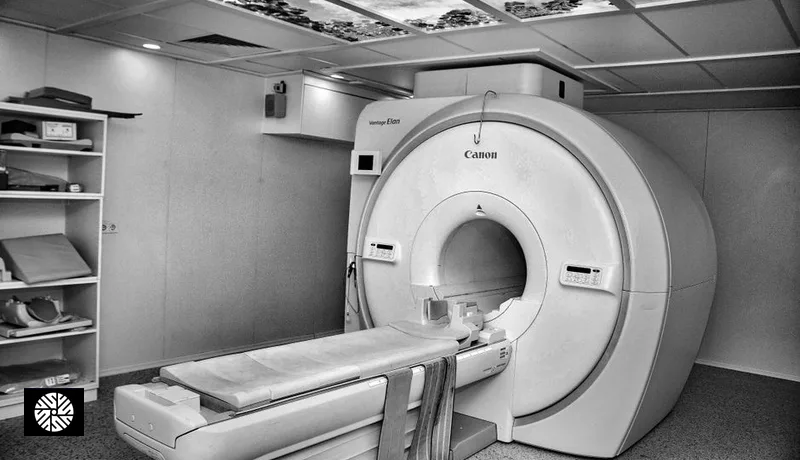
A single-region MRI scans one part of the body in detail: the brain, a section of the spine, or one joint such as a knee or shoulder. It uses a magnet and radio waves, not X-rays. How an MRI works explains the physics, the noise and the metal check.
Because the scanner spends all its time on one area, it can run more sequences there. That is the point of a targeted scan: a sharper answer to one question, usually a symptom. New Dawn Health books it without contrast or with contrast, and your coordinator confirms which area counts as one region when you book.
Single-region vs full-body MRI
The two scans use the same machine but answer different questions:
| Single-region MRI | Full-body MRI | |
|---|---|---|
| Question it answers | What is going on in this one area? | Is there anything notable across several regions? |
| Detail per area | More sequences, aimed at one structure | A survey; coverage varies by protocol |
| Typical reason | A symptom, an injury or an earlier finding | A general look in someone without symptoms |
| Contrast | Booked with or without it | Depends on the protocol |
Some full-body protocols leave out the arms and legs. A single-region scan can cover one joint the survey skipped. The full-body MRI page covers the survey scan and its evidence.
Brain, spine and joints: what each scan is for
RadiologyInfo, the patient site of the American College of Radiology and the Radiological Society of North America, lists the common reasons for each:
| Region | What it is commonly used to look at |
|---|---|
| Brain | New or long-standing symptoms; stroke, tumors, bleeding after injury, causes of seizures, multiple sclerosis, pituitary problems |
| Spine | Disc and joint disease behind back pain and sciatica; nerve compression, alignment, injury, infection, tumors |
| Joints | Tears of the menisci, ligaments and tendons in the knee; the rotator cuff and labrum in the shoulder or hip; arthritis |
For bones and joints, the first look is usually an X-ray. MRI is the usual choice when the question is the soft tissue around a major joint. The blood vessels of the brain are a separate scan, the brain MR angiogram.
With or without contrast
Many brain, spine and joint scans need no contrast. A contrast scan adds an injection of a gadolinium-based agent through an IV line partway through. It brightens tissue with a rich blood supply or inflammation, so it is used when that is the question.
What the FDA says about retained gadolinium
- No harm found so far with normal kidneys: the FDA-required Medication Guide says studies have not found harmful effects in people with normal kidneys.
- Agents differ: FDA labeling says linear agents leave more gadolinium behind than macrocyclic agents.
- Some people may be at higher risk: people who get many doses, pregnant women and young children.
- Pregnancy: RadiologyInfo says contrast is usually avoided unless the information is critical.
The practical rule follows from this: contrast is worth it when it answers your question, not by default. Which agent the clinic uses, and whether a kidney blood test is needed first, is confirmed when you book.
Metal implants and claustrophobia
The magnet is always on, so metal is checked item by item. The MRI procedure page lists the devices that matter most. For a targeted scan, two points are specific:
- Implants near the scanned area blur it. RadiologyInfo notes that joint replacements, plates, pins and screws can distort images near them.
- Devices are judged by exact model. Some newer pacemakers and defibrillators are acceptable, but staff need the make and model, so bring the implant card.
- Metal near the eye matters. People who have ground or welded metal may need an X-ray first.
Who it suits — and who it does not
A single-region MRI suits a specific question. It is a weaker fit as a general check:
| Situation | Fit |
|---|---|
| A symptom a doctor wants imaged | Good fit: persistent joint pain, locking or instability, or neurological symptoms |
| Follow-up of an earlier finding | Good fit, ideally with the earlier images to compare |
| A second look at a scan from home | Often useful; bring the previous report and images |
| Low back pain without warning signs | Usually not; the American College of Physicians (US) advises imaging only for serious nerve deficits or warning signs |
| No symptoms, “just to check” | Weak fit; findings are common in people without pain |
That last row is the honest catch. Scans of people without symptoms find things that often mean nothing, and each finding can lead to more tests:
- Spine: in a review of 3,110 people without back pain, disc bulges rose from 30% at age 20 to 84% at age 80.
- Knee: in adults 50 to 90, 61% of those with a meniscal tear had no knee pain, aching or stiffness in the past month.
- Brain: in 2,000 adults from the general population, scans found an unsuspected aneurysm in 1.8% and a benign tumor in 1.6%.
What it can show — and what it cannot
- Soft tissue in one area: brain, spinal cord, discs, nerves, cartilage, ligaments, tendons
- Swelling, fluid and inflammation in that area
- Masses, told apart from the tissue around them
- Anything outside the scanned area. A full-body MRI surveys several regions.
- The arteries of the brain in detail. A brain MR angiogram is built for that.
- Bone density. A DEXA scan measures it.
- Whether a finding causes your pain. That takes a physical exam and a doctor who knows your history.
What to expect on scan day
-
1Safety questionnaireYou list implants, devices, past surgery and any metal fragments. Bring implant cards and any earlier scans of the same area.
-
2Change and positionYou change into a gown and leave metal outside. A coil is placed around the area being scanned, and you get earplugs.
-
3The scanYou lie still while the machine knocks loudly. If contrast is booked, it is injected partway through. Your coordinator confirms the expected time when you book.
-
4AfterwardsWithout a sedative you can usually leave straight away. After any relaxation medication, RadiologyInfo says to have someone take you home.
Cost and coverage
The live prices further down this page are New Dawn Health's booking prices, for the non-contrast and contrast versions and for the other single-region options. What happens after that depends on your coverage:
- Screening in Taiwan is self-funded for visitors. Short-term visitors are not covered by Taiwan's National Health Insurance, so screening is self-funded.
- Reimbursement at home is a question for your insurer. A plan may require a referral or a symptom for MRI. Ask them before you book.
Results and follow-up
- A written radiology report on the scanned area. Turnaround, report language and who explains it vary by hospital; your coordinator confirms them when you book.
- A finding is not a diagnosis. Many findings are common with age; what they mean depends on your symptoms and examination.
- Bring the images home. A copy of the images, not just the report, lets your own doctor compare future scans.