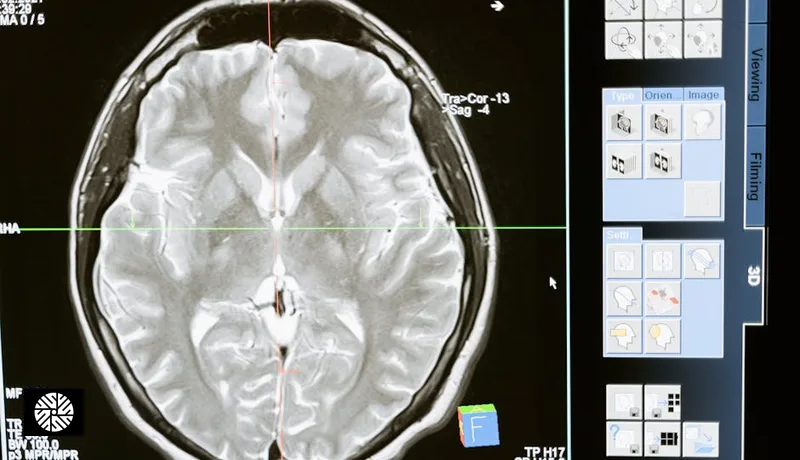

Quick answer: Structural brain MRI and brain MRA answer different questions. MRA is designed to evaluate blood vessels and may be performed with or without contrast. It is not a routine test for every asymptomatic adult and cannot predict or exclude every future stroke or aneurysm. The USD $699 New Dawn listing and US $2,500–$5,800 comparison range need exact protocol, source and date confirmation.
Brain MRI and MRA are not interchangeable
| Study | Primary purpose | Important limit |
|---|---|---|
| Structural brain MRI | Brain tissue and anatomy using sequences selected for the clinical question. | Not optimized for every vascular question; a normal study cannot exclude all disease. |
| Brain MRA | Intracranial or neck blood vessels, depending on the protocol. | May use non-contrast or contrast-enhanced techniques and does not detect every vascular abnormality. |
A clinician may consider one or both studies for symptoms, a known condition, a previous finding or selected family-history and risk situations. This article does not recommend MRA simply for “peace of mind,” cognitive concerns, smoking, hypertension or age.
Contrast depends on the protocol
Time-of-flight MRA can be performed without contrast, while other protocols may use gadolinium. The radiologist selects the method for the question. Kidney function, pregnancy, prior reactions and alternatives may affect the decision. Do not assume that every $699 listing includes contrast or that contrast is always preferable.
Price comparison
The New Dawn catalogue has recorded a USD $699 brain MRA listing. The article also uses a US self-pay comparison range of $2,500–$5,800. Before publication, record the source and verification date for the US range and confirm whether each price includes:
- brain MRA alone, structural MRI, or both;
- head only or head and neck vessels;
- with-or-without-contrast protocol;
- radiologist interpretation, report language and DICOM files;
- consultation, facility fees and follow-up.
A Prenuvo whole-body price should not be labelled a “brain-only” price, and the products should not be described as equivalent. Prenuvo's official site lists its own coverage and limitations, which must be checked at the time of comparison.
Equipment, reports and timing
Do not state that all partners use 3T scanners, provide English reports or DICOM files, complete kidney testing, or deliver results within a fixed time without current written confirmation for the booked site. Field strength alone does not guarantee clinical suitability or detection of every small finding.
Insurance
Coverage varies by insurer, plan, indication, referral and prior authorization. Confirm directly with the insurer and facility. Do not present elective self-pay access as a reason that the scan is medically indicated.
Primary references
- RSNA/ACR: Magnetic Resonance Angiography
- RSNA/ACR: MRI Safety
- American College of Radiology: Manual on Contrast Media
- Prenuvo: Official Services and Pricing
US / UK terms and the closest Taiwan context
Read this first: These are comparison aids, not claims that coverage, credentials, or care pathways are equivalent. Europe is not one health system; UK examples below refer specifically to NHS England.
Radiology report, DICOM, and PACS
- What it means there
- A radiology report is the clinician’s interpretation. DICOM (Digital Imaging and Communications in Medicine) is the international standard for medical images and related information. PACS is a system used to store and retrieve imaging data.
- Closest Taiwan context
- Taiwan facilities may use the same international imaging standards, but the available export medium, viewer, report language, and delivery time are facility-specific.
- Do not treat as equivalent
- Receiving a PDF report does not necessarily mean the diagnostic images are included. Receiving DICOM files does not replace a signed clinical report or guarantee that another facility can import every file.
- What to ask
- Ask separately for the signed report, report language, complete DICOM study, delivery method, viewer needs, release timing, and any fee.
Frequently asked
What is the difference between brain MRI and brain MRA?
Structural brain MRI images brain tissue and anatomy. Brain MRA is designed to evaluate blood vessels. The clinical question determines which study is appropriate.
Does brain MRA always require gadolinium?
No. MRA may use a non-contrast technique or a contrast-enhanced protocol. The radiologist and facility should confirm the method for the individual booking.
What does the USD $699 price include?
Do not infer the scope from the price alone. Confirm anatomy, structural MRI inclusion, contrast, interpretation, report language, DICOM, facility fees and follow-up in the live catalogue and quotation.
Will insurance cover an elective MRA?
Coverage depends on the insurer, plan, indication, referral and prior authorization. Confirm directly before scheduling.
Can a normal MRA rule out a future stroke or aneurysm?
No. MRA has protocol and resolution limits and cannot predict every future event. Results must be interpreted with the person's clinical context.