back icon Blog
Full Body MRI
Health Screening

Full-Body MRI and Health Exams in Taiwan — A Step-by-Step Guide

March 11, 2026

12 mins to read
The actual hour-by-hour walkthrough of a full-body MRI and comprehensive health screening in Taiwan: from the 2-week pre-trip protocol through the 7-day final report — including pricing tiers, biomarker breakdown, and how it compares to Prenuvo, Ezra, and Function Health.
Full-Body MRI and Health Exams in Taiwan — A Step-by-Step Guide - Health information for international visitors in Taiwan

This is the article we wish someone had written for us before our first full-body MRI in Taiwan. Not the marketing brochure version. The actual hour-by-hour, what-do-I-pack, what-does-the-magnet-sound-like, what-happens-on-day-eight version. If you're considering a comprehensive screening trip to Taipei or Beitou, this walkthrough takes you from the day you book to the day your final report lands in your inbox.

Most of our clients come to us because they tried to assemble the same workup at home — calling a U.S. concierge medicine practice, then a Prenuvo center, then a separate cardiologist for the calcium score, then their PCP for the labs — and gave up after the third quote. In Taiwan, all of it happens in one morning, in one building, with one physician debrief. That single fact is why this guide is long. The experience itself is short.

Pre-trip — 2 weeks before your screening

Booking starts with a 15–20 minute concierge intake call in English, usually scheduled within 48 hours of your inquiry on our services page. The intake nurse asks about family history (cardiovascular events, cancers, diabetes), current medications, prior imaging (helpful if you can email us a CD or DICOM file), known allergies — especially to iodinated contrast or gadolinium — and your specific anxieties. We hear "I lost a parent to pancreatic cancer" or "my LDL has crept up despite statins" or "I just turned 45 and I want a baseline" almost every week. The intake exists to match you to the right tier.

There are three tiers at Beitou Health Management Hospital, our most-booked partner. Core ($399 USD) is a focused half-day: full-body MRI, fasting blood panel of about 40 markers, ECG, basic ultrasound, and a brief physician summary. It's the tier we recommend for healthy under-40s wanting a baseline. Signature ($1,499) adds low-dose lung CT, coronary calcium scoring, DEXA bone density and body composition, expanded biomarkers (ApoB, Lp(a), hs-CRP, fasting insulin, HbA1c, comprehensive thyroid, full hormone panel for men or women), carotid intima-media thickness ultrasound, abdominal and pelvic ultrasound, and a 30-minute physician debrief the next day. Executive ($3,499) layers in gastroscopy and colonoscopy under sedation, brain MRA (vessel imaging), tumor marker panel of 12+ markers, advanced cognitive screening, sleep study referral, and a 60-minute physician debrief plus a follow-up tele-consultation 30 days later.

Once you've chosen, we collect a $100 USD deposit to lock the slot — typically 4–8 weeks out, sooner if you're flexible. The deposit is fully refundable up to 7 days before your scheduled date. The remaining package balance is due 30 days out and refundable in full minus a 10% admin fee up to 14 days before; after that it converts to a credit usable within 12 months. We send the pre-screening protocol packet by email about 10 days before your arrival: a fasting timeline, medication-hold instructions (most patients continue their usual meds, but we ask you to pause metformin the morning of if you're getting contrast, and to skip biotin supplements for 72 hours because they interfere with thyroid and troponin assays), and a packing checklist.

What to pack and what to bring

Bring your passport. Bring a printed or digital copy of your current medication list with doses. Bring any prior imaging — even a 3-year-old MRI from your home country gives the radiologist a comparison baseline that catches subtle changes screening alone can miss. DICOM files on a USB stick are ideal; PDF reports are acceptable.

Wear loose, comfortable clothing without metal — yoga pants, a cotton t-shirt, slip-on shoes. The hospital provides a gown for the MRI portion, but you'll be in your own clothes for ultrasounds and the physician check-in. Leave jewelry, watches, and underwire bras at the hotel. If you wear a hearing aid, removable dental work, or any kind of magnetic patch (nicotine, pain), let us know in advance — these have to come off for the scan. Bring reading material or download an audiobook for the gaps between modalities; the hospital has Wi-Fi, but the morning has natural pauses where you'll be in a robe with nothing to do.

Day -1: arriving in Taiwan and the night before

Most clients fly into Taoyuan International (TPE) one to three days before their scan. Beitou Health Management Hospital is roughly 45 minutes from the airport and sits in the hot spring district at the northern edge of Taipei. We arrange transportation if you'd like; many clients prefer the MRT, which is clean, English-signed, and direct via the red line.

For accommodation, our most common pairing is a Beitou hot spring resort — Villa 32, Grand View, or Spring City — within walking distance of the hospital. Important caveat: do not soak in the hot springs the morning of your scan. A hot bath right before a 60-minute MRI is a recipe for dehydration and lightheadedness. Soak the night you arrive, then save the rest for after your physician debrief. Some clients prefer a downtown Taipei hotel for the first night and a quick MRT ride out in the morning; both work.

Eat a light, normal dinner before 8:00 PM the night before — grilled fish, rice, vegetables. Avoid alcohol (it skews liver enzymes and blood sugar), heavy red meat (skews creatinine), and shellfish if you've ever had iodine sensitivity. From 8:00 PM onward, water only. No coffee, no tea, no gum. Take your evening medications with a sip of water as usual unless we've told you otherwise. Set two alarms for the morning. Try to be in bed by 10:30 PM; the morning is easier when you're rested, and the MRI is easier still.

Hour-by-hour: the screening morning

Here's the actual cadence at Beitou for a Signature-tier patient. Core finishes around 10:30 AM; Executive runs into early afternoon and resumes the next day for endoscopy.

Time Activity Duration
7:50 AM Concierge desk check-in, paperwork, locker assignment 15 min
8:05 AM Vital signs, height, weight, body composition pre-check, 12-lead ECG 10 min
8:15 AM Fasting blood draw (60+ markers, 8–10 vials) 10 min
8:30 AM Full-body MRI — brain, neck, chest, abdomen, pelvis, optional spine 60 min
9:30 AM Low-dose lung CT 10 min
9:45 AM Coronary calcium score CT (same scanner) 10 min
10:00 AM DEXA — bone density and body composition 10 min
10:15 AM Light snack break (fasting ends after blood draw) 15 min
10:30 AM Ultrasounds — carotid CIMT, thyroid, abdominal, pelvic 25 min
11:00 AM Resting echocardiography (if indicated) 20 min
11:30 AM Brief intake-physician check-in, preliminary impressions 20 min
12:00 PM Complimentary lunch at the hospital cafe

The hand-off between modalities is the part Americans tend to find surreal. There is no scheduling, no second waiting room, no "we'll call you back to confirm a slot." A coordinator walks with you from blood draw to MRI to CT, your gown stays on, your bag stays in your locker, and the next technician already has your chart open on a tablet. This is the workflow we describe in our piece on Taiwan's one-stop medical centers vs. fragmented systems — but you have to live it once to feel the difference.

Inside the MRI: what 60 minutes feels like

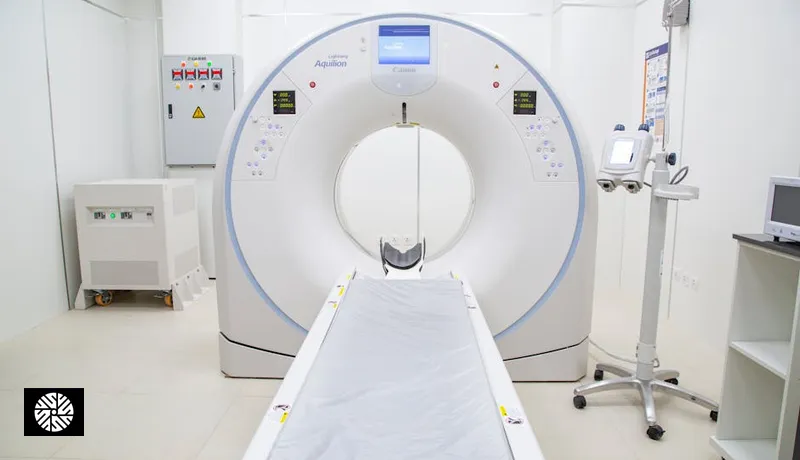
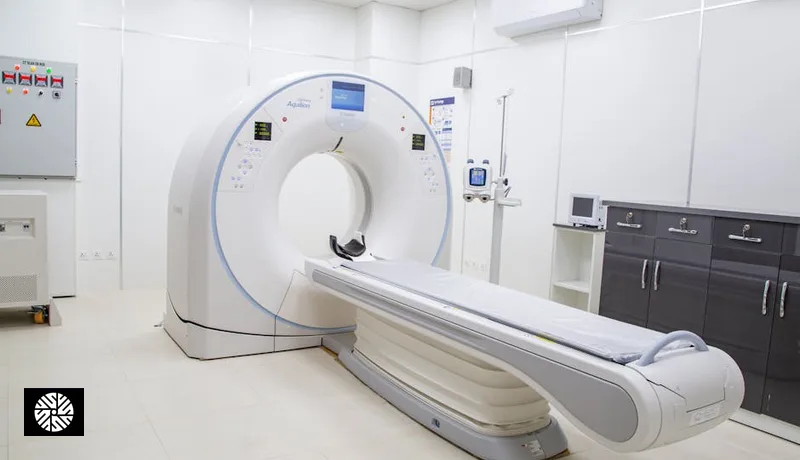
If you've never had an MRI, here is the honest version. You lie on a padded table. The technician hands you foam earplugs and noise-cancelling headphones; you can choose music, and most foreign clients pick a calming playlist. They place a soft cage-like coil over the body region being imaged. The table slides into the bore — a 70 cm wide tunnel on Beitou's 3T Siemens scanner, which is wider than the older 60 cm machines you may have experienced.

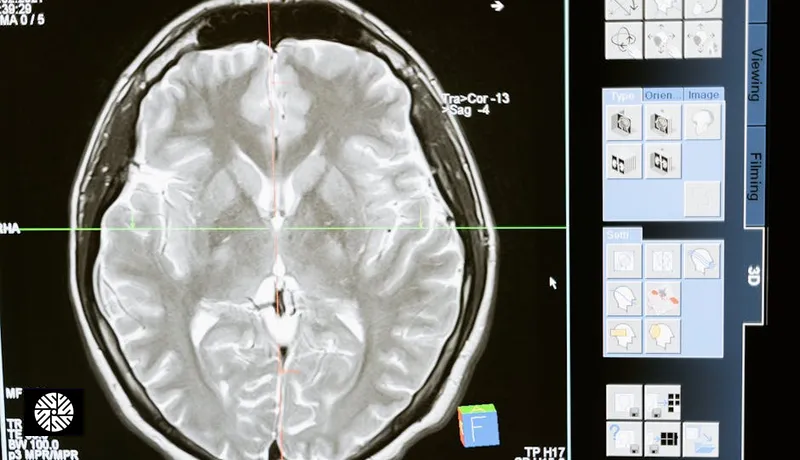
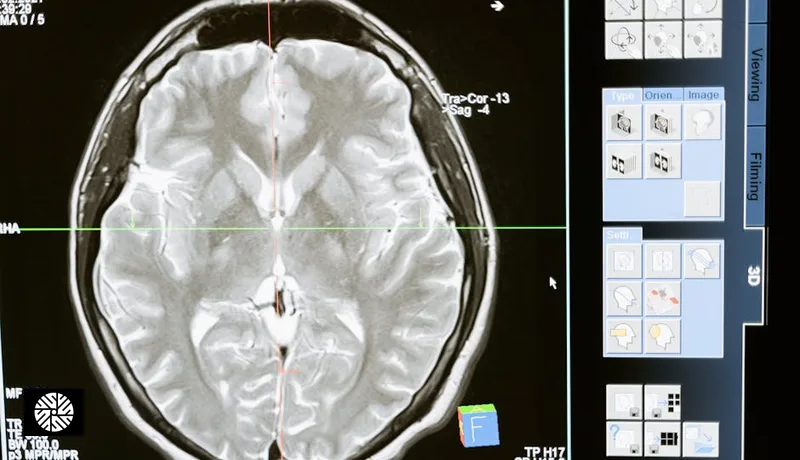
The sequences fire one at a time. T1-weighted images give the radiologist anatomical detail — sharp boundaries between organs, fat, muscle. T2-weighted images highlight fluid and inflammation; fluid glows white. FLAIR (fluid-attenuated inversion recovery) suppresses normal cerebrospinal fluid so that abnormal lesions in the brain — small strokes, MS plaques, tumors — stand out. DWI (diffusion-weighted imaging) detects restricted water movement, the hallmark of acute stroke and many cancers. The radiologist reads each region with a specific list in mind: brain (aneurysms, lesions, atrophy), neck (lymph nodes, thyroid), chest (lung nodules >4 mm, mediastinal masses), abdomen (liver lesions, kidney masses, pancreas), pelvis (uterus and ovaries, prostate, bladder).

You'll hear loud knocks, hums, and rhythmic beeps as the gradient coils switch. With headphones it's tolerable, even hypnotic. The scanner pauses every few minutes; the tech voice will gently say "next sequence, four minutes." You have a squeeze bulb in your hand at all times — squeeze and the scan stops.

Claustrophobia is the most common worry. About 1 in 20 of our clients tells us upfront they're nervous. We mitigate it three ways: (1) the wide-bore scanner; (2) a feet-first orientation when imaging the abdomen and pelvis, which keeps your head outside the tunnel for over half the exam; (3) a low-dose oral anxiolytic (typically lorazepam 0.5 mg) prescribed by the intake physician for patients who request it. With those measures, fewer than 1% of patients abort the scan. If you're severely claustrophobic, tell us at booking — we can pre-arrange the medication and a familiarization visit the afternoon before.

The blood draw: 60+ biomarkers — what each tells you

The Signature panel pulls 8–10 small vials. The lab reports back inside 24 hours. Here's what the most informative markers actually mean:

  • ApoB — counts every atherogenic lipoprotein particle in your blood. Better than LDL-C alone for predicting heart attack risk; many cardiologists now consider it the single most actionable cholesterol number.
  • Lp(a) — a genetically determined lipid particle that drives independent cardiovascular and aortic stenosis risk. Most people are never tested for it. If yours is high, your prevention strategy changes.
  • hs-CRP — a sensitive marker of systemic inflammation. Elevated values predict cardiovascular events independent of cholesterol.
  • Fasting insulin and HbA1c — together they catch insulin resistance years before fasting glucose turns abnormal.
  • Comprehensive thyroid (TSH, free T3, free T4, anti-TPO, anti-Tg) — finds early autoimmune thyroid disease, common and easily treated.
  • Sex hormones — total and free testosterone, SHBG, estradiol, DHEA-S for men; estradiol, progesterone, FSH, LH, AMH for women. Useful for fatigue, libido, perimenopause, and recovery.
  • Tumor markers — PSA (men), CA-125 (women), AFP, CEA, CA 19-9, CA 15-3. Read in context with imaging — never as standalone screening.
  • Vitamin D, B12, ferritin, homocysteine — common deficiencies that affect energy, cognition, and cardiovascular risk.

For a deeper dive on how AI cross-references these blood markers with imaging findings to flag patterns a single specialist might miss, see how AI health screening in Taiwan redefines accuracy.

Day +1: the physician debrief

You return to the hospital at 9:00 AM the next morning for a 30-minute (Signature) or 60-minute (Executive) debrief in English. The physician — typically Dr. Chen or Dr. Lin in our partnership, both fluent in English and trained in U.S. or U.K. fellowships — has already reviewed your imaging stills and lab results overnight.

The debrief is structured around three buckets. Action Required covers anything that needs follow-up within weeks: a 7 mm lung nodule that warrants a 3-month interval CT, an elevated ApoB that warrants a statin discussion, a fibroid causing iron deficiency, a thyroid nodule needing FNA biopsy. Reassurance covers the long list of normal findings and the benign incidentalomas (small liver cysts, simple kidney cysts, asymptomatic gallstones) that imaging routinely turns up. Lifestyle and Optimization covers the nudges: VO2 max suggestions if your body composition was unfavorable, sleep study referral if your snoring history is concerning, sunscreen and skin-check reminders if you have multiple nevi.

You leave the debrief with a one-page printed summary of action items, a digital handoff packet that you can forward to your home physician, and the radiologist's preliminary report. The full final report — including AI-assisted lesion volumetrics, side-by-side comparison images, and structured findings — arrives 7–10 days later as a PDF plus DICOM bundle.

Days +2 through +5: recovery and report waiting

This is the part that distinguishes a Taiwan trip from a U.S. screening: you have somewhere to actually be while the report bakes. Most clients spend two to four days in Beitou's hot springs, rotating between Japanese-style ryokan-inspired baths and quiet hotel rooms. Others continue south — Sun Moon Lake (90 minutes by high-speed rail), Tainan (3 hours), Hualien on the east coast (2 hours by train) — and use the buffer to reset their nervous system. We dig into this layer in why Americans find true wellness recovery in Taiwan.

Practically, the recovery layer also serves a clinical purpose. If the preliminary debrief surfaced something requiring immediate follow-up — a biopsy, a specialist referral, a contrast-enhanced repeat scan — you're already in the country, already in the system, already 20 minutes from the cardiologist or gastroenterologist who can see you the next day. Trying to coordinate the same follow-up after flying home is, in our experience, where the U.S. journey loses momentum.

Day +7-10: receiving and integrating the report

The final report arrives by encrypted email and through the patient portal. It includes a structured radiology narrative (one paragraph per organ system), AI-quantified measurements (brain volume percentiles, visceral fat percentage, coronary calcium Agatston score with percentile rank for your age and sex), the full lab panel with reference ranges in U.S. units, and the physician's summary. The DICOM bundle lets your home physician load every image into their own PACS system for review.

If you'd like, our concierge team translates the report into your home physician's preferred format — converting measurements, mapping Taiwan reference ranges to LabCorp or Quest equivalents, and writing a one-page cover letter that summarizes what's actionable. We also offer a 30-minute follow-up tele-consultation 30 days post-trip (included in Executive, $150 add-on for Core and Signature) to walk through the report once you've had time to digest it. To understand why the imaging quality alone justifies the trip, our piece on Taiwan's 3T MRI technology is the technical companion to this practical guide.

Special situations: claustrophobia, pregnancy, implants, contrast

Claustrophobia. Covered above — wide-bore scanner, optional 0.5 mg lorazepam, feet-first orientation. Severe cases can be referred to a partner facility with an open MRI, though image quality on those magnets is lower and may miss small findings.

Pregnancy and breastfeeding. We do not perform full-body MRI screening during pregnancy. While MRI itself is safe in pregnancy when medically necessary, screening (asymptomatic, elective) is not appropriate; we ask you to defer until 8 weeks postpartum. Breastfeeding is fine; gadolinium contrast, if used, passes into breast milk in trace amounts and is considered safe to continue nursing. We use unenhanced sequences for the baseline screening, so contrast is rarely needed.

Implants. Most modern orthopedic implants (titanium plates, screws, joint replacements after 2010) are MRI-conditional and safe at 3T. Older pacemakers, cochlear implants, certain aneurysm clips, and some insulin pumps may not be safe. Bring the implant card the manufacturer provided. The MRI safety officer screens you again the morning of, and if there's any uncertainty, we substitute a low-dose CT-based protocol for the affected region.

Contrast. Our standard screening protocol is non-contrast for the full-body MRI. We add gadolinium only if the radiologist flags a finding that requires characterization — for example, a liver lesion or an enhancing brain area. If you have known kidney disease (eGFR < 30) or a prior gadolinium reaction, we image without contrast and use ultrasound or follow-up imaging to characterize anything ambiguous.

Pricing and what's bundled at each tier

Component Core ($399) Signature ($1,499) Executive ($3,499)
Full-body MRI (3T, non-contrast) Yes Yes Yes + brain MRA
Fasting blood panel ~40 markers 60+ markers 75+ markers + tumor panel
Low-dose lung CT Add-on Yes Yes
Coronary calcium CT No Yes Yes
DEXA + body composition No Yes Yes
Ultrasounds (carotid, thyroid, abdomen, pelvis) Abdominal only All four All four + echocardiogram
Endoscopy (gastro/colonoscopy) No Add-on Yes (sedated)
Physician debrief 15 min summary 30 min next-day 60 min + 30-day tele follow-up
Final report (PDF + DICOM) 7–10 days 7–10 days 7 days

Add-on menu (any tier): upper endoscopy ($299), colonoscopy ($499), upper endo + colonoscopy combined under sedation ($499), tumor markers panel ($245), allergen panel ($299), single-region MRI with contrast ($550), single-region MRI without contrast ($310), heart calcium score CT ($209), DEXA scan ($109), Rooti 7-day sleep study ($380), iHope orthopedic consultation ($75). Brain MR angiogram is bundled in the Advanced + Brain MRA tier ($3,799). Prices reflect 2026-05 — see /services for current.

How this compares to Prenuvo, Ezra, Function Health

U.S. clients almost always ask: "How is this different from what I could get at home?" The honest answer is that the U.S. options are excellent at one slice of the problem each — Prenuvo and Ezra at the MRI itself, Function Health at the labs — but no single domestic provider does the full workup in one place, and the cost stack ends up significantly higher than Taiwan's bundled price.

Feature Prenuvo (US) Ezra (US) Function Health (US) Taiwan Signature
Full-body MRI Yes (~60 min) Yes (~60 min) No Yes (~60 min, 3T)
Lung CT + calcium score No No No Yes
Comprehensive labs (60+ markers) No Add-on Yes (100+) Yes
DEXA + body composition No No No Yes
Live physician debrief App summary; phone consult upgrade App summary App + physician messaging In-person 30 min next day
Total list price ~$2,499 ~$1,950 ~$499/yr $1,499

The structural difference is that Prenuvo and Ezra deliver an MRI app summary, while Taiwan delivers a comprehensive 4-hour multi-modality screening with lab integration and a sit-down physician conversation. To stitch the U.S. equivalent together — Prenuvo MRI + Function Health labs + a separate cardiologist appointment for the calcium score + a separate facility for DEXA + an executive physical for the debrief — easily exceeds $5,000 and three weeks of calendar coordination. We unpack the math in why many Americans now fly to Taiwan for full-body MRI.

None of this means Taiwan is "better" in some absolute sense. If you live in San Francisco and just want an MRI, Prenuvo is faster than buying a plane ticket. The case for Taiwan is when you want everything done at once, with a physician in the room, and a few quiet days afterward to actually process what you found. If you want help mapping which tier and which dates fit your situation, our intake nurse is the next step — start at our services page or browse the partner facilities and we'll take it from there.

Sources & Further Reading

FAQ

About 1 in 20 of our clients flags claustrophobia at intake. Beitou uses a wide-bore 70 cm 3T scanner, which is significantly more comfortable than older 60 cm machines. We can orient you feet-first for abdomen and pelvis sequences, which keeps your head outside the tunnel for over half the exam, and the intake physician can prescribe a low-dose oral anxiolytic (typically lorazepam 0.5 mg) the morning of. With these measures, fewer than 1% of patients abort. If you are severely claustrophobic, tell us at booking so we can pre-arrange medication and a familiarization visit.

Our standard full-body MRI screening protocol is non-contrast, so most clients never receive gadolinium. We add it only when the radiologist flags a finding that requires characterization, such as a liver lesion or an area of brain enhancement. If you have known kidney disease (eGFR under 30) or a prior gadolinium reaction, we image without contrast and use follow-up ultrasound or short-interval MRI to characterize anything ambiguous. Iodinated CT contrast is used selectively for the lung and calcium scoring protocols at very low doses.

Most modern orthopedic implants — titanium plates, screws, hip and knee replacements after 2010 — are MRI-conditional and safe at 3T. Older pacemakers, cochlear implants, certain aneurysm clips, and some insulin pumps may not be. Bring the implant card the manufacturer gave you. Our MRI safety officer rescreens you the morning of the scan, and if there is any uncertainty, we substitute a low-dose CT protocol for the affected region so you still get comprehensive imaging.

You leave the next-day debrief with a one-page printed action summary and the radiologist preliminary report. The full final report — including AI-assisted lesion volumetrics, structured findings, side-by-side comparison images, and the complete lab panel in U.S. units — is delivered as a PDF plus DICOM bundle 7 to 10 days after your scan. Executive tier patients receive theirs in 7 days. The bundle is sent through our encrypted patient portal and email.

We do not perform full-body MRI screening during pregnancy. MRI itself is considered safe in pregnancy when medically necessary, but elective asymptomatic screening is not appropriate, and we ask clients to defer until at least 8 weeks postpartum. Breastfeeding is fine; gadolinium passes into breast milk only in trace amounts and current guidelines support continuing to nurse without interruption. Our standard protocol is non-contrast, so this is rarely a factor.

A U.S. annual physical typically includes vitals, a basic lipid panel, glucose, and a clinical exam — useful but limited for catching asymptomatic disease. The Taiwan Signature screening adds full-body MRI, lung CT, coronary calcium scoring, DEXA body composition, four ultrasound regions, and a 60+ marker biomarker panel including ApoB, Lp(a), hs-CRP, fasting insulin, and full hormone profiles. It is closer to what concierge executive physicals in the U.S. charge $5,000–$10,000 for, delivered in one morning at one facility.

You do not. The next-day debrief gives you a clear action plan, and we provide a digital handoff packet — radiology report, DICOM imaging, structured lab data — that your home physician can load into their own system. If a finding warrants immediate follow-up, you have two options: stay an extra few days and use our partner specialist network (cardiology, gastroenterology, oncology referrals available within 24–48 hours), or fly home with the data and coordinate locally. Most clients choose the latter for non-urgent findings and stay in Taiwan only when something needs immediate intervention. Our concierge team supports both paths.

Related Posts