
If you have ever battled melasma, you know the cycle: a laser session, a few good weeks of fading, and then — at the first stretch of heat, sun, or stress — the patches creep back, sometimes darker than before.
Melasma is one of the most stubborn conditions in aesthetic dermatology, and it punishes shortcuts. A common misconception among international patients traveling to Asia for skin treatments is that a single pass with a picosecond laser will clear it for good. Leading dermatologists in Taiwan take a fundamentally different approach: they treat melasma not as surface pigment to blast away, but as a structural problem in the skin that needs a staged, combination protocol.
To understand how that works in practice, we spoke with two of New Dawn Health's vetted partner dermatologists: Dr. Lo of Provenir Clinic and Dr. Zahn of iHope Clinic.
The Misconception: "Just Give Me a Pico Laser"
Picosecond lasers — including gold-standard platforms like PicoSure Pro — are genuinely excellent at shattering epidermal melanin into microscopic fragments the body can clear. For freckles, sun spots, and tattoo pigment, that mechanism is often the whole story. (Our Taipei pico laser guide covers those uses in depth.)
Melasma is different. Treating it with laser alone is like pulling weeds without fixing the soil: the visible pigment goes, but the conditions that produced it remain, and the pigment almost always grows back.
Worse, melasma-prone skin is hypersensitive to heat and high energy. When a practitioner uses aggressive settings to force a fast result in one session, the inflammation itself can trigger post-inflammatory hyperpigmentation (PIH) — leaving the patient darker than when they started. This risk is especially pronounced in Asian and other medium-to-deep skin tones, which is exactly why Taiwan's dermatologists, who treat these skin types every day, default to conservative, staged protocols.
Why Melasma Keeps Coming Back: The Basement Membrane
As Dr. Zahn explains, durable melasma control requires addressing the basement membrane — the delicate layer separating the epidermis from the dermis.
In melasma-affected skin, this membrane is often damaged and "leaky." Pigment slips through it into the dermis, where lasers reach it less safely, and abnormal micro-vessels grow beneath the patches, feeding the overactive pigment cells. As long as that structure stays broken, any clearance is temporary: heat, UV exposure, and hormonal shifts simply restart production.
That is why the specialists we work with structure treatment as a three-phase combination protocol: repair the soil, deliver energy intelligently, then shatter the pigment.
Phase 1: Repairing the "Soil" with Microneedling
By introducing microneedling before or alongside laser therapy, clinicians create controlled micro-channels that stimulate the skin's natural structural repair — rebuilding the basement membrane and normalizing the vasculature underneath the patches. A stronger foundation makes the skin more resilient to heat and dramatically reduces the recurrence rate after laser clearance.
Our two partner specialists reach the same goal with different tools:
| Specialist | Microneedling technology | Clinical advantage |
|---|---|---|
| Dr. Lo Provenir Clinic |
Sylfirm X (dual-wave RF microneedling) |
Uses targeted radiofrequency to repair the damaged basement membrane and collapse the abnormal micro-vessels feeding melasma. Its pulsed-wave mode limits heat load, which matters in melasma-prone skin. |
| Dr. Zahn iHope Clinic |
Dermapen (medical-grade mechanical microneedling) |
Focuses on precision collagen induction, skin-barrier restoration, and deep transdermal delivery of brightening serums such as tranexamic acid. |
Phase 2: Smart Energy Delivery — Flat Lens vs. Focus Lens Array
Once the foundation work is underway, how the laser energy is delivered matters as much as the device itself. To keep total heat below the PIH threshold, Taiwan's specialists calibrate between two delivery modes:
- Flat lens: a broad, conservative sweep across the face that evens out tone gradually without irritating hypersensitive pigment cells. This is the workhorse mode for active melasma.
- Focus lens array: redistributes the PicoSure Pro's energy into concentrated micro-spots surrounded by untouched tissue. The micro-spots remodel deep collagen and break up stubborn pigment, while the spared tissue in between keeps overall inflammation — and therefore PIH risk — low.
Phase 3: Targeted Pigment Clearing
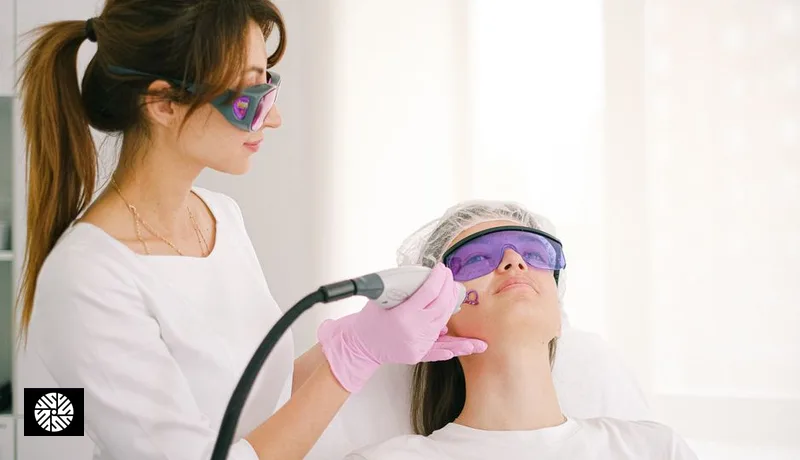
With the basement membrane fortified and energy settings dialed in, the picosecond laser does what it does best: fragmenting the visible melanin into particles the body clears on its own. Patients typically begin to see noticeable clarity and radiance within two to three weeks of a session, with continued improvement as the skin turns over.
One honest caveat our partner dermatologists insist on: melasma is a chronic, relapse-prone condition. The goal of this protocol is not a one-time "cure" but deep clearance plus a repaired skin structure that keeps pigment from returning — maintained with rigorous sun protection and, where appropriate, topical or oral therapy your doctor prescribes. Any clinic promising permanent removal in one session is telling you what you want to hear, not what the biology allows.
Fitting the Protocol to Your Stay in Taiwan
Every patient's pigment depth, skin architecture, and itinerary are different, so there is no one-size-fits-all timeline. Spacing sessions roughly one month apart gives the skin a full cellular turnover cycle to heal in between, and our partner dermatologists routinely adapt the plan to how long you will actually be in Taiwan:
- Short visits (1–2 weeks): an initial barrier-strengthening treatment with conservative laser settings, plus a structured post-care regimen and a maintenance plan you can follow from home.
- Extended visits (1+ months): time for multiple combination sessions, spaced to target superficial and deeper dermal pigment safely.
- Frequent travelers: if you visit Taiwan periodically, your dermatologist can map a multi-phase roadmap across your trips over the year.
Whichever pattern fits you, plan around downtime too — our pico laser and microneedling aftercare guide walks through what the days after treatment look like.
How to Get Started
The right first step is always an in-person skin analysis and diagnostic scan — not a treatment booked sight unseen. During the initial consultation, your dermatologist evaluates your pigment depth, assesses your skin barrier and vascular involvement, and builds a protocol around your skin and your exact travel dates.
At New Dawn Health, we connect international patients directly with Taiwan's premier English-speaking dermatologists operating US FDA-cleared technology, and we handle the scheduling around your trip. You can browse our vetted beauty and aesthetics providers, or contact our concierge team to arrange an initial skin analysis with Dr. Lo or Dr. Zahn.
This article is for general education and is not a substitute for a medical consultation. Treatment suitability, device selection, and session spacing are decisions for a licensed dermatologist who has examined your skin.