
In 2011, South Korea diagnosed thyroid cancer at 15 times the rate it did in 1993. The death rate from thyroid cancer did not move.
Fifteen times more cancer found, and the same number of people dying of it. That gap has a name, and understanding it is the difference between a screening program that helps and one that only feels like it does.
What happened in South Korea?
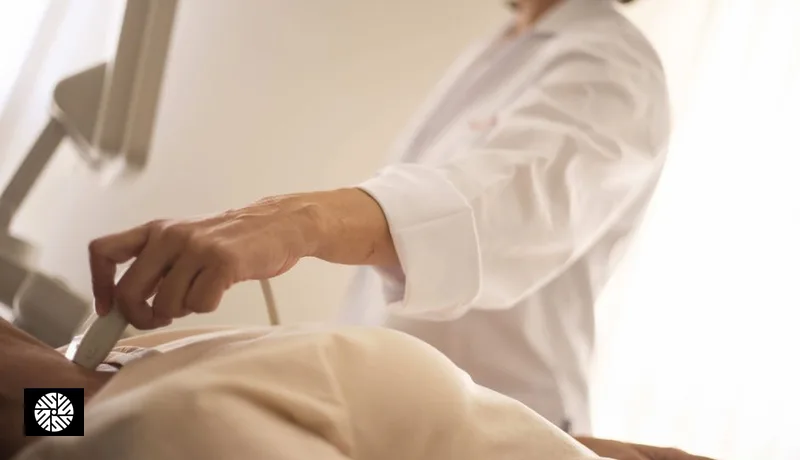
A national cancer screening program launched in 1999, and clinicians began offering thyroid ultrasound alongside it for a small additional fee. Detection climbed for two decades. Mortality stayed flat.
Ahn, Kim and Welch published the analysis in the New England Journal of Medicine in 2014, under the title "Korea's thyroid-cancer 'epidemic': screening and overdiagnosis". The US Preventive Services Task Force cites the same figures in its 2017 recommendation.
| Measure | What changed between 1993 and 2011 |
|---|---|
| Thyroid cancer diagnosis rate | 15 times the 1993 rate by 2011 |
| Thyroid cancer death rate | Remained stable |
| How cases were found | Ultrasound offered for a small additional fee |
| National screening program | Launched 1999 |
What this is, precisely, is a natural experiment. One country adopted one screening technology over two decades, and the before-and-after data on both incidence and mortality are unusually complete.
It is not a controlled experiment, and it is not the strongest study design available. Randomized population screening trials exist, and they are closer to one.
Those trials randomize people to be offered a screen or not, then count deaths in each arm. Korea's data cannot do that, because everyone in it lived in the same country under the same change.
What is overdiagnosis, and how is it different from a false positive?
Overdiagnosis means finding a real cancer that would never have hurt you. The National Cancer Institute defines it as detecting "cancers that would never become clinically apparent in the absence of screening".
Most people fold three different events into one word. They are not the same, and only one of them involves a mistake at the microscope.
| Term | What the test found | What the person ends up with |
|---|---|---|
| False positive | Nothing. The disease is not there | Follow-up tests, then an all-clear |
| Overdiagnosis | A real cancer that would never have surfaced | Treatment for a disease that was harmless |
| Misdiagnosis | Something real, named as the wrong condition | A label that does not match the disease |
The overdiagnosis row is the uncomfortable one. Nobody made an error. The pathology was correct, the tumor was real, and treating it still did the person no good.
False positives are also common and worth taking seriously. The NCI puts false-positive rates per screen for mammography and PSA testing in the range of 5 to 10 percent, with cumulative rates over repeated screening substantially higher.
How can anyone tell a cancer was overdiagnosed?
Not in an individual. Only in a population, and only by watching what incidence and mortality do to each other over time.
The NCI states the mechanism plainly. Overdiagnosis "increases the number of cases, gives the appearance of a stage shift, and results in improved survival and/or cure rates, without affecting cause-specific mortality in the population."
That last clause is the test, and it is a test at the level of a population. A large gap between rising incidence and flat mortality is strong evidence that much of the extra detection was overdiagnosis in that setting.
It is not evidence that every excess diagnosis was harmless. The pattern cannot say which cases were overdiagnosed, and it cannot rule out that better treatment held the death rate down while some real cancers were also being found.
It also does not travel on its own. A gap measured in South Korean thyroid screening is a finding about South Korean thyroid screening, and each other program has to be measured separately.
There is a second clue in thyroid specifically. The USPSTF cites autopsy work in which 11.5 percent of thyroid glands examined contained papillary carcinoma, in people who died of something else.
That is a reservoir of thyroid cancer that never announced itself in the people who carried it. Point an ultrasound at enough people and some of it gets found.
What happened to the people who were overdiagnosed?
They had surgery, and a predictable fraction of them were permanently harmed by it. These are the rates the USPSTF cites when it weighs thyroid screening.
| Consequence of treatment | Rate cited by the USPSTF |
|---|---|
| Permanent hypoparathyroidism | 2 to 6 per 100 total thyroidectomies |
| Permanent recurrent laryngeal nerve palsy | 1 to 2 per 100 operations |
| Radioactive iodine therapy harms | About 12 to 13 excess secondary cancers per 10,000 person-years; salivary gland harms in 2.3 to 21 per 100 people |
Hypoparathyroidism means lifelong calcium management. Recurrent laryngeal nerve palsy means a permanently altered voice.
For a person whose cancer was going to kill them, those are acceptable odds against a fatal disease. For a person whose cancer was never going to surface, they are pure harm with nothing on the other side.
The USPSTF's conclusion follows directly. It found "moderate certainty that screening for thyroid cancer in asymptomatic persons results in harms that outweigh the benefits", and gave it a grade D.
Where else is overdiagnosis a live argument?
In every major screening program, and the bodies that run them publish their own estimates. This is not a fringe position held by critics.
| Program | Named body and year | What it estimates |
|---|---|---|
| Thyroid ultrasound, South Korea | USPSTF, 2017 | 15x detection, mortality stable |
| Screening mammography | USPSTF, 2024 | 14 overdiagnosed per 1,000 screened, range 4 to 37 |
| PSA prostate screening | USPSTF, 2018 | 20% to 50% of screen-detected cancers |
| Infant neuroblastoma, Japan | NCI PDQ | 10x detection, no mortality improvement |
The mammography figure comes from collaborative modeling of biennial screening from ages 40 to 74. The USPSTF notes the range across models is wide, from 4 to 37 cases per 1,000. Estimates drawn from randomized trials run from roughly 11 to 19 percent of cancers diagnosed.
The Japanese neuroblastoma program is the cleanest parallel to Korea. The NCI reports it "detected malignancy in ten times as many infants as in unscreened populations", and a randomized trial showed no improvement in cause-specific mortality.
Note what makes that row stronger than the Korean one. A randomized trial ran alongside it, so the comparison does not rest on a before-and-after national series.
Does this mean cancer screening does not work?
No, and reading it that way gets the lesson exactly backwards. The same task force that says do not screen thyroid gives several other programs its strongest grades.
The difference is not enthusiasm. It is whether a randomized comparison showed fewer deaths in the screened group, and whether the population being screened was narrow enough for that benefit to survive contact with the harms.
Screening that has earned a grade A or B is worth taking. Screening that has earned a grade D is worth declining. Both statements come from the same body applying the same standard.
Some tests sit in neither camp. We looked at one of them in what the evidence says about a full body skin check, where the Task Force found the evidence insufficient to judge either way.
What actually reduces overdiagnosis?
Three things: screening people whose risk justifies it, stopping at a defined age, and not pointing imaging at organs nobody asked about.
| Program | Who the USPSTF says to screen | Grade | Year |
|---|---|---|---|
| Breast | Women 40 to 74, every 2 years | B | 2024 |
| Colorectal | Adults 50 to 75 | A | 2021 |
| Colorectal | Adults 45 to 49 | B | 2021 |
| Colorectal | Adults 76 to 85, selectively | C | 2021 |
| Lung | 50 to 80, 20 pack-years, quit within 15 years | B | 2021 |
| Prostate | 55 to 69, individual decision | C | 2018 |
| Prostate | 70 and over | D | 2018 |
| Thyroid | Asymptomatic adults: do not screen | D | 2017 |
Every row carries an age range, and most carry an upper bound. That upper bound is the anti-overdiagnosis device. The USPSTF notes that in adults 86 or older, "competing causes of mortality likely preclude any survival benefit that would outweigh the harms of screening."
The lung row shows risk stratification doing its work. It is not "everyone over 50". It is a smoking history, a window since quitting, and an explicit stopping rule when a person has not smoked for 15 years.
What the guideline bodies do not endorse is the opposite approach: image everything and see what turns up.
- The FDA states it "knows of no scientific evidence demonstrating that whole-body scanning of individuals without symptoms provides more benefit than harm to people being screened."
- It also prohibits manufacturers from promoting CT systems for whole-body screening of asymptomatic people.
- The NCI names renal and thyroid cancer as cancers whose rising incidence was driven primarily by incidentally detected cases.
If you are weighing what to include in a screening panel, we set out the same reasoning in what to add to a health screening and what to skip.
How would you spot this in a test you are offered?
Work backwards from the outcome, not forwards from the technology. Five questions separate a screening test with evidence behind it from one that only sounds thorough.
- Which body has graded this test, and what grade did it get?
- Does that grade come with an age range and a stopping age, or does it apply to everyone?
- Was the benefit measured as fewer deaths, or as more cancers found?
- If it finds something, what is the treatment, and what are its permanent complication rates?
- Would a normal result change anything my physician is already doing?
Question three is the one that catches overdiagnosis. "We detect more cancer" is a claim about the test. "Fewer people died" is a claim about the person.
Question four matters because the harm of overdiagnosis is delivered by the treatment, not by the scan. In thyroid, that harm is measured in permanent hypoparathyroidism and a permanently altered voice.
Where does a company that sells screening stand on this?
Uncomfortably, and honestly. New Dawn Health arranges screening for a living, so every argument above cuts against part of what we sell.
The evidence for a grade D test does not improve because we list a price beside it. Our packages page exists so you can see what is and is not included before you decide, not to settle the question of whether you should.
The bottom line
Finding more cancer is not the same as preventing more death, and South Korea's two decades of national data are the clearest illustration of the gap.
Before agreeing to any screening test, the useful question is not "what might this find". It is "what would change if it found something, and has anyone shown that change helps".
Guideline bodies publish their answers with grades and age ranges attached, and those documents are free to read. A test with a grade D is not a bargain at any price.
What you screen for, and when you stop, is a decision for you and your physician.
Sources
- PubMed - Ahn HS, Kim HJ, Welch HG. Korea's thyroid-cancer 'epidemic': screening and overdiagnosis. New England Journal of Medicine 2014 (accessed 2026-09-09)
- US Preventive Services Task Force - Thyroid Cancer: Screening, final recommendation 2017 (accessed 2026-09-09)
- National Cancer Institute - Cancer Screening Overview (PDQ), Health Professional Version (accessed 2026-09-09)
- US Preventive Services Task Force - Breast Cancer: Screening, 2024 (accessed 2026-09-09)
- US Preventive Services Task Force - Prostate Cancer: Screening, 2018 (accessed 2026-09-09)
- US Preventive Services Task Force - Lung Cancer: Screening, 2021 (accessed 2026-09-09)
- US Preventive Services Task Force - Colorectal Cancer: Screening, 2021 (accessed 2026-09-09)
- US Food and Drug Administration - Full-Body CT Scans: What You Need to Know (accessed 2026-09-09)