Here's the thing nobody warns you about before a trip to Taiwan: the healthcare is excellent and cheap, but the process of getting it is completely unlike what you're used to. There's no insurance card to hand over at a desk, no copay you've pre-negotiated, no single front counter that owns your whole visit. Instead there's a registration window, a number ticket, a digital board calling people in Mandarin, a cashier you visit after the doctor, and a separate pharmacy window. The first time, it feels like a maze. Once you've done it once, it's genuinely faster and simpler than a Western clinic. This is the walkthrough that gets you through that first time.
If you want the bird's-eye view first — emergency vs urgent care vs family medicine vs specialist — read our guide to which kind of care to choose. This article is the companion to it: you've decided you need to see a doctor, now how do you actually do it, step by step. For true emergencies, skip all of this and see our emergency room guide instead.
Before you walk in: clinic or hospital, and what to bring
Your first decision is clinic (診所) or hospital (醫院). For anything routine — a cold, a stomach bug, a skin problem, a minor injury — a neighborhood clinic is faster, cheaper, and far less overwhelming. Hospitals are for serious problems, specialists, or imaging, and they're harder to navigate, though major ones post English signage and many doctors speak fluent English. When in doubt for a non-emergency, start at a clinic.
Bring four things: your passport (your ID for registration and what your insurer will want later), a credit card and some cash (clinics may be cash-only; hospitals take cards), your travel-insurance details, and — if relevant — a photo of any medications you take. That's it. As a short-term visitor you won't have a National Health Insurance (NHI) card, which simply means you'll pay as a self-pay (自費) patient. More on what that costs below.
Step 1 — Register (掛號)
Every hospital and clinic runs its own system, so the first time you visit any given place, you register into that facility's records. Look for the 掛號 (guà hào) counter or kiosk — it literally means "register at a hospital," and it's the front door of the whole process. At a clinic this is one friendly desk. At a hospital it's a registration hall, sometimes with self-service machines and sometimes with staffed windows.
Tell them which department you want (at a clinic there's usually just one; at a hospital you choose — internal medicine, orthopedics, ENT, and so on). As a first-timer you'll fill out a short form with your name, passport number, and date of birth. You'll be given a registration number for the doctor you're seeing. If you're unsure which department fits your problem, say so — staff are used to routing confused newcomers, and at a hospital you can ask for the International Medical Service desk by name.
Step 2 — Take your number and wait
Registration gives you a number, and now you wait for it to come up. Watch the digital display board outside the doctor's room (or in the waiting area) — it shows the number currently being seen and yours in the queue. Numbers are called in order, in Mandarin, but the board is what you actually rely on, so you don't need to understand the announcements. This is the part that surprises Western visitors most: you're not "checked in" to a room and forgotten; you simply watch the number climb toward yours.
Step 3 — See the doctor
Taiwanese consultations are efficient and often short — a few focused minutes, not a 30-minute chat. The doctor asks what's wrong, examines you, and decides on tests, medication, or a referral. At major hospitals and international clinics, English is common; at small neighborhood clinics it's hit or miss, so a translation app on your phone is worth having open. Be direct and specific about your symptoms — it's the fastest way through a fast system. There's no referral gate, so if you need a specialist, you can usually just register for that department directly, even on a later visit.
Step 4 — Tests, if needed
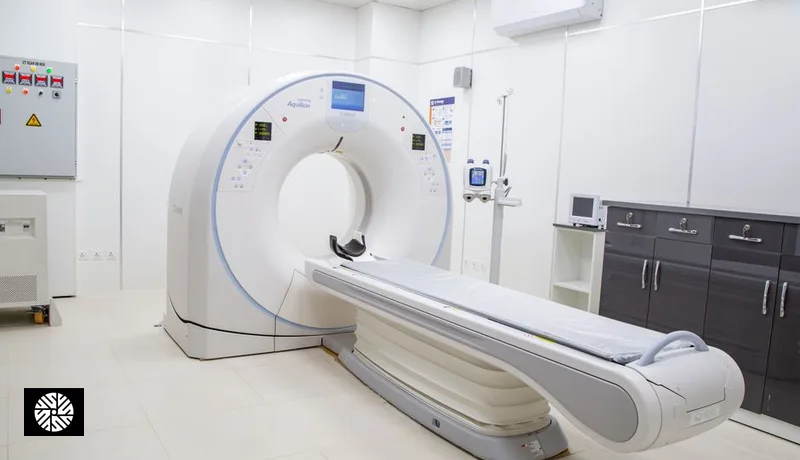
If the doctor orders blood work, an X-ray, an ultrasound, or other tests, you'll usually do them during the same visit — you take the order to the relevant lab or imaging counter, have it done, and often get results quickly, sometimes within the same appointment. This same-visit, one-stop rhythm is a big part of why care in Taiwan feels so fast compared with the multi-appointment coordination common in the West.
Step 5 — Pay at the cashier (批價)
Here's the reversal that trips people up: you pay after seeing the doctor, not before. Take your paperwork to the 批價 (pī jià) / cashier window, where your bill is calculated and you pay by cash or card. Because you're a self-pay foreigner without NHI, your rate is set by the hospital's self-pay schedule — many hospitals bill patients without NHI at roughly 1.3× the standard self-pay fee, and somewhat more through a dedicated international medical service. Keep the itemized receipt; it's what turns this into a travel-insurance reimbursement.
Step 6 — Collect your medication (領藥)
If you were prescribed medicine, you don't leave with it from the doctor — you take the prescription slip to the 領藥 (lǐng yào) pharmacy window. At a hospital this is a separate counter (and may involve a small additional payment slip before they dispense). At a clinic the pharmacy is often right there. Hand over the slip, wait for your name or number, and collect clearly labeled medication. And that's the whole loop: register → number → doctor → tests → pay → meds.
What a visit costs without NHI
The honest headline: much less than you fear. As a self-pay foreigner, a specialist outpatient visit paid in cash typically runs roughly NT$1,500–5,000 (about US$45–155), depending on the hospital tier and whether imaging is involved — standard outpatient clinics at the lower end, premium hospitals' international centers at the higher end. A simple clinic visit is cheaper still. These are approximate and vary, so treat them as a ballpark and confirm at the cashier.
For context: long-term residents on an Alien Resident Certificate (ARC) join NHI (compulsory from day one of employment, or after six continuous months of residence), after which point-of-care copays are tiny — a fixed NT$50 at a dental or traditional-medicine clinic, for instance. As a tourist you don't get those NHI rates, but Taiwanese self-pay prices are still a fraction of American ones, which is the whole reason medical tourism to Taiwan works.
Book ahead or just walk in?
Both work. Walk-in is the default and entirely normal — show up, register, wait. To cut the wait, major hospitals offer online or app-based registration, sometimes in English, where you reserve a slot or a number in advance; many clinics let you reserve a morning number to be seen later that day. For a first-timer with a non-urgent problem, walking into a clinic is the simplest possible start.
Bringing your own medication and refills
One catch worth knowing: Taiwanese pharmacies won't fill a US, UK, or EU prescription. If you run out of a regular medication, the workaround is simple — book a brief consultation with a Taiwan physician (roughly NT$500–1,500 cash), bring your medication bottle and any records, and they'll write an equivalent local prescription you can fill on the spot. For controlled medications, bring documentation from your home doctor.
Getting help in English
At a major medical center, ask for the International Medical Service or International Patient Center — these desks exist specifically to walk foreign patients through registration, translation, and billing. For finding English-speaking doctors and dentists in advance, the American Institute in Taiwan (AIT) publishes a regularly updated directory. And in practice, Taiwan's culture of helpfulness toward visitors is real: if you're stuck at a counter, someone who speaks English is usually produced to guide you through.
First-timer survival tips
- Start at a clinic for anything routine — it's the gentlest introduction to the system.
- The board, not the announcements — watch your number on the display; you don't need to understand spoken Mandarin.
- Pay after, not before — the cashier (批價) comes after the doctor.
- Medication is a separate window (領藥), with its own short wait.
- Keep every receipt for your insurer; ask for an itemized bill and, if needed, an English diagnosis.
- Translation app open, passport in hand — that combination gets you through almost anything.
Quick reference: the loop in one line
掛號 Register → take a number → see the doctor → tests (if needed) → 批價 Pay → 領藥 Collect meds. Self-pay as a tourist runs roughly NT$1,500–5,000 for a specialist visit, less at a clinic; bring passport, card, cash, and insurance details; for a real emergency, see our ER guide and call 119.
Sources & Further Reading
- National Health Insurance Administration, Ministry of Health and Welfare — coverage, copayment, and self-pay basics (nhi.gov.tw).
- Individual hospital charge-and-payment / self-pay billing pages for patients without NHI.
- "Taiwan Healthcare FAQ," Foreigners in Taiwan — practical registration and self-pay notes (foreignersintaiwan.com).
- American Institute in Taiwan — directory of English-speaking physicians and dentists.
- New Dawn Health — How to See a Doctor in Taiwan (which type of care to choose) and Emergency Room in Taiwan.
This article is general information for travelers, not medical advice. Prices are approximate and change; confirm with the hospital and your insurer. In an emergency, call 119 or go to the nearest emergency room.
 Blog
Blog