
Quick answer: Taiwan's bicycle industry is a cluster, not a company. Giant Manufacturing was founded in 1972 by King Liu; Merida Industries was founded the same year by Ike Tseng. In 2003 the two rivals formed Taiwan's A-Team, a joint supplier-development programme that ran until 2016. Taiwan Panorama, published by the Ministry of Foreign Affairs, counts more than 900 bicycle-industry companies clustered in the Taichung, Changhua and Tainan areas, exporting bikes to international brands at an average of US$813 apiece. The trade meeting point is Taipei Cycle at Nangang: 25–28 March 2026, next edition 24–27 March 2027.
If you have ridden a high-end bicycle, there is a strong chance the frame was manufactured in Taiwan or designed by a brand whose engineers work with Taiwanese OEM partners. The dominance is structural — built over five decades, anchored by family-run companies that scaled into global leaders, and reinforced by an unusual culture of cross-rival cooperation.
This guide is the industry-context layer for anyone visiting Taipei Cycle, sourcing from Taiwanese manufacturers, or curious about why so many components on their bike say "Made in Taiwan". Every figure below is either a company's own published record or an official Taiwanese source, listed at the end.
How did Taiwan become the global bicycle capital?
Three events define the rise from no-name component supplier to indispensable manufacturing centre.
1972 — the founding year
Both companies that would define Taiwanese cycling were founded in the same year. Giant records its own founding as 1972, by King Liu, starting out "producing bicycles for some of the world's top cycling brands". Merida's milestone list opens the same year: "1972 — MERIDA INDUSTRIES is born", founded by Ike Tseng. Both began as contract manufacturers for foreign brands; both later built their own global brands while continuing to build for others.
1981–1996 — the brand pivot
Giant dates its brand to 1981: "Giant-branded bikes hit the market, first in Taiwan followed by Europe, North America and other nations." Merida's own dated record shows the parallel track — first overseas distributor in Norway in 1988, first bicycle manufacturer listed on the Taiwan Stock Exchange in 1992, first-generation pedelec in 1995, and first ISO-certified bike manufacturer in Taiwan in 1996. Brand plus contract manufacturing on the same factory floor became the distinctive Taiwanese structure.
2003 — the A-Team
The most consequential industry event was the A-Team. As Taiwan Panorama puts it: "A key moment in the development of Taiwan's bicycle industry came in 2003, when local heavyweights Giant and Merida formed their own version of the A-Team." Two structural rivals set aside competitive instinct to raise manufacturing and quality-management capability across a shared supplier base. The programme concluded in 2016, having institutionalised cross-rival supplier development — the reason Taiwanese quality consistency is treated as a given rather than a gamble.
What makes Giant the anchor of the cluster?
Giant Manufacturing Co., Ltd. is the largest bicycle brand by global revenue, with operations spanning Taiwan, China, the Netherlands and Hungary. Its product line runs road, mountain, e-bike, urban, gravel and triathlon. The company puts its retail reach at "more than 12,000 retail stores around the world".
- OEM/ODM continues — Giant builds for several major US and European brands alongside its own label; the relationships are open secrets in the trade
- Carbon depth — Giant's own timeline marks 1987 as its carbon-fibre entry, which is why frame tooling knowledge sits so deep in the cluster
- E-bike platforms — Giant was an early entrant with its E+ system, competing with Bosch, Shimano STEPS and Yamaha PW
- Show anchor — Giant is a fixture at Taipei Cycle, where the frame and component tail exhibits alongside it
How is Merida different from Giant?
Merida bikes are made by a Taiwanese company: Merida Industry Co., Ltd. is headquartered in Yuanlin, Changhua, and its own milestone record dates its listing on the Taiwan Stock Exchange to 1992, so it is publicly held rather than owned by a foreign parent. Founded the same year as Giant, it built its identity around engineering precision and competitive cycling rather than volume retail. Its milestone record shows an early European tilt (Norway, 1988) and an early electric one (pedelec, 1995), both ahead of the market they now serve.
- Specialized relationship — Merida has a long-running manufacturing and ownership relationship with Specialized Bicycle Components, one of the more interesting structures in the industry
- European distribution — particularly strong in German-speaking Europe
- Pro team sponsorship — sustained UCI WorldTour sponsorship converts race credibility into consumer brand authority
- Public-company discipline — listed since 1992, so its reporting cadence is unusually visible for a bicycle manufacturer
Where does Maxxis fit in the supply chain?
Maxxis International is headquartered in Taiwan with manufacturing operations worldwide, and its bicycle tires — the Minion DHF and DHR mountain tires, the Re-Fuse road models, the Rambler and Ravager gravel tires — sit on the OEM spec sheets of most major bicycle brands. For a US buyer, Maxxis is the component most likely to be Taiwanese even when the frame is not: the tire is the one part specced by name on the box.
Which components does the Taichung cluster actually make?
Beyond the anchor brands, the supply chain is hundreds of specialist manufacturers in the Taichung–Changhua corridor. The categories where Taiwan sets the global standard:
| Category | Taiwan Position | Notable Names |
|---|---|---|
| Carbon frames (high-end) | Dominant for the premium tier | Giant, Merida, and a long tail of OEM specialists |
| Tires | Maxxis leads premium spec; Kenda and Innova serve mid-tier | Maxxis, Kenda, Innova, CST |
| E-bike systems | Deep integration capacity; gaining on European leaders | Giant E+ system, ODM motor/battery integrators |
| Saddles and contact points | Established makers; Italian brands often built here | Velo, Selle Royal Taiwan operations |
| Hubs and wheels | Specialist Taiwanese makers across the premium tier | Taichung wheel and hub specialists |
| Headsets, seatposts, stems | Quietly Taiwan-dominant | FSA Taiwan operations and others |
Why is the cluster in Taichung and not Hsinchu?
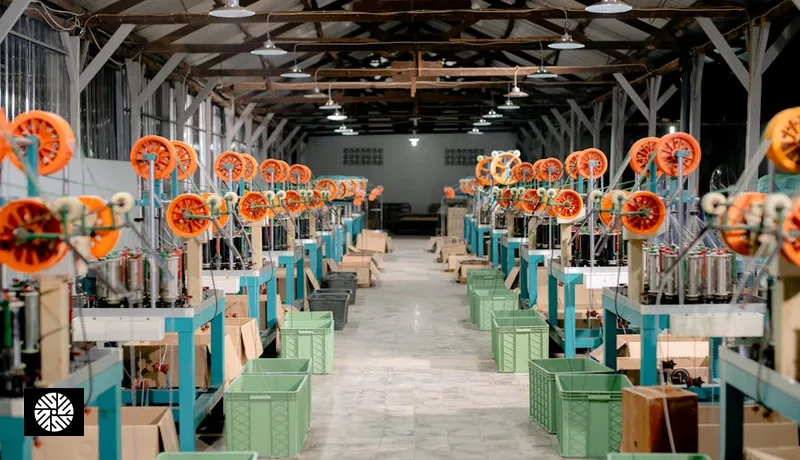
People who know Taiwan as "the semiconductor island" sometimes assume bicycles are made in Hsinchu, where TSMC is headquartered. They are not. Taiwan Panorama counts more than 900 bicycle-industry companies in the Taichung, Changhua and Tainan areas, in central and southern Taiwan.
Giant's headquarters sits in Dajia, Taichung; Merida's in Yuanlin, Changhua. The concentration matters operationally: partners co-locate engineering teams, prototype iterations happen in days rather than weeks, and the whole industry draws on one pool of mid-career manufacturing engineers who have worked across several OEM partners.
For buyers attending Taipei Cycle, the show is the formal introduction and the real work happens at factory visits in Taichung, a High Speed Rail ride south of Taipei. The organiser has built that into the 2027 edition as a "Total Taiwan Experience" of factory visits and innovation centres for international attendees.
What is changing in the e-bike era?
Electric drivetrains moved the value of a bicycle from the frame to the system — motor, battery, controller, display and the integration between them. That is exactly the kind of multi-vendor assembly the Taichung corridor was already built for, which is why European and US brands sourced their e-bike platforms here rather than rebuilding supply chains at home. Merida shipped its first pedelec in 1995; the capability is older than the boom that made it valuable.
After the boom, the category is consolidating. For buyers, the practical read is that the strongest Taiwanese e-bike manufacturers hardened their quality processes under volume pressure, the weakest have exited, and the survivors are the ones worth a factory visit.
What labor and sustainability concerns should a buyer check?
The quality reputation is genuine and well-earned. The industry has also faced real scrutiny over migrant-worker recruitment fees charged by labor brokers, and the debt-bondage risk that follows. Ask suppliers directly about recruitment practices and how they handle broker fees. Mature suppliers have answers ready; suppliers that deflect should raise a flag. Labor and sustainability are increasingly material in US distributor due diligence.
Can you visit the factories as a traveler?
Yes. Several Taichung-based factories — Giant most prominently — run visitor-facing brand experiences and on-site retail, and the museum-style exhibits are worth a half day. Combined with a meal in central Taichung and a High Speed Rail return to Taipei, it makes a strong day trip, and it contextualises everything you have ridden on Taiwanese roads (see our cycling routes guide).
Can Taipei Cycle visitors fit a health screening into the trip?
Taipei Cycle runs four days at Nangang, and most international buyers stay longer for factory visits. That leaves a spare half-day in Taipei, which is enough for a full screening — the same trip logic that already brings sourcing travelers to us.
- Essential holistic exam — US$699, about 3.5 hours. Five ultrasounds, bone mineral density, vitamin D and cardiovascular risk bloodwork. Booked in the morning, you are out before lunch.
- Light full-body MRI — US$1,399, about 2 hours. Radiation-free full-body MRI covering head, neck, abdomen, pelvis and whole spine, plus a low-dose lung CT, two ultrasounds and a doctor's debrief.
- Premium holistic exam — US$1,699, about 5 hours. Full-body MRI with a low-dose lung CT and heart calcium score added.
Results are reviewed with a doctor before you fly home. Inclusions and the full price list are on our packages page — book around the show days, not on them.
Taipei Cycle at a glance
| Detail | Official figure |
|---|---|
| Venue | Taipei Nangang Exhibition Center, Hall 1 & Hall 2 (TaiNEX 1 & 2) |
| 2026 edition | 25–28 March 2026; over 3,450 booths across the full bicycle supply chain |
| 2025 edition | 1,000+ exhibitors, 3,600 booths, more than 20,000 professional visitors from 90 countries |
| 2027 edition | 24–27 March 2027; booth registration opened 22 July 2026 |
| 2027 positioning | "Trust Drives the Future", with a "Total Taiwan Experience" of factory visits and innovation centres |
| Awards | TAIPEI CYCLE d&i awards (design and innovation) |
Related reading
- Riding side: Cycling in Taiwan — East Coast Highway 11, Taroko, Wuling
- Adjacent industry: Taiwan's Semiconductor Ecosystem — TSMC, ASML & US Supply Chain
- Related health: Longevity Health Screening — An Evidence-Informed 2026 Roadmap
- Company sites: Giant, Merida, Maxxis
Sources
- Giant Bicycles — About Us and company timeline: 1972 founding, 1981 brand launch, 1987 carbon fibre, 12,000+ retail stores (accessed 2026-09-08)
- Giant Bicycles — Giant manufacturing founded, King Liu, 1972 (accessed 2026-09-08)
- Giant Bicycles — The Brand is born, 1981 (accessed 2026-09-08)
- Merida Bikes — Our Milestones: 1972 founding by Ike Tseng, 1988 Norway distributor, 1992 stock-exchange listing, 1995 pedelec, 1996 ISO certification (accessed 2026-09-08)
- Taiwan Panorama (Ministry of Foreign Affairs, ROC) — Spinning Wheels: How Taiwan Became a Hub for High-End Bicycle Manufacturing: A-Team formed 2003 and concluded 2016, 900+ bicycle-industry companies in Taichung, Changhua and Tainan, US$813 average export price (accessed 2026-09-08)
- TAITRA — Taipei Cycle official site: 2027 show dates and TaiNEX 1 & 2 venue (accessed 2026-09-08)
- TAITRA — Taipei Cycle unveils new brand positioning and opens booth registration for 2027: over 3,450 booths in 2026, 24–27 March 2027, Total Taiwan Experience (accessed 2026-09-08)
- TAITRA — Taipei Cycle Show Special Award: TAIPEI CYCLE d&i awards 2027 concept, brochure and winners (accessed 2026-09-08)
- TAITRA — Taipei Cycle exhibitor information: 25–28 March 2026 dates; 2025 edition with 1,000+ exhibitors, 3,600 booths and more than 20,000 professional visitors from 90 countries (accessed 2026-09-08)
Frequently asked
Why does Taiwan dominate the global bicycle industry?
Three structural reasons. (1) Giant and Merida were both founded in 1972 as contract manufacturers for foreign brands. (2) Through the 1980s and 1990s both transitioned from pure OEM to branded competitors while continuing to build for others, creating the distinctive dual-track structure. (3) In 2003 the two rivals formed Taiwan's A-Team, a joint supplier-development programme that ran until 2016 and institutionalised cross-rival cooperation on supplier quality. Taiwan Panorama, published by the Ministry of Foreign Affairs, counts more than 900 bicycle-industry companies clustered in the Taichung, Changhua and Tainan areas.
What was the A-Team Alliance?
The A-Team, formed in 2003, was an agreement between rivals Giant and Merida to raise manufacturing and quality-management capability across their shared supplier base. As Taiwan Panorama puts it, "a key moment in the development of Taiwan's bicycle industry came in 2003, when local heavyweights Giant and Merida formed their own version of the A-Team". The premise was that the whole Taiwanese cycling ecosystem benefited from raising the supplier quality floor and that no single company could do the work alone. The programme concluded in 2016, and it is the structural reason Taiwanese quality consistency is treated as a given rather than a gamble.
Where is Taiwan's bicycle manufacturing cluster?
In Taichung and Changhua in central Taiwan, a High Speed Rail ride south of Taipei. It is not in Hsinchu, which is the semiconductor cluster. Taiwan Panorama counts more than 900 bicycle-industry companies in the Taichung, Changhua and Tainan areas; Giant's headquarters sits in Dajia, Taichung, and Merida's in Yuanlin, Changhua. The geographic concentration is what enables co-located engineering teams, prototype iterations in days rather than weeks, and a shared pool of mid-career manufacturing engineers.
When were Giant and Merida founded?
Both in 1972, by their own records. Giant Manufacturing dates its founding to 1972 under King Liu, starting out producing bicycles for some of the world's top cycling brands; it dates its own brand to 1981. Merida Industry opens its milestone list the same year — "1972 — MERIDA INDUSTRIES is born" — founded by Ike Tseng, with its first overseas distributor in Norway in 1988 and a Taiwan Stock Exchange listing in 1992. Both transitioned from pure OEM to branded competitors while continuing contract manufacturing.
How big is Maxxis in the bicycle industry?
Maxxis International is headquartered in Taiwan with manufacturing operations worldwide, and its bicycle tires — the Minion DHF and DHR for mountain, Re-Fuse for road, Rambler and Ravager for gravel — sit on the OEM spec sheets of most major bicycle brands. For a US buyer it is the component most likely to be Taiwanese even when the frame is not: the tire is the one part specced by name on the box.
Can I visit a Taiwanese bicycle factory as a tourist?
Yes — several Taichung-based factories, Giant most prominently, operate visitor-facing brand experiences and museum-like exhibits. The Giant cycling museum in Dajia is worth a half-day visit; combined with a meal in central Taichung and an HSR return to Taipei, it makes a strong day trip. For serious buyers, formal factory visits are arranged through existing account managers (request well in advance). For tourists, the brand experiences require less advance planning.
Why are e-bikes a particularly Taiwanese story?
Because electric drivetrains moved the value of a bicycle from the frame to the system — motor, battery, controller, display and the integration between them — and multi-vendor assembly is exactly what the Taichung corridor was already built for. European and US brands sourced their e-bike platforms here rather than rebuilding supply chains at home. The capability is older than the boom that made it valuable: Merida's own milestone record shows its first pedelec in 1995. The category is now consolidating, and the survivors are the manufacturers that hardened their quality processes under volume pressure.