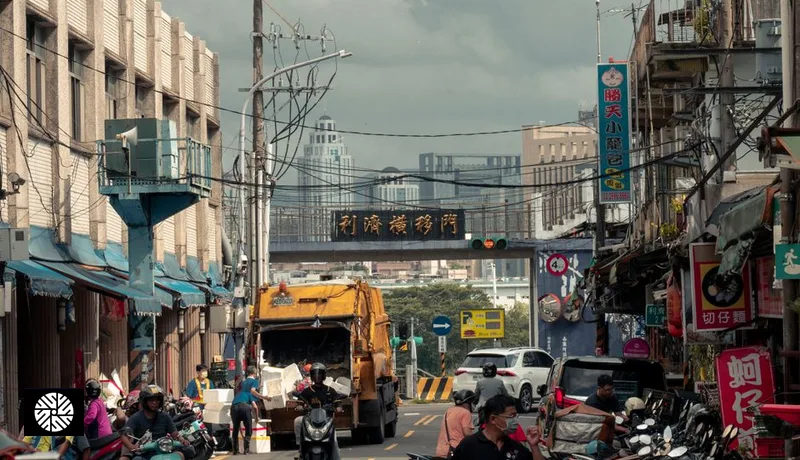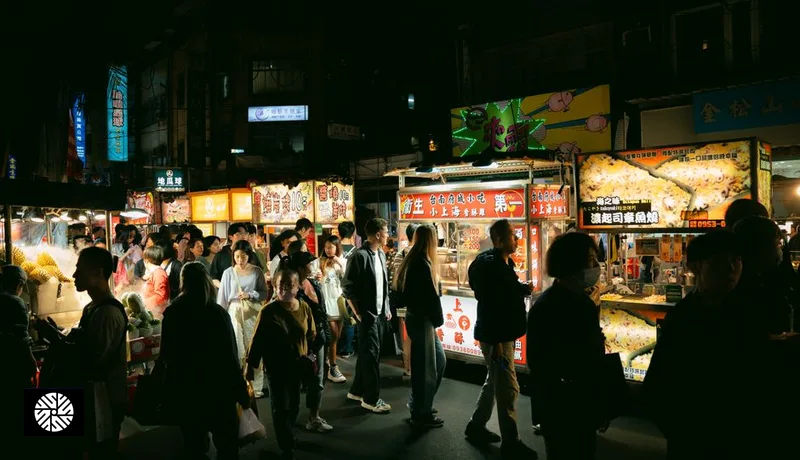

An American traveler finishes a bowl of beef noodle soup in Taipei, pays NT$220, and leaves NT$50 on the table. Before he reaches the door, someone is chasing him down the sidewalk holding the bill, apologizing, assuming he forgot his change.
This happens constantly. It is one of the most reliable culture shocks for visitors arriving from the United States, where a 20% tip is not a compliment but an obligation, and where the tablet screen swivels around with three suggested percentages before you have even sat down.
Taiwan has no tipping culture. Not "tipping is optional here." Not "tip less than you would at home." The tip, as an American understands it — a customer-funded supplement to a worker's wage, calculated as a percentage, expected at the end of a transaction — is simply not part of how the transaction works. Understanding why is more useful than memorizing a rule, because it explains something about Taiwan that visitors notice within a day: the service is excellent anyway.
The Short Version
| Situation | Do you tip? | What actually happens |
|---|---|---|
| Noodle shop, café, night market, food court | No | You pay the posted price. There is no tip line and no jar. |
| Mid-range and upscale restaurant | No | A 10% service charge may already be printed on the menu and added to the bill. |
| Taxi or ride-hailing | No | Meter fare. Many people let the driver keep small change; nobody expects it. |
| Convenience store, bakery, pharmacy | No | Exact change is counted back to you with two hands. |
| Hotel bellhop, housekeeping | Optional | NT$50–100 is a kind gesture at a luxury hotel. Never required. |
| Private driver, guide, or multi-day tour | Optional | The one context where a real tip is understood and welcome. |
| Hospital, clinic, health screening center | Absolutely not | The invoice is the total. Offering cash to medical staff creates a problem, not goodwill. |
The 10% Service Charge Is Not a Tip
The one number visitors do see is 10%. Taiwan's Tourism Administration puts it plainly in its travel notes for foreign visitors: a service charge of 10% is customary in hotels and restaurants. On a Chinese-language menu it appears as 服務費 (fúwùfèi) or as a line reading 加一成 — "plus one tenth."
Three things make it fundamentally different from an American tip:
- You do not choose it. It is added by the restaurant, at a fixed rate, before the bill reaches you. There is no percentage to select and no judgment being made about the server.
- It is not everywhere. Local eateries, breakfast shops, night-market stalls, food courts, and most casual restaurants charge nothing extra. The service charge concentrates in hotel restaurants, mid-to-high-end dining, and places with table service and a reservation book.
- It does not replace a wage. Taiwanese service staff are paid a salary governed by the Labor Standards Act and the statutory minimum wage. The service charge is revenue for the business, not a substitute paycheck.
That last point is where the American and Taiwanese systems separate completely. Under US federal law an employer may pay a tipped worker a cash wage as low as $2.13 an hour and count customer tips toward the rest of the minimum wage. The tip is structural. Diners in the United States are not rewarding service; they are covering payroll, and everyone involved knows it.
Taiwan never built that structure. Wages come from the employer. So when you add money on top, you are not filling a gap — you are handing someone an unexplained amount of cash, which is exactly why it produces confusion rather than gratitude.
What Locals Argue About Instead
Taiwan's own service-charge debate would sound strange to an American ear. Nobody argues about whether 15% is stingy. The domestic argument is whether the 10% should exist at all.
The service charge has no specific statute behind it — it is commercial custom, not law. Consumer advocates in Taiwan have long argued that if a restaurant does not clearly disclose the charge on its menu or signage before you order, a customer can decline to pay it. The second recurring complaint is that the money often stays with the business rather than reaching the staff who earned it.
So the local conversation is about disclosure and distribution, not generosity. It is a business-practice dispute, not an etiquette question. That distinction is the whole culture in one line.
The Reverse Tip: Your Receipt Is a Lottery Ticket
Here is the part that genuinely delights visitors. In Taiwan, the flow of small unexpected money runs the other direction — from the government to you.
Almost every legitimate purchase generates a 統一發票 (tǒngyī fāpiào), a government uniform invoice. Each one carries an eight-digit number, and Taiwan's Ministry of Finance runs a lottery on those numbers every two months. Matching the last three digits pays NT$200. The top prizes run to NT$2 million and NT$10 million.
The design is clever tax policy: consumers have a reason to demand a real receipt, so vendors have a reason to report the sale. But the traveler's experience of it is simply this — the flimsy slip handed over with your bubble tea might be worth money, and foreign visitors can claim prizes with a passport.
Keep your receipts until the draw, check the numbers on the Ministry of Finance eTax portal, and enjoy the inversion: a country where you do not tip the cashier, but the cashier hands you a lottery ticket.
Then Why Is the Service So Good?
Americans raised inside the tipping system are taught an implicit theory: without the tip, service collapses. Taiwan is a live disproof, and visitors notice it fast.
The convenience-store clerk heats your food, brews your coffee, and processes your parcel without a tip jar. The pharmacist explains a dosage carefully with nothing to gain. The MRT staff member walks you to the correct platform. The breakfast-shop owner remembers your order on day two. None of it is transactional, because none of it is being purchased.
What is operating instead is a set of workplace norms that treat competence and courtesy as part of the job rather than as an upsell — the same instinct that produces spotless subway stations and lost wallets returned intact. Service quality is a matter of professional standard and personal dignity. Being paid extra to be pleasant would, to many workers here, slightly cheapen the point.
It also removes an entire layer of low-grade anxiety from your trip. No mental math. No guessing at the local percentage. No wondering whether the tablet is watching you. The posted price is the price, sales tax is already inside it, and the interaction ends cleanly.
What Happens If You Tip Anyway
Nothing bad — just something awkward. The most common outcomes, in order of likelihood:
- Staff chase you down to return the money, certain you made a mistake.
- The cash is refused politely, twice, and you feel obliged to take it back.
- It is accepted with visible discomfort and a slightly confused thank-you.
- At a hotel or on a private tour, it is accepted normally — these are the contexts where tipping is legible.
If you genuinely want to reward someone, there are gestures that translate better than cash. Say 謝謝 (xièxie) properly. Write the shop a positive Google review — small Taiwanese businesses value these enormously. Buy something extra rather than leaving change behind. Bring a small gift from home for a guide or driver you spent days with. Come back, and be recognized.
When a Tip Is Actually Appropriate
A short list, and it really is short:
- Private drivers and licensed guides, especially on multi-day charters. NT$200–500 per day is a normal and understood gesture.
- Luxury hotel bellhops and concierges handling heavy luggage or an unusual request. NT$50–100.
- Anyone who solves a problem outside their job, such as a driver who spends thirty minutes helping you recover a phone left in a restaurant.
The mechanics matter more than the amount. Cash is presented with two hands, discreetly, at the end — not dropped on a table or waved in the air. For a larger amount, or for anything involving a family or a formal relationship, money belongs in a red envelope (紅包, hóngbāo), which converts a payment into a gift. Prefer even-numbered, non-inauspicious amounts; skip anything built on the number four.
Medical Visits: The Bill Is the Whole Story
This is the section that matters most for anyone coming to Taiwan for care, and it is unambiguous: do not tip anyone in a medical setting. Not the physician who reads your imaging, not the nurse who draws your blood, not the technician running the ultrasound, not the coordinator who arranged the day.
Taiwanese hospitals and screening centers operate on published, itemized pricing. Public-sector integrity rules and hospital policy govern what staff may accept from patients, and an envelope of cash pushed across a counter puts a professional in a genuinely uncomfortable position — one they will have to decline and possibly document. It is not a gray area and it is not a way to secure better attention.
Visitors sometimes worry that a "no tipping" system means care will be rushed or transactional. The opposite tends to be true at a well-run health screening center: the schedule, the escort between stations, the explanation of results, and the follow-up are the product you already bought. Nobody is working an angle for a gratuity because there is no gratuity to work for.
If your experience was excellent and you want to say so, the useful currencies are a written review, a note to the center naming the staff who helped, and a referral. Those reach the people who deserve credit in a way cash never will.
The One-Sentence Rule
Pay the number on the bill, keep the receipt in case it wins the lottery, and spend the 20% you would have tipped on more food. That is not a shortcut — in Taiwan it is the complete etiquette.
Sources & Further Reading
- Taiwan Tourism Administration — Useful Tips for visitors (service charge, currency)
- Ministry of Finance eTax Portal — Uniform-Invoice prize winning numbers
- Printing Plant, Ministry of Finance — Uniform invoice lottery FAQ
- US Department of Labor — Minimum wages for tipped employees
- Laws & Regulations Database of Taiwan — Labor Standards Act
- Taipei Times — "False gratuity": how Taiwan's 10% service charge is treated as restaurant revenue
This article is general travel and cultural information, not legal, tax, or medical advice. Customs and prices change; confirm current charges locally. Lottery prize amounts and claim procedures are set by Taiwan's Ministry of Finance.
Frequently asked
Do you tip in Taiwan?
No. Taiwan does not have a tipping culture. Restaurants, taxis, cafés, convenience stores, night markets, and hair salons all expect exactly the posted price. Leaving cash on a table frequently results in staff chasing you down to return it, assuming you forgot your change. The rare exceptions are private drivers and licensed guides on multi-day charters (NT$200–500 per day) and luxury hotel bellhops handling heavy luggage (NT$50–100).
What is the 10% service charge on Taiwanese restaurant bills?
Taiwan Tourism Administration notes that a 10% service charge is customary in hotels and restaurants, shown on menus as 服務費 or 加一成. It is not a tip: you do not choose the amount, it is added by the business before the bill reaches you, and it does not substitute for staff wages the way an American tip does. It appears mainly at hotel restaurants and mid-to-upscale table-service venues — local eateries, breakfast shops, food courts, and night-market stalls charge nothing extra. Taiwan has no statute mandating it, and there is ongoing domestic debate about whether the money reaches service staff.
Should I tip taxi drivers in Taiwan?
No. Taxi and ride-hailing fares are metered and the meter is the price. Some passengers let a driver keep small change on a fare such as NT$185, but nobody expects it and declining to do so is entirely normal. No percentage calculation is involved.
Do you tip doctors or nurses in Taiwan?
Absolutely not. Do not offer cash to any medical staff — physicians, nurses, technicians, or coordinators. Taiwanese hospitals and screening centers use published itemized pricing, and hospital policy plus public-sector integrity rules govern what staff may accept from patients. An envelope of cash puts a professional in a position where they must decline and possibly document it. If you want to recognize excellent care, write a review, send a note naming the staff who helped, or refer someone.
What is the Taiwan receipt lottery?
Almost every legitimate purchase in Taiwan generates a government uniform invoice (統一發票) carrying an eight-digit number. Taiwan's Ministry of Finance draws a lottery on those numbers every two months. Matching the last three digits pays NT$200, and top prizes reach NT$2 million and NT$10 million. Foreign visitors can claim prizes with a passport. It is deliberate tax policy — consumers demand real receipts, so vendors report sales — and it means the country where you never tip the cashier hands you a lottery ticket instead.