Blog
Blog
Why an Island of 23 Million Has Three Long-Haul Airlines

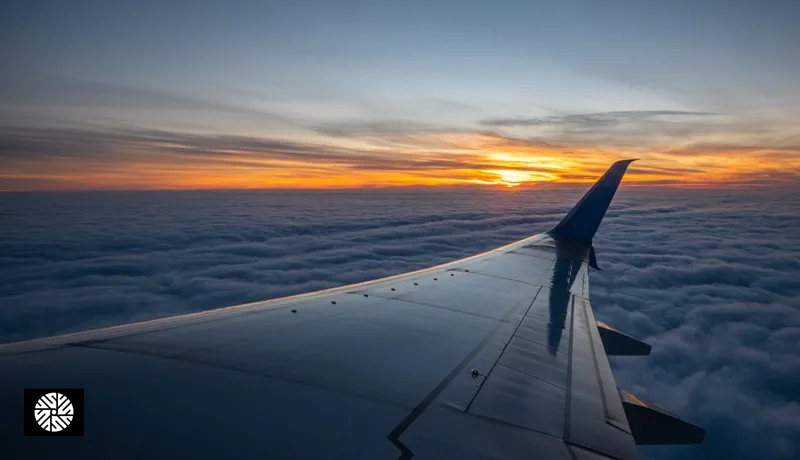
Here is a fact that sounds like a typo. Taiwan has about 23.4 million people — roughly the population of Florida — and it supports three airlines that fly nonstop across the Pacific. Florida has none.
New Zealand, with a fifth of Taiwan's population, has one long-haul carrier. Ireland has one. Portugal has one. Taiwan has China Airlines, EVA Air, and STARLUX, and in 2026 they were still adding US cities rather than trimming them.
If you are weighing up a trip to Taipei — for a health screening, for business, for family — this is not aviation trivia. It is the difference between one flight a week you must build your entire schedule around, and a choice of departures you can move if something changes.
Three Airlines, Briefly
- China Airlines (華航, CI) — founded 1959, the flag carrier. The oldest network and the broadest European reach.
- EVA Air (長榮航空, BR) — founded 1989 by the Evergreen shipping group. Consistently rated among the world's best airlines, and the largest North American network of the three: in June 2026 it opened Washington, D.C. as its tenth North American gateway.
- STARLUX (星宇航空, JX) — founded 2018, first flights 2020, which means it launched an airline into the pandemic. It went transpacific anyway and now serves five US cities; Phoenix started in January 2026.
Tigerair Taiwan exists too, but it is a short-haul low-cost carrier — regional Asia, not the Pacific.
Why Three? Four Reasons That Compound
1. Taiwan is a manufacturing island that has to move people
Taiwan makes a majority of the world's most advanced semiconductors. That produces a permanent, price-insensitive flow of engineers, executives, auditors, and equipment specialists between Taiwan and the US West Coast — and it does not stop in a recession, because a fab under construction cannot wait for the business cycle. Business-class demand on a route is what makes long-haul flying profitable, and Taiwan has an unusually reliable supply of it.
2. A large, concentrated, high-frequency diaspora
Several hundred thousand people of Taiwanese origin live in the United States, densely clustered in Southern California, the Bay Area, and Seattle. This is the demand that explains the odd-looking airports. Ontario, California is not a tourist gateway — it is a 40-minute drive from the San Gabriel Valley, home to one of the largest Taiwanese communities outside Taiwan, and flying there means skipping LAX entirely. That is a route designed around where people actually live.
3. Geography made Taiwan a natural connecting point
Taipei sits within about four hours' flying of Tokyo, Seoul, Shanghai, Hong Kong, Manila, Bangkok, Singapore, and Ho Chi Minh City. A carrier can fill a transpacific widebody with passengers who are not going to Taiwan at all — they are changing planes there. That connecting traffic subsidises frequency on routes that a purely local market of 23 million could not support alone.
4. Deliberate competition, quite recently
For decades this was a two-airline country. STARLUX's arrival in 2020 was a bet that Taiwan could support a third premium carrier, and the market has behaved the way contested markets do: more cities, newer aircraft, and fares that have to compete. As a passenger you are the beneficiary of an argument between three airlines.
What This Actually Means For Your Trip
You probably have more than one option, and possibly more than one airport. If you are on the US West Coast, Taiwan's carriers now serve several cities there — including two, Phoenix and Washington D.C., that did not exist as nonstop options at the start of 2026. Check departures from your second-nearest airport as well as your nearest; the answer changes more often than people expect.
Rebooking is realistic. This is the part that matters if you are travelling for medical reasons. On a route with one weekly flight, a schedule change means losing a week. On a route with competing daily services, moving a flight is an ordinary transaction. Screening appointments occasionally shift, results occasionally warrant staying an extra few days, and a route with depth absorbs that.
Do not trust any route list, including a fresh one. Taiwan's transpacific map changed twice in the first half of 2026 alone. Anything published — here or anywhere — is a snapshot. Book from the airline's own schedule for your travel month.
The Honest Caveats
Three long-haul carriers does not mean cheap. Transpacific fares from Taiwan are competitive but not low, and peak periods — Lunar New Year above all, plus the July–August school holidays — are expensive and sell out early. If your dates are flexible, avoid Lunar New Year entirely; if they are not, book months ahead.
It also does not mean every US city is connected. The network is heavily weighted to the West Coast, and East Coast and inland options are thinner, though growing. If you are flying from a smaller US city you will most likely connect on the West Coast regardless of which carrier you choose.
And a nonstop of 13 to 16 hours is still a nonstop of 13 to 16 hours. Convenience here means "you can get there without changing planes," not "the flight is short." If you are arriving for a screening that requires fasting, build in a recovery day rather than going straight from the airport to a blood draw — see our airport and arrival guide for the practical sequencing.
The One-Line Version
Three long-haul airlines from an island of 23 million is what happens when a manufacturing economy, a concentrated overseas community, a well-placed hub, and genuine competition all point the same way. For a visitor, the effect is mundane and valuable: you get choices, and you can change your mind.
Route and gateway details in this article reflect publicly announced schedules as of August 2026 and are included to illustrate how quickly the network is changing. Always confirm current flights directly with the airline before booking.
FAQ
Taiwan has three long-haul carriers — China Airlines (華航), EVA Air (長榮), and STARLUX (星宇) — and all three fly the Pacific, alongside some US carriers on the busiest routes. EVA Air has the largest North American network of the three and added Washington, D.C. in June 2026 as its tenth North American gateway; STARLUX serves five US cities, having opened Phoenix in January 2026. Because the map changed twice in the first half of 2026 alone, confirm current routes on the airline's own schedule for your travel month rather than relying on any published list.
Four reasons that reinforce each other. Taiwan's semiconductor industry generates constant, recession-resistant business travel to the US West Coast, and premium demand is what makes long-haul routes profitable. A large Taiwanese-American community concentrated in Southern California, the Bay Area, and Seattle flies frequently. Taipei sits within about four hours of most major East and Southeast Asian cities, so carriers can fill transpacific aircraft with connecting passengers who are not visiting Taiwan at all. And STARLUX entered the market in 2020, turning a two-airline country into a genuinely contested one.
Ontario is about a 40-minute drive from the San Gabriel Valley, which has one of the largest Taiwanese communities outside Taiwan. Flying there lets passengers skip LAX congestion entirely and land much closer to where they are actually going. It is a good example of Taiwan's transpacific network being shaped by diaspora geography rather than by tourism.
Competitive, but not cheap. Three carriers plus route competition keeps fares honest and gives you alternatives, yet transpacific tickets remain a significant cost. Peak periods are the real problem: Lunar New Year is both expensive and sells out early, and July–August school holidays are close behind. If your dates are flexible, avoid Lunar New Year; if not, book several months ahead.
Easier than on a thin route, which is the practical value of having three carriers. On a route with one weekly departure, a change costs you a week; on a route with competing daily services it is an ordinary rebooking. This matters for medical travel, where a screening slot can shift or results can warrant staying a few extra days. Check what your fare class actually permits before booking — frequency helps only if your ticket allows a change.