Blog
Blog
Taiwan Airport Guide 2026: Entry, Transfers & Health Forms

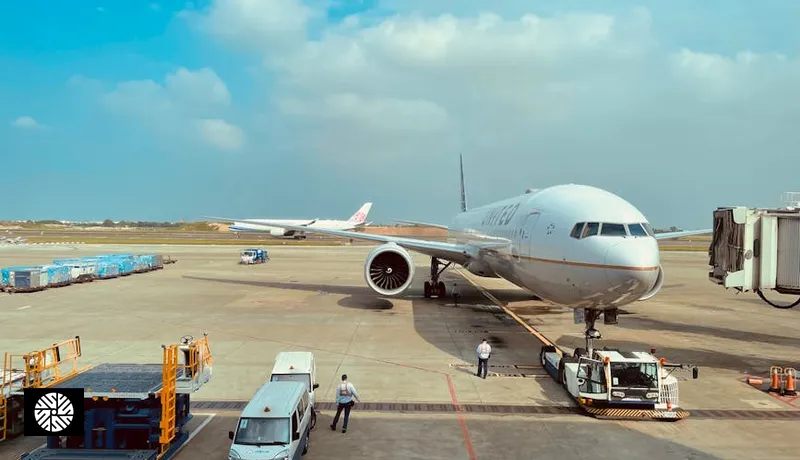
If you're flying into Taiwan for a health screening trip — or just visiting and want to land smoothly — the airport is the first chapter of the experience. Most international travelers arrive at Taiwan Taoyuan International Airport (TPE), but Taipei Songshan (TSA) and Kaohsiung (KHH) play roles too. This guide walks through terminals, immigration, customs, transit options into Taipei, lounges, and the small logistics that make a long-haul flight feel either painless or punishing.
For a wider view of getting to and around the country, see our guide to getting around Taiwan and the entry rules and visas guide. If you're specifically here for a scan, the full-body MRI primer covers why so many travelers now build trips around Taiwan's screening clinics.
Which Taoyuan terminal will your flight use — T1 or T2?
Taoyuan has two terminals connected by a free shuttle and an underground walkway. Knowing which terminal your flight uses matters because they have different lounges, different MRT entrances, and different amenities. Terminal 1 is the older terminal and hosts most regional Asian carriers, including some long-haul flights. Terminal 2 is newer, larger, and hosts the bulk of long-haul Western carriers.
The split isn't perfectly clean — codeshares and seasonal rotations occasionally move flights — so always confirm with your airline before heading to the airport. But for planning purposes, this is the rough breakdown:
| Terminal | Major carriers | Notes |
|---|---|---|
| T1 | EVA Air (regional), China Airlines (regional), Tigerair, Scoot, Jetstar, Vietnam Airlines, Thai Airways, Philippine Airlines | Older terminal, more compact, primarily Asia-Pacific carriers |
| T2 | EVA Air (long-haul), China Airlines (long-haul), United, Delta, Air France, Lufthansa, KLM, Cathay Pacific, Singapore Airlines, ANA, JAL, Korean Air | Newer terminal, larger duty-free, more lounge options, MRT station directly underneath |
Two caveats on the table above. STARLUX (星宇航空), Taiwan's newest carrier, is not listed because terminal assignments are operational and move — we would rather not send you to the wrong building than guess. And airlines are reassigned between T1 and T2 periodically regardless of carrier. Your boarding pass states the terminal; the airport's own departures board is the authority on the day. The two terminals are linked by a free shuttle and the Skytrain people mover, so a mistake costs minutes rather than a flight.
If you're flying United, Air France, Lufthansa, KLM, or Cathay, you'll almost always be at T2. If you're on a budget Asian carrier, expect T1.
Which immigration lane can you use at TPE?
Immigration is where first-time visitors lose the most time, but it's also where you can save the most with a little preparation. There are three lanes:
Regular line. Used by most first-time visitors. You hand your passport and arrival card to an officer, they ask a couple of questions (purpose of visit, length of stay, hotel address), stamp you in, and you're through. Waits are longest when several wide-bodies land together — early-morning arrivals from North America and evening waves from Southeast Asia are the usual clusters.
e-Gate (automated). Taiwan's National Immigration Agency opens e-Gate enrolment to foreign nationals holding an Alien Resident Certificate, an APRC, or an Employment Gold Card, and to electronic-passport holders from partner countries under reciprocal arrangements. Applicants must be at least 10 years old and at least 120 cm tall. Enrolment is done either by self-service at the e-Gate itself or manually with an immigration officer. Once you're enrolled, every subsequent arrival is a walk through an automated gate instead of a queue — worth doing on your first trip if you expect to come back.
APEC Business Travel Card. If you hold an ABTC, there's a dedicated fast lane that bypasses the regular queue entirely. Useful for executives doing repeat trips.
Practical tip: pre-fill the Online Arrival Card at niaspeedy.immigration.gov.tw, the NIA's own portal. It saves you the paper card on the plane and shortens the counter interaction.
What do you have to declare at Taiwan customs?
Taiwan customs is generally relaxed but has a few firm rules worth knowing:
- Currency. Taiwan sets declaration thresholds for New Taiwan dollars, foreign currency, and renminbi carried in or out. The thresholds are published on the Customs Administration's inbound-passenger page and do change — read it before you fly, and when in doubt, declare.
- Tobacco and alcohol. A per-adult duty-free allowance applies to cigarettes, cigars, loose tobacco, and liquor; anything above it is dutiable. Current quantities are on the same Customs page.
- Agricultural products. No fresh meat, no fresh fruit, no live plants or seeds. Undeclared pork products carry a substantial fine under Taiwan's African swine fever controls. Don't bring beef jerky from the US, sausage from Germany, or fresh fruit from anywhere.
- Prescription medications. Bring them in original packaging and carry the prescription letter from your doctor. For controlled substances (sleeping aids, ADHD medication, stimulants, narcotics), declare in advance and bring documentation. Don't try to fly in with quantities exceeding personal use.
The green channel (nothing to declare) is a quick walk-through. The red channel (something to declare) involves a brief conversation and possibly a bag scan. Be honest. Customs officers are professional and the process is faster when you don't try to hide things.
Do you need a health declaration to enter Taiwan?
Not as a routine traveler. Taiwan CDC's standing border-quarantine measure is that every arriving passenger has their body temperature scanned with an infrared thermal apparatus, and only passengers showing symptoms are required to fill out the Communicable Disease Survey Form. Depending on the symptoms and the travel history, those passengers may be asked for an onsite specimen or referred to the local health authority for follow-up.
What sits on top of that baseline is outbreak-specific and is adjusted on a rolling basis. Through 2026, for example, Taiwan has run temporary border controls — including reporting to the airport quarantine station and self-health management after entry — for travelers arriving with a recent travel history to Ebola-affected countries. Nothing of that kind applies to a routine arrival from North America, Europe, or elsewhere in Asia, but check Taiwan CDC's current measures before you fly. If you genuinely feel unwell on the plane, tell the cabin crew before landing so you can be cleared smoothly.
For health-screening visitors specifically: bring your prescription medication letter, any prior imaging on physical media (more on this below), and don't worry about extra paperwork beyond what any tourist needs.
How do you get from TPE to central Taipei?
Four reasonable options, each with a different trade-off. Fares and journey times change with timetables and traffic, so we've linked the operators' own pages in Sources rather than quoting figures that go stale:
| Option | How it works | Best for |
|---|---|---|
| Taoyuan Airport MRT (Express) | Direct to A1 Taipei Main Station; station under T2, short underground walk from T1 | Light luggage, daytime arrival, hotel near MRT |
| High-Speed Rail (THSR) | Airport MRT or shuttle to THSR Taoyuan station, then the high-speed train | Continuing south to Taichung, Tainan, or Kaohsiung |
| Taxi (metered) | Official rank outside arrivals; metered, late-night surcharge applies | Late arrivals, heavy luggage, families |
| Private transfer | Booked ahead; driver meets you at the arrivals exit with a sign | Screening trips, jet-lagged travelers, door-to-door |
Airport MRT. Boards at T2 (station directly underneath) or T1 (short walk via underground passage). Express trains skip several stops and run direct to Taipei Main Station. Clean, reliable, and the cheapest of the four.
THSR. Useful only if you're heading south. The THSR Taoyuan station isn't at the airport — you connect to it first, then catch the high-speed train. Not the right choice for a hotel in Taipei; ideal if you're going straight to Taichung, Tainan, or Kaohsiung.
Taxi. Metered taxis at the official airport rank are honest and reliable. Drivers don't always speak English, so have your hotel address ready in Chinese.
Private transfer. For screening trips, this is what we usually recommend. A driver meets you at the arrivals exit with a sign, helps with bags, and takes you door-to-door. The peace-of-mind premium is small after a long-haul flight, and clinics often coordinate this through their concierge teams.
For a deeper dive on getting around once you're in town, see Getting Around Taiwan.
Which TPE amenities matter on arrival — lounges, SIM, currency, Wi-Fi?
Taoyuan has done a lot of upgrading over the past decade and the amenities are now genuinely good. Here's what's worth knowing:
Lounges. Several options, with access depending on your ticket class, frequent-flyer status, or paid lounge membership (Priority Pass, Plaza Premium membership, etc.).
| Lounge | Terminal | Access |
|---|---|---|
| Plaza Premium | T1 + T2 | Priority Pass, paid walk-in, some credit cards |
| EVA Infinity Lounge | T2 | EVA Royal Laurel/business class, Star Alliance Gold |
| Cathay Pacific Lounge | T2 | Cathay business/first, Oneworld Sapphire/Emerald |
| United Polaris Lounge | T2 | United Polaris (business), Star Alliance Gold on long-haul |
| China Airlines Dynasty Lounge | T1 + T2 | CI business/first, SkyTeam Elite Plus |
SIM and eSIM. The three carrier kiosks (Chunghwa Telecom, Taiwan Mobile, FarEasTone) in the arrivals hall of both terminals sell tourist SIMs by the day, in plans ranging from a few days to a month. eSIMs from Airalo or Holafly are bought before you fly and activate on touchdown. For a screening trip, the eSIM is the simplest option: you walk off the plane already connected.
Currency. Bank of Taiwan counters in both T1 and T2 offer the best official rates and lowest fees. ATMs (look for the international logos — Cirrus, Plus, Visa) work with most foreign cards and dispense NT dollars. Avoid the named "currency exchange" stalls — their margins are visibly worse.
Food. Both terminals have proper food courts (not just airport snacks). T2 has Din Tai Fung, several beef noodle stalls, and decent coffee. Prices are airport-elevated but reasonable.
Wi-Fi. Free iTaiwan Wi-Fi is available throughout the airport. Register with your passport number at a kiosk or online — it works for the duration of your stay across many public locations in Taiwan.
When does Songshan (TSA) or Kaohsiung (KHH) beat Taoyuan?
Taipei Songshan (TSA) is the city's secondary airport — actually inside Taipei city limits, a short hop from Taipei Main Station and on the Taipei Metro. It handles domestic flights to Kaohsiung, Taichung, Penghu, Kinmen, and Matsu, plus a small but useful set of international shuttle routes: Tokyo Haneda, Shanghai Hongqiao, Seoul Gimpo, and Hong Kong. If you're flying in from one of those four cities, TSA is dramatically more convenient than TPE. Routes are limited though, and most North American and European flights don't touch TSA.
Kaohsiung International (KHH) serves southern Taiwan. It handles international flights from Japan, Korea, Hong Kong, and Southeast Asia, plus a small number of long-haul routes. Useful if you're doing a screening at a Kaohsiung-area clinic or if you want a quieter, less crowded entry point. The Kaohsiung MRT red line runs directly under the airport terminal into the city.
How should you plan arrival for a screening trip?
If you're flying into Taiwan specifically for a health screening — a full-body MRI, an executive package, or a multi-day workup — the arrival logistics matter more than they would for a leisure trip. A few things we tell screening guests:
Give yourself a night or two before scan day. Jet lag affects sleep, hydration, and stress hormones, all of which influence imaging quality and lab values. Solid sleep before a scan produces noticeably cleaner results than landing the night before.
Use a concierge airport pickup. Most clinics on our providers list offer or coordinate private transfer service. After a long-haul flight you don't want to be deciphering MRT maps or hailing a taxi while jet-lagged.
Pack documents in your carry-on. Prior imaging (DICOM USB or disc), prescription letters, recent bloodwork, and a one-page health summary. Don't check these — checked bags occasionally arrive a day late, and you don't want to delay your appointment.
Stay near the clinic. Many clinics have partner hotels within a short walk. Reduces transit stress on scan day, especially if you have an early-morning fasting appointment.
Which medical records should you bring to Taiwan?
Taiwan radiologists and clinicians work with international imaging records routinely, and the format requirements are straightforward:
- DICOM on USB drive or CD/DVD. The standard. Most US, UK, EU, and Asian hospitals can burn DICOM imaging onto a disc or USB at request — usually free or for a small fee. Bring this even if you also have it in a patient portal.
- Paper reports. Acceptable for context (radiologist findings, pathology reports, surgery notes). English is fine — many Taiwan physicians read English fluently.
- Patient portal logins. Useful as a backup but unreliable if Wi-Fi is spotty or the portal session times out. Don't rely on this alone.
- Recent lab values. We ask screening guests for results from the past year where they have them — especially for cardiac, oncology, or chronic-disease screenings. Trends matter more than single data points.
If you're not sure what to bring, the clinic's intake coordinator can review your case before you fly and tell you specifically which records would change the workup.
What catches first-time arrivals at TPE?
A short list of things that catch first-time arrivals off guard, with the fix:
- Peak immigration waves. Mornings when North American flights arrive together, evenings when Southeast Asian carriers cluster. If your flight lands in one of these windows, pad your transfer time — and enrol in e-Gate if you're eligible.
- ATM surprises. Some foreign cards work fine; some get rejected at random ATMs. Try Bank of Taiwan or Cathay United Bank ATMs first — they have the highest international acceptance. Bring a backup card and a small amount of USD cash for emergencies.
- eSIM activation timing. Activate your eSIM before you board the plane (not after landing). Some eSIMs need a few minutes for the carrier handshake — easier to do this on hotel Wi-Fi at your origin than fumbling at the gate.
- Restroom locations after immigration. Bathrooms before immigration are crowded; the ones after immigration but before customs are often empty. Use those.
- Currency at the wrong booth. Stick with Bank of Taiwan in the arrivals hall. The named exchange kiosks sometimes show a small spread on the board but charge a flat fee that wipes out the rate.
- Forgetting the Chinese hotel address. Take a screenshot of your hotel's Chinese name and address before you fly. Drivers, taxi dispatchers, and even Google Maps work better with the Chinese characters than the romanized version.
Can you book a health screening within 48 hours of landing?
Yes — and for a lot of our guests that is the whole point of the trip. A screening slot two days after landing gives you one night to sleep off the flight and a fasting morning to walk into, which is what we'd pick over a same-day appointment anyway.
What's bookable on that timeline:
- Screening packages. Our entry-level package, Convenient, is $299 and covers the core workup plus ultrasounds — not the CT or MRI tiers; the full-body MRI tier starts at $1,399 (Light). These need a booked slot, so reserve before you fly rather than on landing day.
- Single scans and panels, a la carte. A DEXA scan is $109, a heart calcium score CT is $209, and a comprehensive blood work panel is $249 — short appointments that fit a spare morning without rearranging the trip.
Two arrival-side constraints worth planning around: most panels want an overnight fast, so an early slot beats an afternoon one, and endoscopy or colonoscopy add-ons need bowel prep the day before, so they don't fit a 48-hour turnaround.
Prices and current availability for every item are on our packages page. If you already have a flight number, send it with your enquiry and the clinic's coordinator will fit the slot around your landing time.
Sources
- National Immigration Agency, R.O.C. (Taiwan) — e-Gate: Enrollment and Usage for Foreign Persons (accessed 2026-09-08)
- National Immigration Agency, R.O.C. (Taiwan) — Online Arrival Card (accessed 2026-09-08)
- National Immigration Agency, R.O.C. (Taiwan) — Online Arrival Card submission portal (accessed 2026-09-08)
- Customs Administration, Ministry of Finance — Inbound Passengers: duty-free allowances and currency declaration (accessed 2026-09-08)
- Taiwan Centers for Disease Control — General Border Quarantine Measures: crew and passenger quarantine (accessed 2026-09-08)
- Taiwan Centers for Disease Control — Taiwan adjusts temporary border control measures in response to the international Ebola outbreak (accessed 2026-09-08)
- Taoyuan Metro — Airport MRT official site: fares and timetables (accessed 2026-09-08)
- Taiwan High Speed Rail — official site: fares and timetables (accessed 2026-09-08)
- Taipei Rapid Transit Corporation — Taipei Metro official site (accessed 2026-09-08)
FAQ
Nobody publishes a queue-time table for Taoyuan, so treat this as a pattern rather than a promise: arrivals bunch in the morning, when North American flights land together, and again in the evening, when Southeast Asian carriers cluster. Landing between those waves means a shorter line. The durable fix is e-Gate. Taiwan's National Immigration Agency opens enrolment to foreign nationals holding an Alien Resident Certificate, an APRC or an Employment Gold Card, and to electronic-passport holders from partner countries, provided the traveller is at least 10 years old and at least 120 cm tall. Enrol on your first trip and every arrival after it is a walk through an automated gate instead of a queue.
The Airport MRT Express runs direct to Taipei Main Station and is the cheapest of the four routes — best with light luggage and a daytime arrival. A metered taxi from the official rank outside arrivals is door-to-door and carries a late-night surcharge, which makes it the better call with heavy luggage, a family, or a late landing. For a screening trip after a long-haul flight we usually suggest a private transfer booked ahead, with the driver meeting you at the arrivals exit. Fares and journey times move with timetables and traffic, so check Taoyuan Metro's own fare and timetable pages rather than a figure in a travel article.
Yes. DICOM imaging on USB drives or CD/DVD discs is the standard format for international medical records, and Taiwan customs has no issue with personal medical data on storage media. Pack the USB in your carry-on rather than checked luggage. Paper radiologist reports in English are also accepted — many Taiwan physicians read English fluently. If you have prior bloodwork, pathology or surgery notes, bring those as well; a trend across successive results is often more informative than a single data point.
The three carrier kiosks (Chunghwa Telecom, Taiwan Mobile, FarEasTone) in the arrivals hall of both terminals sell tourist SIMs by the day, in plans running from a few days to a month, with the current prices posted at the kiosk. Coverage and quality are similar across all three. Even simpler: buy an eSIM (Airalo, Holafly) before you fly and activate it on touchdown. You walk off the plane already connected and skip the kiosk entirely.
Plaza Premium operates lounges in both T1 and T2 with several access paths: Priority Pass membership (free or discounted with many premium credit cards), a paid walk-in at the rate posted at the door, or a card that carries its own lounge benefit (Amex Platinum, certain Visa Infinite cards). The Plaza Premium lounges at TPE are comfortable, with hot food, showers and decent Wi-Fi. Airline lounges (EVA Infinity, Cathay, United Polaris) require status or a business-class ticket on the operating carrier.
No. Taiwan has retired its COVID-era arrival requirements: no quarantine, no testing, no vaccination requirement and no dedicated COVID health declaration form. What remains is Taiwan CDC's standing border-quarantine measure — every arriving passenger has their body temperature scanned with an infrared thermal apparatus, and only passengers showing symptoms are asked to fill out the Communicable Disease Survey Form, with an onsite specimen or a referral to the local health authority if the symptoms and travel history warrant it. Outbreak-specific controls sit on top of that baseline and are adjusted on a rolling basis, so check Taiwan CDC's current measures before you fly. For health-screening visitors, bring your prescription letter and prior imaging; no extra paperwork is required beyond what any tourist needs.