Diabetes

Prediabetes and type 2 diabetes can be detected with validated blood tests; risk reduction is possible, but no result or intervention guarantees prevention.

Last updated October 2026 · New Dawn Health editorial team

How common
One of the most common chronic diseases worldwide
Usually silent?
Yes — often no symptoms for years
How it is screened
Blood tests: fasting glucose, HbA1c or a glucose-tolerance test
Key modifiable factor
Excess weight and inactivity

What is type 2 diabetes?

Type 2 diabetes is a long-term condition in which blood sugar (glucose) stays too high. The body stops responding properly to insulin, the hormone that moves glucose into cells. This is called insulin resistance, and over time the pancreas cannot keep up.

Type 1 diabetes is different: an autoimmune disease that usually starts younger and stops insulin production. Type 2 is far more common, and it often develops over years with no symptoms.
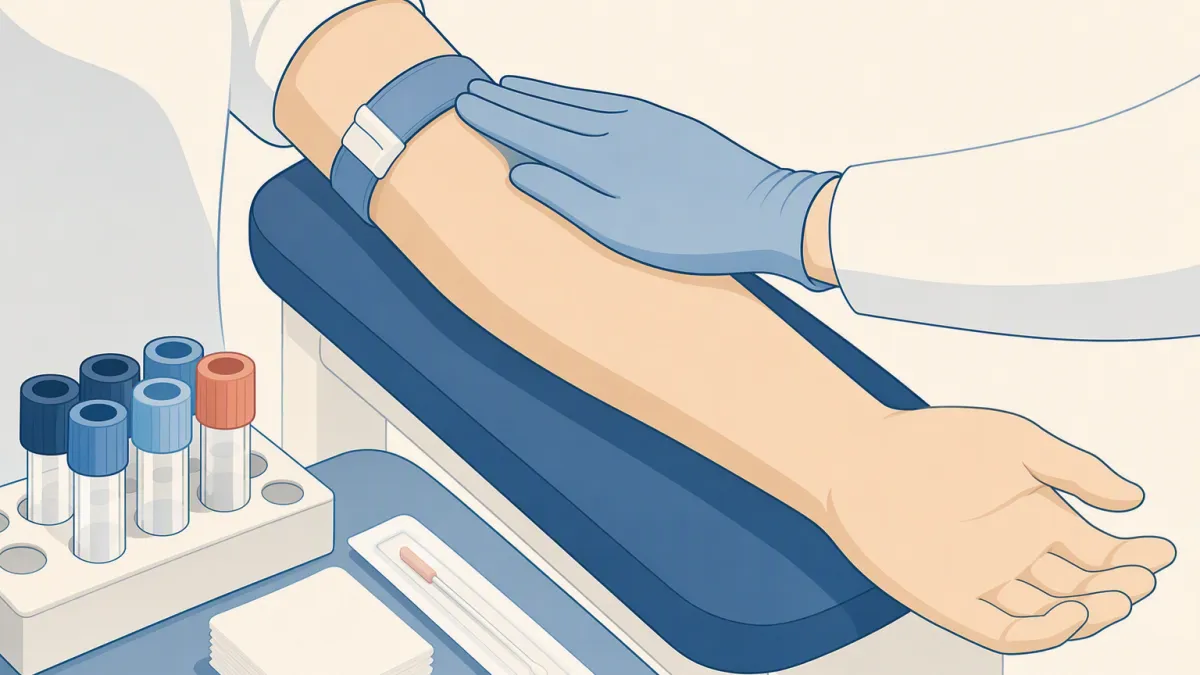
A gloved hand steadies a patient's arm, tourniquet in place, with color-capped collection tubes waiting nearby.
Diabetes is found with a blood test; your booking confirms which tests are run.

Why catching it early matters

High blood sugar slowly harms the small blood vessels of the eyes, kidneys and nerves. It also speeds up disease in the heart and large arteries. Most people first pass through prediabetes, a stage of mildly raised glucose that a blood test can find.

How blood tests detect it

Diabetes is diagnosed with blood tests, not symptoms. A comprehensive blood panel can measure fasting glucose and HbA1c, which reflects average blood sugar over about three months. NIDDK uses these ranges:

HbA1c below 5.7%
Normal. Fasting glucose 99 mg/dL or below.
HbA1c 5.7–6.4%
Prediabetes. Fasting glucose 100–125 mg/dL. The stage where lifestyle change matters most.
HbA1c 6.5% or above
Diabetes range. Fasting glucose 126 mg/dL or above. Without clear symptoms, a second abnormal result confirms it.

A ladder like this is the general pattern, not a rule your case must obey. Reporting conventions differ between hospitals, and two experienced clinicians can read the same finding and reasonably advise differently. Where your report or your doctor differs from this table, go with them — they are looking at your actual result.

One abnormal value is not a diagnosis on its own. Without clear symptoms of very high blood sugar, the ADA requires two abnormal results: two different tests, or the same test repeated. HbA1c can also mislead in some people, such as those with anemia or certain hemoglobin variants.

Who should be tested

Two US guidelines on who to test for diabetes.
Body Who to test
USPSTF (US, 2021) Adults 35–70 with overweight or obesity
ADA (US, 2026) Everyone from 35; at any age with overweight plus a risk factor; repeat at least every 3 years if normal

The ADA lists risk factors including:

  • A parent, sibling or child with diabetes
  • High blood pressure, or low HDL and high triglycerides
  • Physical inactivity, or polycystic ovary syndrome
  • Diabetes during a past pregnancy, which calls for testing every 1–3 years

For people of Asian ancestry, the ADA sets the overweight threshold lower, at a BMI of 23 rather than 25. Diabetes tends to appear at a lower body weight.

Lowering the risk, and what to do now

Modest weight loss, regular activity and a better diet lower the chance that prediabetes becomes diabetes. Once diabetes is established it is usually managed rather than cured. Some people reach normal blood sugar without medication, but it can return, so monitoring continues.

  • Vomiting, deep fast breathing, fruity breath, confusion or drowsiness, especially with known diabetes: In Taiwan call 119 (the local equivalent of 911).
  • Constant thirst, frequent urination, blurred vision or unexplained weight loss: see a doctor soon.
  • No symptoms: check yourself against the table above, and ask for a repeat test if one result comes back abnormal.

Sources & further reading

  1. [1] Prediabetes and Type 2 Diabetes: Screening (2021) — adults 35–70 with overweight or obesity — US Preventive Services Task Force
  2. [2] Diagnosis and Classification of Diabetes: Standards of Care in Diabetes—2026 — testing from 35, earlier with overweight plus a risk factor (BMI 23 in Asian ancestry); two abnormal results confirm — American Diabetes Association / Diabetes Care
  3. [3] Diabetes tests and diagnosis — A1C, fasting glucose and OGTT ranges — NIH / NIDDK
  4. [4] The A1C test and diabetes — conditions that can give false results — NIH / NIDDK
  5. [5] Diabetes Prevention Program: lifestyle intervention reduced diabetes incidence by 58% (Knowler 2002) — New England Journal of Medicine / PubMed
  6. [6] What Is Diabetes? — NIH / NIDDK
  7. [7] Diabetic ketoacidosis — symptoms and when to call for emergency help — MedlinePlus (NIH)

Diabetes — Frequently Asked Questions

What is the difference between type 1 and type 2 diabetes?

Type 1 is an autoimmune disease in which the body stops making insulin; it usually starts younger and needs insulin for life. Type 2, the large majority, develops from insulin resistance and is linked to weight, activity and genetics. Screening focuses on type 2.

Can diabetes be reversed?

Prediabetes often improves with weight loss and activity. In the Diabetes Prevention Program, a lifestyle program cut the rate of new diabetes by 58%. Some people with early type 2 diabetes reach normal blood sugar without medication, but it can return, so monitoring continues.

Does diabetes cause any warning symptoms?

Often none for years. Thirst, frequent urination, tiredness, blurred vision or slow-healing cuts can appear later, and need a doctor soon. Vomiting, deep fast breathing, fruity breath or drowsiness are an emergency. In Taiwan call 119 (the local equivalent of 911).

How is diabetes tested for?

With blood tests: fasting glucose, HbA1c (average blood sugar over about three months) or a glucose-tolerance test. Without clear symptoms, a diagnosis needs two abnormal results, either two different tests or the same test repeated.

Screen smart. Travel once. Know where you stand.

Compare screening packages, see exactly what each one includes, or talk to a coordinator about fitting Diabetes screening into your visit to Taiwan.