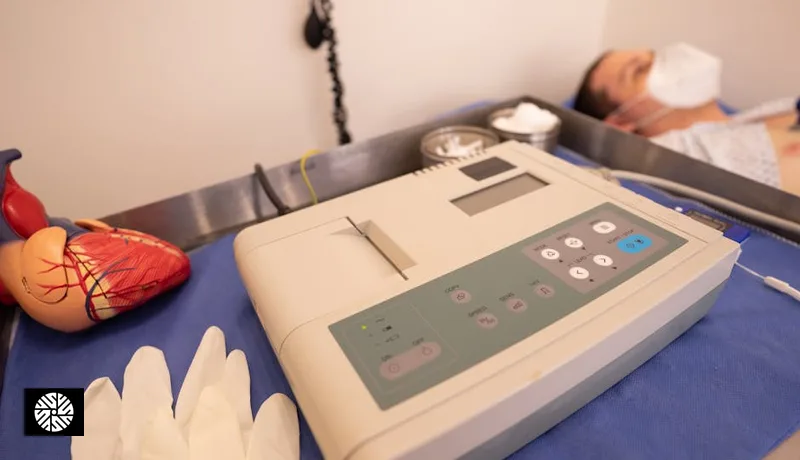
A spine scan and a bone scan sound like the same test. They answer different questions: one reads the shape of the vertebrae, the other reads how much mineral is left in them.
What gets checked, and with what
| Target | What the test looks for | The test that does it |
|---|---|---|
| Spine | Disc degeneration, herniation, narrowing — and the spinal cord itself | The spine sequences of a full-body MRI, when the protocol includes them |
| Bone density | The mineral content of the hip and spine, returned as a T-score — a comparison with a healthy young adult | DEXA scan — a very-low-dose X-ray bone scan |
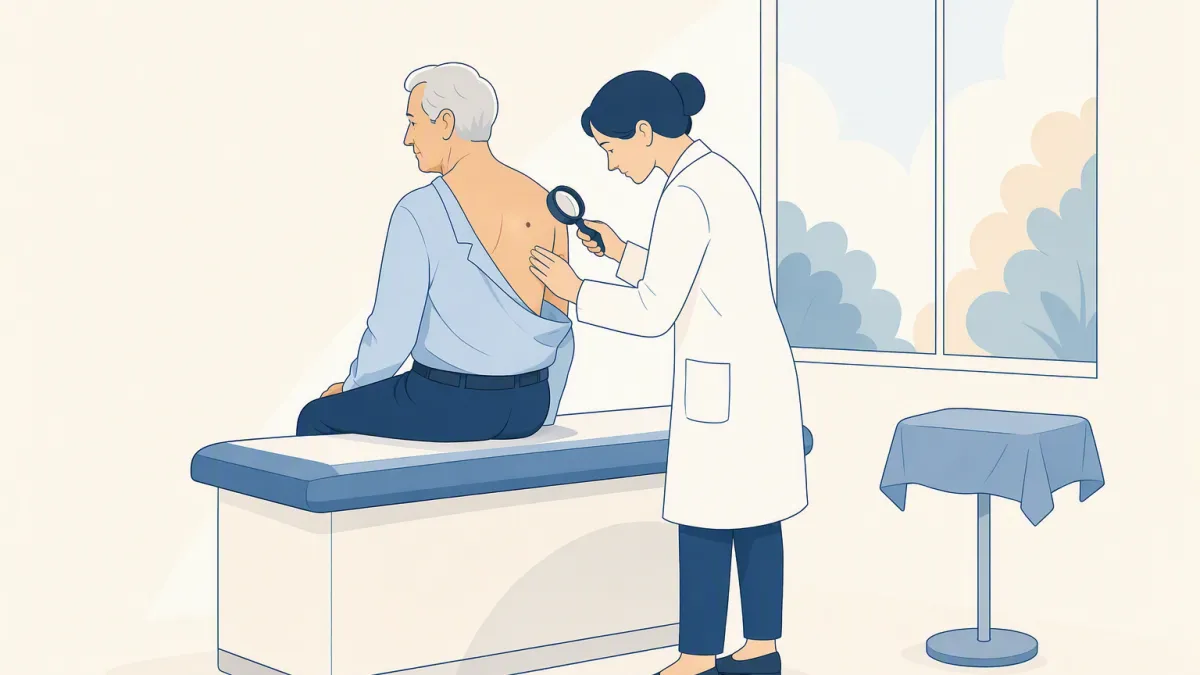
| Skin | Moles and spots — asymmetry, border, color, and change over time | A clinician's visual exam; no scan covers the skin |
Spine
- No radiation, but not without checks: MRI uses magnets rather than X-rays. The magnet is always on, so implants and devices are checked first; tell the team if you are or could be pregnant.
- What it often finds: wear that causes no pain. In a review of people without back pain, disc degeneration rose from 37% at age 20 to 96% at age 80 (Brinjikji 2015).
- Imaging can't: grade bone strength. It shows the shape of the vertebrae, not their mineral density — which is exactly why the next scan exists.
Bone Density
- Why it matters: bone loss causes no symptoms, and a fracture is often the first sign anyone notices.
- Who is screened: the DEXA page sets out the US and ISCD guidance, and where they disagree on men. A fracture from a minor fall is a reason to ask at any age.
- The dose is very low: RadiologyInfo estimates about 0.001 mSv, about one-hundredth of a chest X-ray. It is still an X-ray, so tell the staff if you are or may be pregnant.
- Imaging can't: pinpoint a weak spot or say when a bone will break. A T-score estimates risk across a population, and its thresholds were derived in postmenopausal women.
Skin
- Why it matters: the body's largest organ is the one place where the useful tool is a trained eye on the surface.
- Naming this honestly: neither MRI nor DEXA nor the other screening scans discussed here evaluates the skin.
- When to see a doctor: a new spot, or a mole that changes in size, shape or color, or bleeds. Those are symptoms, not a screening question. Many moles, past sunburns or a family history of melanoma are worth raising too.
What this region's screening does not cover
What these two scans give you
- The whole spine, cervical to lumbar, in one radiation-free pass, when the protocol includes it
- A bone-density T-score from a very-low-dose X-ray
- A starting point, so real change later stands out from harmless background wear
What they do not
- A spine MRI very commonly shows disc bulges and mild, age-appropriate wear that cause no symptoms. These incidental findings are usually monitored rather than treated.
- The skin. No scan reads it; a clinician's visual exam does.
- Where your pain comes from. An MRI shows what a spine looks like, not which finding is the one causing symptoms.