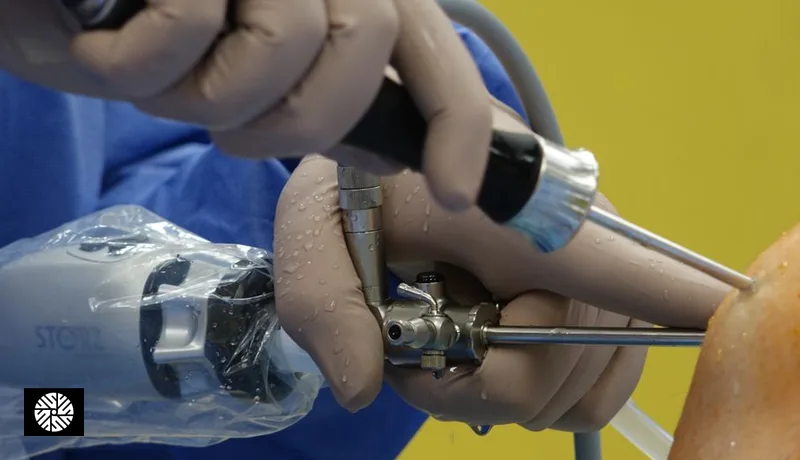
What are gastroscopy and colonoscopy?
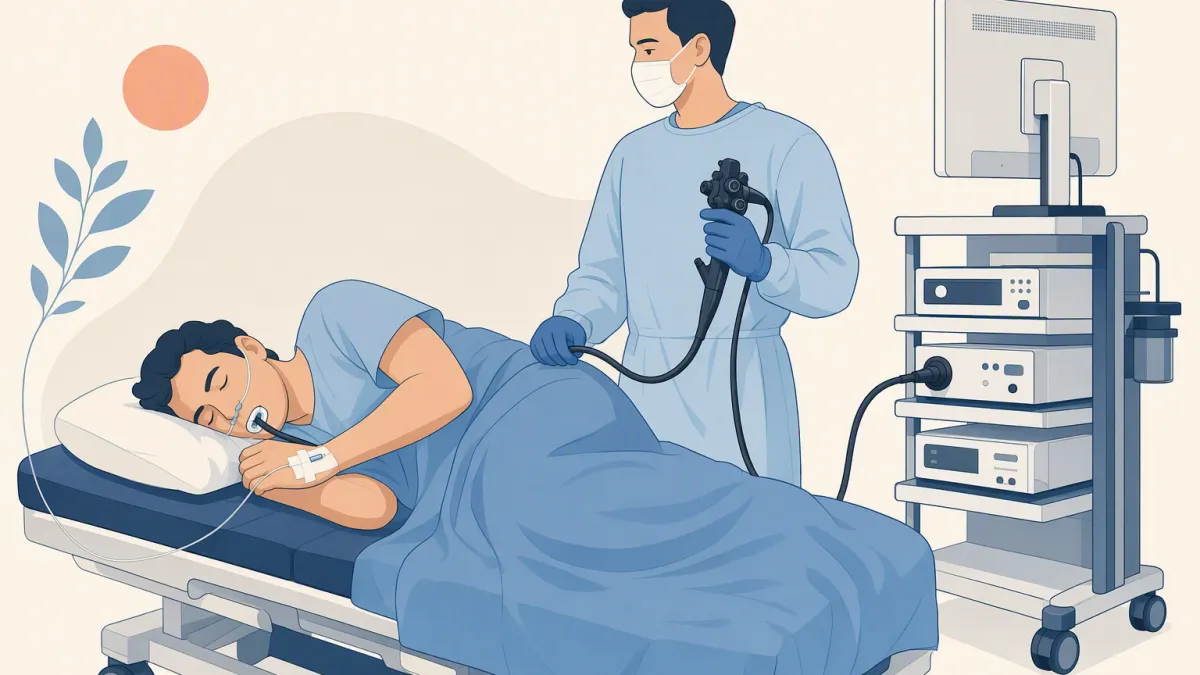
Gastroscopy and colonoscopy are camera examinations of your digestive tract. A gastroscopy passes a thin, flexible scope through the mouth to inspect the esophagus, stomach and duodenum (the first part of the small intestine). A colonoscopy examines the large intestine from the other direction.
Colonoscopy can find and remove many precancerous polyps in the same procedure, which a stool test cannot. The two exams answer different questions and are not automatically needed together. The digestive tract page walks the same ground organ by organ.
What can they detect?
- Colonoscopy: polyps (usually removed during the exam), colorectal cancer, inflammation and diverticulosis (small pouches in the colon wall)
- Gastroscopy: stomach cancer, ulcers, gastritis, and reflux damage to the esophagus such as Barrett's changes
- Biopsies: tissue samples, including for H. pylori, sent to pathology
- See every polyp. Even a well-prepared colon hides some. A 2019 meta-analysis of tandem colonoscopies found about 26% of adenomas (polyps that can turn into cancer) were missed on the first pass. Only about 9% of advanced adenomas — larger or more abnormal ones — were missed. Follow-up timing depends on exam quality, prep, findings and pathology; an inadequate exam may need an earlier repeat.
- See the organs around the tract. The liver, pancreas and kidneys need separate imaging, chosen for the question. An abdominal ultrasound is one option, but it does not fully assess the pancreas.
- See most of the small intestine. Neither scope reaches it; a gastroenterologist chooses another test, such as capsule endoscopy, if that matters.
Chronic H. pylori infection is a major risk factor for stomach cancer. Whether a biopsy for it can be added to your gastroscopy, and what pathology costs, is confirmed when you book.
Who should get screened?
Colorectal screening is recommended by age, and the first test does not have to be a colonoscopy. Stomach screening by gastroscopy is a different question:
| Program or body | Colorectal | Stomach |
|---|---|---|
| Taiwan (HPA) | Stool test (FIT) every 2 years at 45–74; at 40–44 every 2 years if a parent, child or sibling has had colorectal cancer | One-time H. pylori stool test at 45–74 from 2026; no population gastroscopy program |
| US (USPSTF 2021) | Screening at 45–75 with stool tests, colonoscopy or other options | No USPSTF population screening; US gastroenterology guidance (AGA 2025) suggests considering endoscopic screening for defined high-risk groups |
| Korea (national program) | — | Gastroscopy or barium X-ray every 2 years from 40 |
| Japan (national guidelines) | — | Gastroscopy or barium X-ray from 50 |
Korea and Japan screen the stomach because stomach cancer is common there; Korean data link screening gastroscopy with fewer stomach-cancer deaths. Taiwan relies on finding and treating H. pylori instead. A gastroscopy without symptoms is a personal or clinical choice, not a program.
- A positive FIT should be followed by a diagnostic colonoscopy. If that is not possible, discuss alternatives with a clinician. A positive H. pylori stool test leads to a treatment discussion, not a colonoscopy.
- A family history of colorectal cancer or advanced polyps in a parent, sibling or child usually means starting earlier. The starting age and interval depend on the relative's age at diagnosis and how many relatives are affected.
- Symptoms change the exam. Unexplained anemia, bleeding, trouble swallowing, persistent reflux or changed bowel habits make it a diagnostic test — tell your doctor.
Prep and what to expect on the day
The procedure itself is the easy part; the bowel prep is the demanding part. A clean colon makes polyps easier to see and lowers the miss rate. It does not make the miss rate zero.
-
1Before booking — medicinesTell the team about blood thinners (such as warfarin, apixaban, clopidogrel or aspirin), insulin and other diabetes medicines, and iron tablets. Some are paused before the exam and some are not — never stop a blood thinner without the prescribing doctor's advice.
-
2The days before — diet and prepLow-fiber meals, then clear liquids and the prep solution, as the clinic instructs.
-
3Exam day — fastingNothing to eat for several hours before the exam, so the stomach is empty for the gastroscopy and safe for sedation. Your coordinator confirms the cut-off times.
-
4The procedureThe endoscopist examines the tract and may remove polyps or take biopsies when appropriate and feasible. Who performs it, and whether both scopes are done in one session, is confirmed when you book.
-
5RecoveryRest until the sedation wears off. Someone must take you home, and you should not drive or sign important documents for 24 hours.
How bowel prep is graded
Many reports score the clean-out with the Boston Bowel Preparation Scale. Each of three colon segments gets a score from 0 to 3:
A ladder like this is the general pattern, not a rule your case must obey. Reporting conventions differ between hospitals, and two experienced clinicians can read the same finding and reasonably advise differently. Where your report or your doctor differs from this table, go with them — they are looking at your actual result.
Results and follow-up
Some findings can be described right after the exam, while biopsies go to pathology and take longer. When you hear what, and how the report reaches you after you fly home, is confirmed when you book. The next colonoscopy depends on the number, size and type of polyps found. The examples below assume a complete, good-quality exam with all polyps removed; your gastroenterologist sets your interval from your pathology.
| Finding | Next colonoscopy |
|---|---|
| No polyps, average risk | 10 years |
| 1–2 small adenomas (under 10 mm) | 7–10 years |
| 3–4 small adenomas | 3–5 years |
| 5–10 small adenomas, or any adenoma 10 mm or larger | 3 years |
| More than 10 adenomas | 1 year |
- A family history or a poor prep shortens the interval.
- A gastroscopy finding, such as H. pylori or precancerous change in the stomach, has its own treatment and follow-up plan.
Endoscopy in Taiwan — and coverage
Sedated endoscopy is widely offered in Taiwan, but what is available varies by clinic. The live price further down this page is the booking price at New Dawn Health; anything billed separately — such as biopsy, polyp removal or pathology — is confirmed when you book:
- In Taiwan, screening is paid for by the visitor. Short-term visitors are not covered by Taiwan's National Health Insurance, so screening is self-funded. The national programs above fund stool tests, not screening gastroscopy, for people with National Health Insurance who meet the criteria.
- Pathology can add to the bill. Whether biopsy and polyp pathology are included is confirmed when you book.
- Reimbursement at home is a question for your insurer. Ask them before you book, and ask which documents they need.
- Plan the timing. Book the exam early in your trip, so a delayed problem or a biopsy result does not collide with your flight.