
Quick answer: Some US travellers compare Taiwan because New Dawn's recorded catalogue prices are lower than published US consumer full-body MRI prices. That price difference does not prove that protocols are equivalent or that a scan is medically appropriate. Compare identical anatomy and deliverables, include the trip and follow-up cost, and confirm insurance or HSA/FSA treatment before payment.
Price comparison needs a defined scope
Recorded 2026 comparison figures include US consumer full-body MRI prices around USD $1,950–$2,500 and higher hospital self-pay ranges, alongside New Dawn catalogue prices such as $1,399 and $1,699 full-body MRI tiers and a $3,099 Plus package. These figures require current source verification before publication.
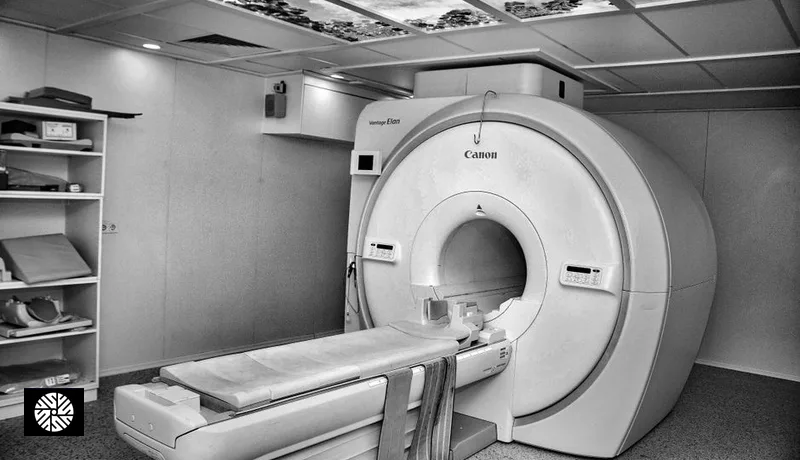
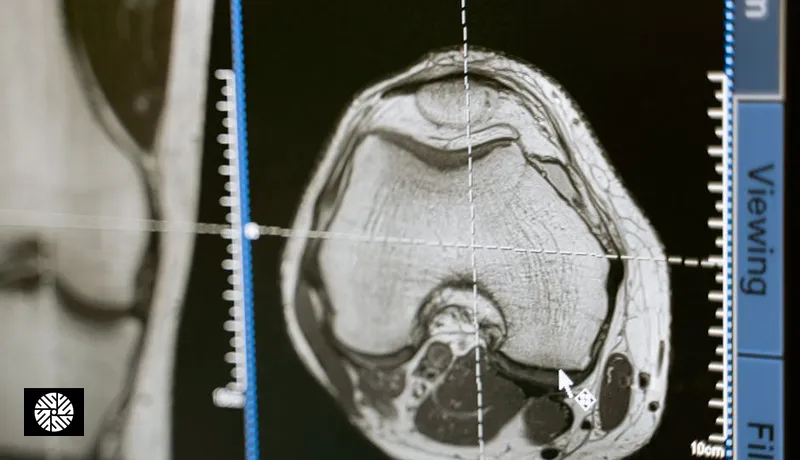
A valid comparison must match body regions, sequences, contrast, scanner and protocol, radiologist interpretation, report language, DICOM delivery, consultation and follow-up. A shared “3T” label or a similar package name does not prove equivalence.
Medical evidence comes before travel economics
ACR states that evidence is insufficient to recommend total-body MRI screening for asymptomatic people without risk factors, symptoms or family history. No proven life-prolonging or cost-effectiveness benefit has been established for the general population. Incidental findings may lead to repeat imaging, procedures, anxiety and cost.
Full-body MRI also does not replace eligibility-based breast, cervical, colorectal, oral or lung cancer screening. It is not a universal surveillance test after cancer treatment; follow-up imaging must come from the treating oncology team and the relevant disease-specific plan.
Insurance, HSA and FSA
Do not assume that US insurance, an HSA or an FSA will reimburse elective international imaging, travel or concierge fees. Eligibility depends on medical necessity, plan documents, tax rules, documentation and the particular expense. A letter of medical necessity does not guarantee reimbursement.
Before payment, ask the insurer or plan administrator in writing. For tax treatment, use current IRS guidance and seek qualified advice. Keep itemized invoices, but do not describe travel expenses as reimbursable without specific confirmation.
Travel and follow-up
The medical price is not the total. Include flights, lodging, meals, local transport, time away, possible repeat testing and the cost of follow-up at home. A lower scan price alone may not justify a trip.
Confirm before travel:
- facility, appointment and exact protocol;
- implant and pregnancy safety review;
- contrast, sedation and preparation;
- report language, DICOM availability and delivery estimate;
- how urgent, incidental and non-urgent findings are handled;
- price, currency, taxes, deposit, cancellation and refund terms.
Do not assume a specialist appointment is available within 24 hours, a final report arrives within seven days, or records translation is included. These are facility-specific operational claims that require written confirmation.
Implants, devices and claustrophobia
MRI safety depends on the exact device and conditions of use, not the implant year. Bring the implant card or manufacturer documentation and allow the facility's MRI safety team to decide. Disclose claustrophobia before booking; do not take a sedative based on this article.
What a report can and cannot do
An English report or DICOM file may help a home clinician review the examination, but format, availability and clinical acceptance vary. A normal scan cannot rule out every cancer or disease. An incidental finding is not a diagnosis and may require comparison or additional evaluation.
Primary references
- American College of Radiology: Total-Body MRI Screening
- RSNA/ACR: MRI Safety
- US IRS Publication 502: Medical and Dental Expenses
US / UK terms and the closest Taiwan context
Read this first: These are comparison aids, not claims that coverage, credentials, or care pathways are equivalent. Europe is not one health system; UK examples below refer specifically to NHS England.
Annual Wellness Visit (AWV), annual physical, health checkup
- What it means there
- Medicare describes the AWV as a prevention-planning conversation and explicitly says it is not a routine physical exam.
- Closest Taiwan context
- Taiwan HPA adult preventive services (成人預防保健) include defined history, measurements, examinations, laboratory items, and counselling for eligible age groups. Private self-pay checkups are a separate service whose contents vary.
- Do not treat as equivalent
- AWV, a US routine physical, Taiwan government-funded preventive care, and an executive self-pay package are not interchangeable names or benefit sets.
- What to ask
- Request the exact item list, eligibility rule, physician consultation, follow-up plan, and whether each item is NHI-funded or self-pay.
Screening vs diagnostic work-up
- What it means there
- Screening generally concerns people without recognized signs or symptoms. A symptom, abnormal examination, or positive screen can require a separate diagnostic assessment.
- Closest Taiwan context
- Taiwan uses 篩檢 for defined screening programs and 診斷/進一步檢查 for evaluation of symptoms or abnormal findings.
- Do not treat as equivalent
- Calling a scan a “screening” test does not establish that it is recommended for every asymptomatic person, covered by insurance, or sufficient to diagnose or exclude disease.
- What to ask
- Tell the clinic about symptoms and risk factors, then ask whether the proposed test is screening or diagnostic and what follow-up is planned for normal, unclear, and abnormal results.
Prior authorization / prior approval / precertification
- What it means there
- These US terms describe a health plan decision that may be required before a service or prescription is covered. Approval is not a promise that every cost will be paid.
- Closest Taiwan context
- There is no direct label to apply to a Taiwan self-pay package. For Taiwan care, the relevant questions are whether a physician order is needed, whether an NHI benefit or review rule applies, and what the clinic will charge.
- Do not treat as equivalent
- A US insurer authorization and a Taiwan clinic confirmation solve different problems. Neither should be represented as the other.
- What to ask
- Before travel, obtain a written answer from the insurer about overseas coverage, authorization, documents, deadlines, exclusions, and reimbursement currency.
In-network / out-of-network
- What it means there
- US network status is based on a provider contract with a particular insurance plan.
- Closest Taiwan context
- Taiwan has NHI-contracted providers (健保特約醫事機構), but that status is not the same as being in a US insurer network. A service at an NHI-contracted facility can still be self-pay or outside an overseas policy.
- Do not treat as equivalent
- “NHI-contracted,” “covered by NHI,” “in-network,” and “eligible for overseas reimbursement” are four separate questions.
- What to ask
- Verify the facility, physician, service, and claim route with the insurer; separately ask the Taiwan facility which items are NHI-funded and which are self-pay.
Radiology report, DICOM, and PACS
- What it means there
- A radiology report is the clinician’s interpretation. DICOM (Digital Imaging and Communications in Medicine) is the international standard for medical images and related information. PACS is a system used to store and retrieve imaging data.
- Closest Taiwan context
- Taiwan facilities may use the same international imaging standards, but the available export medium, viewer, report language, and delivery time are facility-specific.
- Do not treat as equivalent
- Receiving a PDF report does not necessarily mean the diagnostic images are included. Receiving DICOM files does not replace a signed clinical report or guarantee that another facility can import every file.
- What to ask
- Ask separately for the signed report, report language, complete DICOM study, delivery method, viewer needs, release timing, and any fee.
Official sources checked 2026-07-28
- European Commission: country-specific health-system profiles
- Medicare: yearly Wellness visit
- Taiwan HPA: adult preventive health service
- USPSTF: how preventive recommendations are used
- HealthCare.gov: preauthorization
- HealthCare.gov: preferred provider
- Taiwan NHI: contracted provider lookup
- ACR/RSNA RadiologyInfo: understanding a radiology report
- DICOM Standard Committee: DICOM overview
Frequently asked
Is a Taiwan full-body MRI equivalent to a US scan?
Do not assume equivalence. Compare exact regions, sequences, contrast, scanner and protocol, interpretation, report language, DICOM, consultation and follow-up.
Will US insurance reimburse a Taiwan scan?
Coverage depends on the plan, medical necessity, authorization and international-care rules. Obtain written confirmation from the insurer before payment.
Can I pay with HSA or FSA funds?
Do not assume eligibility. Ask the plan administrator and use current IRS guidance or qualified tax advice. A letter of medical necessity does not guarantee reimbursement.
Will my US doctor receive English reports and DICOM files?
Confirm the format, language, delivery method, timing and any charge with the booked facility, and ask the receiving clinician what they can accept.
Should cancer survivors return annually for full-body MRI?
Not based on this article. Surveillance should follow the treating oncology team's disease-specific plan. Full-body MRI is not a universal annual surveillance test.