Blog
Blog
Hair Restoration in Taiwan: FUE, PRP, Exosomes, and How It Compares to Turkey, USA, and Korea

Hair restoration has quietly become one of the most-searched medical treatments among international travelers heading to Asia, and Taiwan has emerged as a serious — if often overlooked — destination for it. The combination of board-certified dermatologists, modern follicular unit extraction (FUE) clinics, and a regulated pharmaceutical environment for finasteride and minoxidil makes Taiwan a credible alternative to the higher-volume hair transplant tourism markets in Turkey and Korea. This guide goes deep on the clinical realities: how hair loss is actually diagnosed, which surgical and non-surgical options work, and how Taiwan compares on price and quality against Istanbul, Seoul, and U.S. clinics.
For broader context on why patients choose Taiwan for medical-aesthetic care, see why Taiwan is a top destination for medical beauty. To browse providers and consultation options, visit our services page or the provider directory.
Hair loss types and diagnosis
Before you start shopping for transplants, you need a real diagnosis. Hair loss is not one disease — it's a symptom that can come from at least four very different underlying causes, and the right treatment depends entirely on which one you have.
- Androgenetic alopecia (pattern hair loss): By far the most common cause, affecting roughly half of men by age 50 and a substantial share of women, especially post-menopause. It's driven by genetic sensitivity of follicles to dihydrotestosterone (DHT), and it follows predictable patterns — receding hairline and crown thinning in men, diffuse central thinning in women.
- Traction alopecia: Mechanical hair loss from chronic tension — tight ponytails, braids, extensions. Reversible if caught early, permanent if scarring sets in.
- Alopecia areata: Autoimmune attack on hair follicles, producing round patches of complete hair loss. Can spontaneously regrow or progress to alopecia totalis. Treated with intralesional steroids, JAK inhibitors, or topical immunotherapy — not transplant.
- Telogen effluvium: Diffuse shedding triggered by physiologic stress — childbirth, major illness, crash dieting, severe psychological stress, or thyroid disturbance. Usually self-resolves in 6 to 9 months once the trigger is removed.
A proper diagnostic workup at a Taiwan dermatology clinic typically includes trichoscopy (high-magnification scalp imaging that reveals follicular miniaturization, perifollicular inflammation, and exclamation-mark hairs of alopecia areata), a blood panel covering thyroid function (TSH, free T4), iron stores (ferritin, ideally above 70 ng/mL for hair growth), vitamin D, and in selected cases androgen profile (testosterone, DHEA-S, prolactin). Scalp biopsy is rarely needed but may be ordered for unclear scarring alopecias.
Skipping this workup is the single biggest mistake international hair transplant tourists make. A patient with active telogen effluvium or undiagnosed thyroid disease who undergoes a transplant will lose the transplanted grafts at the same rate as the surrounding hair — wasting tens of thousands of dollars on a procedure that was the wrong treatment.
FUE hair transplant — standard procedure
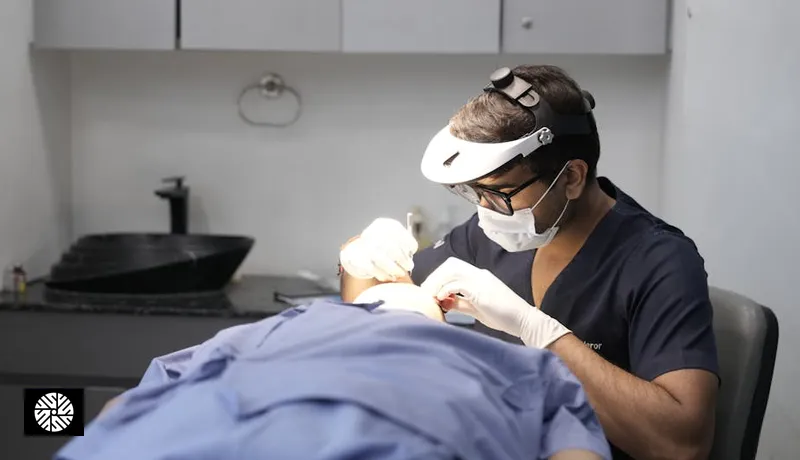
Follicular Unit Extraction is the dominant surgical technique in 2026, and for good reason. Individual follicular units (groups of 1 to 4 hairs that grow together naturally) are extracted one at a time from the donor area at the back and sides of the scalp using a punch tool typically 0.8 to 1.0 mm in diameter. Each unit is then implanted into recipient sites along the recipient pattern, usually after a brief hydration in chilled holding solution.
A typical full-day FUE session at a Taiwan clinic harvests 1,500 to 3,000 grafts for a first-time patient. Larger sessions of 3,000 to 4,000 grafts are possible but require longer surgical days (often 8 to 10 hours) and exhaust more donor capacity. Density matters more than total count: 30 to 40 grafts per square centimeter generally looks natural in the hairline; 40 to 50 produces a denser, more youthful appearance but demands a generous donor area.
Healing follows a predictable timeline. Tiny scabs form in the recipient area over 7 to 10 days and shed naturally. The transplanted hairs themselves enter a shock-loss phase around week 3 to 6, fall out, and regrow starting around month 3 to 4. Visible thickening shows by month 6 and the final result lands somewhere between months 9 and 12. Donor area sites heal with pinpoint scars that are virtually undetectable when hair is kept above a #2 buzz cut.
FUT vs FUE vs DHI vs robotic
FUT (Follicular Unit Transplantation), or "strip" surgery, removes a horizontal ellipse of donor scalp, dissects it under microscopes into individual follicular units, and transplants them. Advantages: more grafts in a single session (up to 4,000 to 5,000), often slightly cheaper per graft, and the dissected grafts can have more surrounding tissue for transplant resilience. Disadvantage: a permanent linear scar at the back of the scalp, which limits short hairstyles. FUT has fallen out of favor in most premium clinics globally and is increasingly rare in Taiwan in 2026, though it remains a legitimate option for patients planning very large sessions who don't mind the scar.
DHI (Direct Hair Implantation) is FUE with a Choi pen tool that creates the recipient site and implants the graft in one motion. Marketing claims of higher density and better survival are largely unsupported by independent data — DHI is essentially FUE with a different implantation tool. It's a legitimate technique but not categorically superior.
Robotic-assisted FUE (ARTAS) uses computer vision to identify and extract follicular units. The robot reduces operator fatigue on long sessions and standardizes punch angles, but the human surgeon still makes recipient sites and supervises every extraction. Premium-tier pricing in Taiwan, often a 15 to 25 percent surcharge over manual FUE.
Taiwan vs Turkey vs USA vs Korea pricing
Pricing differences across hair transplant destinations are dramatic — but the per-graft number tells only part of the story. What matters is the price multiplied by the realistic graft survival rate at the clinic, plus the cost of revisions if the result fails.
| Destination | Cost (2,000 grafts) | Per-graft | Notes |
|---|---|---|---|
| Taiwan (premium FUE) | USD 2,500 - 5,800 | USD 1.25 - 2.90 | Top-tier clinics around USD 6,500. Surgeon-led, modest case volume per day. |
| Turkey (Istanbul) | USD 1,500 - 3,000 | USD 0.50 - 1.50 | Wide quality variation. Many clinics run technician-driven, high-volume operations with rushed scheduling and language barriers. |
| United States | USD 5,000 - 15,000 | USD 2.50 - 7.50 | Longest collective experience and tightest regulation, but pricing is 2 to 4x Taiwan for comparable techniques. |
| Korea (Seoul) | USD 3,000 - 7,000 | USD 1.50 - 3.50 | Strong for Asian hair characteristics; premium-tier clinics on par with Taiwan top tier. |
For a broader perspective on procedure pricing across Asia and the U.S., see our medical beauty cost comparison. The Turkey value proposition is real on price alone, but the variation between top-tier Istanbul surgeons and high-volume mass-market operations is enormous — and the latter dominate the marketed deals. Taiwan's price-to-quality ratio sits in a defensible middle: meaningfully cheaper than the U.S., comparable to or below Korea, and substantially more consistent than Turkey at the median clinic.
PRP, exosomes, mesotherapy — non-surgical regenerative
Regenerative scalp injectables are the most active area of non-surgical hair restoration in 2026. They don't replace transplant for advanced loss, but they can stabilize early-stage androgenetic alopecia and meaningfully boost density.
- PRP (platelet-rich plasma): Patient's own blood is centrifuged to concentrate platelets and growth factors, then injected into the scalp. Evidence base is the strongest among regenerative options — multiple randomized trials show measurable density gains in early androgenetic alopecia. Protocol: monthly injections for 3 to 4 sessions, then maintenance every 3 to 6 months. Taiwan pricing NT$8,000 to 15,000 per session.
- Exosome therapy: Cell-derived nanovesicles containing growth factors and signaling molecules. Promising mechanistic story, growing but still limited human trial data for hair specifically. Newer and more expensive than PRP at NT$15,000 to 30,000 per session. Best regarded as adjunct, not first-line.
- Mesotherapy: Micro-injections of vitamin and peptide cocktails. Evidence is weaker than PRP. Reasonable as a low-cost maintenance protocol at NT$5,000 to 10,000 per session.
- Low-level laser therapy (LLLT): At-home caps from Capillus or iRestore deliver red-light photobiomodulation. Modest but real evidence for stabilizing pattern hair loss. Good adjunct for committed users.
Realistic expectations matter. Regenerative injections can slow progression and add 10 to 20 percent density in early-stage androgenetic alopecia. They cannot regrow follicles in scarred or completely miniaturized regions.
Pharmacological — finasteride, minoxidil, oral minoxidil
For androgenetic alopecia, the medication backbone is unchanged for two decades and remains essential — even alongside transplant.
- Finasteride 1 mg daily (Propecia): 5-alpha reductase inhibitor that lowers scalp DHT. Stops progression in roughly 80 to 90 percent of men, partial regrowth in many. Side effect rates of sexual dysfunction in long-term use are debated but real; counseling is required. Dutasteride is a more potent alternative, off-label for hair, used in some Asian protocols.
- Topical minoxidil 5 percent: Vasodilator and follicular stimulator. Twice-daily application. Works for both men and women. Continuation is essential — stopping leads to loss of gains within months.
- Oral minoxidil 1.25 to 5 mg daily (off-label): Dramatically more popular since 2022 as evidence accumulated for low-dose oral use in hair. Better adherence than topical (no greasy scalp), comparable or better efficacy at 2.5 to 5 mg. Side effects include hypertrichosis (body hair growth), peripheral edema in a minority, occasional palpitations. Requires a prescriber comfortable with off-label dosing — many Taiwan dermatologists are.
Patients who skip pharmacological therapy after transplant typically watch their non-transplanted hair continue to thin around their preserved donor-derived grafts, producing a strange "halo" effect within 3 to 5 years. Medications protect the investment.
Patient candidacy — who's a good FUE candidate
Three things determine whether you're a real candidate for hair transplant:
- Pattern stability: Loss should have plateaued, or be controlled on finasteride and/or minoxidil. Transplanting into actively progressing loss produces poor long-term outcomes because the surrounding native hair will keep retreating.
- Donor area density: The back and sides of the scalp must hold enough viable follicular units to harvest without leaving the donor visibly thinned. Typical donor capacity is 5,000 to 8,000 lifetime grafts, but this varies widely.
- Realistic expectations: Transplant restores frame and density to the recipient pattern — it does not give a 20-year-old's full mop. Patients fixating on impossible coverage targets are usually unhappy regardless of technical outcome.
Younger patients (early 20s) with aggressive pattern loss are often poor candidates because the eventual loss pattern hasn't declared itself. A skilled surgeon will turn these patients away or push them toward medical management until the pattern stabilizes.
Recovery and travel — 7-10 day stay
Plan a 7 to 10 day stay in Taiwan for a transplant trip. Typical itinerary:
- Day 0: Arrive, in-person consultation, review of donor and recipient design.
- Day 1: Surgery day — typically 6 to 9 hours depending on graft count, with breaks for meals.
- Day 2: First post-op review and gentle washing demonstration.
- Day 3 to 6: Daily saline misting of grafts, sleeping at a 30 to 45 degree elevation, no exercise, no sun, no swimming. Most patients are physically fine and can sightsee gently.
- Day 7 to 10: Final follow-up, scab shedding largely complete, cleared to fly home.
Air travel is medically permitted from around Day 3 to 4 in most clinics' protocols, but staying for the Day 7+ follow-up is wise. Carry cabin baggage only — no overhead lifting on the surgical day or for several days after to avoid graft trauma.
Combining with other Taiwan treatments — what works, what doesn't
Hair transplant has a recovery profile that conflicts with most cosmetic procedures, so combining is generally not recommended on the same trip. The reasons are practical and clinical:
- Avoid laser facials and Pico Laser — sun avoidance and inflammation control overlap, but more importantly the patient cannot lie face-down on a treatment bed comfortably for at least 7 days post-FUE.
- Avoid Botox and fillers in the same week — facial swelling profiles can confuse post-op monitoring of the scalp.
- Avoid Thermage and HIFU on the face — heat-based facial treatments push fluid into the head and neck, theoretically worsening scalp swelling.
- Generally fine: health screening, dental cleaning, GI endoscopy under sedation if scheduled before the transplant rather than after, and PRP scalp injections (often performed the same day or shortly after FUE as a graft survival booster).
For travelers trying to bundle treatments efficiently, see our guide to combining cosmetic treatments on a Taiwan trip. The honest answer for hair transplant patients is: dedicate this trip to hair, and schedule cosmetic procedures for a separate visit.
Maintenance schedule — annual review, ongoing pharmacological
A successful transplant is the start of a maintenance relationship, not a one-and-done event. Realistic ongoing protocol:
- Year 1 post-op: Photo follow-ups at months 3, 6, 9, and 12 — most clinics handle these by video for international patients.
- Annual review thereafter: Trichoscopy and density photo comparison, ideally with the same surgeon or via a local provider sending records.
- Pharmacological maintenance: Daily finasteride and/or minoxidil — likely indefinite. Stopping leads to resumed pattern progression.
- PRP boosters: 1 to 2 sessions per year for committed maintainers. Optional but reasonable.
- Touch-up surgery: Many patients return for a smaller second session at year 2 or 3 to add density to the crown, frame the hairline, or address ongoing thinning. Plan for this possibility in budgeting.
| Treatment | Cost per session (NT$) | Frequency | Best for |
|---|---|---|---|
| PRP | 8,000 - 15,000 | Monthly x 3-4, then quarterly | Early androgenetic alopecia, post-transplant booster |
| Exosomes | 15,000 - 30,000 | Monthly x 3, maintenance variable | Patients seeking premium adjunct, plateau on PRP |
| Mesotherapy | 5,000 - 10,000 | Bi-weekly to monthly | Budget maintenance, scalp nutrition |
| Oral minoxidil 2.5 mg | Prescription, low monthly cost | Daily, indefinite | First-line systemic stimulator (off-label) |
| Finasteride 1 mg | Prescription, low monthly cost | Daily, indefinite | Men with pattern hair loss |
Hair restoration in Taiwan rewards patients who treat it as a clinical project, not a tourism splurge. Get the diagnosis right, take pharmacological therapy seriously, choose a surgeon-led FUE clinic over a high-volume technician operation, and budget for a multi-year maintenance relationship. Done that way, the value Taiwan offers — meaningful surgical skill at prices half of U.S. equivalents — is real and durable.
Sources & Further Reading
FAQ
Turkey wins on raw price (USD 1,500 to 3,000 for 2,000 grafts versus USD 2,500 to 5,800 in Taiwan), but the median Istanbul clinic runs technician-driven, high-volume operations with rushed scheduling and language barriers. Taiwan clinics tend to be surgeon-led with smaller daily case loads and more consistent quality at the median, plus a regulatory environment closer to U.S. and EU standards. If you can afford the Taiwan premium, it buys real consistency. If budget is the dominant constraint, choose a top-tier Turkish surgeon — not a generic Istanbul package deal.
For most patients in 2026, FUE is the right choice. It leaves no linear scar, healing is faster (7 to 10 days), and it allows short hairstyles afterward. FUT remains a legitimate option only for patients planning very large sessions (4,000+ grafts) who do not mind a linear donor scar and want maximum graft yield from limited donor area. Premium clinics in Taiwan offer FUE almost exclusively now.
Typical first-session graft counts run 1,500 to 3,000. A modest hairline restoration may need 1,500 to 2,000; a full hairline plus mid-scalp may need 2,500 to 3,500; advanced loss with crown coverage often requires 3,000 to 4,000 in one session or staged into two. Density of 30 to 40 grafts per square centimeter looks natural; 40 to 50 produces denser, more youthful coverage but demands more donor capacity.
Exosome therapy has a promising mechanistic story — cell-derived nanovesicles deliver growth factors and signaling molecules to scalp tissue — but human trial data specifically for hair restoration is still limited compared to PRP. Treat exosomes as a premium adjunct rather than a first-line treatment. PRP has a stronger evidence base and a lower per-session cost. If you have plateaued on PRP and want to add a regenerative layer, exosomes are reasonable.
Expect tiny scabs in the recipient area for 7 to 10 days, post-op shock loss of transplanted hairs at week 3 to 6, regrowth starting month 3 to 4, visible thickening by month 6, and final results between months 9 and 12. Air travel is generally permitted from Day 3 to 4 onward; most patients stay 7 to 10 days in Taiwan to attend the final follow-up before flying home.
Generally no. Hair transplant recovery requires avoiding face-down positioning, heat-based facial procedures, and treatments that produce facial swelling — all of which conflict with the post-op scalp protocol for at least 7 to 10 days. Health screenings, dental work, and PRP scalp injections can be combined; lasers, Botox, fillers, Thermage, and HIFU should wait for a separate trip. See our treatment combining guide for safe pairings.
Yes — for androgenetic alopecia patients, ongoing pharmacological therapy is essentially mandatory to protect the investment. Transplanted grafts from the donor zone are DHT-resistant and will survive long-term, but your remaining native hair around them will continue to thin without treatment, producing a strange halo effect within 3 to 5 years. Daily finasteride 1 mg, topical minoxidil 5 percent, or low-dose oral minoxidil 2.5 to 5 mg are the standard protective protocols.