
Asia has spent the last two decades reshaping the global medical aesthetics market. Korea pulled the spotlight first, with the Gangnam district becoming shorthand for cosmetic surgery. Thailand carved a parallel niche around cosmetic surgery with a spa-medical lifestyle layer. Japan stayed quietly premium. Singapore and Hong Kong stayed quietly expensive. Taiwan grew up in the middle of that conversation — without the marketing budget of Seoul, but with a clinical depth that international patients are starting to take seriously.
This article is the hub piece for our Taiwan medical aesthetics coverage. It answers the high-level question — why Taiwan, given the alternatives? — and then points you to the deep dives on specific treatments, clinics, and trip planning.
How does Taiwan compare with Korea, Thailand, Singapore and Hong Kong?
Most of Taiwan's aesthetic activity concentrates in Taipei, with the Da'an and Songshan districts functioning as the city's aesthetics corridors — clusters of dermatology and plastic surgery clinics around Zhongxiao East Road, Dunhua South Road, and the Minsheng Community.
| Destination | Strongest in | Weaker in | Patient profile |
|---|---|---|---|
| Korea (Seoul / Gangnam) | Aesthetic surgery — rhinoplasty, double eyelid (雙眼皮), jawline reshaping, fat grafting | English support varies; high-volume clinic culture; aesthetic standards skew maximalist | Patients seeking surgery from an established global brand |
| Thailand (Bangkok / Phuket) | Cosmetic surgery, gender-affirming surgery, spa-medical hybrid stays | Less depth in advanced non-surgical aesthetic medicine; quality variance | Patients combining surgery with an extended recovery vacation |
| Taiwan (Taipei) | Non-surgical aesthetic medicine — energy-based devices, injectables, regenerative | Smaller surgical-volume reputation than Korea; less marketing reach | Patients prioritizing natural, doctor-led, non-surgical outcomes |
| Singapore / Hong Kong | Premium clinic environments, top-tier devices, strong English | Premium pricing tier for equivalent non-surgical treatments | Local high-net-worth and expat market |
The shorthand we hear most often from patients who have shopped both: Korea is where you go if you want surgery, Taiwan is where you go for the same equipment and a calmer aesthetic philosophy without the surgery push. Reductive, but it captures how the two markets have specialized.
What is Taiwan's specialty in non-surgical aesthetic medicine?
Where Taiwan genuinely competes is non-surgical aesthetic medicine, which covers four sub-areas:
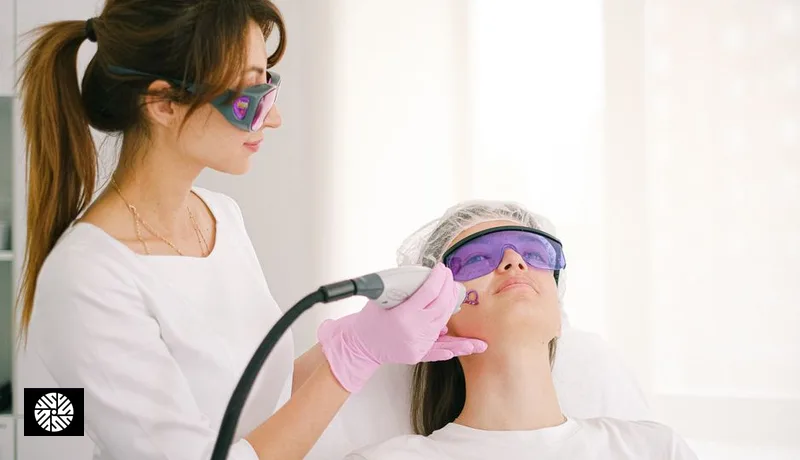
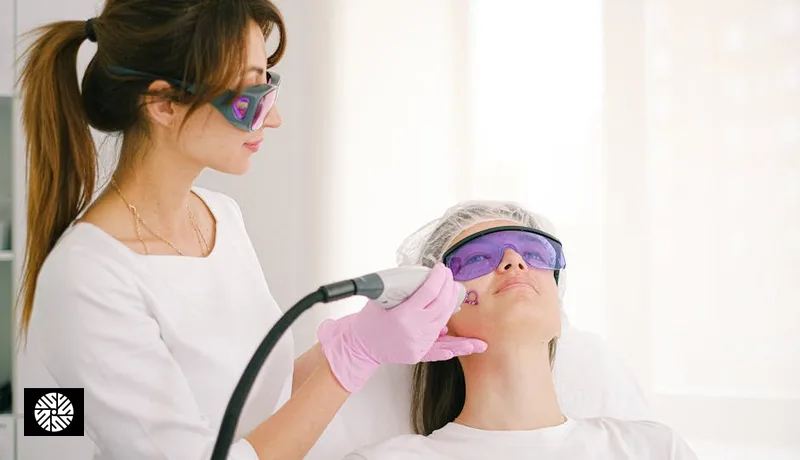
- Energy-based devices — picosecond and Q-switched lasers, intense pulsed light, radiofrequency, ultrasound. Treats pigmentation, vascular concerns, texture, and skin laxity without cutting.
- Injectables — neuromodulators, hyaluronic acid fillers, biostimulators, skin boosters.
- Regenerative aesthetics — PRP, exosomes, polynucleotides, microneedling with growth factors.
- Body and contouring — non-invasive fat reduction, muscle stimulation, cellulite treatment.
Clinicians describe Taiwan's house style as "the Korean aesthetic without the maximalism" — the same skill set with energy-based devices and injectables, applied with a lighter hand and a preference for results that look rested rather than altered.
What does medical beauty cost at New Dawn Health?
These are our own prices at our Taipei partner clinics — iHope Clinic, Provenir Clinic, Aimer Clinic and BaM — bookable on our packages page. Each is the full session price, not a deposit or a teaser rate.
| Treatment | New Dawn Health price (USD) | Treats |
|---|---|---|
| Stellar M22 IPL (Lumenis) | from $133 | Sun spots, freckles, redness, broken capillaries |
| Hydrafacial | $135 | Cleansing, extraction, hydration — no downtime |
| Premium Hydrafacial | $266 | Extended protocol with boosters |
| Botox (Provenir Clinic) | $350 | Dynamic lines — forehead, glabella, crow's feet |
| PicoSure Pro, flat lens (45 min) | $400 | Sun spots, freckles, general pigmentation |
| Stellar M22 ResurFX | $600 | Texture, pores, collagen remodelling |
| Photofabulous combo (IPL + ResurFX) | $670 | Tone and texture in one visit |
| Platinum PicoSure Pro, Focus lens (1 hr) | $733 | Melasma, acne scars, fine lines, pores |
| Hair restoration — PRP (BaM) | $1,600 | Thinning, early-stage hair loss |
| Density Treatment | $3,166 | Multi-session hair density programme |
| iHope Clinic custom treatment plan | Quoted at consultation, paid to the clinic | Anything outside the fixed menu |
Our Botox session is $350 and our laser sessions run $400 to $733; the American Society of Plastic Surgeons publishes the US national averages for the same two procedures. For a fuller treatment-by-treatment breakdown, see our cost comparison guide.
The honest framing on price: the savings are real, but they should not be the only reason you travel. If a Taiwan trip costs the same as your local clinic after flights and hotels, come for the clinical experience or skip it.
How do you verify a Taiwan clinic and clinician before booking?
The market has wide variance — there are world-class clinics and aggressively-marketed mediocre ones, and the difference is not visible from the outside. That is why we work with a curated set of partners rather than a long directory. It is also why Taiwan's regulator publishes lists you can check yourself.
- The Ministry of Health and Welfare's Department of Medical Affairs runs an Aesthetic Medicine Information Zone that publishes the register of medical institutions approved by each county and city to perform specified aesthetic surgery, alongside the consent-form templates those procedures require.
- MOHW launched a voluntary clinic aesthetic medicine quality certification in 2019, run by the Taiwan Joint Commission on Hospital Accreditation and scored against 20 assessment items covering staff qualifications, information transparency, environmental safety, emergency response and complaint handling. Certification lasts three years and certified clinics are published on the ministry's and the commission's websites. At launch MOHW counted about 1,186 clinics nationwide offering aesthetic medicine, of which 217 performed the specified higher-risk procedures.
New Dawn may introduce partner clinics, but partnership is not proof that a particular clinician, product, device, or procedure is suitable for you. Before booking, verify the legal clinic name, current licence, clinician licence and specialty, the role of the person who will actually operate the device, the exact product or device, the quoted scope, and the complication plan. Our skin-treatment consultation checklist walks through the questions.
- Board-certified dermatologists or plastic surgeons leading treatments — not technicians operating devices unsupervised.
- A device list that reads like the global premium standard rather than off-brand alternatives.
- Consultation-first culture, where the doctor will tell you when not to treat or when to delay.
- Clear written treatment plans, including alternatives and expected outcomes.
- Transparent pricing without surprise add-ons mid-treatment.
Which devices do the partner clinics use?
Premium Taipei clinics use the same flagship platforms you would find at top clinics in New York, London, or Seoul. The devices behind the treatments in the price table above:
- PicoSure Pro (Cynosure) — 755 nm picosecond laser for pigmentation, melasma, acne scarring and skin renewal. The PicoSure Workstation cleared US FDA 510(k) review as a powered laser surgical instrument (K210226, decision 30 March 2021).
- Stellar M22 (Lumenis) — multi-application IPL and non-ablative fractional (ResurFX) platform for vascular, pigmentary, and texture concerns.
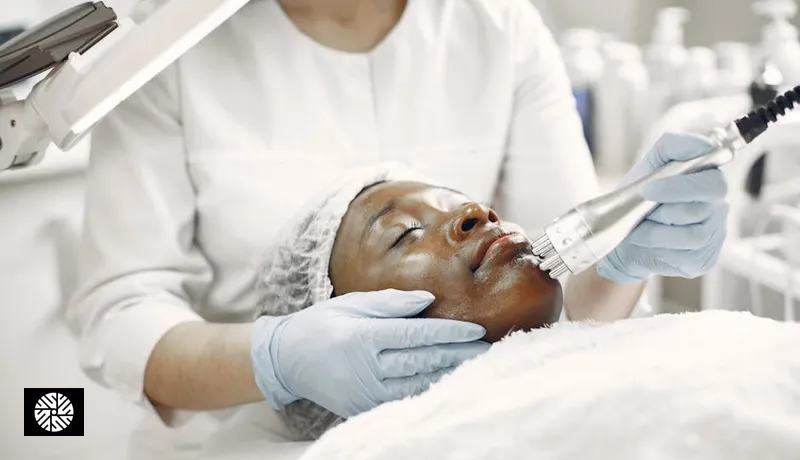
- Hydrafacial — vortex cleansing, exfoliation and serum infusion, often used as a same-day complement to laser work.
- PRP for hair — the patient's own platelet-rich plasma, drawn and re-injected in the same visit.
Other platforms — biostimulators, ultrasound and radiofrequency tightening, threads — are available at partner clinics on a custom-quote basis rather than as a fixed-price package. Whatever the device, ask which model and which manufacturer before you sit down: any medical device sold in Taiwan has to be registered with or listed by the central competent authority before import or manufacture, so the answer is checkable.
Who travels to Taiwan for medical beauty?
From our concierge bookings, Taiwan medical aesthetics trips fall into three patterns:
- Asian-American visitors looking for same-tone aesthetic guidance. Skin behaviour on energy-based devices varies by Fitzpatrick phototype, and Taipei dermatologists treat types III-V daily. The clinical fluency around melasma, post-inflammatory hyperpigmentation, and laser settings for non-Caucasian skin is a genuine advantage.
- Comparison shoppers who started their research in Korea or Thailand and ended up considering Taiwan after weighing price, English-language clinic options, and aesthetic philosophy. Many describe Taiwan as feeling "less aggressive" — fewer hard sells, more conservative recommendations.
- Returning patients on a maintenance cycle. After a good first experience, the pattern we see is one Taiwan trip every six months or annually, building a treatment relationship with one doctor. That cadence lines up with the collagen-stimulation timeline of the laser and biostimulator treatments most of them book.
How does Taiwan regulate aesthetic medicine?
The clinical safeguards are stronger than the marketing chatter suggests, and they sit in published law.
- Devices. Taiwan's Medical Devices Act makes the Ministry of Health and Welfare the central competent authority. Manufacturers and importers must register or list a device with that authority before it is manufactured or imported (Article 25), and the authority designates products for safety monitoring under approved plans with periodic reporting (Article 47). The Taiwan Food and Drug Administration is the MOHW agency that administers this for drugs, medical devices and cosmetics.
- Operators. Under the Regulations on the Administration of Specified Medical Techniques, Examinations, Tests and Medical Devices, a physician performing a specified aesthetic surgery must hold the relevant specialty certification — the regulation names, procedure by procedure, which boards qualify (Article 26) — and must complete at least 32 hours of aesthetic-medicine training recognised by an approved academic society (Article 25), then 24 hours of continuing education every three years to stay eligible.
- Institutions. A clinic applying to perform those procedures files the surgeon's specialist certificate and training certification with the health authority (Article 4), which is what puts it on the county or city approved-institution list MOHW republishes.
In practice: the product, the device, and the operator are all checkable before you book — and for a first-time visitor that checkability matters more than any clinic's marketing.
Deep-dive guides
- Laser skin treatments — a traveler's guide — PicoSure Pro, Stellar M22, fractional, vascular, and how to plan recovery around travel.
- Botox & fillers in Taiwan — quality, cost, what to expect — neuromodulator and HA filler specifics, including pricing and the brand landscape.
- Medical beauty cost comparison — Taiwan, US, Korea, Japan.
- All New Dawn Health packages — book any treatment in the table above.
Sources
- Laws & Regulations Database of the Republic of China (Taiwan) — Medical Devices Act, Articles 1, 25 and 47 (accessed 2026-09-08)
- Laws & Regulations Database of the Republic of China (Taiwan) — 特定醫療技術檢查檢驗醫療儀器施行或使用管理辦法, Articles 4, 25 and 26 (accessed 2026-09-08)
- Taiwan Food and Drug Administration — official English site, regulatory scope (accessed 2026-09-08)
- Ministry of Health and Welfare, Department of Medical Affairs — 美容醫學資訊專區 (Aesthetic Medicine Information Zone): register of institutions approved to perform specified aesthetic surgery (accessed 2026-09-08)
- Ministry of Health and Welfare — 衛福部推動「診所美容醫學品質認證」,民眾就醫安心有保障, 31 October 2019: 20 assessment items, three-year certification, 1,186 clinics, 217 performing specified procedures (accessed 2026-09-08)
- U.S. FDA — 510(k) Premarket Notification K210226, PicoSure Workstation, Cynosure LLC, decision 30 March 2021 (accessed 2026-09-08)
- Cynosure — PicoSure Pro device information (accessed 2026-09-08)
- American Society of Plastic Surgeons — Botulinum toxin injection cost (accessed 2026-09-08)
- American Society of Plastic Surgeons — Laser skin resurfacing cost (accessed 2026-09-08)
- U.S. FDA — Aesthetic (Cosmetic) Devices (accessed 2026-09-08)
Frequently asked
Why choose Taiwan over Korea for medical beauty?
Korea leads in aesthetic surgery — rhinoplasty, double eyelid, jawline reshaping — and has the largest international following. Taiwan competes in non-surgical aesthetic medicine: lasers, injectables, regenerative treatments, energy-based devices. Patients often describe Taiwan as Korean-level technical skill paired with a more conservative aesthetic philosophy and lighter sales pressure. Taiwan pricing is typically 30-50% below Seoul for equivalent non-surgical treatments.
Is the quality really comparable to Korea, Singapore, or the U.S.?
For non-surgical treatments at a credentialed premium clinic, yes. The flagship devices — Picosure Pro, Stellar M22, Thermage FLX, Ultherapy, Sculptra — are TFDA-cleared in Taiwan and largely the same hardware used at top clinics globally. Physicians at premium clinics are board-certified dermatologists or plastic surgeons. The variance in the Taiwan market is wide, so clinic selection matters more than country selection.
How should I evaluate a named partner clinic?
Do not rely on a partnership label or country comparison. Verify the clinic and treating clinician against current authoritative records, then confirm the exact product or device, indication, operator, risks, price scope, follow-up, and complication plan in writing.
Can I combine a medical beauty trip with a health screening trip?
Yes, but separate trips are usually ideal because the recovery profiles differ. Health screening involves fasting and endoscopy that benefit from a quiet recovery day; aesthetic treatments may involve mild swelling, pinpoint bleeding, and sun-avoidance windows. If you do combine, sequence screening early in the trip and aesthetics later, with sun-sensitive treatments timed so the avoidance window matches your flight home. Returning patients with established clinic relationships often combine successfully on yearly trips.
What is the best season for aesthetic treatments in Taiwan?
For laser-heavy treatment plans, fall and winter (October to March) are easier — lower UV exposure makes the post-treatment sun-avoidance window simpler to manage. Spring and summer are perfectly workable for non-laser treatments like injectables, Thermage, Ultherapy, and skin boosters. If a single trip mixes both, try to schedule lasers toward the end so you fly home into your home-country winter or stay indoors for the post-treatment window.
Are products and devices in Taiwan TFDA-approved and equivalent to FDA?
Yes for the major flagship devices and injectables. The Taiwan FDA (TFDA) regulates medical devices and prescription products on a framework comparable to the U.S. FDA, including pre-market review and post-market surveillance. Picosure Pro, Stellar M22, Thermage FLX, Ultherapy, Sculptra, Profhilo, and major neuromodulator and HA filler brands are all TFDA-cleared. At a credentialed clinic, you can verify the specific product batch and device on request.
How do I get started with a Taiwan medical beauty trip through New Dawn Health?
Start by telling us your goals rather than a specific treatment — the right approach depends on your skin, timeline, and recovery flexibility. Browse our services or providers pages to begin the concierge intake. We match you to a partner clinic (often iHope), arrange a pre-trip virtual consultation with the doctor, then coordinate in-person consultation and treatment scheduling around your travel dates.