Blog
Blog
Safety Standards at Taiwan Medical Beauty Clinics

For international patients considering medical aesthetics in Taiwan, the most important conversation isn't about which clinic has the prettiest waiting room or the most aggressive package discount — it's about clinical governance. Who is licensed to inject you? Where did the product in the syringe come from? What happens if something goes wrong at 9 PM on a Saturday? These are questions that separate a high-quality medical practice from a glorified beauty salon, and Taiwan, fortunately, has built a regulatory environment that takes them seriously.
This guide walks through Taiwan's safety framework in the detail an informed traveler actually needs: the regulators behind it, the credentials to verify, the questions to ask before booking, the red flags that should send you walking, and the emergency protocols every reputable clinic must have on hand. If you're new to Taiwan as a destination, our overview of why Taiwan has become a top destination for medical beauty is a useful starting point — this article focuses specifically on the safety side of that decision.
Taiwan's regulatory framework — TFDA, MoHW, specialty boards
Three layers of oversight govern medical aesthetics in Taiwan, and they interact in ways patients should understand.
The Taiwan Food and Drug Administration (TFDA) is the device-and-drug regulator, broadly comparable to the U.S. FDA. Every botulinum toxin brand (Botox, Dysport, Xeomin, Letybo), every hyaluronic acid filler line (Juvederm, Restylane, Belotero, Teosyal), and every laser or energy-based device (Picosure Pro, Thermage FLX, Ultherapy, M22) sold legally in Taiwan must hold a TFDA registration number. Clinics are required to use only TFDA-approved products on patients. Counterfeit or grey-market product — Korean toxins of dubious provenance, Chinese-manufactured filler counterfeits sold online — is illegal and carries criminal penalties for the practitioner.
The Ministry of Health and Welfare (衛福部, MoHW) licenses physicians and clinics. Every doctor practicing in Taiwan holds a national medical license issued by MoHW after passing the national medical exam, and every clinic operates under a clinic license tied to a specific physical address and a designated responsible physician (負責醫師). MoHW also runs the public license database where patients can verify a doctor's credentials.
Beyond MoHW's general medical license, specialty board certification is issued by professional societies. The two that matter most for aesthetics are the Taiwan Dermatological Association (台灣皮膚科醫學會), which certifies dermatologists (皮膚科專科醫師), and the Taiwan Society of Plastic Surgery (台灣形體美容外科醫學會), which certifies plastic surgeons (整形外科專科醫師). A physician can technically perform aesthetic injections without one of these specialty boards — Taiwan is somewhat permissive there — but board-certified specialists have completed an additional 3-5 year residency in their field and passed rigorous board exams. For non-surgical aesthetics, you want one of these two specialties.
Verifying physician credentials
Before you sit in the chair, you should know exactly who is treating you. Here is what to verify and how.
Full legal name and license number. The clinic's website should list the treating physician by full name (in Chinese characters and ideally Pinyin/English). MoHW's public physician database — accessible at the Ministry's "醫事查詢" portal — lets you search by name and confirm the license is active and unrestricted.
Specialty board certification. Ask whether the doctor is a board-certified dermatologist or plastic surgeon, and look for the certification number. The Taiwan Dermatological Association and Taiwan Society of Plastic Surgery both maintain searchable member directories. A "cosmetic doctor" without one of these specialties may still be skilled, but you're entitled to know the difference.
Hospital affiliation and training history. Taiwan's top-tier academic medical centers — National Taiwan University Hospital (NTUH, 台大醫院), Chang Gung Memorial Hospital (長庚), Cathay General Hospital (國泰), Veterans General Hospital (榮總), and Mackay Memorial — produce most of the country's leading specialists. A physician who completed residency at one of these institutions, or who maintains a current attending appointment, has been vetted by the most rigorous training pipeline in the country.
Years in independent practice. Ten or more years post-board-certification is a reasonable benchmark for an "established" practitioner — enough cases to have seen most complications and refined their technique. Younger physicians can be excellent, but pair experience with affiliations and continuing education credentials.
Continuing education and international training. Aesthetics moves quickly. Look for KOL designations from manufacturer training programs (Allergan, Galderma, Merz), masterclass attendance at international meetings (IMCAS, AAD, ASAPS), and published lectures. Our providers directory lists the partner physicians at New Dawn Health with their credentials laid out in this format.
Clinic accreditation + sterilization protocols
A licensed physician at an unlicensed or poorly-run clinic is still a problem. Clinic-level governance matters.
Taiwan operates the Taiwan Medical Quality Indicators System (TQIS) through the Joint Commission of Taiwan (財團法人醫院評鑑暨醫療品質策進會), which evaluates hospitals and large clinics on infection control, patient safety reporting, and clinical outcome metrics. Smaller aesthetic clinics aren't always TQIS-accredited — the system was designed for hospitals — but reputable clinics voluntarily adopt comparable internal protocols.
What to look for on a clinic walkthrough or in their FAQ:
- Autoclave sterilization for any reusable instruments, with sterilization log books available on request.
- Single-use needles and syringes opened from sealed packaging in front of the patient — never reused, never pre-loaded out of sight.
- Sealed product packaging shown to the patient before opening, so brand, batch number, and expiration date can be verified.
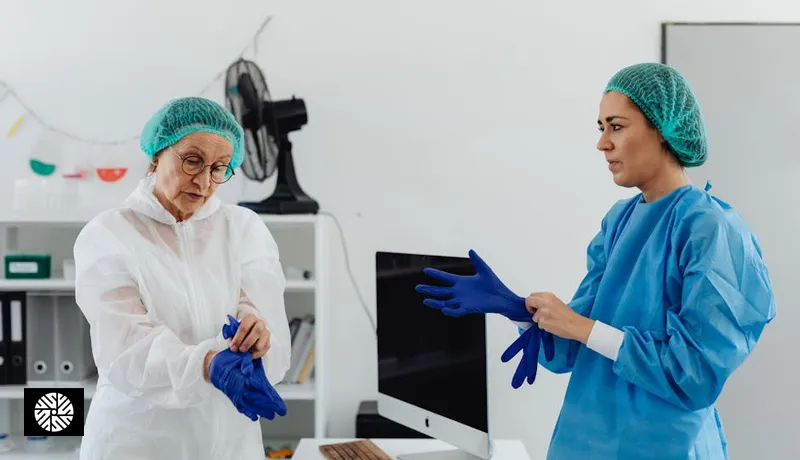
- Hand hygiene and gloving protocols visibly observed by the injector and assistants.
- Privacy and data protection — Taiwan's Personal Data Protection Act (個人資料保護法) is broadly comparable to HIPAA; clinics handling foreign patient records should have a written privacy policy.
- Emergency equipment on site (more on this below).
What to verify before booking
The pre-booking conversation tells you almost everything you need to know about how a clinic operates. Here is the checklist we recommend foreign patients run through before placing a deposit.
| # | Verify | How / what good looks like |
|---|---|---|
| 1 | Treating physician's full name | Stated clearly in writing before booking — not "one of our doctors" |
| 2 | Specialty board certification | Board-certified dermatologist or plastic surgeon, verifiable via association directory |
| 3 | Real, registered clinic address | A licensed clinic location — not a residential apartment, hotel room, or unmarked space |
| 4 | Specific product brand and source | Brand named (e.g. "Allergan Botox" not "premium toxin"), TFDA-registered, sealed packaging shown |
| 5 | Device model for laser/energy treatments | Specific model named (Picosure Pro, Thermage FLX, Ultherapy) — matches their marketing |
| 6 | Emergency protocols on site | Hyaluronidase available for filler complications, anaphylaxis kit (epinephrine, oxygen) |
| 7 | Consent forms in English | Provided in advance for review; clear about risks, touch-up policy, and what's covered |
| 8 | Patient reviews and before/afters | Real Google reviews, identifiable patients, ideally results from international patients |
| 9 | English-speaking concierge or translator | If you don't speak Chinese, professional translation is essential — not a casual front-desk volunteer |
| 10 | Aftercare and follow-up plan | Written aftercare, 2-4 week touch-up window for asymmetry, contactable physician for complications |
Our step-by-step clinic selection guide for foreign patients walks through how to use this checklist during a video consultation.
Red flags — when to walk away
The vast majority of TFDA-licensed clinics meet a high standard. The minority that don't tend to share a recognizable pattern.
"Too cheap" pricing. Botulinum toxin and brand-name filler have wholesale costs that don't bend much. A clinic offering Botox at half the market rate is almost certainly using a non-TFDA-approved Korean toxin of unverified provenance, a counterfeit, or an under-dosed dilution. Our pricing breakdown in Botox and fillers in Taiwan — quality, cost, and what to expect covers realistic ranges.
High-pressure or "today only" sales tactics. Aggressive day-of-trip discount aggressive sales — especially urging upgrades or add-on syringes during the consultation — is a bad sign. Reputable clinics quote a treatment plan, give you time to decide, and let you walk out and think about it.
Unlicensed beauty salons offering injections. Walking into a 美容沙龍 (beauty salon) and being offered "Botox lite" or filler is illegal in Taiwan. Only licensed physicians can inject. The fact that this still happens occasionally is exactly why the regulatory framework matters — and why you should always verify a clinic, not a "shop."
No physician on-site. Filler or toxin administered by a nurse, aesthetician, or technician without a physician present is illegal. Some unscrupulous venues use a remote-supervision claim — "the doctor signs off afterwards" — which is not lawful practice.
Refusing to show product packaging. A clinic that won't open the sealed box in front of you is hiding something. This is non-negotiable.
Vague answers about credentials. If the front desk can't tell you the treating physician's name and specialty in plain language, walk.
Common complications and clinic emergency protocols
Even in expert hands, complications happen. The mark of a good clinic is not zero complications — it's how they're prepared to handle the ones that occur. Here are the main scenarios and what should be in place.
| Complication | Why it happens | Clinic response |
|---|---|---|
| Vascular occlusion (filler) | Filler accidentally injected into or compressing an artery — risk of skin necrosis or, rarely, blindness | Immediate hyaluronidase injection (and IV in severe cases) to dissolve the HA filler; warm compress, aspirin, urgent referral if vision affected |
| Anaphylaxis (toxin or filler) | Rare allergic reaction to product or excipient | Intramuscular epinephrine, oxygen, antihistamine, corticosteroid; ambulance transfer to ER |
| Infection (post-procedure) | Skin flora introduced during injection or post-treatment skin care lapse | Oral or IV antibiotics, aseptic re-treatment of the site, possible drainage if abscess; close follow-up |
| Asymmetry | Uneven product distribution, individual muscle response, swelling masking final result | Touch-up at 2-4 week mark — most reputable clinics include one complimentary touch-up in the original fee |
| Bruising or swelling | Normal injection-related; resolves in 3-7 days | Cold compress, arnica, reassurance; patient education on avoiding NSAIDs and alcohol pre-treatment |
| Laser burns or PIH (post-laser) | Energy setting too aggressive for skin type, sun exposure pre/post-treatment | Topical steroids, hydroquinone for PIH, strict SPF, cooling protocols; treatment plan adjustment |
For more on the laser-specific safety considerations, see our laser skin treatments traveler's guide.
Hyaluronidase on hand — the gold-standard filler safety check
If you take only one specific question from this guide into your next clinic conversation, make it this: "Do you keep hyaluronidase on site, and how is it stored?"
Hyaluronidase is the enzyme that dissolves hyaluronic acid filler. In a vascular occlusion — when filler ends up in or pressing on an artery — minutes matter. Skin necrosis can begin within hours; in the worst case, occlusion of the ophthalmic artery causes blindness. The only effective treatment is high-dose hyaluronidase delivered immediately, ideally within the first hour. A clinic that performs HA filler injections but does not stock hyaluronidase is, frankly, not safely equipped to perform HA filler injections at all.
Reputable Taiwan clinics — including iHope Clinic and our other partner providers listed in our providers directory — stock hyaluronidase, refrigerated and within reach of the injection room. They train staff to recognize occlusion signs (sudden blanching, severe pain, mottling) and have a written protocol. Ask. The answer should be immediate and confident.
Similarly, for botulinum toxin, anaphylaxis is rare but possible. Every injecting clinic should have an anaphylaxis kit — IM epinephrine (adrenaline), oxygen, IV access supplies, and a defined route to the nearest emergency department.
Pre-procedure consent — what's in English, what to ask about
Informed consent is a legal and ethical requirement in Taiwan, and for foreign patients it should be conducted in English (or your preferred language with a qualified medical interpreter, not a casual translator).
What a proper consent form covers:
- The specific procedure — drug name, brand, dose, anatomical sites; or device, settings, treatment areas.
- Expected results and limitations — onset, duration, what improvement is realistic.
- Common side effects — bruising, swelling, redness, transient asymmetry.
- Rare but serious risks — vascular occlusion, anaphylaxis, infection, scarring, vision loss (for high-risk filler areas).
- Alternatives — other treatments or no treatment.
- Touch-up and follow-up policy — what's included if asymmetry or under-correction occurs.
- Photography release — how before/after photos will be used (this should be optional, separately consented).
What not to sign without questioning:
- Blanket waivers of liability for negligence — these are unenforceable under Taiwan law and a sign the clinic is testing your attention.
- Mandatory arbitration in a foreign jurisdiction — patient disputes in Taiwan should fall under Taiwan's medical mediation system.
- Open-ended permission for "additional treatments deemed necessary" — informed consent is procedure-specific.
- Photo and marketing rights without opt-out — your before/after images are personal data.
Read the form, ask questions, take a photo of the signed copy for your records, and request a copy of the product packaging or batch sticker on the chart.
Travel insurance + complication coverage
Most travel medical insurance policies explicitly exclude elective cosmetic procedures and any complications arising from them. Read the fine print: language like "treatment for elective aesthetic procedures and any sequelae" is the exclusion clause to look for.
What to do instead:
- Confirm the clinic's complication-management policy in writing. Reputable clinics handle direct complications (asymmetry touch-ups, infection management, hyaluronidase reversal) at no additional cost within a defined window.
- Ask about touch-up warranties. Most established Taiwan clinics offer one complimentary touch-up at 2-4 weeks for injectables, and a graduated re-treatment policy for laser series that under-perform.
- Consider a longer Taiwan stay or a planned follow-up trip. A 7-10 day buffer between treatment and departure lets minor complications surface while you're still in-country and able to be seen.
- Plan for "what if I'm home and something flares?" Get the clinic's WhatsApp/LINE contact, the treating physician's direct email, and clarify telemedicine options for follow-up.
- Specialty medical evacuation insurance exists for high-risk cosmetic surgery patients but is rarely needed for non-surgical aesthetics; for facelift, liposuction, or rhinoplasty travelers, it's worth investigating.
Taiwan vs Korea Gangnam — why Taiwan's regulatory environment reduces risk
The horror stories that circulate in international beauty press — "ghost surgeons," counterfeit injectables, unlicensed injectors at backstreet clinics — are disproportionately reported from a small number of jurisdictions where high tourist volume has outpaced enforcement. Korea's Gangnam district, which sees enormous medical-tourism volume, has had documented cases of vascular occlusion from non-physician injectors, ghost-doctor surgery (a different surgeon than the one who consulted), and counterfeit products. These cases are the minority — Korea also has world-class clinics — but the reputational damage has been real.
Taiwan's environment differs in a few structural ways. Volume is lower and more dispersed, so individual clinics see steady local Taiwanese patients alongside international visitors and are accountable to a domestic patient base. Physician-only injection is more strictly enforced. The TFDA's product approval pipeline is conservative, so grey-market product is less prevalent. And the academic medical centers (NTUH, Chang Gung, Cathay, Veterans General) that train most aesthetic specialists set a baseline standard that filters into private practice.
None of this means complications can't happen in Taiwan — they can, anywhere. But the structural odds are good, and the framework rewards patients who do their homework.
The bottom line for international patients
Safety in Taiwan medical aesthetics is not luck; it's a system. TFDA approves the products, MoHW licenses the doctors, the specialty boards certify the experts, and individual clinics implement the protocols. Your job as a patient is to pick a clinic that takes all four layers seriously — and to verify, not assume.
Use the pre-booking checklist above. Verify the physician's name and board status before you fly. Ask about hyaluronidase and the consent form in English. Read the touch-up policy. And give yourself a few buffer days in-country between treatment and departure.
To explore specific treatments and partner clinics that meet these standards, browse our services directory and verified providers list.
Sources & Further Reading
FAQ
Search the public directories of the Taiwan Dermatological Association (台灣皮膚科醫學會) for dermatologists, or the Taiwan Society of Plastic Surgery (台灣形體美容外科醫學會) for plastic surgeons. You can also confirm the underlying medical license through the Ministry of Health and Welfare's 醫事查詢 portal. Ask the clinic for the doctor's full Chinese name and license number — a reputable clinic will provide this without hesitation.
Contact the treating clinic immediately via WhatsApp, LINE, or email — most clinics keep direct lines open for international patients. They can advise on what local care to seek, prescribe or recommend medications, and coordinate with a local provider if needed. For serious complications (vision changes, severe pain, signs of infection), seek emergency care first, then notify the clinic. Always get the clinic's direct contact details and the treating physician's information before you leave Taiwan.
Some Korean toxins (such as Letybo by Hugel) have received TFDA approval and are safely used in Taiwan, alongside Allergan's Botox, Galderma's Dysport, and Merz's Xeomin. The safety issue is not "Korean" vs "Western" — it's TFDA-approved vs grey-market. A clinic offering an unnamed "Korean toxin" at a steep discount is likely using an unapproved or counterfeit product, which is illegal and unsafe regardless of country of origin. Always ask for the specific brand name and verify it on the TFDA registration database.
Yes — for clinics injecting hyaluronic acid (HA) fillers, hyaluronidase is the only effective rescue for vascular occlusion, the most serious filler complication. Without it on site, a clinic cannot safely manage occlusion in the time window that matters (minutes to an hour). Any clinic offering Juvederm, Restylane, Belotero, Teosyal, or other HA fillers should have hyaluronidase refrigerated and immediately accessible. This is a non-negotiable standard.
Most established clinics include one complimentary touch-up for injectables (Botox, fillers) at the 2-4 week mark to address asymmetry or under-correction — this is the standard window when results have settled. For laser treatment series, clinics typically offer a graduated re-treatment policy if a series underperforms expectations. Clarify the specific policy in writing before booking, including what triggers a touch-up (provider judgment vs patient preference) and any time limits.
First, give it time — most injectable results take 2-4 weeks to fully settle, and laser results unfold over 4-8 weeks. After that window, contact the clinic to discuss. Reasonable issues like asymmetry are typically addressed under the touch-up policy. For HA filler, hyaluronidase can dissolve the product entirely if you want to reverse it. For more subjective dissatisfaction, an honest conversation with the physician about expectations is the next step. If you cannot reach resolution, Taiwan operates a medical mediation system through local health departments that handles patient-clinic disputes.
Both Korea and Taiwan have world-class clinics, and both have isolated cases of poor practice. Structurally, Taiwan benefits from lower tourist volume per clinic (more accountability to a domestic patient base), strict physician-only injection enforcement, conservative TFDA product approvals, and strong academic medical centers (NTUH, Chang Gung, Cathay, Veterans General) that train most aesthetic specialists. The "ghost doctor" and unlicensed-injector cases that have surfaced in Korea's Gangnam district are rarer in Taiwan due to enforcement patterns. That said, the most important variable is your specific clinic and physician — verify credentials in either country.