Blog
Blog
How to Choose a Medical Beauty Clinic in Taiwan as a Foreigner
April 29, 2026
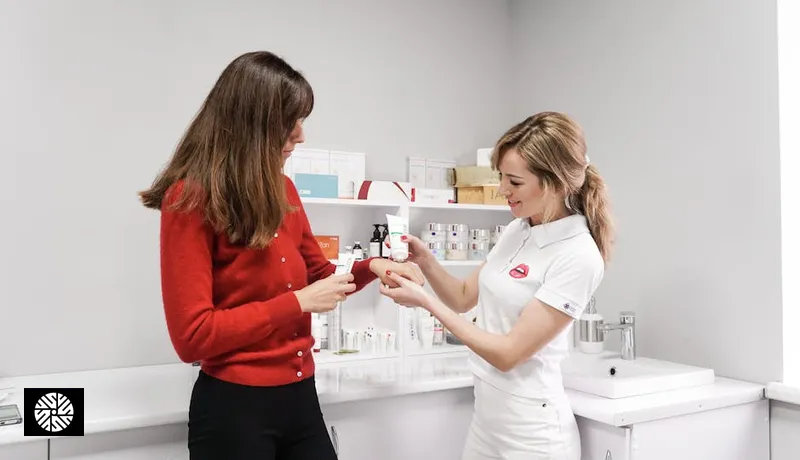
Choosing a medical aesthetics clinic in Taiwan is not the same problem as choosing one at home. The market is large, the price-to-quality ratio is excellent, and most of the best clinics operate primarily in Mandarin. As a foreign patient, the question is rarely "is this clinic safe?" — Taiwan's regulatory baseline is high (see our safety standards guide for the regulatory side). The real question is: which type of clinic fits my goals, my budget, my time, and my comfort with a non-English-speaking environment?
This guide is the patient-side decision framework. We walk through the three tiers of clinics in Taiwan, the factors that should drive your choice, the research process, the geographic clusters worth knowing, and the booking workflow we use at New Dawn Health to vet clinics and handle language for international patients.
Three-tier clinic framework — premium boutique, mid-tier multi-physician, volume chains
Taiwan's medical beauty clinics roughly fall into three operational tiers. Each delivers a different experience, a different pricing point, and a different patient profile. There is no "best" tier — there is only the best fit for you.
Tier 1 — Premium boutique (single physician focus, hands-on, $$$). These are clinics built around one or two senior physicians who personally perform consultations and treatments. iHope Clinic, where Dr. Andre Zahn practices, is a good example. Patient volume per day is intentionally low. Consultations run long. The physician is hands-on through the entire treatment, not delegating injections to assistants. Pricing sits at the top of the Taiwan market — though still well below comparable U.S. clinics. Best fit for: first-time aesthetic patients, complex or combination treatments, returning patients building a long-term relationship, and anyone who values continuity over price.
Tier 2 — Mid-tier multi-physician (broader treatment options, mid-pricing $$). These are well-known named clinics with three to ten physicians on staff. They typically cover the full menu — injectables, lasers, skin boosters, energy-based devices, threads, and sometimes minor surgery. Patient volume is higher, but consultations are still substantial. You may not always get the same physician on a return visit unless you specifically request one. Pricing is meaningfully lower than tier 1, often by 20-40 percent. Best fit for: patients who want broad treatment options under one roof, slightly more price sensitivity, or those combining multiple procedures across different specialties on the same visit.
Tier 3 — Volume chains (lower per-treatment cost, less personalized $). These are franchise or chain clinics with locations across multiple cities. They run on volume — fast consultations, standardized menus, and per-syringe or per-shot pricing that is often the lowest in Taiwan. Quality varies by location, and language support is typically the weakest. Best fit for: experienced patients who already know exactly what product, dose, and technique they want, who are price-driven, and who do not need a deep consultation.
Clinic tiers — boutique vs mid-tier vs volume
| Dimension | Premium boutique | Mid-tier multi-physician | Volume chain |
|---|---|---|---|
| Pricing | $$$ (top of Taiwan market) | $$ (mid) | $ (lowest) |
| Consultation length | 30-60 min | 15-30 min | 5-15 min |
| Physician continuity | Same doctor every visit | Possible if requested | Often whoever is available |
| English support | Often direct or strong translator | Translator on request | Variable, often Chinese-only |
| Treatment menu | Curated, physician-led | Broad | Standardized |
| Best for | First-timers, complex cases, continuity | Multi-procedure visits, mid-budget | Experienced, price-driven, single product |
Decision factors — treatment goal, budget, time, language, privacy
Once you understand the tiers, the choice comes down to weighing six factors. The right answer is the clinic that best matches your specific combination — not the most expensive or the most reviewed.
Treatment goal. Are you targeting one specific concern (pigmentation, a single area of volume loss, a known wrinkle pattern) or pursuing a general aesthetic refresh? Specific goals often do well at any tier with the right physician. General refresh — where the physician's eye and judgment shape the outcome — almost always benefits from a boutique or strong mid-tier setting.
Budget tier. Be honest about what you can spend total, including travel. Taiwan is meaningfully cheaper than the U.S. or Korea (see our cost comparison), so even tier 1 boutique pricing is often equivalent to mid-tier U.S. pricing. If your budget is tight, going one tier down in Taiwan often beats going one tier up at home.
Time available. Are you here for a single appointment over a long weekend, or do you have a week or more for a multi-session plan with healing windows in between? Treatments like threads, deeper lasers, and combination protocols benefit from a multi-day window. Single-session work like Botox, basic fillers, or light skin boosters fits a tighter trip.
Language preference. English direct from physician, English via translator, or willing to use Chinese with a friend? This drives clinic selection more than people expect. Premium boutiques and clinics with international patient programs handle English smoothly. Volume chains often do not.
Privacy and discretion. Some clinics have separate VIP entrances, private waiting areas, and discreet scheduling. If privacy matters — public figures, professional considerations, or just personal preference — say so during intake. It narrows the list quickly.
Returning vs first-time patient. First-timers benefit from longer consultations and a physician who explains options. Returning patients with a known plan can move faster and get better value at a mid-tier with a trusted physician.
Decision matrix by patient profile
| Patient profile | Recommended tier | Why |
|---|---|---|
| First-time, English-only, refresh goal | Premium boutique | Long consult, English support, physician continuity |
| Multi-procedure trip, mid-budget | Mid-tier multi-physician | Broader menu under one roof |
| Experienced, knows exact product | Volume chain or mid-tier | Best per-unit pricing, less consult needed |
| Returning patient, continuity matters | Premium boutique (same MD) | Compounding benefit of physician memory |
| Privacy-sensitive | Premium boutique | VIP scheduling, lower foot traffic |
| Tight schedule, single procedure | Any tier with concierge | Pre-vetted booking saves trip time |
Research process — what to look for in English-language sources
Searching for Taiwan clinics in English surfaces a smaller subset than searching in Chinese — but the subset is meaningful. Clinics that have invested in English-language presence are usually the ones that have invested in international patient infrastructure.
Direct English websites are the strongest signal. iHope Clinic maintains full English content, as do clinics like Wisely Aesthetics and Lin Aesthetic Clinic. A second tier of well-known clinics has English landing pages that funnel into a concierge or international coordinator. A third tier is functionally English-friendly only via outside concierge services like New Dawn Health, even though their public site is Chinese-only.
What to look for: a real physician page with credentials and photos, specific equipment and product brands named (not just "advanced laser"), pricing at least in ranges, and a way to ask questions in English before booking. Vague marketing copy and stock photos are a soft red flag — not disqualifying, but worth verifying. Use the verification checklist in our safety standards article before any booking.
Reviews on Google and international medical tourism forums help, but weight them carefully. Recent reviews matter more than older ones. Reviews from patients in your language and with goals similar to yours matter more than generic five-star ratings. Pay attention to reviews that mention communication and aftercare — those are the parts of the experience most likely to differ from what locals experience.
Geographic clusters — Da'an / Songshan / Xinyi
Most of Taiwan's medical aesthetics infrastructure sits in Taipei, and within Taipei, three districts dominate. Knowing the geography helps you plan logistics, hotel choice, and clinic shortlisting.
Da'an district is the densest aesthetics concentration in Taiwan. It is centered around the Zhongxiao Fuxing and Zhongxiao Dunhua MRT corridor, with hundreds of clinics packed into a few square kilometers. Many premium boutiques and well-known mid-tier clinics are here. Hotel options are abundant. If you are doing multi-clinic comparisons or combining aesthetics with shopping, Da'an is the default base.
Songshan district is an emerging cluster, particularly along Minsheng East Road. It sits closer to Songshan Airport, which makes it convenient if you are flying in domestically or via short regional hops. The clinic density is lower than Da'an but rising, and the area has a quieter, more residential feel that some patients prefer.
Xinyi district is the premium location — Taipei 101, luxury hotels, flagship retail. Clinics here tend to skew toward the higher end and toward patients who are combining aesthetics with a high-end Taipei stay. Patient flow is often more international.
Outside Taipei, Tainan and Kaohsiung in the south offer additional options, particularly if you are combining your aesthetics visit with a broader Taiwan tour. Quality at top southern clinics is comparable to Taipei tier 2, with somewhat lower pricing and a more relaxed pace. English support is thinner outside Taipei, so concierge handling becomes more important.
Booking workflow via concierge
This is the part of the process most international patients find genuinely useful. Concierge booking through New Dawn Health collapses what would otherwise be a multi-week research project into a single intake conversation, then handles vetting, scheduling, and language end-to-end.
The workflow has five steps:
- Initial concierge intake (15-20 min, English). A coordinator walks through your goals, timing, budget, language preference, and any history with aesthetic treatments. The output is a shortlist of two to three vetted clinics that match your profile, with reasoning for each.
- Pre-trip virtual consultation with the physician (recommended for first-time). A video call between you and the treating physician — usually 20-30 minutes — to confirm fit, discuss specific treatment options, and align on expectations before you book flights.
- Clinic appointment day-of-arrival or day-2. The concierge schedules around your flight times, with day-2 preferred for first-timers to allow rest and an in-person final consultation before treatment.
- Treatment and immediate post-care. The concierge coordinates language support during the appointment and ensures aftercare instructions are delivered in English.
- Follow-up via concierge. Post-treatment questions, photos, or concerns flow through the concierge for the first few weeks. This is particularly valuable once you are home and time zones complicate direct clinic communication.
You can absolutely book directly with clinics — many do serve international patients well. Concierge booking is the right choice when you want vetting, language coverage, and a single point of contact through the entire arc.
Pre-trip virtual consultation — recommended for first-timers
The pre-trip video consultation is one of the highest-value steps in the workflow, and the one most patients underestimate. It is not a sales call. It is a clinical conversation with the physician who will treat you.
What to expect: the physician asks about your concerns, looks at your face on video (good lighting helps), discusses what is realistically achievable, and outlines a treatment plan with options. You should leave the call knowing what is being recommended, why, what the alternatives are, and approximately what it will cost. If the call feels like a pitch, that is a signal — flag it to the concierge.
Bring reference photos if you have them. Bring a list of products you currently use. Bring questions you would feel awkward asking in person with a translator in the room. The video format makes those conversations easier.
For an example of how a senior Taiwan dermatologist communicates with international patients, our Q&A with Dr. Andre Zahn shows the tone and depth you should expect from a strong physician consultation.
Pricing transparency — written quote, no upsell pressure
Always ask for a written quote before treatment. This is your right as a patient and the standard at any reputable clinic. The quote should list each treatment, the product brand and quantity (for injectables), the per-unit or per-syringe price, and any package or session pricing. It should also flag what is included (numbing, follow-up visit) and what is not.
If you receive a quote during the pre-trip consultation, it should largely match the in-clinic quote — small adjustments are normal once the physician sees you in person, but order-of-magnitude changes are not. If pricing shifts dramatically on arrival, pause and ask why.
Upsell pressure is rare at premium and reputable mid-tier clinics. It is more common at volume chains, where add-ons are how the business model works. You are not obligated to buy anything beyond what you came for, and a good clinic will respect that without changing the quality of your treatment. If you feel pressured, that is information about the clinic — not about whether the add-on is worth it.
Language and translation arrangements
Language is the single most underestimated factor in international patient satisfaction. The clinic-side and concierge-side arrangements stack:
Concierge side. The English-speaking concierge typically stays through the consultation, particularly on day one. This is not because the clinic cannot communicate — it is because nuance matters in aesthetic medicine. "A little more lifted" means different things to different ears. The concierge ensures the physician's recommendation matches what you actually want.
Clinic side. Premium boutiques typically have either an English-speaking physician or a dedicated international coordinator who functions as a clinical translator. Mid-tier clinics often have one or two staff members who can translate, but availability depends on scheduling. Volume chains often rely on a colleague or a phone-based translator app — workable for simple visits, less ideal for first-timers.
Documents. Consent forms in English are standard at clinics serving international patients. Aftercare instructions should be in English — request them in writing, not verbally. Many Taiwan clinics use LINE for follow-up messaging, which works well across languages with screenshots and photos.
Taiwan vs Korea aesthetic culture — natural vs maximalism
This is a cultural difference worth understanding before you sit down with a physician. Taiwan beauty culture leans toward natural results — softer, less obviously "done," with the goal of looking like a well-rested version of yourself. Korean beauty culture, by contrast, often celebrates more visible transformation, with sharper contours, stronger volume changes, and a more recognizable aesthetic signature.
Neither is better. They are different aesthetic philosophies, and they shape how physicians inject, how they recommend treatments, and what they consider a successful outcome. If you walk into a Taiwan clinic asking for a Korean-style result, a senior physician may push back — not out of refusal, but because their default training and aesthetic eye is calibrated differently.
The practical takeaway: communicate desired outcomes clearly and concretely. Reference photos help enormously. Be specific about what you do and do not want. If your goal is more dramatic, say so during the pre-trip consultation so the physician can either calibrate or, if the gap is too wide, suggest a clinic better matched to that style. If your goal is subtle and natural — the Taiwan default — you will be in good hands at most reputable clinics.
First-time patient strategy + returning patient continuity
First-time and returning patients should approach Taiwan clinic selection differently.
First-time patient strategy. Optimize for consultation depth, language clarity, and physician judgment over price. A premium boutique or strong mid-tier clinic with a long consultation pays for itself the first visit, because the physician is calibrating to your face, your goals, and your comfort. Treatment plans tend to be conservative the first round — a senior physician would rather under-treat and add at follow-up than overcorrect. Plan for a single concentrated visit rather than spreading across multiple clinics.
Returning patient continuity. Optimize for relationship with a single physician. The compounding value of a physician who knows your face, your responses to specific products, and your aesthetic preferences is real and meaningful. Returning patients can often move faster, get better outcomes, and unlock more nuanced treatment plans because the clinical baseline is already established. If you found a physician you trust on the first visit, going back to that physician is almost always the right call — even if a different clinic offers a slightly better price on a single product.
For returning patients, also consider: building two visits a year into your travel rhythm, layering complementary treatments across visits (lasers in winter, lighter work in summer), and using the concierge for between-visit questions so the physician has continuous context.
Choosing a clinic in Taiwan is fundamentally a fit problem, not a quality problem. The infrastructure is excellent across the board. The right choice for you is the one that matches your goal, your budget, your time, your language comfort, and where you are in your aesthetic journey. Done well, this is a decision you make once and refine over years — and Taiwan is one of the best places in the world to make it.
Explore our medical aesthetics services or browse vetted providers to start your shortlist. For the broader case for Taiwan as a destination, see why Taiwan is a top destination.
Sources & Further Reading
FAQ
iHope Clinic is a premium boutique in the tier 1 category — built around senior physicians like Dr. Andre Zahn who personally handle consultations and treatments, with strong English support and a curated treatment menu. Compared to mid-tier multi-physician clinics, iHope offers longer consultations, more physician continuity across visits, and a more hands-on experience, at a higher price point. Compared to volume chains, the gap is wider — iHope optimizes for outcome quality and patient relationship, not throughput. Best fit for first-time patients, complex or combination treatments, and anyone building a long-term aesthetic relationship.
Both work. Direct booking is fine if the clinic has strong English support, you have done your own vetting, and you are comfortable handling scheduling and follow-up yourself. Concierge booking through New Dawn Health is the right choice when you want pre-vetted clinic options, a pre-trip physician consultation, English language coverage during the appointment, and a single point of contact for follow-up after you return home. For first-time patients, concierge typically saves significant research time and reduces the risk of mismatched expectations.
Yes — and you should. Reputable clinics provide written quotes during the pre-trip virtual consultation, listing each treatment, product brand and quantity, per-unit pricing, and what is included. Small adjustments after the in-person consultation are normal, but order-of-magnitude changes are not. If a clinic refuses to quote in writing before treatment, that is a strong signal to look elsewhere.
Three layers help. First, bring reference photos to the pre-trip virtual consultation — visuals translate better than words for aesthetic goals. Second, work through an English-speaking concierge or international coordinator who can convey nuance to the physician. Third, be specific and concrete about what you want and what you do not want. Phrases like "softer, not done" or "more lifted at the cheekbone, not the jaw" carry better than general descriptors. Premium boutiques and clinics with international patient programs are calibrated for this kind of detailed communication.
Yes. First-time patients should optimize for consultation depth, English support, and physician judgment — usually pointing toward a premium boutique or strong mid-tier clinic with a long consultation and conservative initial treatment plan. Returning patients should optimize for continuity with a trusted physician, even if it means staying with a slightly more expensive clinic. The compounding value of a physician who knows your face, your responses, and your goals is significant and grows over multiple visits.
Da'an district has the densest concentration, centered around the Zhongxiao Fuxing and Zhongxiao Dunhua MRT corridor. Songshan district is an emerging cluster near Songshan Airport, with a quieter feel. Xinyi district hosts more premium-positioned clinics around Taipei 101 and the luxury hotel district. Outside Taipei, Tainan and Kaohsiung offer additional options for patients combining medical beauty with broader Taiwan travel.
Yes. Taiwan beauty culture leans toward natural, less visibly "done" results — the goal is looking like a well-rested version of yourself. Korean aesthetic culture often embraces more visible transformation, with sharper contours and stronger volume changes. Neither is better, but the difference shapes how physicians inject and what they consider a successful outcome. Communicate your desired direction clearly during the pre-trip consultation, and use reference photos to align with the physician on style.