Blog
Blog
How to Get to Taiwan - Flights, Airports, and High-Speed Rail

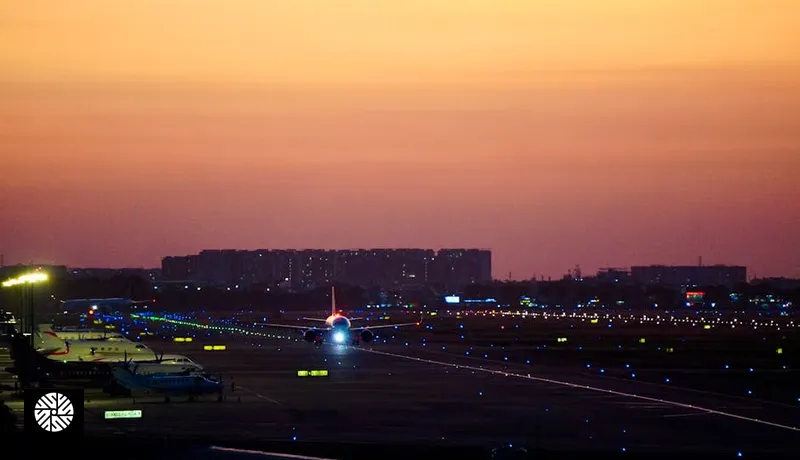
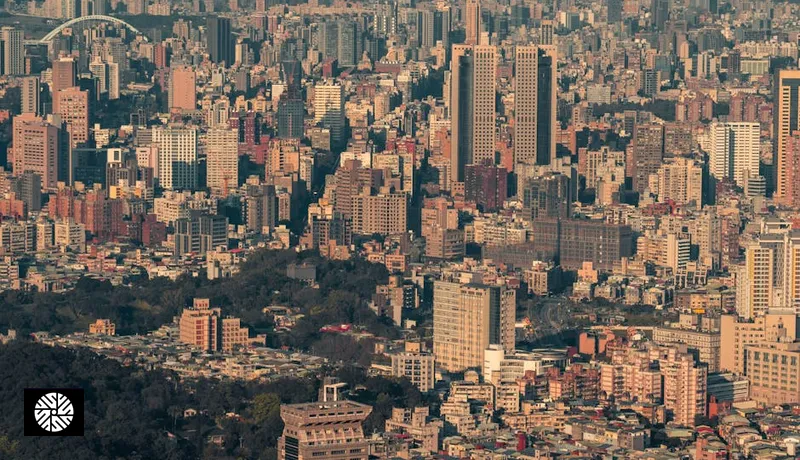
Taiwan looks small on the map, but reaching it from the West and moving around once you arrive can feel surprisingly choreographed. Most international travelers fly into Taoyuan International Airport (TPE), about 50 km west of Taipei, then choose between the Airport MRT, Taiwan High-Speed Rail (HSR), conventional rail, or a private transfer to get where they're actually going. For a screening trip, the logistics matter — you don't want to arrive jet-lagged and then guess at signage. This guide walks through the airports, the direct flights from each major source region, and how to assemble a smooth door-to-door itinerary, including what we handle for patients arriving for a New Dawn Health screening or consultation visit.
Taiwan's airports — TPE, TSA, KHH, RMQ
Taiwan operates four civilian airports with international service, but they aren't interchangeable. Taoyuan International (TPE) is the primary gateway and what roughly 90% of foreign visitors use. It has two terminals (Terminal 1 for most US carriers, Air Canada, Cathay, AirAsia, Scoot, and Vietnam Airlines; Terminal 2 for EVA, China Airlines, Korean Air, ANA, Lufthansa, and most premium European carriers), connected by a free people-mover. Both terminals connect directly to the Airport MRT.
Taipei Songshan (TSA) sits inside the city — a ten-minute taxi from many central hotels — but only handles a small set of international routes: Tokyo Haneda, Shanghai Hongqiao, Seoul Gimpo, and Hong Kong. It's mostly used by domestic passengers and short-haul business travelers. If you're flying in from anywhere in North America or Europe, you will not land at TSA. Kaohsiung International (KHH) in southern Taiwan handles regional flights from Japan, Korea, Hong Kong, and Southeast Asia, and is convenient if your screening or care is happening in Tainan or Kaohsiung. Taichung (RMQ) is the smallest of the four with limited service to Japan, Korea, Vietnam, and China, useful only if your itinerary is squarely in central Taiwan.
For most patients flying in for a multi-day screening package, TPE is the right answer. It's the only airport with the volume of nonstop service to make scheduling reliable, and it links cleanly to both Taipei (via MRT) and the rest of the island (via HSR at Taoyuan station).
Direct flights from North America
North America is one of Taiwan's best-served regions — partly because of strong family and business ties, and partly because EVA Air and China Airlines both operate large fleets of long-haul widebodies. From the West Coast, expect roughly 13 hours westbound and 11-12 hours eastbound (the jet stream helps on the way home).
| Origin | Carriers | Flight time | Frequency |
|---|---|---|---|
| LAX (Los Angeles) | EVA, China Airlines, United, Starlux | ~13 hr | Multiple daily |
| SFO (San Francisco) | EVA, China Airlines, Starlux, United | ~13 hr | Multiple daily |
| SEA (Seattle) | EVA | ~13 hr | Daily |
| JFK / EWR (New York) | EVA, China Airlines | ~16 hr | Daily |
| YVR (Vancouver) | EVA, Air Canada, China Airlines | ~12.5 hr | Daily |
| YYZ (Toronto) | Air Canada via YVR, EVA codeshare | ~16 hr | Daily one-stop |
| ORD / IAH / DFW | EVA, China Airlines (seasonal/codeshare) | ~15-16 hr | Daily |
EVA Air's Royal Laurel business class on the 777-300ER is consistently rated among the best premium products in the world, and is what most of our concierge clients fly. Booking 6-8 weeks out tends to give the best fares; if you're flexible on dates, Tuesday and Wednesday departures are usually cheaper. Award availability through partners (United MileagePlus for EVA, Delta SkyMiles for China Airlines via codeshare partners, Air Canada Aeroplan for Vancouver) opens up at the 11-month mark.
Direct flights from Europe
Europe-Taiwan service is more concentrated than North America's. Most direct flights route through three carriers: EVA Air (London Heathrow, Paris CDG via Bangkok, Vienna seasonal, Amsterdam), China Airlines (London, Frankfurt, Rome, Prague, Amsterdam), and European flag carriers like Lufthansa (Frankfurt, Munich), Air France (Paris CDG, sometimes via Bangkok), KLM (Amsterdam codeshare with EVA), and Swiss (Zurich seasonal).
| Origin | Carriers | Flight time |
|---|---|---|
| LHR (London Heathrow) | EVA, China Airlines | ~14 hr |
| FRA (Frankfurt) | Lufthansa, EVA, China Airlines | ~12.5 hr |
| MUC (Munich) | Lufthansa | ~13 hr |
| CDG (Paris) | Air France, China Airlines | ~12.5 hr |
| AMS (Amsterdam) | KLM/EVA codeshare, China Airlines | ~12.5 hr |
| ZRH (Zurich) | Swiss (seasonal) | ~13 hr |
| VIE (Vienna) | Austrian (seasonal), EVA | ~12 hr |
| IST (Istanbul) | Turkish Airlines | ~10.5 hr |
From smaller European cities (Madrid, Stockholm, Warsaw, Dublin), expect to connect through Frankfurt, Amsterdam, or Istanbul. Turkish Airlines via IST is often the cheapest and surprisingly comfortable option from Eastern Europe. From the UK, EVA's London-Bangkok-Taipei service breaks the journey into two segments, which some patients prefer over a single 14-hour leg.
East Asia and Southeast Asia connections
Within Asia, Taiwan is essentially a shuttle hub. Tokyo and Seoul have multiple daily flights operated as if they were domestic — many travelers do same-day round trips for business. Tokyo Narita and Haneda together see over 30 daily flights to TPE on JAL, ANA, EVA, China Airlines, and Starlux. Seoul Incheon has 15+ daily on Korean Air, Asiana, EVA, China Airlines, and Tigerair. Hong Kong service is even more frequent, treated almost as a metro line.
For Southeast Asia, Singapore (SIN) connects via Singapore Airlines, EVA, China Airlines, Scoot, and Jetstar Asia (4.5 hr); Bangkok (BKK) via Thai Airways, EVA, China Airlines, Starlux (3.5 hr); Kuala Lumpur via Malaysia Airlines, AirAsia, China Airlines (4.5 hr); Jakarta via Garuda and China Airlines (5 hr); and Manila via Philippine Airlines, EVA, and China Airlines (2 hr).
Japanese cities beyond Tokyo are well covered too: Osaka Kansai (3.5 hr), Nagoya, Fukuoka, Sapporo, and Okinawa all have direct daily service. For travelers in mainland China, Beijing, Shanghai Pudong/Hongqiao, and Guangzhou all offer direct flights, though political conditions occasionally affect frequency.
Oceania and Middle East routings
From Sydney (SYD), China Airlines and Qantas (with EVA codeshare) operate daily 9-hour direct flights. Melbourne and Brisbane don't currently have direct service — most travelers from those cities connect in Sydney or route through Singapore or Hong Kong. Auckland has no direct service to Taipei; the typical routing is via Singapore, Hong Kong, or Sydney, adding 4-6 hours to the journey.
From the Gulf, Emirates operates a daily Dubai-Taipei flight (~9 hr), and Qatar Airways serves Doha-Taipei daily (~9 hr). Both are excellent options for travelers from Africa, the wider Middle East, and South Asia, who can connect through DXB or DOH from dozens of cities. Etihad does not currently fly direct from Abu Dhabi — typical routing is via Bangkok or Hong Kong.
TPE airport arrival — from gate to your hotel
Taoyuan's arrival flow is fast by Asian standards. From wheels-down to curbside is typically 30-45 minutes if you're in the first wave off the plane. Immigration accepts e-gates for most North American, European, Australian, and Japanese passport holders if you've registered (sign-up is free at the airport, takes 5 minutes, and saves you from the queue on future visits). Baggage claim is usually fast; Taiwan Customs is a simple green/red-channel walk-through.
| Option | Time to Taipei | Cost | Best for |
|---|---|---|---|
| Airport MRT (Express) | ~38 min | NT$160 | Solo travelers, light luggage, hotels near Taipei Main |
| Airport MRT (Commuter) | ~50 min | NT$160 | Stops at every station; cheaper sleep on the train |
| HSR (via Taoyuan station + shuttle) | ~35 min to Taipei | NT$30 shuttle + NT$160 HSR | Onward to Taichung, Tainan, Kaohsiung same day |
| Official taxi | ~50-70 min (traffic) | ~NT$1,200 | Late-night arrivals, families, lots of luggage |
| Private transfer (sedan/SUV) | ~50-70 min | NT$1,500-2,500 | Concierge meet-and-greet, screening trips |
| Airport bus | ~60-90 min | NT$125-150 | Budget travelers; specific hotel drop-offs |
The MRT is what most independent travelers use. It runs every 7-15 minutes from roughly 6am to midnight, has English signage, accepts EasyCard (the rechargeable transit card sold at the airport), and deposits you at Taipei Main Station — which connects to four MRT lines, the HSR, and dozens of bus routes. For first-time visitors with multiple bags, jet lag, and a hotel that isn't right at Taipei Main, a private transfer or taxi is worth the spend.
High-speed rail (HSR) — the secret weapon for Taiwan trips
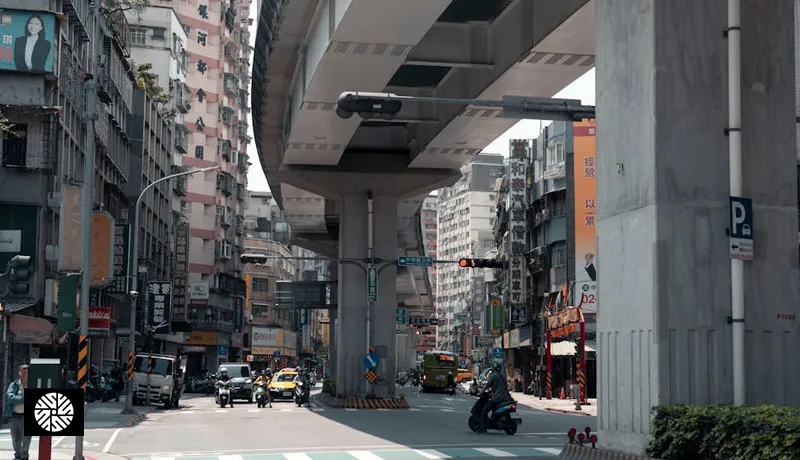
Taiwan High-Speed Rail is the single piece of infrastructure that makes Taiwan feel small. It runs the western length of the island at speeds up to 300 km/h, with 12 stations from Nangang (eastern Taipei) down to Zuoying (Kaohsiung). What this means in practice: Taipei to Taichung is 60 minutes. Taipei to Tainan is 110 minutes. Taipei to Kaohsiung is 100 minutes. Trains depart every 15-30 minutes during peak hours.
The experience feels closer to a quiet airport-style cabin than a train. Standard class has 2+3 seating with reclining seats, power outlets, and Wi-Fi. Business class adds wider 2+2 seating, complimentary refreshments, and lounge access. Tickets can be booked online up to 28 days in advance via the THSRC website or app, and foreign tourists can buy a discounted 3-day Pass (about US$90) for unlimited travel.
For screening trip planning, the HSR's advantage is that day-trip optionality stays open. Patients staying in Taipei can still see a Tainan-based provider in the morning and be back for dinner. From the airport, taking the airport shuttle (NT$30) to Taoyuan HSR station and onward to Tainan or Kaohsiung beats a domestic flight in nearly every dimension — security is faster, station-to-city centers are short, and there's no luggage drama.
Conventional rail (TRA) — when to use it
Taiwan's older, slower conventional rail network — the Taiwan Railways Administration (TRA) — is what you use to reach the east coast and most non-HSR cities. The HSR only runs along the western corridor; if you're heading to Yilan, Hualien, Taroko Gorge, Taitung, or any of the smaller mountain towns, TRA is your only train option.
The Taipei-to-Hualien express takes about 2-2.5 hours via Puyuma or Taroko trains and gives you views of the Pacific coastline that a plane can't match. From Hualien, local buses or a hired driver get you to Taroko Gorge. Taipei to Taitung on the southeast coast is roughly 3.5-4.5 hours by TRA. Tickets are cheaper than HSR (NT$400-700 for most long-distance routes) but seats sell out for weekend services to popular destinations like Hualien, so book ahead. The TRA app and website both have English booking flows.
Domestic flights — TPE → KHH, TPE → TTT
Domestic flying inside Taiwan is a small market — HSR has eaten most of it — but two routes still make sense. Songshan (TSA) to Kaohsiung (KHH) is about 50 minutes in the air on Mandarin Airlines or Uni Air, but with check-in, security, and ground transport on both ends, the door-to-door time is roughly the same as HSR (which is more comfortable and cheaper). The exception: if you're already at TSA for some reason, the flight may win.
Songshan to Taitung (TTT) on the east coast, however, is genuinely useful. The flight is about 50 minutes on Mandarin or Uni Air, versus 4+ hours on TRA. For travelers heading to Taitung, Green Island, or Orchid Island, this is the clearly faster option. Similarly, Songshan to Hualien (HUN) takes about 35 minutes by air, though most still take TRA for the scenery. There's no domestic flight from TPE itself for these routes — you'd transfer to TSA first.
For screening trip arrivals — what concierge can arrange
For patients flying in for a New Dawn Health screening or treatment package, we handle the logistics that turn a long-haul flight into a smooth handoff:
- Airport meet-and-greet at TPE — a driver with a name sign waiting just outside customs, English-speaking, with bottled water and a quiet ride to your hotel.
- Hotel coordination — we recommend hotels in Taipei (or near your specific provider) that are within 15 minutes of the screening facility, so you're not fighting morning traffic on appointment day.
- Day-of-procedure transport — pickup from your hotel 30 minutes before fasting bloodwork or imaging, with a driver who knows the facility's drop-off point and can wait if your appointments overlap.
- Onward HSR booking — if your screening involves multiple cities (e.g., a Tainan dental specialist after a Taipei full-body MRI), we book the HSR and arrange ground transport on both ends.
- Departure transfer — return to TPE timed to your flight, with airline-specific terminal drop-off (Terminal 1 vs Terminal 2 matters and we don't want guests guessing).
What's typically not included unless you ask: sightseeing transport, food tours, cultural day trips. We can arrange those too, but they're separate from the medical itinerary so the schedule stays clean.
Many patients choose to extend their trip after the screening — Taiwan rewards a few extra days. If that's your plan, see our companion pieces on Taiwan's geography and context, the entry rules and visa basics, and how to get around once you're here. For the philosophical case for combining a wellness trip with travel, this piece on why Americans find recovery here covers the bigger picture.
Plan your arrival once, and the rest of the trip becomes easy. Taiwan's transport is one of its quiet superpowers — fast, clean, and forgiving of the mistakes a first-time visitor will inevitably make. Get the flight right, get the airport handoff right, and you're already most of the way there.
Sources & Further Reading
FAQ
They are roughly equivalent in quality — both are clean, modern, and well-signed in English. The practical difference is which airline you fly. Terminal 1 handles most US carriers, AirAsia, Cathay Pacific, Scoot, and Vietnam Airlines. Terminal 2 handles EVA Air, China Airlines, Korean Air, ANA, JAL, Lufthansa, and most premium European carriers. Terminal 2 has slightly better lounges and dining; both connect to the same Airport MRT station via a free people-mover.
For most travelers, the Airport MRT Express is the right answer — NT$160, 38 minutes to Taipei Main Station, runs every 7-15 minutes, English signage throughout. For late-night arrivals, families with multiple bags, or anyone wanting a stress-free first experience, an official taxi (~NT$1,200) or pre-booked private transfer (NT$1,500-2,500) is worth the upgrade. We arrange private transfers for all New Dawn Health screening patients by default.
Yes. EVA Air operates daily nonstop service from New York JFK to Taipei TPE (~16 hours), and China Airlines flies daily nonstop from EWR (Newark) to TPE. Both use widebody aircraft (EVA on the 777-300ER, China Airlines on the A350) with full business and premium economy cabins. Eastbound on the return is shorter, around 15 hours, thanks to favorable winds.
HSR almost always wins. Taipei to Kaohsiung by HSR is 100 minutes city-center to city-center, with no security lines, no luggage drama, and trains every 15-30 minutes. Flying TSA to KHH takes 50 minutes in the air, but with check-in, security, and ground transport on both ends, the door-to-door time is similar — and the HSR is more comfortable, more reliable, and usually cheaper. The only cases where flying wins are if you are already at TSA for another reason, or your destination is closer to KHH airport than to Zuoying HSR station.
EVA Air and China Airlines both have excellent on-time records and rarely cancel routes. EVA in particular has a reputation for operational reliability and is what we recommend for patients booking 3-6 months ahead. For premium long-haul, EVA Royal Laurel business class on the 777-300ER is consistently rated among the world's best. United and Air Canada are reliable on the codeshare side. Avoid speculative bookings on smaller carriers with limited frequency — if a single weekly flight gets cancelled, you have no recovery option.
Citizens of the US, Canada, UK, most EU countries, Australia, New Zealand, and Japan can enter Taiwan visa-free for stays up to 90 days — no application required, just a valid passport with 6+ months validity and a return ticket. Travelers from a smaller list of countries can apply for an eVisa online before arrival. Check the latest official entry requirements on the Bureau of Consular Affairs website before booking.