
Between the early-morning blood draw and the afternoon nap that always follows a full health screening, you have hours of unstructured Taiwan time. This is where the country quietly becomes one of the most pleasant places on earth to just exist. The convenience stores work harder than your last assistant. The MRT runs on time. The garbage truck plays Beethoven. And nobody is going to ask you for a tip.
Here is what daily life actually looks like during a screening trip — the small, useful texture of moving around Taipei when you're not in a hospital robe.
The 7-Eleven kingdom — what you can do at any convenience store
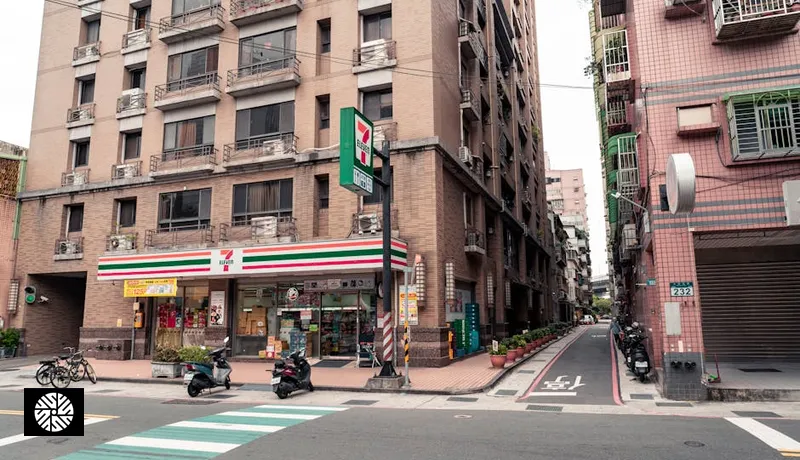
Taiwan has the highest convenience store density in the world: roughly one store per 1,200 people. 7-Eleven leads with more than 6,000 locations, FamilyMart follows with about 4,000, and Hi-Life and OK Mart fill the gaps. In central Taipei, you are usually within 200 meters of one. In Beitou, near most of the screening hospitals, the same holds.
Calling these "convenience stores" undersells what they do. A single 7-Eleven branch can replace your bank, post office, ticket counter, pharmacy, photocopy shop, and dinner — sometimes all before lunch.
What you can actually do at a Taiwanese 7-Eleven (or FamilyMart):
- ATM withdrawal — most accept foreign Visa, Mastercard, and UnionPay cards. Daily limit is usually NT$20,000.
- Photocopying, scanning, printing — multifunction kiosks (ibon at 7-Eleven, FamiPort at FamilyMart). Print PDFs from a USB drive or cloud link.
- HSR, TRA, concert, baseball, and movie ticketing — the same kiosk books high-speed rail seats and prints them on the spot.
- Bill payment — utilities, parking tickets, traffic fines, and even some hospital invoices.
- Ship and receive packages — domestic, and increasingly international.
- EasyCard top-up — tap your card on the counter reader, hand cash, done in 15 seconds.
- Hot food — bento (lunchbox), oden (黑輪, simmered fishcake and daikon), tea eggs (茶葉蛋), microwaveable pasta, dumplings, baozi.
- Coffee and beer — fresh-brewed CITY CAFE at 7-Eleven, or canned Taiwan Beer from the fridge. Alcohol sales after 11 PM are legal and routine.
- Pharmacy basics — paracetamol, antacids, plasters, electrolytes, and the legendary cold medicine 普拿疼.
- Free Wi-Fi and clean toilets at most branches.
None of this requires Mandarin. The kiosks have an English mode. Staff know the universal mime for "I'd like an iced coffee, please."
Shopping landscape — traditional markets to Eslite
Taiwan's shopping geography moves in layers. At dawn, the traditional morning markets (傳統市場) open: Nanmen Market in Zhongzheng, Shuangcheng Street in Zhongshan, and dozens of neighborhood markets in alleys you wouldn't otherwise walk down. These are where locals buy fish, pork, vegetables, fruit, and the prepared foods that show up on dinner tables that night. Visiting one before your screening morning is a useful way to understand what the food culture actually looks like.
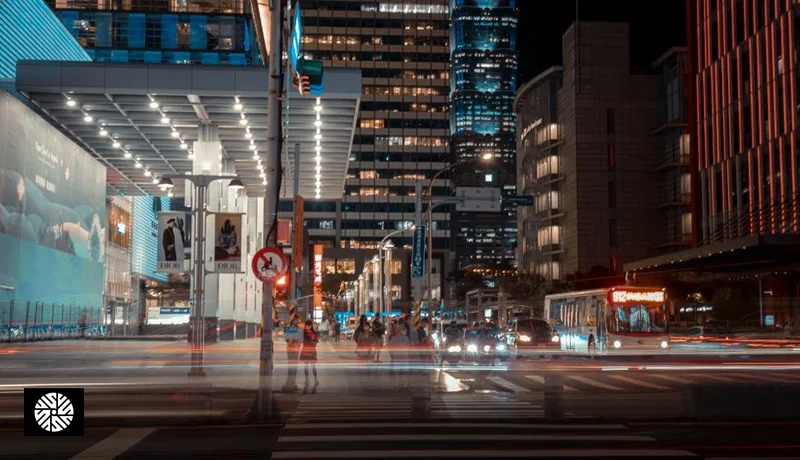
By 11 AM, the department stores open. Taiwan's flagship department-store district is Xinyi, anchored by SOGO, Mitsukoshi, Bellavita, Breeze, and Taipei 101 Mall. SOGO Mitsukoshi Pacific in Tianmu serves the northern expat-and-medical-tourist crowd; if you're staying near Beitou for a multi-day screening, that's the closest full-service department store.
Then there's Eslite (誠品) — Taiwan's iconic bookstore-turned-lifestyle empire. The flagship Eslite Spectrum at Songyan Cultural Park combines a 24-hour bookstore (yes, open all night), a curated selection of Taiwanese designers, a food hall, a cinema, and a hotel. Eslite Dunnan was the original 24-hour location until it closed in 2020; the Xinyi branch picked up that role. Even if you don't read Mandarin, Eslite is worth a slow walk-through for the design objects and the Taiwanese craft section.
For everyday needs, MUJI, Uniqlo, and IKEA are everywhere, and prices are competitive with the U.S. — sometimes lower. Daiso stores stock NT$49 (about US$1.50) household items. If you forgot a charger, an umbrella, or comfortable hospital socks, you'll find them within 10 minutes of any MRT station.
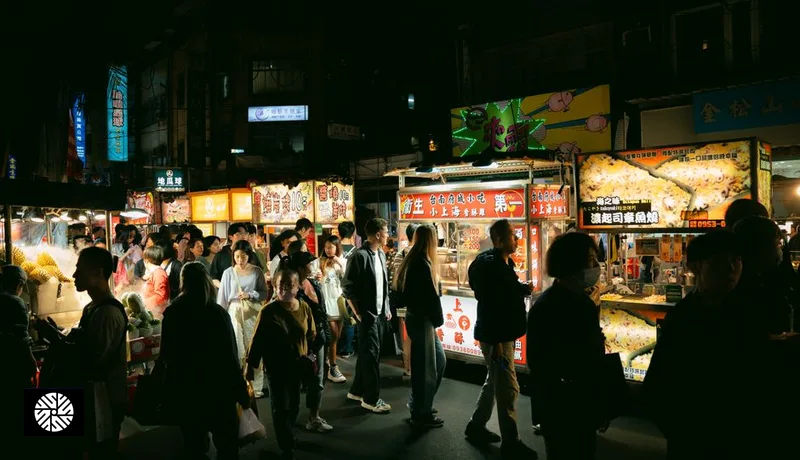
Night market shopping is its own category — clothing, phone cases, novelty socks, plush toys. Shilin and Raohe are the famous ones; Ningxia and Linjiang Street are quieter and less tourist-heavy.
For the broader sightseeing context, see our Taipei first-timer guide.
Best souvenirs to bring home
The default Taiwan souvenir is pineapple cake (鳳梨酥). The two cult brands worth the extra effort:
- Sunny Hills (微熱山丘) — single-serving cubes, made with whole winter pineapple. Their Minsheng East Road shop offers free tea and one cake to every visitor. The branch experience is part of the gift.
- Chia Te (佳德糕餅) — Songshan district bakery, the local-favorite version. Lines move quickly. Boxes are heavier and less photogenic than Sunny Hills, and most Taiwanese will tell you they prefer the taste.
Beyond pineapple cake:
- Nougat (牛軋糖) — Sugar Daze (糖村) is the gift-box standard. The French-style milk nougat with almonds is the variant that actually disappears from the office break room.
- Tea — Wang Te Chuan (王德傳) for elegant gift tins, Ten Ren (天仁茗茶) for everyday oolong and high-mountain tea. Either offers vacuum-packed bricks that survive a checked bag.
- Kaoliang liquor (金門高粱) — Kinmen distillery's sorghum-based spirit, 38–58% ABV. The bottle design alone is worth the suitcase space, and duty-free at TPE carries the full lineup.
- Traditional crafts — Meinong oil-paper umbrellas, Yingge ceramics, Xinzhu glassware. Eslite Spectrum's craft section curates the best of these without requiring a day-trip out of Taipei.
Service culture — what Taiwan does that other places don't
The first thing American visitors notice is that nobody is performing service for a tip — because there is no tipping. Most restaurants add a 10% service charge automatically; some don't add anything, and you simply pay the bill. The politeness is structural, not transactional.
Specific places where this is most visible:
- Eslite checkout — your books are wrapped, taped, and handed back with both hands. Receipts are folded.
- Hospital reception — at most screening hospitals, staff stand to greet you, walk you to the next station rather than pointing, and hand documents with both hands. See our wellness and recovery context for why this changes how a screening day feels.
- Convenience store — the cashier announces the total, repeats the change count, and bows slightly as you leave.
- MRT — passengers form orderly lines on platform markings. Priority seats stay empty even on crowded trains. Eating, drinking, and chewing gum on platforms or trains carries an NT$1,500 fine — and locals enforce it socially.
Volume on phones, in restaurants, and on public transport is markedly lower than in many Western cities. This isn't shyness; it's the social contract.
Daily logistics — laundry, pharmacy, public toilets, water
For practical screening-trip logistics:
- Laundry — most hotels offer same-day laundry, but coin-op self-service laundromats (自助洗衣) are everywhere. NT$50–100 per wash, NT$10 per 10 minutes of dryer. The Beitou and Tianmu areas, where many screening guests stay, have several. A 30-minute wash plus 30-minute dry runs about NT$150–200 total.
- Pharmacy access — chain pharmacies (Cosmed 康是美, Watsons 屈臣氏, Poya 寶雅) are on most main streets and inside MRT stations. For prescription medications, you need a Taiwan prescription; for over-the-counter needs, English-speaking staff are common in central Taipei.
- Dental emergency — most large hospitals run a dental department, and walk-ins are accepted with payment. New Dawn Health can refer to English-speaking dentists in Taipei within 24 hours.
- Public toilets — clean by Asian standards, plentiful, and free. MRT stations all have them. 7-Eleven and FamilyMart toilets are usually customer-only but consistently usable. Hotel lobbies are a reliable backup.
- Tap water — officially safe to drink and tested daily by the Taipei Water Department, but most locals boil it before drinking out of cultural habit. Bottled water at any 7-Eleven runs NT$15–25; refilling reusable bottles at hotel water stations is the cheapest move.
- Internet and SIM — Taiwan Mobile, Chunghwa Telecom, and FarEasTone all sell tourist SIMs at TPE and TSA airports, NT$300–1,000 depending on duration. eSIM is widely supported. Free public Wi-Fi (TPE-Free, iTaiwan) covers most public buildings and MRT stations.
EasyCard / iPASS — the smart card that works everywhere
The single most useful object in your pocket on a Taiwan trip is an EasyCard (悠遊卡). Buy one at any MRT station ticket kiosk for NT$100, then top up at any convenience store or MRT machine. As of 2026, EasyCard, iPASS, and iCash 2.0 are interoperable across most systems — buy whichever you find first.
What an EasyCard pays for:
| Service | Notes |
|---|---|
| MRT (metro) — Taipei, Kaohsiung, Taoyuan | 20% discount on Taipei MRT vs. single-ride ticket |
| City buses, intercity buses | Tap on entry and exit |
| YouBike (公共自行車) | Register card online once; 30-min minimum |
| High Speed Rail (HSR) | Standard cars only, no reserved seat |
| Taiwan Railways (TRA local trains) | All non-reserved services |
| 7-Eleven, FamilyMart, Hi-Life, OK Mart | Up to NT$1,000 per transaction |
| Parking meters, public parking lots | Tap at exit gate |
| Some museums, Taipei Zoo, Maokong Gondola | Direct tap-in entry |
Top up in NT$100 increments. The card holds up to NT$10,000. Refunds are available at major MRT stations when you leave (deduct NT$20 service fee for cards used less than 5 times).
Recycling and the garbage truck music
Taiwan has one of Asia's strictest household recycling regimes. Residents sort waste into general garbage, recyclables (paper, plastic, metal, glass — separately), and food waste. There are no public street bins for general garbage in most neighborhoods. Instead, residents bring their bags to garbage trucks that arrive at scheduled times.
And here is the part that surprises every visitor: the trucks play music as they approach, much like ice cream trucks in the U.S. The standard tunes are Für Elise (Beethoven) and The Maiden's Prayer (Bądarzewska). Hearing classical piano echo down a Taipei alley at 7 PM, while neighbors gather with sorted bags, is one of the small surreal pleasures of being here.
You won't deal with this in a hotel — they handle it for you — but you will hear it. The music is part of the soundtrack of evening Taipei.
Etiquette quick guide — temples, homes, MRT, queueing
Taiwan is forgiving of foreign visitors who get small things wrong, but the gestures that matter:
- Take shoes off when entering homes, traditional teahouses, some temples, and many guesthouses. Watch what others do at the door.
- Don't stick chopsticks upright in a bowl of rice — it resembles funeral incense.
- Receive things with both hands, especially business cards, money, and gifts. Reciprocate the same way.
- Queue. Cutting a line is one of the few things that will get you publicly corrected.
- Don't eat or drink on the MRT, including water. NT$1,500 fine, enforced.
- Keep voices down in trains, restaurants, and elevators. Phone calls on the MRT are socially frowned upon.
- At temples, walk clockwise around the main hall, don't step on the threshold, and keep voices low. Photography is usually okay; flash is not.
- Basic phrases — 你好 (nǐ hǎo, hello), 謝謝 (xiè xiè, thank you), 不好意思 (bù hǎo yì sī, excuse me). The effort is appreciated even when the tones are wrong.
Cultural calendar — what's happening when you're here
If your screening trip overlaps with a major Taiwanese holiday, the country's rhythm changes. Some hospitals close or reduce hours; restaurants near tourist sights fill up; long-distance trains book out a week early. Plan around these dates:
| Holiday | When | Effect on hospital scheduling |
|---|---|---|
| Lunar New Year (春節, CNY) | Late Jan to mid-Feb (lunar) | 7–9 day shutdown. Most screening hospitals close. Avoid for any planned procedure. |
| Lantern Festival (元宵節) | 15 days after CNY | Hospitals open. Pingxi sky lanterns and night-market crowds are the main effect. |
| Tomb Sweeping Day (清明節) | Around April 4–5 | 1-day national holiday, often extended to a long weekend. Hospitals close on the day itself. |
| Dragon Boat Festival (端午節) | May or June (lunar) | 1-day holiday. Limited screening availability that day. |
| Mid-Autumn Festival (中秋節) | September or October (lunar) | 1-day holiday. Mooncakes everywhere; rooftop barbecues across the city. |
| Double Tenth (國慶日, 10/10) | October 10 | National Day. Government and most hospitals close. Fireworks at the Presidential Office Building. |
Our team at New Dawn Health books around these dates by default — if you've been quoted a screening date, it isn't on a holiday.
Daily logistics for a screening trip
Putting all of this together for a typical 5-day screening visit based around Beitou or Tianmu:
- Day 1 — arrival. Pick up an EasyCard at TPE airport MRT station and a tourist SIM at any of the three carrier counters. Top up the card with NT$500. Hotel check-in usually after 3 PM.
- Day 2 — pre-screening. Light walking, hydration, a 7-Eleven dinner of bento + tea egg + bottled water if the screening protocol allows. Fasting begins at 10 PM.
- Day 3 — screening morning. Hospital from 7 AM. Done by noon. Light lunch, then a long afternoon nap. Evening walk to a morning-market street that's converted into a quiet dinner scene by 6 PM.
- Day 4 — recovery. Eslite Spectrum for slow browsing. Pineapple cake shopping at Sunny Hills or Chia Te. Optional Beitou hot springs (skip if any procedure ruled them out).
- Day 5 — results review and departure. Morning consultation, afternoon flight. Drop laundry the night before so it's ready by checkout.
For background on why people choose Taiwan as a screening destination in the first place, see where Taiwan sits geographically and culturally. For food specifically, the food guide covers the dishes you'll see in convenience stores and night markets. To see which physicians and hospitals coordinate New Dawn Health screenings, browse our provider list.
Taiwan does not announce itself. It just works — quietly, politely, on time, with classical music playing as the garbage truck pulls away.
Sources & Further Reading
- CDC — Travel health information for Taiwan
- Taiwan Bureau of Consular Affairs — visa and entry
- Taiwan Tourism Bureau — official travel resources
- Central Weather Administration of Taiwan
- Taiwan High Speed Rail — official site
- Taipei Metro (MRT) — official
Frequently asked
What is the best 7-Eleven hot food in Taiwan?
The bento (lunchbox) rotation is the workhorse — pork chop with rice, braised chicken leg, and the seasonal specials are reliable. Tea eggs (茶葉蛋) and oden (黑輪, simmered fishcake and daikon broth) are the signature counter items, both under NT$50. Hot baozi from the steamer near the register is the underrated breakfast move. CITY CAFE coffee is genuinely good and runs NT$45–65.
How do I top up an EasyCard?
Three options. (1) Any MRT station has a self-service top-up machine — feed cash, tap card, done in 20 seconds. (2) Any convenience store counter — hand the card and cash to the cashier; they tap and confirm the new balance. (3) Some banks support card-linked auto top-up, but this requires a Taiwan bank account and isn't practical for short visits. Top up in NT$100 increments. Maximum balance is NT$10,000.
Are public toilets in Taiwan clean?
Yes — generally clean by Asian standards and far better than U.S. public restrooms. MRT station toilets are cleaned multiple times daily and almost always stocked. 7-Eleven and FamilyMart toilets are usually customer-only but consistently usable. Department stores and hotel lobbies are reliable backups. Carry a small pack of tissues just in case; soap is usually present, paper towels less so.
Where can I do laundry on a 5-day screening trip?
Most hotels in the Beitou and Tianmu areas offer same-day laundry service for NT$200–500 per bag. Cheaper option: self-service coin laundromats (自助洗衣) are scattered throughout residential streets. NT$50–100 per wash, NT$10 per 10 minutes of dryer. A complete wash-and-dry runs NT$150–200 and takes about an hour. Look for green-and-white storefronts marked 自助洗衣. Most are 24-hour and cashless via EasyCard or LINE Pay.
How does Lunar New Year (CNY) week affect hospital scheduling?
Significantly. Most major screening hospitals close for 7–9 days during Lunar New Year, typically late January through mid-February depending on the lunar calendar. Outpatient services suspend, and only emergency departments stay open. Restaurants in residential neighborhoods close for several days; tourist-area restaurants stay open but are crowded. We don't schedule screenings during this window. If you're planning a screening trip in late January or February, contact us to confirm dates fall outside the CNY closure.
Do I need to tip in Taiwan?
No. Tipping is not part of the service culture. Most mid-range and higher restaurants automatically add a 10% service charge to the bill, which covers everything. Taxis and convenience-store staff don't expect tips. Hotel bellhops and room service in international-brand hotels are an exception where small NT$50–100 tips are appreciated but not required. Trying to tip a waiter directly often causes confusion — they may chase you down to return the money.