Blog
Blog
The Recovery Layer: Why a Taipei Screening Trip Includes Beitou and Sun Moon Lake
April 20, 2026
This article isn\'t about cost. We\'ve covered the cost case for U.S. patients in detail (see our cost & insurance math piece). It also isn\'t a high-level positioning argument about Taiwan as a category (see the wellness-tourism positioning piece). This is the granular, place-specific piece — the part of a Taipei screening trip that doesn\'t show up in the package price. The way the recovery, the food, the hot springs, the slower mornings between the clinical morning and the flight home actually integrate into the experience. American patients who\'ve done it tell us this is the part they didn\'t expect to value, and now insist on building into every annual cycle.
The recovery case for travel-based screening — why information needs space to land
A comprehensive workup is, paradoxically, exhausting. Four hours of imaging, a fasting blood draw, a physician debrief, and a stack of new information about your body to absorb — most patients arrive at the U.S. equivalent (when they piece it together over weeks of separate appointments) and immediately return to work. The physiological and psychological load goes unprocessed. Findings get filed in an inbox folder. Lifestyle recommendations get nodded at and forgotten by Wednesday.
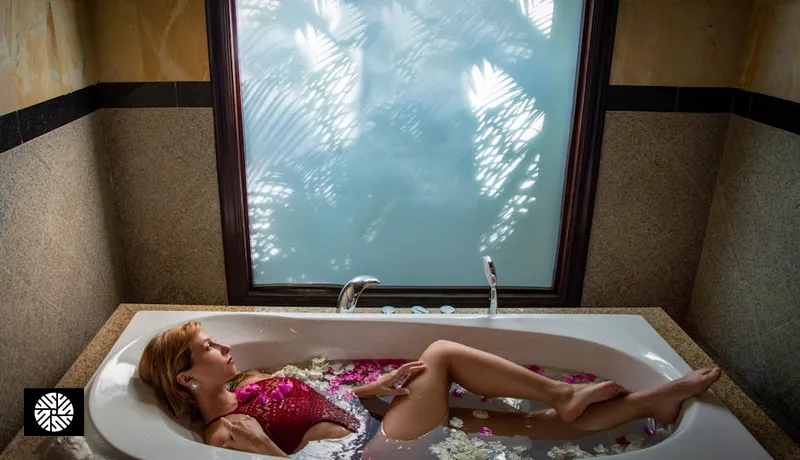
The traditional ningen-dock-style trip in Japan, Taiwan, and Korea was always built around a specific insight: the screening is the stress event, the days afterward are the integration. Patients return better calibrated to act on findings, more committed to lifestyle changes if indicated, and physically rested in a way they wouldn\'t be at home. The behavior-change literature supports this intuition. Prochaska\'s Stages of Change Model — contemplation, preparation, action — describes a sequence that requires cognitive bandwidth to traverse. A patient who returns to a full inbox 90 minutes after a physical is stuck at contemplation. A patient who has three days at a hot spring with their physician\'s findings in hand has the bandwidth to move into preparation and even action — booking the cardiology follow-up, switching the diet, deciding to retire the after-dinner whiskey.
Counsel the patient at the right moment, in the right setting, and the lifestyle change uptake roughly doubles. That\'s not a marketing claim — it\'s the consistent finding across motivational-interviewing literature in primary care. The Beitou-Sun-Moon-Lake-Tainan triangle didn\'t evolve as a wellness gimmick. It evolved because the integration phase is where annual screenings actually start producing health outcomes.
Beitou — the natural pairing
Beitou (北投) is unique. A 30-minute MRT ride from central Taipei on the Tamsui Line (淡水線) — change at Beitou Station for the short single-stop branch line up to Xinbeitou Station (新北投站) — it\'s a hot-springs district built around volcanic geology that produces some of the world\'s most therapeutically rich mineral waters. The volcanic geothermal source is Datun Volcano Group activity, and Beitou\'s waters fall into three named profiles:
- 青磺泉 (blue/green sulfur) — milky-blue, highly acidic (pH ~1.4-2), radium-bearing, the most distinctive Beitou water. Geothermal Valley (地熱谷) is the visible source. Therapeutic claims center on dermatologic conditions and circulation.
- 白磺泉 (white sulfur) — opaque white-grey, slightly acidic, sulfur and calcium dominant, the most common in Beitou hotels. Slightly gentler than the blue spring; favored for general bathing and circulation.
- 鐵磺泉 (iron sulfur) — golden-brown, iron oxide content, less common, found at the lower elevation. Visually striking and considered rejuvenating in traditional descriptions.
Beitou is also where one of our flagship partner hospitals — Beitou Health Management Hospital — happens to be located. The combination is intentional and uncommon. Most cities don\'t have a world-class screening hospital co-located with a hot springs ecosystem. The walk from Xinbeitou MRT exit to the hospital is roughly 8 minutes. The walk from the hospital to most of the named hot spring hotels is between 4 and 12 minutes. You can finish your debrief at 9:45 AM and be soaking by 11.
The typical 4-day post-screening pattern American patients describe:
- Day 1 (screening morning): 4-hour clinical workup, 8 AM to noon. Light lunch at hospital cafe. Afternoon rest at hotel; many patients go to bed early to compensate for fasting and jet lag.
- Day 2 (debrief morning): 30-minute physician debrief at 9 AM. Free remainder of day — typically a long lunch + Beitou hot springs in the afternoon. Evening dinner in Taipei (Din Tai Fung at Xinyi or a beef noodle pilgrimage).
- Day 3: extended hot springs morning, walking in Beitou Park, optional Yangmingshan day trip (see below). Light hotel dinner.
- Day 4: light morning, soak, return flight afternoon — total trip 5 nights.
The Beitou hot springs short-list — hotels reviewed
Reasonable hotel choices, all within walking distance of Beitou Health Management Hospital. Pricing is per-night, double occupancy, in USD, and varies meaningfully by season (cherry blossom March-April and year-end peak; weekday-weekend differences are also material).
| Hotel | Style | Price band (USD/night) | Walk to hospital | Notes |
|---|---|---|---|---|
| Villa 32 | Boutique, ultra-premium | $650-$1,200 | ~7 min | 5 villas only. Private outdoor + indoor blue and white sulfur springs in each suite. Adults-only. Booking 4-8 weeks ahead recommended. |
| The Gaia Hotel | Modern design | $280-$520 | ~5 min | Milky-blue thermal baths, in-room sulfur baths in higher categories. Strong English service. Most popular pick among American patients. |
| Grand View Resort Beitou | Japanese-style mid-range | $220-$420 | ~10 min | Multiple public + private spring options, traditional kaiseki dinners available. Good value. |
| Spring City Resort (大地溫泉) | Resort-style, family-friendly | $200-$380 | ~12 min (taxi 5 min) | Larger property, multiple restaurants on-site. Good if traveling with non-screening companions. |
| Public Beitou Hot Spring (北投親水公園露天溫泉) | Public bathhouse — cultural option | ~$2 entry (not lodging) | ~6 min | Tiered outdoor pools, very inexpensive, multiple sessions per day. Pair with hotel stay elsewhere; bring your own swimsuit, basic facilities. |
For first-time visitors, our concierge most often books The Gaia Hotel for 3-4 nights — it balances price, English support, and proximity. Returning patients who want a more boutique experience step up to Villa 32. Patients on a quieter budget who want the cultural texture often combine Grand View Resort (3 nights for the in-hotel springs) with one afternoon at the Public Beitou Hot Spring for the local ritual.
Sun Moon Lake (日月潭) — the longer-stay option
Patients who want a longer post-screening recovery often build in 2-3 days at Sun Moon Lake — Taiwan\'s largest body of water, in the central highlands of Nantou County. Routing is straightforward but multi-leg: 90 minutes from Taipei to Taichung on the High Speed Rail (HSR), then a 60-90 minute Nantou Bus shuttle (route 6670 or 1833) up to Shuishe Pier (水社碼頭), the main lake gateway. Total transit: about 3 hours. There\'s also a direct Kuo-Kuang bus from Taipei City Hall Station (~3.5-4 hours), useful if the HSR connection doesn\'t suit.
The lakeside resorts offer the kind of digestive quiet that processing health information benefits from. Named options:
- The Lalu — Taiwan\'s most celebrated luxury resort. Minimalist Aman-style architecture, infinity pool over the lake, $700-$1,400/night. The destination resort, not the convenience choice. Spa programs are long-format and serious.
- Fleur de Chine Hotel — luxury hot spring resort with private in-suite springs (the lake has its own thermal source distinct from Beitou), $400-$800/night. The most popular premium pick.
- Hotel Day+ — modern mid-range, $200-$340/night, close to Shuishe Pier shops and ferry. Good base for active itineraries.
- Crystal Resort Sun Moon Lake — full-service lakeside resort, $260-$480/night, larger property with strong family amenities.
What patients actually do at the lake: cycle the lakeside path (the Sun Moon Lake bike trail is regularly listed among the world\'s most beautiful — about 30 km full perimeter, but the Xiangshan Visitor Center to Shuishe Pier 8 km section is the most photographed); take the dawn ferry across to Xuanguang Temple (玄光寺) for sunrise; visit the Formosan Aboriginal Culture Village for Thao tribe (邵族) cultural performances and one of Taiwan\'s most thoughtful indigenous museums; tea-tasting in the surrounding hills (Sun Moon Lake Black Tea is a specific regional cultivar). The pace is deliberate. You read in the morning, soak in the afternoon, ferry at dusk.
This stretches the trip to 7-8 days but for patients with longer flexibility — East Coast Americans absorbing jet lag, retirees with no return-deadline pressure, couples treating the trip as a wellness vacation — it\'s the most-recommended add-on among our concierge team.
Tainan — the food + culture option
For patients who want the cultural-tourism layer rather than the wellness-retreat layer, Tainan (台南) — Taiwan\'s former capital, the oldest city — is 1.5-2 hours south of Taipei by HSR (Taipei to Tainan HSR Station, then a 25-minute shuttle bus or taxi to the historic center). Tainan is the slow-food capital of Taiwan. The local saying is that you eat your way through Tainan in seven days and still haven\'t finished. Highlights worth dedicating mealtimes to:
- 蝦仁飯 (shrimp rice) — Tainan-specific. Best at 矮仔成 (Aizicheng) in the old quarter. Sweet soy-glazed plump shrimp over short-grain rice.
- 牛肉湯 (beef soup) — sliced raw beef cooked at the table by hot bone broth poured over. The dawn ritual at 文章牛肉湯 (Wenzhang) requires arriving by 6 AM.
- 擔仔麵 (danzai noodles) — Tainan\'s signature noodle dish. 度小月 (Du Hsiao Yueh) is the canonical address, dating to 1895.
- 棺材板 (coffin bread) — deep-fried bread bowl filled with seafood chowder. A Tainan-specific oddity and one of Anthony Bourdain\'s favorites.
- 虱目魚粥 (milkfish congee) — breakfast staple, milkfish farmed in the surrounding wetlands.
Cultural sites: Tainan Confucius Temple (台南孔廟, established 1665, Taiwan\'s first), Anping Old Fort (安平古堡, Dutch colonial fort dating to 1624), Chihkan Tower (赤崁樓), the National Museum of Taiwan Literature, the Hayashi Department Store (built 1932, Japanese colonial era, restored). Tainan is best for two full days; many patients pair it with a single night in Kaohsiung — Taiwan\'s southern port city — for the harbor lights and the Pier-2 art district.
Yangmingshan day trip — the close addition
Yangmingshan National Park (陽明山國家公園) sits just north of Taipei, 30-45 minutes by car from Beitou. It\'s the easiest add-on if you\'re already at a Beitou hotel — your concierge can arrange a half-day private car (about $80-$140 for a 4-5 hour outing). What you get:
- Volcanic hot spring zones — different mineral profiles than Beitou, often less crowded. Macao Hot Spring area (馬槽) is a favorite.
- Hiking — Mt. Qixing (七星山), Yangmingshan\'s highest peak at 1,120 m, is a 4-hour round trip on well-marked trails. The Lengshuikeng (冷水坑) to Qingtiangang (擎天崗) loop is gentler — 2 hours through grasslands with grazing buffalo.
- Seasonal flowers — cherry blossom in February-March (the Yangmingshan Flower Festival), calla lily in April-May at Zhuzihu (竹子湖), hydrangea in May-June.
- Bamboo Lake (竹子湖) — farm restaurants, mountain vegetable lunch, calla lily pick-your-own in season.
Pattern: leave Beitou hotel at 9 AM, hike or flower-walk in the morning, mountain lunch, back to Beitou by 3 PM for an afternoon soak. Half-day commitment, full-day reward.
Trip pattern variations — 4 days to 14 days
The most-asked question in pre-trip calls is "how long do I need." Answer depends on what you want the trip to be.
| Trip length | Base | What\'s included | Best for |
|---|---|---|---|
| 4 days / 3 nights | Taipei or Beitou | Clinical workup + debrief only. Minimal recovery. | Time-constrained executives, frequent return travelers, anyone treating screening as a "transactional" trip. |
| 5-6 days / 4-5 nights | Beitou | Workup + debrief + 2-3 days Beitou hot springs + 1 day Taipei food/cultural. | First-time patients. The "default recommended" itinerary. |
| 7-8 days / 6-7 nights | Beitou + Sun Moon Lake | Workup + Beitou recovery + 2-3 days Sun Moon Lake. | Couples, retirees, anyone wanting a true wellness vacation framing. |
| 9-10 days / 8-9 nights | Beitou + Tainan | Workup + Beitou + HSR south to Tainan for 3 days food/culture, optional Kaohsiung night. | Cultural travelers, food enthusiasts, repeat visitors who already know Taipei. |
| 12-14 days / 11-13 nights | Beitou + Sun Moon Lake + Tainan | Full Taiwan loop. Workup + 3 nights Beitou + 3 nights lake + 3-4 nights south. | Retirees, sabbatical travelers, anyone treating the trip as a once-every-2-3-years event. |
Patient persona narratives — three trips described
(a) The Boston attorney — 4-day version. Sarah K., 52, partner at a Boston litigation firm. Sunday evening JFK to Taipei, arriving Tuesday morning local. Tuesday afternoon hotel rest. Wednesday 8 AM screening at Beitou Health Management Hospital, Wednesday afternoon a single 90-minute soak at The Gaia. Thursday 9 AM debrief, Thursday lunch at Din Tai Fung Xinyi, Thursday afternoon return flight. Total: 4 days door-to-door, 3 nights in Taipei. Quote from her exit interview: "I\'d come back. But next time I\'d give myself the extra two days for Beitou. The debrief had things I needed to think about and I had a brief sitting on my desk Friday morning that took the thinking space."
(b) The San Francisco couple — 7-day version. Michael and Amanda R., 58 and 55, both screening on the same trip (his + her packages). SFO to Taipei direct overnight Friday, arriving Saturday afternoon. Sunday rest. Monday morning dual screening (her at 8 AM, his at 9 AM, staggered so they\'re not both fasting in the same waiting room). Monday-Tuesday at Villa 32 (private suite with in-room blue sulfur spring). Wednesday 9 AM debrief together, then HSR south Wednesday afternoon to Taichung, shuttle to Sun Moon Lake. Three nights at The Lalu. Saturday return Taipei, Saturday evening flight home. Total 8 days. Their feedback: the lake stay was the single most-relaxing experience either had had in 15 years. The debrief findings (a borderline lipid panel for Michael, a small thyroid nodule for Amanda) were processed during long lake walks. Both implemented their lifestyle recommendations on returning.
(c) The New York retired physician — 12-day version. Dr. James W., 67, retired surgeon. JFK to Taipei Sunday, arriving Tuesday. Wednesday screening, Thursday debrief. Three nights at Grand View Resort, daily morning soak followed by Beitou Park walks reading the imaging report. Sunday HSR south to Tainan, three nights at the Silks Place Tainan, working through the night markets methodically (Garden Night Market on Thursday, Flower Night Market on Saturday). Wednesday west to Kaohsiung overnight. Thursday HSR back to Taipei, two nights at the Mandarin Oriental Taipei for Din Tai Fung and the National Palace Museum. Saturday flight home. Total 13 days. His description: "I retired three years ago and I\'ve never had a vacation that combined a serious medical workup with this much actual recovery. My U.S. concierge medicine was 15-minute appointments and an inbox with results. This was integrated."
"My U.S. annual physical was 90 minutes total in a day I went straight back to work from. My Taipei screening was 4 hours followed by 4 days at Beitou hot springs reading and walking and digesting what the doctor told me. The information landed differently. I made changes I would not have made otherwise." — Sarah K., 52, attorney, Boston
What this isn\'t — preserving clinical rigor
This article isn\'t selling you a tourist trip dressed up as health care. The clinical workup is the point — non-negotiable. Imaging at hospital-grade resolution, fasting blood panels read by board-certified internists, a real same-day debrief from a physician who\'s read your full chart. The recovery layer is what makes the workup easier to absorb. It is not a substitute, and it is not a "wellness retreat" with a token blood draw bolted on.
Patients who just want imaging and don\'t want days of unstructured reflection time can still do this trip — fly Friday afternoon, screen Monday morning, debrief Tuesday morning, return Tuesday afternoon. That\'s a viable 4-day version. The 7-day version with Beitou recovery is the version most patients tell us they wish they\'d planned. The 12-day version with Sun Moon Lake or Tainan added is the version that retired patients and couples describe as transformative. None of these versions weaken the clinical layer. The clinical layer is what makes the recovery layer worth taking.
If you\'re weighing the comparison against Japanese ningen-dock — which has the same Asian-precision clinical heritage — see our Japan vs Taiwan piece on why Taiwan offers comparable rigor with materially better accessibility for English-speaking patients. And if you\'re trying to understand why the integrated single-day model works at all, see Taiwan\'s one-stop medical centers vs Asia\'s fragmented systems.
Concierge logistics — what gets arranged for you
What our team coordinates as part of the screening package, at no extra cost:
- Hotel booking at Beitou (and Sun Moon Lake or Tainan if extending) — we hold preferred-rate relationships with Villa 32, The Gaia, Grand View Resort, and Fleur de Chine.
- Airport transfer to your hotel (Taoyuan Airport to Beitou is about 60 minutes by private car).
- Inter-city HSR booking and shuttle coordination for Sun Moon Lake or Tainan add-ons.
- Restaurant reservations for Taipei (Din Tai Fung, RAW, Tairroir), Tainan (Du Hsiao Yueh, Aizicheng), and lake-side dining.
- Day-trip arrangement for Yangmingshan including private car and English-speaking driver-guide if requested.
- Hot springs booking coordination — public bathhouse passes, private-room bookings at hotels.
- Translation support by phone for any need during the recovery phase (occasional pharmacy visit, taxi to a less-touristed restaurant).
What\'s explicitly not included: international flights, your meals at restaurants outside the package, any optional spa/aesthetic add-ons, optional private guides for cultural sites. We don\'t mark these up — we\'ll book on your behalf at cost if helpful, or recommend trusted operators.
For booking the screening + an aligned recovery itinerary, our concierge can coordinate hotel, transport, and dining recommendations during the intake call. To browse package tiers, see /services; to meet the partner physicians, see /providers.
Sources & Further Reading
- USPSTF — U.S. Preventive Services Task Force recommendations
- American Cancer Society — Cancer Facts & Figures
- NCI SEER — Surveillance, Epidemiology, and End Results Program
- CDC — Cancer prevention & screening
- American Heart Association — heart attack risk
- American College of Cardiology — clinical guidelines
Frequently asked questions
FAQ
Yes — a streamlined 4-day version (Friday flight, Monday screening, Tuesday debrief, Tuesday return) is straightforward. The recovery layer (Beitou hot springs, Sun Moon Lake, Tainan) is optional. Most patients who try the longer version once tell us they wish they'd done it the first time.
Yes. The MRI itself has no recovery time. Low-dose CT delivers a small radiation dose comparable to 6 months of natural background exposure — no precautions needed. Hot springs are completely safe the same day or the day after. Avoid hot springs in the morning before fasting blood draws.
Beitou's mineral profile (volcanic, sulfur-rich, milky-blue) differs from Japanese onsen (typically clearer, varied minerals) or European thermal towns. The therapeutic claims for Beitou waters focus on circulation and skin conditions; the experience is unique to this geology. The proximity to a flagship screening hospital is the unusual integration point.
Yes, with caveats. Beitou is family-friendly — Spring City Resort and Grand View Resort both have family-room configurations and large public springs that allow children. Villa 32 is adults-only. The recovery pacing (long soaking afternoons, early bedtimes) suits older children and teens better than toddlers. Sun Moon Lake works very well for families — cycling, ferries, and the Aboriginal Culture Village are kid-engaging. Tainan's food street pace is also family-friendly. The clinical screening morning itself is solo; arrange the children with the non-screening parent or with the hotel's daycare arrangement.
October to early December is the consensus best window — pleasant temperatures (60-75 F), low humidity, minimal rain. March to early May (cherry blossom and calla lily season at Yangmingshan) is the second-best window but carries higher hotel rates. Avoid June-August (hot, humid, typhoon season) and Chinese New Year (late January-February — most Beitou hotels closed or fully booked). For Sun Moon Lake specifically, October-November and March-April are both excellent; the lake's mountain elevation moderates summer heat better than Taipei does.
Yes — Tokyo (TPE-NRT or TPE-HND) and Osaka/Kyoto (TPE-KIX) are both 3-3.5 hour direct flights, frequently scheduled. American patients on the West Coast often build a Taipei + Kyoto stopover into a single 14-day trip. Our concierge can coordinate Japan hotel bookings on request, though we work primarily in Taiwan; we typically refer to a partner Japan agency for the Japan leg. The screening trip itself does not constrain return routing — once your debrief is complete, you're free to fly anywhere.