Blog
Blog
Ningen Dock in Taipei: Why Japanese Patients Choose Taiwan for Annual Screening

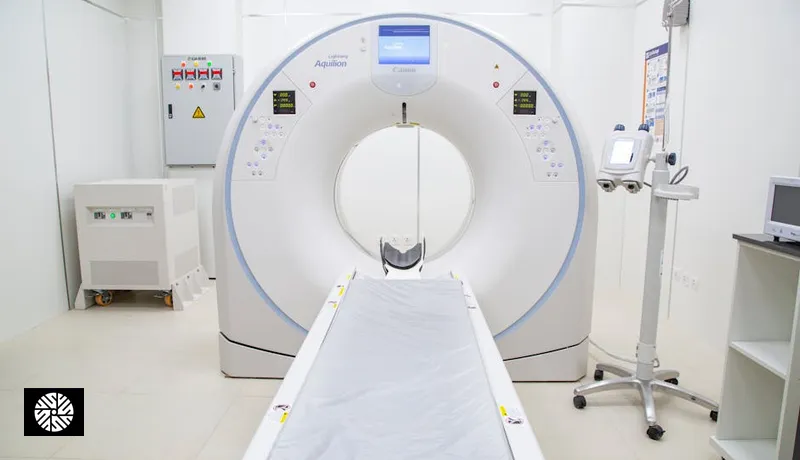
Japan invented the modern ningen dock (人間ドック) — the comprehensive day-long health screening that mid-career professionals undergo annually, and which Western medical tourism markets later imported. The cultural expectation around preventive screening is therefore higher in Japan than almost anywhere else: most large Japanese employers cover or subsidize an annual workup at a hospital like St. Luke's International (聖路加国際病院) or Tokyo Midtown Clinic (東京ミッドタウンクリニック). Pricing for an extended ningen dock with brain MRI and full cardiology workup typically runs ¥250,000–¥500,000 ($1,650–$3,300 USD).
So why are Japanese patients increasingly arriving at our partner hospitals in Taipei? Three reasons that have nothing to do with quality and everything to do with cost basis, scheduling friction, and Taiwan's specific advantages for Japanese-speaking visitors. To understand the appeal of the Taipei alternative, it helps to first understand what ningen dock actually is in Japan — and why the system is structured the way it is.
What ningen dock actually means
The phrase ningen dock translates literally as "human dry dock" — the metaphor borrowed from shipyards where vessels enter for thorough inspection and refit. The concept dates to 1954, when the National Cancer Center and a handful of postwar Japanese hospitals piloted multi-day comprehensive examinations for executives, framing preventive medicine as a national resilience priority during the country's reconstruction era. By the 1970s, single-day "short dock" formats had standardized, and by the 2000s ningen dock had become a ritual covering an estimated 9 million Japanese adults annually, supported by an industry association (日本人間ドック学会) that publishes screening guidelines and accredits over 1,500 facilities nationwide.
Ningen dock is not a procedure. It is a category — a structured menu of biomarker tests, imaging, endoscopy options, and physician consultations bundled into a single morning or two-day inpatient stay. Within that category, hospitals and dedicated ningen dock clinics differentiate on imaging tier (1.5T vs 3T MRI, low-dose CT, PET), biomarker depth (basic chemistry vs full tumor markers and trace metals), and the seniority of the physician who delivers the debrief. The category is so culturally entrenched that nearly every Japanese white-collar professional over 35 can describe their employer's ningen dock allowance in concrete yen terms.
Tokutei Kenkō Shinsa vs ningen dock — the legal split
One of the most misunderstood facts about Japanese preventive medicine is the legal distinction between two adjacent products. Since the 2008 metabolic syndrome reforms, every Japanese resident aged 40–74 is entitled to an annual Tokutei Kenkō Shinsa (特定健康診査) — the "specific health checkup" — covered fully by their public health insurance plan. This includes height, weight, BMI, waist circumference, blood pressure, urinalysis, basic blood chemistry (lipids, glucose, liver function), and a brief physician interview. It exists to catch metabolic syndrome early; it does not include imaging, endoscopy, or advanced cancer markers.
Ningen dock sits outside this mandate. Public insurance — whether Kenkō Hoken (健康保険) for company employees or Kokumin Kenkō Hoken (国民健康保険) for the self-employed and retirees — does not reimburse the additional services that elevate a screening from "metabolic check" to "ningen dock." Those additional services (brain MRI, low-dose lung CT, gastroscopy, colonoscopy, full tumor marker panel, cardiac stress testing, abdominal ultrasound, comprehensive debrief) are paid by employer subsidy or out-of-pocket. The annual question every Japanese adult quietly answers is: does my employer cover the upgrade, and if not, am I willing to pay roughly ¥100,000–¥500,000 myself this year?
This split explains the entire economic logic of why Japanese patients consider Taipei. The mandatory check is free at home. The upgrade is what costs money — and Taiwan's value proposition is precisely on that upgrade.
Tokyo premium ningen dock — pricing chain by chain
Pricing in Tokyo varies materially by hospital. Below are typical 2026 rates, drawn from publicly published menus on each facility's Japanese-language site:
- Tokyo Midtown Clinic (東京ミッドタウンクリニック, Roppongi) — basic ningen dock ¥98,000; premium with brain MRI and tumor markers ¥350,000; executive package with full-body MRI and cardiac CT ¥520,000+
- St. Luke's International (聖路加国際病院, Tsukiji) — basic ningen dock approximately ¥150,000; premium tier with MRI and endoscopy approximately ¥420,000; executive 2-day inpatient program ¥600,000+
- Yokohama Total Health Care (横浜総合健診センター) — standard ¥85,000; with MRI ¥240,000; female-focused premium ¥310,000
- Mitsui Memorial Hospital (三井記念病院, Kanda) — basic ¥110,000; premium ¥320,000; executive ¥480,000
- Sumitomo Hospital (住友病院, Osaka) — standard ¥90,000; premium with imaging ¥280,000
The variance is real but the floor and ceiling are remarkably consistent across central Tokyo: a serious annual workup with imaging starts in the ¥250,000 range and tops out near ¥600,000. Taiwan partners deliver comparable scope, on the same imaging hardware tier, at roughly half that cost.
Cultural alignment Japan–Taiwan
Taiwan's healthcare system shares more with Japan's than with the U.S. or UK in several practical ways:
- Single-day screening as a category: both Japanese ningen dock and Taiwanese 健檢 (jiànjiǎn) are designed as one-morning structured workups, not multi-week specialist tours
- Heavy use of imaging: 3T MRI, low-dose lung CT, abdominal ultrasound, gastroscopy/colonoscopy options — both systems consider these standard rather than exotic
- Form-friendly to kanji: Taiwanese hospital intake forms use traditional Chinese (繁體字), which shares roughly 80%+ overlap with Japanese kanji for medical terminology — terms like 検査 (inspection), 病歴 (medical history), 採血 (blood draw), 同意書 (consent form), 結果 (result) are mutually readable. Many partner hospitals also provide Japanese-translated forms on request
- Politeness and process orientation: workflow expectations Japanese patients bring — punctual scheduling, clean waiting areas, clear paperwork, respectful staff — translate intact. Taiwanese clinical environments share the same ritual cleanliness and process precision Japanese visitors expect
- Ningen-dock-style debrief: a same-day or next-morning sit-down with the supervising physician to walk through every result is standard at both Japanese ningen dock facilities and Taiwanese partner hospitals — not a 5-minute callback like in much of the West
Pricing — the actual delta
| Service | Japan (Tokyo premium) | Taiwan (New Dawn partner) |
|---|---|---|
| Standard ningen dock (1 day, no MRI) | ¥80,000–¥150,000 | From NT$10,000 (≈¥45,000) |
| Premium ningen dock with brain MRI | ¥250,000–¥350,000 | From NT$45,000 (≈¥210,000) |
| Executive package with full-body MRI + cardiac CT + biomarker panel | ¥400,000–¥600,000+ | From NT$110,000 (≈¥515,000) — and includes more |
The Executive comparison is the closest match. At the high end, Taiwan delivers a similar scope at roughly half the Tokyo price, and many travelers fold a long-weekend trip around the screening — Beitou hot springs, Taroko Gorge, Tainan food. The economics of that combined trip rarely favor staying in Tokyo. Taiwan's 3T MRI hardware deployment is at parity with Tokyo's premier ningen dock facilities, which removes the most common quality concern.
Japanese health insurance covers — what is included where
| Test | Tokutei Kenkō Shinsa (特定健診) | Japan ningen dock (premium) | Taiwan partner package |
|---|---|---|---|
| Blood pressure, BMI, waist | はい (yes) | はい | はい |
| Basic blood chemistry (lipids, glucose, liver) | はい | はい | はい |
| Urinalysis | はい | はい | はい |
| Brain MRI (3T) | いいえ (no) | はい | はい |
| Low-dose lung CT | いいえ | はい | はい |
| Abdominal ultrasound | いいえ | はい | はい |
| Gastroscopy / colonoscopy | いいえ | option | option |
| Comprehensive tumor markers | いいえ | はい | はい |
| Cardiac CT angiogram | いいえ | premium tier only | included in executive tier |
| Same-day physician debrief | brief | はい | はい |
| Hot spring + recovery itinerary | — | — | included on request |
Flight options — every Japanese major airport
Direct daily service connects every major Japanese airport to Taipei Taoyuan (TPE):
- Tokyo Narita (NRT) → TPE: JAL JL801, ANA NH1183, EVA BR196, China Airlines CI107, Starlux JX801 — multiple frequencies daily, peak hourly
- Tokyo Haneda (HND) → TPE: JAL, ANA, EVA, China Airlines — convenient evening departures, also daily
- Osaka Kansai (KIX) → TPE: JAL, ANA, EVA, Peach, Starlux — multiple daily
- Nagoya Centrair (NGO) → TPE: EVA, China Airlines, Starlux — daily
- Fukuoka (FUK) → TPE: EVA, China Airlines, Starlux — daily
- Sapporo (CTS), Sendai (SDJ), Okinawa (OKA) — multiple weekly direct, plus easy connections via TPE
Flight time is approximately 3.5 hours. Round-trip economy in shoulder seasons typically prices ¥35,000–¥60,000 — frequently less than the saving on the screening alone. Premium economy ¥80,000–¥120,000; business class ¥180,000–¥260,000.
"私は東京で人間ドックを毎年受けていましたが、今年は台北で行いました。同じMRIプロトコル、半分の価格、土曜日の予約。先生は日本語が話せました。" / "I used to do my annual ningen dock in Tokyo. This year I did it in Taipei instead — same MRI protocol, half the price, Saturday booking. The doctor spoke Japanese." — Takeshi M., 48, Tokyo
Patient personas: three economic positions
Three distinct profiles dominate our Japanese intake calls, each with different decision logic:
1. The corporate executive on annual cycle. Mid-40s to mid-50s, working at a large Japanese employer (Toyota, Sony, Mitsubishi, Hitachi, Sumitomo) where ningen dock is a contractual benefit at a designated facility. The employer typically subsidizes ¥80,000–¥150,000 of a basic dock; anything beyond — brain MRI, full tumor markers, executive scan — comes out of pocket. For this persona, Taipei is attractive when they want to upgrade beyond the employer-covered basic, and would otherwise pay ¥200,000–¥300,000 in incremental cost in Tokyo. They book a long weekend and use the saving to fund a Beitou onsen stay.
2. The recently retired professional. Age 60–72, no longer covered by Kenkō Hoken at preferential corporate rates, now under Kokumin Kenkō Hoken (which still does not cover ningen dock). The Tokutei Kenkō Shinsa they're entitled to feels insufficient; their cohort is the one most actively monitoring cardiac, oncological, and cognitive risk. They're willing to pay full freight, and the Taiwan price gap matters most to them — a ¥250,000 saving funds a meaningful Taroko Gorge or Tainan food itinerary alongside the screening.
3. The freelance creative or self-employed. Age 35–55, Kokumin Kenkō Hoken member, no employer subsidy. Cost-sensitive but quality-conscious. This persona often does the basic Tokutei Kenkō Shinsa annually for free in Japan, then plans a biennial premium screening in Taipei rather than upgrading to a Tokyo ningen dock — the math is cleaner. They tend to fly EVA or Peach, choose mid-range hotels in Da'an or Zhongshan, and treat the trip as productive time off.
"フリーランスなので、毎年の高額な人間ドックは負担でした。台北で2年に1回、ハイエンドのスクリーニングを受け、東京では特定健診だけ。コストは半分以下、内容はむしろ充実しています。" / "As a freelancer, the cost of an annual premium ningen dock was a burden. I now do a high-end screening every two years in Taipei and stick to the free Tokutei Kenkō Shinsa in Tokyo. Less than half the cost, and arguably more thorough." — Yuki S., 41, Yokohama
Records integration with Japanese physicians
Most Japanese physicians read English medical reports fluently — the medical curriculum at Japanese universities is taught with substantial English literature, and clinical reports from international screenings are a routine input at Japanese specialist clinics. Standard reports come in English and require no translation for most use cases.
For patients who prefer Japanese, full Japanese translation is available for an additional ¥5,000 fee with a 3-business-day turnaround. The translation is performed by a medical-trained translator, not a generic service, and reviewed before delivery.
Format compatibility is rarely an issue. Japanese hospitals predominantly use Vector / Yui / FUJIFILM Synapse EHR systems, all of which ingest standard PDF reports and DICOM imaging files via CD or secure download. Our partners deliver reports in PDF + DICOM (on USB or download link) by default, which is precisely the format Japanese receiving clinics expect. Patients typically hand the USB to their primary care physician or specialist on their next visit, who imports the imaging directly into their PACS workstation.
Insurance reimbursement: 生命保険 / 医療保険 supplemental policies
Public Japanese health insurance does not reimburse cross-border elective screening. However, several private supplemental policies do offer partial reimbursement under their 海外医療保障 (overseas medical coverage) or preventive medicine clauses. Notable carriers and policies to check:
- Sompo Himawari Life (SOMPOひまわり生命) — certain premium medical riders include partial preventive screening reimbursement up to a yen cap
- Tokio Marine Nichido Anshin (東京海上日動あんしん生命) — selected supplemental medical plans cover overseas screening with prior authorization
- MetLife Japan (メットライフ生命) — overseas medical clauses on certain executive medical policies
- AFLAC Japan — typically limited to overseas treatment not screening, but worth confirming on individual policy
The pattern: verify before traveling. Reimbursement almost always requires a pre-screening claim authorization from the carrier and itemized invoices afterward. Our concierge can issue invoices in the format Japanese insurers expect (itemized in JPY equivalent, with hospital chop and physician name in kanji-readable format).
Practical considerations for Japanese travelers
- Visa: Japanese passport holders enter Taiwan visa-free for 90 days — covers any reasonable screening trip
- Currency: NT dollar is broadly stable to the yen at NT$1 ≈ ¥4.7; major hospitals accept Japanese credit cards (Visa, Mastercard, JCB)
- Payment: JCB is widely accepted; bring a backup Visa or Mastercard for restaurants in less central areas
- Records integration: reports delivered in Japanese on request (additional ¥5,000 fee); standard English report acceptable to almost every Japanese physician
- Language support: Japanese-speaking concierge on intake calls; on-site Japanese interpreters at our larger hospital partners
- Cuisine: most partner hospitals offer post-fasting meals with Japanese-friendly options (お粥, miso, soft tofu) — important after gastroscopy or colonoscopy
Booking from Japan — typical timeline
- 4 weeks out: 15-minute concierge consultation in Japanese or English, choose package on /services
- 3 weeks out: deposit secures the morning at a partner hospital
- 1 week out: pre-screen instructions delivered in Japanese on request
- Trip: typical itinerary is Friday–Tuesday (4 nights) — fly Friday afternoon, screen Monday, debrief Tuesday morning, fly home Tuesday afternoon. Many add a Wednesday–Thursday extension for wellness tourism in Beitou or Yangmingshan
Patients who want to compare the cross-cultural angle can also read our companion piece on why Indonesian patients are turning to Taiwan — different price elasticity, different language considerations, but the same underlying Taiwan logic.
Sources & Further Reading
- MHLW — Japan Ministry of Health, Labour and Welfare
- Japan Society of Ningen Dock
- American College of Radiology — practice parameters
- Radiological Society of North America (RSNA)
- Radiology — peer-reviewed imaging journal
- FDA — medical imaging device regulation
Frequently asked questions
FAQ
The imaging stack is equivalent — 3 Tesla MRI, low-dose lung CT, abdominal ultrasound, optional cardiac CT angiogram, biomarker panels. The radiologist credentialing is comparable. The differences are administrative (one-stop campus model) and economic (roughly half the Tokyo price for similar scope).
Standard reports come in English, which most Japanese physicians can read. Japanese translation is available on request (additional JPY 5,000 fee, 3-business-day turnaround). All hospital intake forms can be provided in Japanese on request — please mention this on your concierge call.
Approximately 3.5 hours nonstop on JAL, ANA, EVA Air, China Airlines, or Starlux from NRT or HND. Daily multiple frequencies. Osaka, Nagoya, and Fukuoka also run direct. Round-trip economy in shoulder seasons typically prices JPY 35,000-60,000.
Yes — we frequently coordinate paired bookings (couples, parent-adult-child) with adjacent time slots. The concierge handles scheduling so both screenings finish on the same morning with shared physician debriefs the next day.
Yes. Both Japanese ningen dock and Taiwanese 健檢 are designed around the same single-day structured workflow: arrive fasted, complete imaging and biomarkers in a fixed sequence, receive a same-day or next-morning physician debrief. Punctuality, paper trail, and ritual cleanliness expectations match. The main difference is that Taiwanese partner hospitals tend to consolidate the entire workflow on one floor, whereas Tokyo Midtown and St. Luke's often distribute it across departments.
It depends on the policy. Some private supplemental policies — Sompo Himawari, Tokio Marine Nichido Anshin, MetLife Japan — include 海外医療保障 (overseas medical coverage) clauses that reimburse partial preventive screening abroad, typically subject to a yen cap and prior authorization. Verify with your carrier before traveling. Our concierge can issue the itemized invoice format Japanese insurers expect.
Generally no — most large Japanese employers (Toyota, Sony, Mitsubishi, etc.) contract with specific designated domestic facilities and the benefit is non-transferable. However, employees commonly use the employer-covered basic ningen dock at home and add a premium Taipei screening in alternating years out of pocket. Some firms with international employee bases will reimburse on a flexible benefits basis — worth asking your HR department directly.