Blog
Blog
Wellness Tourism Reinvented: Why Taiwan's Clinical Rigor Plus Geography Is a Category, Not a Hybrid
April 21, 2026
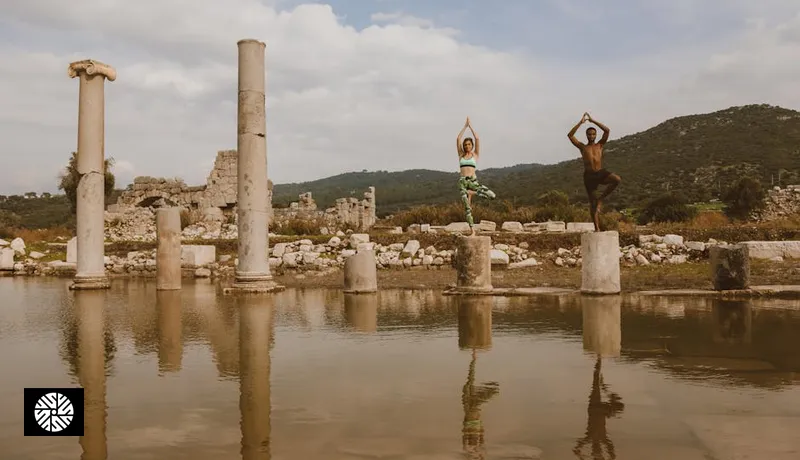
The phrase "wellness tourism" historically meant spa retreats with a thin medical veneer — a yoga mat next to a vitamin drip, with results no more verifiable than the Instagram caption. The category is rebuilding itself in a more credible direction, and Taiwan is the structural reason. The Taiwan model takes the tightly-engineered preventive-screening workflow that was always the country\'s strength and grafts on the leisure-travel layer that medical tourism markets like Thailand had figured out independently. The result isn\'t a hybrid — it\'s a category reinvention.
This piece is about the category itself: how big it is, where the boundaries are blurring, why dilution is the biggest near-term risk, and why the structural advantages that make Taiwan the substrate for the credible end of the category aren\'t something competitors can quickly copy. If you want the patient-side recovery argument, our recovery-in-Taiwan piece covers that. If you want the preventive-screening leadership argument, our preventive-healthcare piece covers that. This one zooms out one more layer.
The wellness tourism market in 2026 — actual numbers
The Global Wellness Institute (GWI), which publishes the Wellness Economy Monitor, sized wellness tourism at roughly $650 billion globally pre-pandemic and tracks it as one of the fastest-growing segments of the broader wellness economy. Their projections place wellness tourism above $1 trillion by 2027, growing in double digits annually as Western mid-career and pre-retirement cohorts shift discretionary travel spend from pure-leisure trips toward trips with a health-outcome component.
It\'s worth being precise about what these numbers do and don\'t cover. GWI\'s wellness tourism category includes any leisure trip where wellness is a primary or significant component — that\'s broad. The narrower adjacent category, medical tourism (procedures, surgeries, treatments performed across borders), is sized by Patients Beyond Borders at roughly $50–80 billion globally — an order of magnitude smaller. And then there\'s longevity tourism, an emerging slice that doesn\'t yet have a settled market size, encompassing residential medical-wellness (Buchinger Wilhelmi in Germany, Lanserhof in Austria, SHA Wellness in Spain), Blue Zones travel, and the new clinical-screening-plus-recovery model that Taiwan is positioned to lead.
The interesting structural fact: wellness tourism\'s growth is increasingly driven by the boundaries blurring. Pure-leisure spa travelers want measurable outcomes. Medical tourists want recovery built into the trip. Longevity-curious mid-career executives want diagnostic rigor. The three categories are converging — and the destination that can credibly serve the converged demand wins outsized market share.
The dilution risk in the category
The biggest near-term threat to this category isn\'t competition between credible destinations — it\'s soft-wellness operators using clinical language to ride the demand wave. Yoga retreats marketing themselves as "medical wellness." Spa hotels offering blood-test panels and calling the package "preventive screening." IV-drip lounges in Bali rebranding as "longevity clinics." All of this dilutes the category and, more importantly, it hurts patients who buy a clinical-sounding product and receive a leisure-grade one.
The honest distinction is structural, not promotional. A genuinely medical offering involves: imaging hardware at clinical specification (3T MRI, low-dose CT, screening-grade ultrasound), images read by board-certified radiologists with specialty training, pathology and laboratory work performed in CAP- or equivalent-accredited labs, AI second-read tools that are FDA/TFDA/CE-cleared rather than research-grade, a structured physician debrief delivering an interpretable report, and integration pathways that let your home physician act on the findings. If any of those are missing, what you bought is wellness travel with clinical decoration — which is fine if that\'s what you wanted, but it\'s a different product at a different price.
The dilution problem matters strategically because the credible end of the category is being judged by the worst end. Patients who get burned on a "medical retreat" that turned out to be a spa with extra paperwork become skeptical of the entire category. The destinations and operators investing in real clinical rigor — Taiwan among them — have to keep drawing the line clearly.
Why Taiwan, structurally — three factors
Three factors converged to reposition Taiwan as the substrate for the credible end of the category, and none of them are marketing positioning. They\'re infrastructure facts.
- NHI-subsidized cost basis on imaging hardware. Taiwan\'s National Health Insurance system created the demand density that made it economically rational for hospitals to invest in 3T MRI, multi-detector CT, and the latest ultrasound and DEXA hardware at scale — and to keep that hardware utilized. The international cash-pay screening market sits on top of an installed base whose unit economics were pre-paid by domestic NHI volume. That\'s why a Taiwanese hospital can offer a full-body 3T MRI screening package at a price point a U.S. or German equivalent can\'t match without sacrificing radiologist credentialing or report quality. It\'s not a discount — it\'s a different cost structure.
- One-stop campus workflow. Taiwanese health-screening centers engineered the 4-hour single-morning workflow — phlebotomy, imaging across multiple modalities, cardiology, gastroscopy, gynecology or urology, physician consult — as an integrated operation on one campus with shared scheduling. The U.S. and most of Europe still can\'t replicate this at scale because the underlying provider economics are billing-fragmented: a CT center, an imaging center, a primary-care office, a cardiology office are different billing entities with different EHRs and different schedulers. Our one-stop workflow piece goes deeper on why this is structural rather than merely operational.
- Geography. Clinical-grade hospitals in Taipei sit roughly 30 minutes from Beitou\'s thermal-spring district, two hours from Sun Moon Lake, and a high-speed-rail ride from Tainan and Kaohsiung. Bangkok offers spa-medical hybrids but the mountain and hot-springs geography is missing. Singapore is dense and procedure-focused — the recovery layer requires leaving the country. Tokyo has comparable geography but a cost-of-living headwind that prices out the mid-market. The proximity of clinical-grade hospitals to genuine recovery destinations is a fact about Taiwan that competing destinations can\'t adopt without moving their hospitals.
The cumulative effect is that Taiwan can offer clinical rigor at a competitive price and the leisure-recovery layer that turns the trip into something a mid-career professional actually wants to take. The two aren\'t in tension — they\'re both load-bearing.
Adjacent destinations — what they do, what they don\'t
| Destination | Primary offering | Price tier | Geographic accessibility | English support | Recovery integration |
|---|---|---|---|---|---|
| Korea | Aesthetics, cosmetic procedures (~$8B medical tourism) | $$ | Seoul-centric | Strong in Gangnam clinics | Limited; urban focus |
| Thailand (Bumrungrad, Samitivej) | Spa-medical hybrid, procedures + recovery | $$ | Bangkok, Phuket | Excellent | Beach/spa, less mountain |
| Singapore | Tertiary procedures, complex care | $$$$ | City-state | Native-level | None on-island |
| Japan | Ningen dock culture, premium screening | $$$$ | Tokyo, Osaka, Kyoto | Limited outside flagship hospitals | Excellent geography, less integrated |
| Switzerland (Buchinger Wilhelmi, Lanserhof) | Residential medical-wellness, fasting + diagnostics | $$$$$ | Lake Constance, Tegernsee | Native-level | Built-in residential |
| Spain (SHA Wellness) | Premium wellness clinics, longevity positioning | $$$$$ | Alicante coast | Strong | Built-in residential |
| Taiwan | Clinical-grade screening + integrated recovery | $$ | Taipei + national rail network | Strong at international centers | Beitou, Sun Moon Lake, Yangmingshan |
Honest assessment: each destination is excellent at what it does, and most of them are doing something different. Korea owns aesthetics. Thailand owns the beach-recovery procedure model. Singapore owns tertiary specialty care for those who can afford it. Japan owns the cultural prestige of ningen dock but at a price tier that excludes the mid-market. Switzerland and Spain own premium residential medical-wellness — Buchinger Wilhelmi and Lanserhof in particular are exceptional at multi-week fasting and metabolic-medicine programs, but the price tier ($1,500–4,000+ per night, often) puts them out of reach for the mid-career $200K–500K-income segment that\'s actually driving category demand.
What Taiwan is doing — clinical-grade preventive screening at a $$ price tier with genuine recovery geography integrated — sits in a gap none of the others fill. It\'s not better than Lanserhof at what Lanserhof does. It\'s a different product for a wider customer base.
The clinical rigor non-negotiable — what makes a "medical" offering medical
Because the dilution risk is real, it\'s worth being explicit about the floor. A wellness-tourism offering that wants to be in the credible "medical" tier needs to clear specific bars:
- Hospital-grade imaging hardware. 3T MRI rather than 1.5T for screening sensitivity. Multi-detector low-dose CT for lung screening. Hardware on a current service contract with the manufacturer, not aging gear past its supported lifetime.
- Board-certified radiologists, fellowship-trained for the specific imaging modality. Not a general radiologist reading an MRI prostate study — a body-imaging fellow. Every report should name the reading radiologist and their credentials.
- JCI accreditation or equivalent. Joint Commission International accreditation is the de facto international quality bar — it forces a hospital to demonstrate process maturity in patient safety, infection control, medication management, and clinical documentation. Not every excellent hospital is JCI-accredited, but the absence of any equivalent third-party quality bar is a signal.
- FDA/TFDA/CE-cleared AI second-read tools where used. AI-augmented radiology is increasingly part of the offering — but research-grade AI is not the same as cleared-for-clinical-use AI. Patients should be able to ask which tools were used and see the regulatory clearance.
- Integration with home physician care. A screening trip whose report can\'t be acted on at home is a tourist activity, not preventive medicine. The handoff back to your primary-care physician — DICOM-compatible imaging files, structured findings, follow-up recommendations — is part of the product.
Recovery in Beitou, hot-springs soaking, Sun Moon Lake — those are layers on top of the clinical foundation. They are not the foundation itself. If the offer doesn\'t clear the bars above, it\'s soft-wellness travel with clinical disguise.
"What I bought wasn\'t a vacation with a health checkup attached. It was a comprehensive workup with the recovery built in to the same trip. Those are different products. Selling them as the same thing dilutes both." — Eileen W., 40, executive coach, New York
Patient profile evolution
The patient mix in this category is shifting in a way that matters strategically. The original medical tourism cohort skewed toward procedure tourists — patients leaving the U.S. or U.K. to get a hip replaced or a heart valve repaired at lower cost. That cohort still exists, and Bumrungrad and Apollo serve it well. But it isn\'t where the growth is.
The growth segment is mid-career and early-retirement professionals — typically 40–65, household income $200K+, often dual-earner couples — who are buying preventive baseline screening as a longevity practice. They aren\'t sick. They\'re managing decades of health proactively. They have demanding careers, limited PTO, and want the clinical workup compressed into 4–7 days with the recovery and travel built in. They are the densest concentration of category demand and they are extremely under-served by domestic options in the U.S. and most of Europe.
This cohort is also the one most likely to convert from one-time visit to annual ritual. Once a patient has a Taiwan baseline, the case for returning annually for change-detection comparison is strong — both clinically (longitudinal data is more useful than scattered scans) and economically (returning patient pricing tiers, established relationships with the same physician).
| Profile | Trip length | What they want |
|---|---|---|
| Mid-career executive (40–55) | 5 days | Annual baseline + Beitou recovery; minimal time off work |
| Recently retired professional (60–70) | 10–14 days | Comprehensive baseline + Sun Moon Lake / Tainan tour |
| Couple planning shared health strategy | 7–10 days | Paired bookings + leisure travel as a "health summit" |
| Adult child arranging for aging parent | 10–14 days | Multi-generation trip combining screening with family time |
| Frequent flier accumulating mileage | 3 days | Quick screening + premium-cabin redemption |
Where this category is heading — three trajectories
Three trajectories worth watching as the category matures:
- Annual subscription patterns. Patients increasingly book yearly trips with the same partner hospital, building a longitudinal data record. The clinical case for this is strong — change detection between this year and last year is more diagnostically useful than a one-shot scan in isolation. We expect explicit subscription products (annual packages with priority booking, locked-in pricing, longitudinal report templates) to become standard offerings within two to three years.
- Couple and family bookings as health summits. The "two MRIs, two reports, one taxi to Beitou" pattern is becoming dominant. Adjacent time slots, shared physician debriefs, joint nutrition consults. Couples in their 50s and 60s in particular treat this as a relationship investment as much as a health investment — the shared health strategy framing is real, not marketing.
- AI-augmented longitudinal monitoring. Foundation models for medical imaging — Med-PaLM 2 in the radiology context, RadFM, the next generation of vendor-cleared change-detection tools — are increasingly capable of comparing this year\'s scan against last year\'s and surfacing subtle changes a human reader might miss. Our AI screening piece goes deeper on this. Taiwan\'s data density on a single hospital\'s patient base gives partner hospitals an unusual advantage in fine-tuning these tools. Regulatory harmonization — TFDA-FDA reciprocity for AI tools, JCI as the international quality bar — will accelerate cross-border adoption.
What it means for booking decisions
The right entry point depends on what you\'re actually optimizing for:
- Cost: see our country-specific cost articles linked above
- Workflow: see our one-stop comparison
- Hardware and AI: see our AI screening piece
- Recovery integration: see our Beitou + recovery piece
- Preventive screening leadership in Asia: see our preventive-healthcare piece
- Specific package comparison: see our services page with concrete tiers and what\'s included, and our providers list for hospital-by-hospital detail
The strategic implication for Taiwan
If the trajectory above plays out — wellness tourism passing $1T globally, the category bifurcating into a soft-wellness lower tier and a clinical-rigor upper tier, longevity-focused mid-career professionals becoming the densest demand segment — Taiwan is positioned to capture an outsized share of the upper tier. The structural advantages are real and not quickly copyable: the NHI-subsidized cost basis, the one-stop campus workflow, the geography. JCI accreditation, English-language report integration, and TFDA-FDA regulatory bridges are the work to keep doing.
The risk to Taiwan isn\'t external competition — Switzerland and Spain serve a different price tier, Korea and Thailand serve a different intent, Singapore and Japan are too expensive for the volume segment. The risk is internal: dilution, where the credible operators allow themselves to be lumped in with soft-wellness tourism, or where short-term volume seeking erodes the rigor that made the offering credible in the first place.
The strategic recommendation for the ecosystem is straightforward: hold the rigor line, invest in the international-patient interface (English reports, DICOM portability, home-physician handoff), partner with longevity-grade recovery operators rather than commodity hotels, and build the longitudinal-tracking tools that turn one-time visits into annual rituals. The destination that does that for the next five years owns the category. Right now that\'s Taiwan\'s to lose.
Sources & Further Reading
- CDC — Travel health information for Taiwan
- Taiwan Bureau of Consular Affairs — visa and entry
- Taiwan Tourism Bureau — official travel resources
- Central Weather Administration of Taiwan
- Taiwan High Speed Rail — official site
- Taipei Metro (MRT) — official
Frequently asked questions
FAQ
A typical wellness retreat (Bali, Phuket, parts of Bangkok) is a leisure trip with a thin medical layer — yoga, spa treatments, sometimes blood tests. The Taiwan model inverts the structure: a clinical-grade workup (full-body MRI, multi-modality imaging, biomarker panels, physician debrief at JCI-standard hospitals) sits at the center, with leisure recovery built around it. The clinical rigor is the product, not the decoration.
Yes — and it's the most common returning-patient pattern. Annual or every-2-year visits to the same partner hospital create a longitudinal data record that's more clinically useful than scattered scans across providers. AI-assisted comparison against prior baselines (where applicable) helps surface subtle changes. Many returning patients shift to repeat-customer pricing tiers.
Minimum is 4 days (Friday flight, Monday screening, Tuesday debrief, Tuesday return). Maximum is whatever your schedule allows — patients who extend to 10-14 days often combine screening with Sun Moon Lake, Tainan, Yangmingshan, or even a Tainan-Kaohsiung southern Taiwan loop. The 7-day version (4 clinical-adjacent + 3 recovery) is the most-recommended sweet spot.
Different products at different price tiers. Buchinger Wilhelmi (Germany, Lake Constance) and Lanserhof (Austria, Tegernsee) are exceptional at residential medical-wellness — multi-week fasting, metabolic-medicine programs, hands-on physician relationships in a single closed campus, typically $1,500–4,000+ per night. Taiwan offers clinical-grade preventive screening with integrated recovery geography at a $$ price tier — which makes it accessible to the mid-career $200K–500K-income segment that's priced out of the European residential model. If you want a 3-week metabolic immersion at a Bavarian lake, go to Lanserhof. If you want a comprehensive baseline workup with hot-springs recovery in 7 days at a fraction of the cost, Taiwan is the better fit.
Three things will be true. First, the category will pass $1T globally and bifurcate explicitly into soft-wellness and clinical-rigor tiers — patients and travel agents will be more sophisticated about which one they're buying. Second, AI-augmented longitudinal monitoring (foundation models for medical imaging, change-detection tools comparing year-over-year scans) will make annual subscription patterns the dominant behavior in the upper tier. Third, regulatory harmonization (TFDA-FDA reciprocity for AI tools, JCI as the de facto international quality bar) will lower friction for cross-border patient flows. Taiwan is positioned to capture outsized share of the clinical-rigor tier if the rigor line holds.
No — at least not in the preventive-screening sense. If you have active symptoms, you need diagnostic care directed at those symptoms, often coordinated with your home physician, not a screening package optimized for asymptomatic baselines. A comprehensive screening is designed to detect what you don't know is wrong; if you already know something is wrong, the right path is targeted workup. We sometimes redirect patients in this position to consultative care with a specialist rather than a screening package — see our providers list for specialty options. Wellness tourism in the credible sense is a longevity practice for people in good or unknown-baseline health, not a substitute for symptomatic care.