Blog
Blog
What Is Fascia Massage and Why It Matters for Your Body

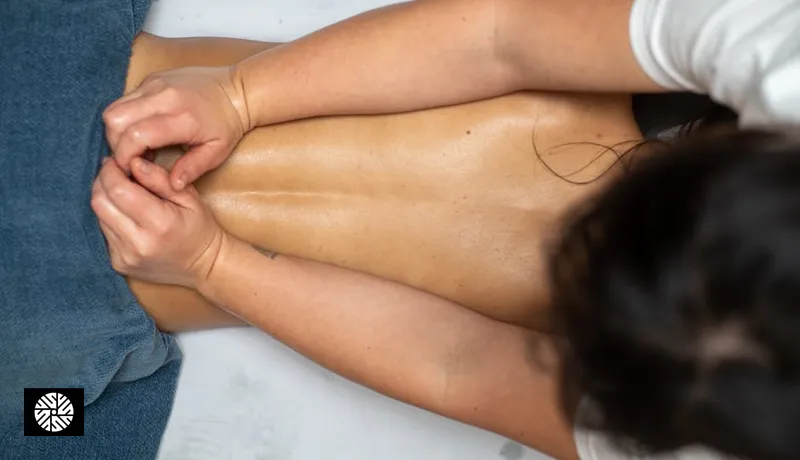
Quick answer: Fascia massage is hands-on or tool-assisted work on the connective-tissue web that wraps and links every muscle and organ. By easing restrictions in this tissue it can reduce tightness, improve mobility, and help with chronic pain or post-surgical scarring. "Fascia massage" is an umbrella term covering myofascial release, Rolfing, IASTM, cupping, and dry needling — this guide explains what fascia is, what goes wrong with it, and what each technique actually does.
Fascia is having a moment — but most people still cannot explain what it actually is. Ask ten practitioners what "fascia massage" means and you will get ten slightly different answers: myofascial release, Rolfing, cupping, dry needling, IASTM, foam rolling. They all claim to work on the same tissue. What is that tissue, and why does the conversation around it matter for anyone dealing with chronic pain, post-surgical scarring, or stubborn mobility limits?
This is the anatomical and clinical primer. If you want to know who fascia work helps most, our benefits guide covers patient profiles. If you want to know why people fly to Taipei for it, see our Taiwan destination piece. Here, we focus on the science: what fascia is, what goes wrong with it, and what each treatment modality is actually doing.
What is fascia? The body-wide connective-tissue web
Fascia is a continuous network of connective tissue that wraps, separates, and connects every structure in the human body. Unlike muscles (which exist as discrete named units) or organs (which sit in defined cavities), fascia is essentially one uninterrupted three-dimensional matrix. Trace it from your scalp to your toes and you never encounter a clean break.
Anatomists describe four broad fascial layers, organized from skin inward:
- Superficial fascia — directly under the skin, embedded with fat, blood vessels, and lymphatics. This is the soft layer you pinch when you grab your forearm skin.
- Deep fascia — denser, more fibrous sheets that wrap individual muscles (epimysium), muscle groups (intermuscular septa), and form retinacula around joints. This is the layer most fascia therapists target.
- Meningeal fascia — surrounds the central nervous system (dura mater, arachnoid, pia mater). Specialized and not typically a target of manual bodywork.
- Visceral fascia — suspends and wraps internal organs. Some visceral manipulation practitioners work with this layer, though it overlaps with osteopathic technique.
At the molecular level, fascia is built from three components: collagen (mostly type I, providing tensile strength), elastin (providing recoil), and ground substance — a gel-like matrix rich in water, proteoglycans, and hyaluronic acid that allows neighboring tissue planes to glide against one another. The collagen-to-elastin ratio varies by region: areas under heavy mechanical load (plantar fascia, IT band) are collagen-dominant and stiff, while areas requiring stretch (superficial back fascia) carry more elastin.
Recent fascia research — Schleip, Stecco, Anatomy Trains
For most of the 20th century, fascia was dissected away and discarded so anatomists could photograph "clean" muscles. The tissue was considered inert packaging. That changed quickly in the 2000s.
The first International Fascia Research Congress at Harvard in 2007 marked the shift. Researchers from anatomy, sports medicine, manual therapy, and rehabilitation converged on a single question: what is this tissue actually doing? Five subsequent congresses (Amsterdam 2009, Vancouver 2012, Washington 2015, Berlin 2018, Montreal 2022) built out a research literature that now spans thousands of papers.
Three figures shape modern fascia thinking:
- Robert Schleip — German researcher whose work demonstrated that fascia contains contractile cells (myofibroblasts) and is densely innervated with sensory and proprioceptive nerve endings. Fascia is not passive — it senses, responds, and contracts.
- Carla and Antonio Stecco — Italian anatomists whose Functional Atlas of the Human Fascial System mapped fascia layer by layer through fresh-tissue dissection. The Stecco family also developed the Fascial Manipulation method, which targets specific densification points along fascial "centers of coordination."
- Tom Myers — American structural integration practitioner whose book Anatomy Trains popularized the idea of "myofascial meridians" — continuous chains of muscle and fascia that transmit force across the body. The model is influential clinically even where the anatomical specifics remain debated.
The consensus that has emerged: fascia is an active sensory and mechanical organ, integral to movement quality, proprioception, and pain perception — not the inert wrapping it was once thought to be.
Fascia properties — hydration, mechanotransduction, sliding planes
Three properties matter for understanding why fascia gets treated and how it responds.
Hyaluronic acid hydration. Between adjacent fascial layers sits a thin film of hyaluronic acid in ground substance. When well-hydrated and at normal viscosity, this film lets layers slide independently — your skin glides over deep fascia, deep fascia glides over muscle, muscle glides over neighboring muscle. When hyaluronic acid becomes more viscous (densification — typically from chronic loading, immobility, or inflammation), this sliding fails. Layers stick. Movement that used to be smooth becomes restricted or painful.
Mechanotransduction. Fascial cells (fibroblasts and myofibroblasts) respond to mechanical load by changing what they produce. Sustained tension upregulates collagen deposition. Lack of load triggers tissue remodeling toward a less organized matrix. This is why sedentary lifestyles weaken fascia and why graded mechanical stimulus — including manual therapy — can drive structural change over weeks to months.
Sliding planes. Healthy fascia has predictable shear interfaces between layers. A skilled clinician palpating your back can feel whether superficial fascia glides freely over deep fascia, whether thoracolumbar fascia moves over the erector spinae, whether the latissimus glides over serratus posterior. When these planes are stuck — usually from old injury, surgery, or chronic posture — restoring glide is often the central therapeutic goal.
Fascia dysfunction — adhesions, densification, restrictions
Fascia goes wrong in a handful of recognizable patterns. Knowing which pattern is present matters because the right modality depends on it.
- Adhesions — abnormal fibrous connections between tissue planes that should slide independently. Common after surgery (C-section scars, abdominal surgery, knee arthroscopy), trauma, or chronic inflammation. Adhesions are structural and often need direct mechanical input to release.
- Densification — increased viscosity of hyaluronic acid in ground substance, typically from chronic mechanical loading or low-grade inflammation. The tissue is not torn or scarred — it has simply lost its sliding quality. This is the Stecco model's primary target.
- Restrictions — a clinical umbrella term covering reduced range of motion from any fascial cause: stuck planes, shortened tissue, neural irritation, or trigger points within fascia-adjacent muscle.
- Inflammation — myofascial pain syndromes involve inflamed and sensitized fascia, often with active trigger points and referred pain patterns.
Common symptoms patients report from fascial dysfunction:
- Chronic neck, shoulder, or low back pain that does not resolve with rest or stretching
- Limited range of motion in a specific direction (often rotational)
- Post-surgical scarring with pain or pulling sensations months or years after healing
- Plantar fasciitis — densification and inflammation of the plantar fascia
- IT band syndrome — restrictions along the lateral thigh fascia
- Frozen shoulder, tennis elbow, and other "sticky" repetitive-strain presentations
Modalities — myofascial release, Rolfing, IASTM, dry needling
Practitioners use a range of techniques, each with a different rationale, depth, and target tissue.
- Myofascial Release (MFR) — Most commonly associated with John Barnes' method. Uses sustained, low-load pressure (often 90–120 seconds per hold) to coax fascial release through what practitioners call "tissue creep." Slower and gentler than deep tissue massage; well suited to chronic and sensitized presentations.
- Rolfing / Structural Integration — A 10-session system developed by Ida Rolf in the mid-20th century. Each session has a defined anatomical focus, progressively working from superficial to deep layers and from the front of the body to the back. The goal is reorganizing the body's relationship to gravity. Deeper and more systematic than typical massage.
- Fascial Manipulation (Stecco method) — Italian system that identifies specific densification points along defined fascial coordination centers, then applies friction to restore tissue glide. More diagnostic and precise than general MFR.
- Active Release Technique (ART) — Combines manual pressure with active patient movement. Practitioner holds a fascial point while the patient moves the limb through range, restoring sliding under load.
- IASTM (Instrument-Assisted Soft Tissue Mobilization) — Tools (Graston, HawkGrips, FAKTR) apply targeted shear to fascial adhesions. Useful for chronic scar tissue and densified areas where finger pressure cannot generate enough specificity.
- Dry Needling — Western-medicine approach using thin solid needles to deactivate trigger points within muscle and adjacent fascia. Distinct from acupuncture in rationale (Western neuroscience vs traditional meridian theory) though needle technique overlaps.
- Cupping — Decompressive technique with roots in Chinese medicine. The negative pressure under the cup lifts skin and superficial fascia away from deeper layers, theoretically restoring glide and increasing local blood flow.
Self-fascia work — foam rolling, lacrosse ball, percussive devices
Consumer-grade tools cover the gentler end of the fascia work spectrum. They cannot replace skilled hands for complex adhesion patterns, but for general maintenance and athletic recovery they are genuinely useful.
- Foam rolling — Distributes body weight along the IT band, quads, hamstrings, calves, and thoracic spine. Works mostly on superficial fascia and the more pliable deep fascia. Best used for 30–60 seconds per region, not as a substitute for warm-up.
- Lacrosse ball / massage ball — More targeted than a foam roller. Useful for glutes, pec minor, plantar fascia, and other small or hard-to-reach areas. The smaller surface concentrates pressure on specific densified points.
- Percussive devices (Theragun, Hypervolt) — High-frequency mechanical oscillation. Some evidence for short-term pain reduction and range of motion improvement. Useful pre-workout for warming tissue and post-workout for general recovery; less effective for deep structural restrictions.
- Mobility blocks and peanut balls — Niche tools for specific spinal and pelvic work, generally requiring more body-awareness to use safely.
Fascia work modalities — practitioner-led + self-led
| Modality | Type | Depth | Best For |
|---|---|---|---|
| Myofascial release (John Barnes) | Practitioner | Gentle to moderate | Chronic, sensitized pain; trauma-aware contexts |
| Rolfing / Structural Integration | Practitioner | Deep | Postural reorganization, 10-session commitment |
| Fascial Manipulation (Stecco) | Practitioner | Deep, precise | Specific densification, movement dysfunction |
| Active Release Technique (ART) | Practitioner | Moderate to deep | Sports injuries, repetitive strain |
| IASTM (Graston, HawkGrips) | Practitioner | Moderate, targeted | Chronic scar tissue, adhesions |
| Dry needling | Practitioner | Deep, point-specific | Trigger points, referred pain |
| Cupping | Practitioner | Superficial decompression | Surface fascia glide, athletic recovery |
| Foam roller | Self | Moderate, broad | General maintenance, recovery |
| Lacrosse ball | Self | Deep, targeted | Small areas, specific trigger points |
| Percussive device (Theragun) | Self | Variable, oscillatory | Pre/post workout, general soreness |
Fascia vs deep tissue massage
Patients regularly conflate these two. They are related but distinct.
Deep tissue massage targets muscle. The practitioner uses pressure, strokes, and kneading to address muscular tension, knots, and general tightness. Pace is moderate, pressure is consistent, and the goal is muscle relaxation and circulation.
Fascia work targets the connective tissue that wraps and connects muscles. Pace is slow, pressure is sustained (often 60–120 seconds in one position), and the goal is restoring tissue glide and structural alignment rather than muscular relaxation per se. A skilled fascia therapist palpates for specific stuck planes, then waits for the tissue to release rather than working through it with force.
In practice, many therapists combine both approaches in a single session. The distinction matters most when choosing a practitioner for a specific problem: muscle soreness from a hard workout responds well to deep tissue work; a chronic post-surgical scar that pulls and limits movement needs fascia-specific technique.
Evidence base — what research shows
Fascia research has grown substantially in the past two decades, but the clinical evidence base sits at "promising and incomplete."
Systematic reviews and meta-analyses suggest moderate effects for myofascial release on flexibility, pain reduction in chronic low back pain, plantar fasciitis, and post-surgical adhesions. Foam rolling consistently shows short-term improvements in range of motion (typically 5–15% in immediate post-intervention measures). IASTM and ART have moderate-quality evidence for repetitive-strain conditions.
The honest caveats: most fascia-related studies are small, methodologically heterogeneous, and difficult to blind (you cannot easily place-control manual therapy). High-quality RCTs comparing modalities head-to-head are rare. Long-term outcome data is thinner than short-term. The therapeutic alliance with a skilled practitioner — independent of technique — almost certainly accounts for a meaningful portion of observed effects.
What this means practically: fascia work is most defensible as part of a broader plan that includes movement, strengthening, and address of underlying load patterns. It is not a substitute for active rehabilitation, and any practitioner who promises permanent relief from a single technique should be viewed skeptically.
When fascia work helps and when it doesn't
Clinical scenarios where fascia work has the strongest rationale:
- Chronic post-surgical scarring with pain, pulling, or restricted movement
- Repetitive-strain injuries that have plateaued with conventional rehab (IT band syndrome, plantar fasciitis, tennis elbow)
- Postural patterns from prolonged sitting or asymmetric loading
- Athletic recovery, particularly for endurance athletes with chronic tissue tightness
- Chronic neck and low back pain with no clear structural diagnosis
- Frozen shoulder and other "sticky" capsular restrictions
Scenarios where fascia work is the wrong tool or should be delayed:
- Acute injuries — let inflammation settle first. Aggressive tissue work in the first 48–72 hours after an acute strain can worsen the injury.
- Bone or joint pathology — fractures, severe arthritis, ligament tears need orthopedic management, not bodywork.
- Nerve compression — sciatica from a herniated disc, carpal tunnel, thoracic outlet syndrome. Fascia work may help adjunctively but does not address the compression itself.
- Active infection or unexplained inflammation — manual therapy can spread or worsen.
- Bleeding disorders or anticoagulant therapy — deeper modalities (cupping, IASTM, deep fascia work) carry bruising and bleeding risk.
- Recent surgery — wait until cleared by your surgeon, typically 6–8 weeks minimum, often longer for direct scar work.
When fascia work helps vs doesn't
| Scenario | Fascia work appropriate? | Why |
|---|---|---|
| Chronic post-surgical scar pain | Yes | Directly addresses adhesion biology |
| Plantar fasciitis | Yes | Fascia-specific condition, good evidence |
| Chronic desk-posture neck and shoulder pain | Yes | Densification from sustained load |
| Athletic recovery (endurance) | Yes | Maintains tissue glide under chronic load |
| Acute strain (first 72 hours) | No | Risk of worsening inflammation |
| Herniated disc with sciatica | Adjunct only | Does not address nerve compression |
| Acute fracture or ligament tear | No | Needs orthopedic management |
| On therapeutic anticoagulation | With caution | Bruising and bleeding risk |
Why fascia is relevant for travelers and longevity-focused patients
Three groups end up valuing fascia work disproportionately.
Long-haul travelers. Sitting in an airplane seat for 12+ hours densifies hip flexor, glute, and thoracolumbar fascia in predictable patterns. Even one focused session after a major flight can restore range of motion that otherwise takes days to recover on its own. This is why our recovery-focused travelers often book fascia work within their first 48 hours in-country.
Posture-affected desk workers. The forward head, rounded shoulders, and stiff thoracic spine of chronic screen work are fundamentally fascial problems — not muscle weakness alone. Strengthening helps, but without restoring fascial glide first, gains plateau quickly.
Longevity and performance-focused patients. Tissue quality is increasingly recognized as a longevity marker. Maintaining sliding planes, hydration, and proprioceptive richness in fascia keeps you moving like a younger person — which in turn protects against falls, injury, and the deconditioning spiral of aging. Many of our wellness-focused visitors include fascia bodywork in their regular maintenance the same way they include strength training and sleep optimization.
To explore what's available at New Dawn Health, see our services overview or browse our network of practitioners for fascia-trained therapists. For the patient-profile side of the conversation, our benefits guide covers who benefits most. For why Taiwan in particular has become a hub for high-quality fascia work, see our destination piece.
Sources & Further Reading
FAQ
Deep tissue massage targets muscle with kneading and pressure to address tension and tightness. Fascia massage targets the connective tissue wrapping muscles, using slow sustained pressure (often 60-120 seconds per hold) to restore tissue glide between layers. Fascia work is slower, more methodical, and aims at structural change rather than muscle relaxation. Many practitioners combine both in one session.
Yes, for what it is. Research consistently shows short-term improvements in range of motion (typically 5-15%) and reduced post-exercise soreness from foam rolling. It works mostly on superficial fascia and the more pliable deep fascia. What it cannot do is replicate a skilled practitioner addressing specific stuck planes, complex adhesions, or post-surgical scarring. Use it as maintenance, not as a substitute for hands-on work when you have a specific clinical problem.
For the right person, yes. Rolfing is a structural integration system — each of the 10 sessions has a specific anatomical focus, progressively working from superficial to deep layers. People with long-standing postural patterns, chronic pain not addressed by conventional care, or those wanting deep structural change tend to benefit most. People looking for general relaxation or a single-session fix will find it overkill. Expect deeper sensations than typical massage and meaningful changes that build over weeks.
Generally yes, with caveats. Fascia work is well-tolerated in most chronic pain presentations and is often specifically helpful. However, avoid or modify in: acute injuries (first 72 hours), active infection, bleeding disorders or anticoagulant therapy, recent surgery before surgeon clearance, fractures, and active malignancy in the treatment area. Always tell your practitioner about medications and medical history. Nerve compression conditions (sciatica, carpal tunnel) may benefit adjunctively but fascia work alone will not resolve the underlying compression.
It depends on goals. For an active clinical issue (chronic pain, post-surgical scar, plateaued rehab), most practitioners recommend a series of 4-8 sessions spaced weekly or every other week, then taper. For general maintenance and athletic recovery, monthly or every 6 weeks is typical. For travelers using fascia work as part of a wellness reset, intensive series (3-5 sessions over 7-10 days) is a common pattern. The key is pairing sessions with movement and load adjustments — fascia work without addressing what created the dysfunction tends to provide temporary relief only.
It is among the best options, once you are cleared by your surgeon (typically 6-8 weeks post-op minimum, sometimes longer). Surgical scars are essentially fascial adhesions, and direct mechanical input through MFR, IASTM, or scar-specific cupping can meaningfully reduce pulling sensations, restore tissue glide, and improve cosmetic outcomes. For older scars (months to years post-op), it is often still effective — fascia remodels in response to load at any age. Work with a practitioner who specifically has experience with scar tissue rather than general massage.