
Blood pressure is the most-measured number in medicine and probably the least understood by the people it belongs to. Most adults can tell you their height and weight; far fewer can tell you their blood pressure, and fewer still what the two numbers actually mean. Taiwan's own hypertension guideline opens by calling high blood pressure "the most important modifiable cause of cardiovascular disease and all-cause mortality worldwide."
The scale is the part that surprises people. The WHO estimates 1.4 billion adults aged 30–79 had hypertension in 2024 — 33% of that age group — and that roughly 600 million of them, 44%, do not know it.
This is a plain-language walk through what the numbers mean, why one high reading doesn't define you, and why the readings you take at home matter more than the one taken in a clinic.
What do the two blood pressure numbers actually mean?
Systolic (the top number) is the pressure in your arteries at the moment the heart contracts and pushes blood out. Diastolic (the bottom) is the pressure between beats, while the heart refills. Both matter; after middle age, systolic tends to be the more important predictor, because arteries stiffen with age and drive it upward.
These are the categories in the 2022 Taiwan Society of Cardiology and Taiwan Hypertension Society guideline, in mmHg:
| Category | Systolic | Diastolic | |
|---|---|---|---|
| Normal | Below 120 | and | below 80 |
| Elevated | 120–129 | and | below 80 |
| Hypertension grade 1 (US: stage 1) | 130–139 | or | 80–89 |
| Hypertension grade 2 (US: stage 2) | 140 or higher | or | 90 or higher |
Two honest notes on the table. First, where the line falls has moved. Most guidelines worldwide used to call hypertension 140/90; the 2017 ACC/AHA guideline dropped it to 130/80, and Taiwan's task force adopted 130/80 as well, arguing explicitly that the 140 threshold understates the risk carried by Asian populations. The US CDC now states the same 130/80 definition. That is a disagreement about where to draw a line on a continuous risk curve, not about the biology — the Taiwan guideline notes the correlation between blood pressure and later cardiovascular events runs down to levels as low as 100/60. There is no cliff. Second, a diagnosis is never made from one reading.
Why does one clinic reading mean so little?
Blood pressure is not a fixed property like height. It swings with stress, caffeine, sleep, pain, a full bladder, talking, and the walk up the stairs to the clinic. Two measurement artifacts are so common they have names, and Taiwanese data puts numbers on both:
- White-coat hypertension — readings high at the doctor's office, normal everywhere else. In the Taiwanese arm of the Asia BP@Home study, 21% of subjects fell into this group at the 130/80 cut-off. Nobody catches it without home readings, and it leads to overtreatment.
- Masked hypertension — the sneakier reverse: normal in the clinic, high in daily life. 11% in that same Taiwanese sample, and in an international cohort 15.9% of already-treated patients were masked-uncontrolled. It carries cardiovascular risk comparable to sustained hypertension, and it is invisible to the clinic.
Taiwan's guideline draws the obvious conclusion and goes further than most: it makes home monitoring — not the office cuff — the foundation for diagnosing and grading hypertension, and it tells doctors that a routine office reading should not be used for diagnosis unless the full standardized protocol was followed.
How do you measure blood pressure properly at home?
Taiwan's guideline standardizes this as the "722" protocol: 7 consecutive days, 2 occasions a day, 2 readings each time. In practice:
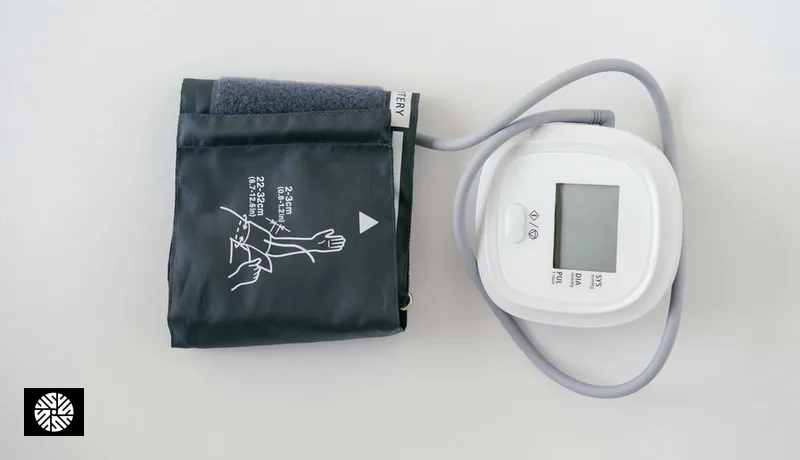
- Use a validated automatic upper-arm cuff sized to your arm — not a wrist device — and have it calibrated at least every 12 months.
- Avoid caffeine, exercise and smoking for at least 30 minutes beforehand, and empty your bladder.
- Sit for 5 minutes without talking, back supported, feet flat on the floor, arm resting on a desk with the cuff at heart level.
- Take 2 readings 1 minute apart. The first time you ever measure, check both arms and use the higher one thereafter.
- Do this in the morning (within an hour of waking, before food and medication) and in the evening (within an hour of bed), for 7 consecutive days — 4 at an absolute minimum.
- Average the week. That average is what your doctor should be reading, and hypertension is diagnosed at a home average of 130/80 or above.
Twenty-eight readings sounds like a lot. It is one week, twice a day, and it settles a question a single clinic measurement cannot.
Why is high blood pressure called a silent killer?
Sustained high pressure damages the pipes quietly. It stiffens and injures artery walls, forces the heart muscle to thicken, and degrades the small vessels of the brain, kidneys, and eyes. The conditions it drives — heart attack, stroke, kidney failure, vascular dementia — announce themselves years later, after the damage is done. You cannot feel high blood pressure at the levels most people have it. The only way to know is to measure.
It is also why the guideline's work-up for hypertension-mediated organ damage looks past the cuff: an ECG and echocardiogram for the heart muscle, kidney function labs, vascular assessment, and fundoscopy for the retina. The number is the trigger; the organ damage is the finding.
Two connections worth making from elsewhere on this blog: hypertension in midlife is one of the strongest modifiable risks for the cognitive decline we covered in our brain aging article, and masked hypertension is measurably more common in people with obstructive sleep apnea — which is why stubbornly high pressure is a classic flag for undiagnosed sleep apnea.
What actually lowers blood pressure?
The Taiwan guideline summarizes lifestyle change as S-ABCDE and attaches an expected systolic reduction to each lever. These are not rounding errors — the diet and exercise numbers are in the range of a first drug.
| Lever | What it means | Expected systolic drop |
|---|---|---|
| Sodium restriction | 2–4 g sodium/day (5–10 g salt) | 3.1 mmHg per 1 g/day cut |
| Alcohol limitation | Under 100 g/week (men), under 50 g/week (women) | 2–4 mmHg |
| Body weight reduction | Target BMI 20–24.9 | ~1 mmHg per 1 kg lost |
| Cigarette cessation | Complete, including e-cigarettes | No independent BP effect (quit anyway) |
| Diet adaptation | DASH pattern | 10–12 mmHg |
| Exercise adoption | At least 30 min moderate aerobic, 5–7 days/week | 3–11 mmHg |
One surprise in that table: neuromotor training — tai chi, yoga, meditation — carries an expected 6–14 mmHg systolic reduction in the same guideline, the largest single number on the list. The catch, which the guideline names outright, is persistence: lifestyle change works and almost nobody sustains it.
And when lifestyle isn't enough: modern blood pressure medications are inexpensive, well tolerated, and among the best-evidenced drugs in all of medicine. Needing one is not a personal failure; declining one at sustained grade 2 levels is a decision to keep taking vascular damage.
Which New Dawn package covers the cardiac work-up?
Every comprehensive health screen measures blood pressure. The value of a structured screening day is context — your pressure read alongside the organ-damage work-up above, rather than filed as an isolated number.
The entry point for that is our Essential holistic exam at $699, the cheapest package on our list whose features include Cardiovascular & Vascular Risk Tests, alongside a heart calcium score, five ultrasounds, bone mineral density, vitamin D and a full-body MRI. Below it, the Convenient package at $299 includes the heart calcium score and ultrasounds but not the cardiovascular risk panel.
If you already have a screening booked and want only the cardiac pieces, these are a la carte:
| Item | Our price |
|---|---|
| Heart Ultrasound (echocardiogram) | $209 |
| Heart Calcium Score CT Scan | $209 |
| Advanced Cardiovascular Lipids Blood Panel | $260 |
| Cardiologist appointment, Taiwan Adventist Hospital | $380 |
| Coronary CT | $899 |
Current inclusions and prices for every tier are on the packages page, and our heart and lung screening guide covers what the full work-up looks like in Taiwan.
The takeaway is almost embarrassingly simple, and it costs nothing we sell: buy a validated upper-arm cuff, run the 722 protocol for a week, and know your average. Bring that number to the screening — not the one the clinic takes while you are still catching your breath.
This article is for general education and is not medical advice. Treatment thresholds depend on your overall risk profile — review your numbers with a physician. NHLBI classes a reading higher than 180 systolic or higher than 120 diastolic as a hypertensive crisis: contact a provider immediately, and seek emergency care if it comes with chest pain, shortness of breath, or vision change.
Sources
- Acta Cardiologica Sinica (Taiwan Society of Cardiology / Taiwan Hypertension Society) — 2022 Guidelines of the Taiwan Society of Cardiology and the Taiwan Hypertension Society for the Management of Hypertension (accessed 2026-09-08)
- National Heart, Lung, and Blood Institute (NIH) — High Blood Pressure: What Is High Blood Pressure? (accessed 2026-09-08)
- US Centers for Disease Control and Prevention — About High Blood Pressure (accessed 2026-09-08)
- World Health Organization — Hypertension fact sheet (accessed 2026-09-08)