Blog
Blog
Botox and Fillers in Taiwan: Quality, Cost, and What to Expect

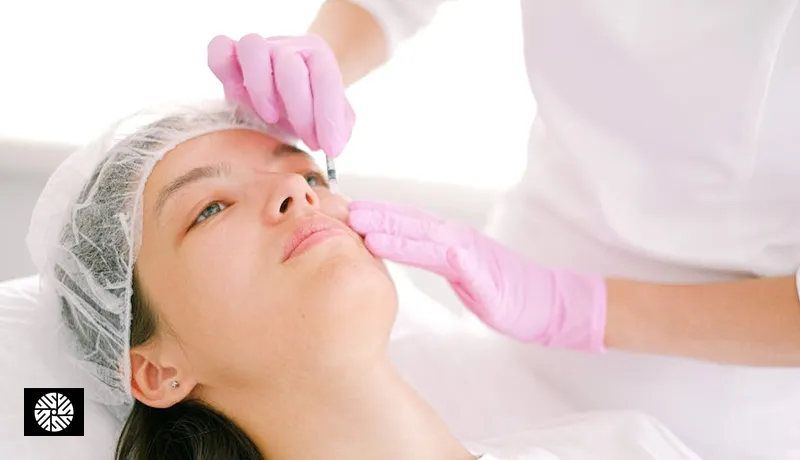
Botulinum toxin and dermal fillers are the most common reason international patients fly into Taiwan for medical beauty. They are quick, recovery is short, and the price gap versus the US makes a long weekend in Taipei pencil out even before you factor in the food. But "Botox in Taiwan" is not a single product, and "fillers" is not a single category. The brand on the bottle, the depth the needle goes, and the credentials of the person holding it all change the result. This guide breaks down what you'll actually be offered, what you should pay, and how to plan the visit so the swelling fades before your dinner reservation.
For a wider view of why Taiwan is a popular destination for these treatments, see our why-Taiwan overview. For broader cost benchmarking, the Taiwan vs US, Korea, Japan cost comparison sits alongside this piece.
Botulinum toxin brands explained — Botox, Dysport, Xeomin, Korean brands
"Botox" has become a generic verb the way "Kleenex" did for tissue, but the actual molecules behind the marketing differ in subtle ways that matter when one clinic's quote is twice the one next door.
Botox (Allergan / AbbVie). The original onabotulinumtoxinA approved by the US FDA in 2002. Decades of clinical data, the most predictable diffusion pattern, and the brand most Western patients recognize on a clinic menu. In Taiwan it carries the highest sticker price among the toxins because the import and licensing cost is real.
Dysport (Galderma). AbobotulinumtoxinA. Onset is faster — many patients see softening within 2 to 3 days, versus 5 to 7 for Botox. Diffusion is slightly broader, which some injectors prefer for forehead work and some avoid around the eyes. Duration is comparable to Botox.
Xeomin (Merz). IncobotulinumtoxinA. Marketed as the "naked" toxin — the surrounding accessory proteins are stripped out, which in theory reduces the chance your immune system develops neutralizing antibodies over years of repeat treatment. Useful for high-frequency users, masseter patients, and anyone who has noticed their Botox "stopped working."
Korean toxins — Innotox, Botulax, Letybo, MEDITOXIN. Common in Taiwan and Korea, rarely seen on US menus. They are real botulinum toxin type A, just manufactured in Korea under Korean regulatory frameworks. Innotox is notable for shipping pre-diluted (no reconstitution at the clinic), which removes one source of dosing error. Pricing is meaningfully lower than Allergan Botox. Quality varies by manufacturer and by clinic — a good clinic uses TFDA-approved Korean toxin from a reliable supplier; a sketchy clinic uses whatever shows up cheapest, which is the part you want to avoid.
Ask the clinic which brand they will use, and ask to see the sealed vial before injection. A reputable injector will not flinch at this request.
Common Botox areas + pricing
Pricing in Taiwan is typically quoted "per area" or "per unit," with bundle discounts for full upper-face treatment. Per-unit pricing is more transparent if you know how many units you need; per-area is simpler for first-timers.
At New Dawn Health, Botox is US$350 per area (see packages). Elsewhere a quote turns on which toxin is in the vial, how many units the area needs, and whether the clinic prices per area or per unit — ask what a number covers before you set it beside another clinic's.
| Area | Duration | Notes |
|---|---|---|
| Glabella (between brows) | 3-4 months | Most common first treatment |
| Forehead lines | 3-4 months | Treat with glabella to avoid brow drop |
| Crow's feet (lateral canthal) | 3-4 months | Softens, doesn't erase, smile lines |
| Masseter (jawline slimming) | 4-6 months | Visible slimming after 4-6 weeks |
| Chin dimpling (mentalis) | 3-4 months | Smooths "orange peel" texture |
| Brow lift (microdosing) | 2-3 months | Subtle, technique-dependent |
| Platysmal bands (neck) | 3-4 months | For visible neck cords |
| Upper face bundle (3 areas) | 3-4 months | Glabella + forehead + crow's feet |
Korean-toxin pricing typically runs 30-40% below branded Allergan Botox at the same clinic, which is why one menu can carry two very different numbers for the same treatment area. Ask which toxin a quote covers before you compare it with anything else.
Filler categories — HA, calcium hydroxylapatite, PLLA, polycaprolactone
Dermal fillers are not all the same material. Knowing the category tells you how the product behaves, how long it lasts, and — critically — whether it can be dissolved if something goes wrong.
Hyaluronic acid (HA) fillers — Juvederm, Restylane, Belotero. The default. HA is a natural sugar molecule found throughout your tissue, so the body tolerates it well. The biggest practical advantage: HA fillers are reversible. If you don't like the result, or worse, if a filler accidentally enters a blood vessel, an injection of hyaluronidase will dissolve it within hours. This is the safety net that makes HA the right choice for first-time filler patients and for high-risk areas like the tear trough and lips. Different HA products have different particle sizes and cross-linking, which is why Juvederm Voluma is used for cheek lift while Volbella sits in the lips.
Calcium hydroxylapatite (Radiesse). A semi-permanent collagen stimulator. The injected gel provides immediate volume; over months, your body breaks down the gel while building new collagen along the scaffold the product leaves behind. Lasts 12-18 months. Not reversible — there is no enzyme that dissolves Radiesse on demand. Used for jawline contouring, hand rejuvenation, and deeper folds.
Poly-L-lactic acid (Sculptra). A pure biostimulator — it doesn't add volume directly, it triggers your body to manufacture collagen over weeks to months. Results build gradually across 2-3 sessions and last 18-24 months. Best for diffuse volume loss across the cheeks and temples, not for spot treatments. Patients who want "I haven't aged" without "she had work done" gravitate toward Sculptra.
Polycaprolactone (Ellanse). A collagen stimulator suspended in a CMC carrier gel. Provides immediate volume like an HA filler, plus collagen stimulation like Sculptra. Available in formulations lasting 1, 2, 3, or 4 years (Ellanse S, M, L, E). Popular in Asia for chin and jawline definition. Like Radiesse and Sculptra, not reversible.
Common filler areas + pricing
| Filler type | Duration | Price (NT$ per cc/vial) | Best use |
|---|---|---|---|
| HA — Restylane / Juvederm | 9-18 months | 15,000 - 25,000 / cc | Lips, tear trough, NLF, cheeks |
| HA — Belotero | 6-12 months | 15,000 - 22,000 / cc | Fine lines, superficial |
| Calcium hydroxylapatite (Radiesse) | 12-18 months | 25,000 - 35,000 / cc | Jawline, deep folds, hands |
| Poly-L-lactic acid (Sculptra) | 18-24 months | 20,000 - 35,000 / vial | Diffuse facial volume, temples |
| Polycaprolactone (Ellanse) | 1-4 years | 25,000 - 35,000 / cc | Chin, jawline, cheeks |
Common filler areas and what each accomplishes:
- Nasolabial folds (NLF). The "smile lines" from nose to mouth corners. Mid-depth HA, 1-2 cc.
- Marionette lines. The vertical lines from mouth corners down. Often paired with NLF treatment.
- Cheek augmentation. Lifts the mid-face and indirectly softens NLFs. 1-2 cc HA per side, or Sculptra over multiple sessions.
- Tear trough. Under-eye hollows. Technically demanding — wrong product or wrong depth causes lumps and the dreaded "Tyndall effect" blue tint. Choose an experienced injector.
- Lips. 0.5-1 cc HA. Soft HA products only. Bruising and swelling are common for 24-72 hours.
- Jawline contouring. Defines the angle and creates a sharper profile. Often Radiesse or Ellanse, 2-4 cc total.
- Chin projection. Adds length or forward projection. Improves overall facial harmony for many patients.
Taiwan vs USA / Korea pricing
| Treatment | USA | Taiwan | Korea |
|---|---|---|---|
| Botox (Allergan), single area | US$400-600 | US$350 (New Dawn Health) | — |
| Korean toxin, single area | Not common | Below branded Botox | Below branded Botox |
| HA filler, 1 cc | US$700-1,500 | US$500-800 | US$400-700 |
| Sculptra, 1 vial | US$900-1,400 | US$650-1,100 | US$600-1,000 |
Korea is cheaper at the headline level, especially for Korean-brand toxins, but two practical issues bite international patients: the language barrier in Korean clinics is significantly steeper than in Taiwan, and quality control across the very high volume of Korean clinics is more variable. Taiwan typically lands at 30-50% below US pricing while preserving English-capable staff and a more uniform regulatory regime. The guide to Taiwan medical beauty goes deeper on the regulatory side.
Who's qualified to inject — board certification
In Taiwan, injectables should be performed by a licensed physician — board-certified dermatologist or board-certified plastic surgeon being the two specialties most relevant to aesthetic injection. "Aesthetic medicine" as a stand-alone specialty does not exist in the same formal way as in some countries; what matters is the underlying medical license plus genuine training in injection anatomy.
What to verify before booking:
- Physician license. Every clinic must display the doctor's license. Confirm the name on the license matches the doctor injecting you.
- Specialty board certification. Dermatology (皮膚科) or plastic surgery (整形外科). Family medicine doctors with weekend injection courses exist; you want a specialist.
- Clinic license. The facility itself is licensed by the Ministry of Health and Welfare and lists the supervising physician.
- Hyaluronidase on hand. Ask, directly: "Do you stock hyaluronidase for vascular occlusion emergencies?" The answer should be yes, immediately, without hesitation.
For a curated list of vetted injectors, see our provider directory, or browse all services for treatment-specific clinic matches.
Risks and complications — what serious injectors prepare for
Most patients leave their appointment with nothing worse than a pin-prick mark. The honest version of "what could go wrong" still belongs in this guide.
Common, expected. Bruising at injection sites (1-7 days), swelling for 24-72 hours, mild tenderness, occasional small lumps with HA fillers that resolve within a week or are massaged out. Headache after Botox is reported by maybe 10% of patients on the first treatment.
Uncommon, manageable. Ptosis (eyelid droop) when Botox migrates from glabella into the eyelid levator muscle — typically resolves in 4-8 weeks, can be partially countered with apraclonidine eye drops. Asymmetry is usually fixable with a small touch-up at the 2-week follow-up. Tyndall effect (blue tint) under thin tear-trough skin from too-superficial HA placement, resolved by dissolving with hyaluronidase.
Rare, serious. Vascular occlusion — filler injected into or compressing an artery, blocking blood flow. Untreated, can cause skin necrosis or, at the worst, blindness if it travels to the ophthalmic artery. Time is tissue: a competent injector recognizes the signs (immediate blanching, severe pain, mottled discoloration) within minutes and floods the area with hyaluronidase, which dissolves HA filler and restores flow. This is precisely why HA is the safer first-time choice and why "hyaluronidase on hand" is non-negotiable. With non-HA fillers (Sculptra, Radiesse, Ellanse) there is no equivalent rescue, which is one reason these are reserved for more experienced patients with experienced injectors.
Infection is rare with sterile technique. Allergic reaction to HA itself is extremely rare; reactions are more often to lidocaine premixed into the filler.
Pre-treatment safety review
Do not stop aspirin, anticoagulants, anti-inflammatory medicines, supplements, or any other treatment because of this article. Give the injector a complete medicine and supplement list and obtain individualized written instructions. If another clinician prescribed a medicine, coordination with that clinician may be required.
- Disclose allergies, pregnancy or breastfeeding, bleeding or clotting problems, immune conditions, cold-sore history, dental work, active infection, prior injectables, and previous reactions.
- Ask who will prescribe and inject, what exact product and lot will be used, whether it is authorized for the proposed use, and how complications will be managed.
- Follow the clinic's written instructions for alcohol, exercise, food, makeup, skin products, travel, and follow-up. These instructions vary by product, injection site, and health history.
Travel-trip planning — when to inject relative to flight + social events
For travelers fitting injectables into a 5-7 day Taiwan trip, sequencing matters more than people expect.
Botox. Flying same-day is technically fine — there is no medical contraindication. Practical advice: keep your head upright for 4 hours post-injection (sleeping reclined on the plane is okay; lying flat is theoretically discouraged for the first few hours to minimize migration risk, though the evidence here is thin). Visible result begins day 3, peaks around day 14. If you're injecting for a specific event (wedding, photoshoot), inject at least 14 days ahead.
Fillers. Allow 24-48 hours before flying long-haul if possible — not because of cabin pressure (that's a non-issue) but because filler injection sites swell, sometimes asymmetrically, for 1-3 days. Dragging luggage with a swollen lip is unpleasant. Bruising on lips and tear troughs can persist 5-10 days; concealer covers most of it. Final result on HA fillers settles around 2 weeks post-injection — early on, things look "overdone" because of swelling.
Smart sequence for a 7-day trip: Day 1-2 arrive, recover from flight. Day 3 morning: consultation + injection. Day 3 evening through day 5: low-key activities, hotel facials at most, no spa heat for 24 hours, no aggressive sun. Day 6-7: most swelling is gone, photographs are fine. If laser is also on the agenda, pair this with our laser-treatments traveler's guide for sequencing.
Avoid heat (sauna, hot springs, intense exercise) for 24-48 hours post-Botox — heat can theoretically increase diffusion. Skip the famous Beitou hot springs until day 3.
Maintenance schedule — when to return
Injectables are not a one-time fix. Plan the cadence early so you're not surprised when results fade.
- Botox upper face: every 3-4 months. Some long-time users stretch to 4-5 months as muscles weaken with sustained treatment.
- Botox masseter: first re-treat at 4-6 months. After 2-3 cycles, many patients only need maintenance every 6-9 months because the muscle atrophies with repeated relaxation.
- HA filler — lips, tear trough: top-up at 9-12 months. These areas metabolize HA faster than cheeks.
- HA filler — cheeks, jawline: top-up at 12-18 months. Some Voluma patients go 18-24 months between sessions.
- Sculptra: initial series of 2-3 sessions, 4-6 weeks apart. Maintenance every 18-24 months.
- Ellanse: based on the formulation injected — Ellanse S re-treats around 12 months, Ellanse M around 24 months, etc.
Couples or friends planning to maintain together can sync their first treatment dates and book yearly Taiwan trips around the maintenance window. It is genuinely cheaper to fly back to Taipei once a year than to re-do everything at home prices, and many patients build their travel calendar around it.
Before booking, use our skin-treatment consultation checklist to verify the clinician, product, risks, price scope, and follow-up plan.
Sources & Further Reading
FAQ
The Korean toxins approved by Taiwan's TFDA are real botulinum toxin type A and are widely used in Taiwan and Korea. Clinical effect is comparable to Botox at meaningfully lower cost. The main caveats: less long-term outcome data than Allergan Botox, and clinic-to-clinic quality varies based on supplier reliability. If you go with a Korean toxin, choose a board-certified dermatologist or plastic surgeon at a reputable clinic and ask to see the sealed vial before injection.
Yes. There is no medical contraindication to flying after a Botox session. Practical guidance: stay upright for the first 4 hours, avoid strenuous exercise and heat (saunas, hot springs) for 24 hours, and skip alcohol that day. For fillers, waiting 24-48 hours before a long-haul flight is more comfortable because of swelling, but it is not a safety requirement.
Vascular occlusion is rare but it is the serious risk that defines the difference between a casual injector and a serious one. Mitigation: choose hyaluronic acid (HA) fillers for first-time treatment because they can be dissolved with hyaluronidase if anything goes wrong, and confirm your clinic stocks hyaluronidase on-site for emergencies. A board-certified dermatologist or plastic surgeon with deep anatomical training significantly reduces the baseline risk. Avoid non-HA fillers (Radiesse, Sculptra, Ellanse) until you and your injector have a track record together.
For Botox: glabella (between the brows) is the classic starter. Effect is visible, dose is well established, and side-effect risk is low. For fillers: a small amount of HA filler in the cheeks or nasolabial folds gives a clear "before and after" without committing to large volumes. Both treatments are reversible or fade within months, which is exactly what you want while you learn how your face responds.
Botox: subtle softening starts at day 3 (faster with Dysport, around day 2), full effect at day 10-14. HA fillers: immediate volume change at the appointment, but expect 30-50% of what you see initially to be swelling. Final settled result is around 2 weeks post-injection. Sculptra: gradual collagen build over 2-3 months across multiple sessions. Plan any photographed event at least 2 weeks after injection.
For Botox upper face, plan to return every 3-4 months. For HA fillers in cheeks or jawline, every 12-18 months. The most efficient pattern for international patients is one annual Taiwan trip combining Botox top-up + filler maintenance + a laser session, which still costs less than maintaining everything at US prices. Sync first treatment dates so the maintenance window lines up across the group, and book travel around the 12-month mark.
A reputable clinic will, without you needing to insist. Ask to see the sealed vial of toxin or the sealed filler syringe with batch number and expiration date before it is opened. This is standard practice in Taiwan and any pushback is a red flag. If you want to verify further, the TFDA maintains a public database of approved injectable products.