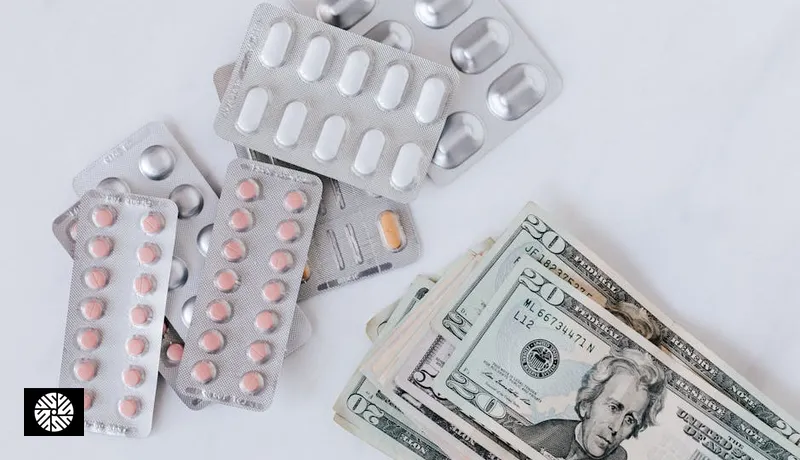
Dental implants are the gold standard for replacing missing teeth — they preserve jawbone, restore full bite force, and, with reasonable maintenance, can last decades. They are also expensive. In the United States a single implant restoration runs $4,000 to $6,500, and a full-mouth rehabilitation can land north of $50,000. Those numbers are why dental implants are the single biggest reason international patients board flights to Taiwan, where the same Swiss and Swedish brands, the same digital workflow, and specialists who routinely place hundreds of implants per year cost roughly half — sometimes less.
This guide goes deep on what actually happens in a Taiwan implant case: which brands clinics deploy, how single implants differ from full-arch All-on-4 / All-on-X, when bone grafting changes the timeline, what the digital diagnostic workflow looks like, realistic 2-visit travel planning, and how to handle insurance, documentation, and integration with your dentist back home.
Implant brands — Straumann, Nobel Biocare, Astra Tech, Korean alternatives
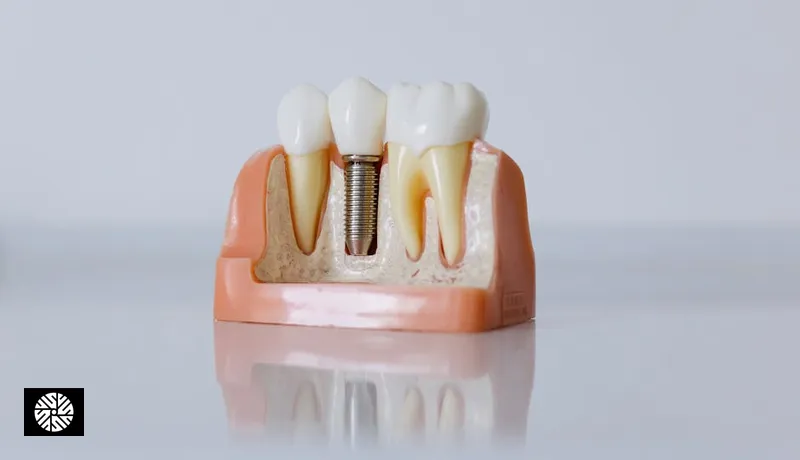
The implant body is the component surgically placed in the jaw. Product system, components, evidence for the intended use, clinician experience, bone and gum health, maintenance, and availability of replacement parts can all matter. A brand name or price tier alone does not predict healing, longevity, or outcome.
Premium tier (Western): Straumann (Swiss) is the most-placed premium implant globally and the workhorse at high-end Taipei clinics — its SLActive surface shaves osseointegration down to 3-4 weeks in good bone. Nobel Biocare (originally Swedish, now US-headquartered) is the original modern implant system; its NobelActive and NobelParallel CC lines are go-to choices for All-on-4 because Nobel literally invented the protocol. Astra Tech (Dentsply Sirona, Swedish) is favored for aesthetic anterior cases because of its OsseoSpeed surface and conical seal that protects crestal bone.
Other implant systems: Clinics may offer Korean, European, U.S., or other systems at different prices. Do not infer equivalence or a specific long-term outcome from country of manufacture. Ask for the exact model, authorized indication, component availability, evidence, total treatment scope, and follow-up plan.
Ask your Taiwan dentist explicitly which brand and which line they plan to use, and request that the implant batch sticker (containing manufacturer, lot number, and surface code) be added to your record. That sticker is what lets any dentist worldwide source a compatible abutment if you ever need service.
A single implant replaces one missing tooth with a titanium root and a crown screwed or cemented onto it. There are two protocols, and they differ mostly in how soon you get a tooth-shaped object on top.
Two-stage (conventional) is the textbook approach. Visit one: the implant body is placed under local anesthesia (30-60 minutes, similar discomfort to a routine extraction) and a healing cap is fitted at gum level. You leave with a temporary flipper or bridge for cosmetic coverage. Over 4-6 months the bone grows into the implant's micro-textured surface — this is osseointegration, the make-or-break biological step. Visit two: a small uncover surgery (if the implant was buried), then an abutment and final crown are seated. Predictable, well-studied, slightly slower.
Immediate-load compresses the cosmetic timeline. On day one the implant is placed and a temporary crown — out of occlusion (i.e. not touching the opposing tooth when you bite) — is fitted the same day or within 48 hours. The implant still needs the full 4-6 months to fully integrate, but you walk out with a tooth-shaped object the same day. Immediate-load requires good primary stability (the implant must torque in at ≥35 Ncm) and is best suited to single anterior implants in healthy bone. Not every site qualifies — your CBCT scan and bone density will decide.
For patients flying in from overseas, immediate-load is attractive because it removes one surgical visit. The trade-off is slightly higher early-failure risk and stricter post-op rules (no chewing on the temporary, soft diet for weeks).
Multi-implant + All-on-4 / All-on-X
When more than one tooth is missing, the math changes. A 3-tooth gap doesn't need 3 implants — a 3-unit bridge anchored on 2 implants works beautifully and saves cost. A 4-tooth gap might still go with 2 implants and a 4-unit bridge, depending on bite forces and bone. Your dentist's job is to find the minimum implant count that distributes load safely.
All-on-4 is the breakthrough protocol, developed by Dr. Paulo Maló in collaboration with Nobel Biocare in the 1990s, that lets a clinician restore an entire arch on just 4 implants. The two posterior implants are tilted (typically 30-45°) to engage denser bone and avoid critical structures like the maxillary sinus or mandibular nerve. A single screw-retained hybrid prosthesis (an arch of 12-14 acrylic or zirconia teeth on a titanium framework) is fitted to the implants, often the same day — this is the famous "teeth in a day" experience. The day-of prosthesis is a temporary; a final, more refined zirconia or PMMA bridge is fitted 4-6 months later after osseointegration is confirmed.
All-on-6 / All-on-X adds 2-4 more implants for cases with stronger bone, longer arches, or higher bite force. More implants means better load distribution, easier prosthesis design, and — if one implant ever fails — a backup that keeps the whole arch functional. The cost premium over All-on-4 is meaningful (roughly 30-40% more) and your surgeon should justify it in your specific bone anatomy, not as a default upsell.
Full-mouth rehabilitation (both arches) typically uses 8-12 implants total. This is the case profile that makes the Taiwan price gap most dramatic — saving $30,000+ on a single trip is realistic.
Bone grafting and sinus lift — when needed, added time
Implants need bone to anchor into. Years of being toothless cause the alveolar ridge to atrophy, and once vertical bone height drops below roughly 8-10mm in the upper jaw or the mandibular nerve sits too close to the planned implant site in the lower jaw, you need to add bone before — or sometimes alongside — implant placement.
Sinus lift (sinus floor elevation) is required in the upper posterior jaw when the maxillary sinus has pneumatized down to where you'd want the implant tip. The surgeon lifts the sinus membrane and packs in graft material (xenograft, allograft, or synthetic) to create new bone height. A "lateral window" sinus lift adds 4-6 months of healing before the implant goes in. A "crestal" or "summers" lift can sometimes be combined with implant placement on the same day if you only need a few millimeters of lift.
Ridge augmentation rebuilds horizontal bone width, often using a block graft, GBR (guided bone regeneration) with membranes, or particulate graft with tenting screws. Healing typically takes 4-6 months before implant placement.
For a traveler this is the single biggest variable in trip planning. If your CBCT shows you need significant grafting, the realistic timeline becomes: trip 1 grafting, trip 2 implant placement, trip 3 final prosthesis — 12-18 months total. Sometimes simultaneous grafting + implant placement is possible (your surgeon will tell you based on bone quality), which collapses things back to the standard 2-trip model.
Diagnostic workflow — CBCT + intraoral scan + treatment planning
Modern implant dentistry is digital from the first appointment. Expect this sequence at any reputable Taiwan clinic:
Cone beam CT (CBCT): a 3D X-ray that maps your bone in three planes plus shows the position of the inferior alveolar nerve, mental foramen, and maxillary sinuses. CBCT is mandatory for proper implant planning — anyone placing implants without one is taking on risk you shouldn't accept.
Intraoral scan: an iTero or Trios optical scan replaces traditional impressions. The digital file feeds directly into the planning software and the lab.
Treatment planning software: clinicians use NobelClinician (now DTX Studio Implant), Straumann CARES, or coDiagnostiX to virtually place each implant, check angulation and depth against vital anatomy, and design a surgical guide. The guide is then 3D-printed in-house or at a partner lab.
Guided surgery: the surgical guide drops onto your teeth (or for fully edentulous cases, onto bone-supported pins) and constrains every drill to the planned position within 0.5mm. This is what lets a Taiwan clinician place 4 tilted implants for an All-on-4 in a single morning with predictable outcomes.
Ask if your case will use a fully guided surgical protocol — for All-on-4 / All-on-X, the answer should be yes.
Taiwan pricing — Straumann premium + Korean mid-tier comparison
Taiwan implant pricing is transparent compared to many destinations because top clinics publish menus and quotes itemize the implant brand, abutment type, and crown material separately. Expect quotes in New Taiwan Dollars (NT$); for travelers we've added rough USD equivalents at NT$31 per USD.
| Procedure |
NT$ |
USD |
| Single Straumann implant + zirconia crown |
80K - 130K |
$2,500 - $4,200 |
| Single Nobel Biocare implant + zirconia crown |
80K - 130K |
$2,500 - $4,200 |
| Single Osstem (Korean) implant + zirconia crown |
50K - 90K |
$1,600 - $2,900 |
| Bone graft (per site) |
10K - 25K |
$320 - $800 |
| Sinus lift (lateral window) |
25K - 45K |
$800 - $1,450 |
| All-on-4 single arch (premium brand) |
500K - 900K |
$16,000 - $29,000 |
| All-on-X (6+) single arch |
700K - 1.2M |
$22,000 - $39,000 |
| Full-mouth (both arches) |
1.0M - 1.8M |
$32,000 - $58,000 |
The single-implant range varies by city (Taipei prices skew higher than Taichung or Kaohsiung), by clinic reputation, and by whether the crown is zirconia, lithium disilicate, or PFM. Always ask whether the abutment, surgical guide, and CBCT are included in the quoted price — at the best clinics they are; at others they're billed à la carte and can add $300-600.
Vs USA, Mexico, Hungary, Thailand pricing
Taiwan sits in a sweet spot globally — significantly cheaper than the US but with quality benchmarks closer to Western Europe than to the lowest-cost destinations.
| Country |
Single implant + crown |
All-on-4 / arch |
Full-mouth (both arches) |
| USA |
$4,000 - $6,500 |
$25,000 - $50,000 |
$50,000 - $100,000 |
| Taiwan |
$1,600 - $4,200 |
$16,000 - $29,000 |
$32,000 - $58,000 |
| Mexico (Cancún / Tijuana) |
$1,500 - $3,000 |
$12,000 - $20,000 |
$24,000 - $40,000 |
| Hungary (Budapest) |
$1,200 - $2,500 |
$10,000 - $18,000 |
$20,000 - $36,000 |
| Thailand (Bangkok / Phuket) |
$1,500 - $3,200 |
$13,000 - $22,000 |
$26,000 - $44,000 |
Mexico and Hungary go lower on sticker price, but quality variance is wider — the gap between the best and worst clinics in those markets is larger than in Taiwan, where dental licensing and continuing education standards are tightly regulated. Thailand is roughly comparable to Taiwan on price; the choice between them often comes down to preferred travel destination and English-language clinic infrastructure. For a wider cost lens see our dental care cost comparison.
Procedure timing for travelers — 2-visit model
The honest answer to "can I do this in one trip?" is: rarely for anything beyond a single straightforward implant. Plan for the 2-visit model and you'll be set up for success.
| Case type |
Trip 1 (placement) |
Healing |
Trip 2 (final) |
Total elapsed |
| Single implant (good bone) |
5-7 days |
4-6 months at home |
5-7 days |
6-8 months |
| Multi-implant (2-4 implants) |
7-10 days |
4-6 months at home |
7-10 days |
6-8 months |
| All-on-4 single arch (immediate load) |
10-14 days |
4-6 months at home |
10-14 days |
6-8 months |
| Full-mouth (both arches) |
14-21 days |
4-6 months at home |
10-14 days |
6-9 months |
| Case requiring bone grafting first |
5-7 days (graft) |
4-6 months |
+ 2 more trips |
12-18 months |
For very simple single-implant cases with a cooperative home dentist, a one-trip-only model is sometimes possible: Taiwan handles the implant placement and provides the final crown specifications, and your home dentist seats the final crown 4-6 months later using lab work coordinated by the Taiwan clinic. This requires excellent communication between both dentists and works best when the home dentist is comfortable with the implant system being used.
Risks + maintenance — peri-implantitis, lifetime considerations
Implants are predictable but not bulletproof. Be honest with yourself about the risks before committing.
Peri-implantitis is the #1 long-term threat — inflammation around the implant that progressively destroys supporting bone, similar to gum disease around natural teeth. Smokers, diabetics, and patients with poor home hygiene are at highest risk. Untreated peri-implantitis leads to implant failure. Daily flossing or interdental brushes around implants and twice-yearly professional cleanings are non-negotiable.
Implant failure happens in roughly 2-5% of cases over a lifetime. Early failure (within the first 6 months, before the implant integrates) is usually due to bone quality, infection, or excessive early loading. Late failure (years later) is most often peri-implantitis or mechanical overload. A failed implant is removed, the site is allowed to heal for 3-4 months, and a new implant can usually be placed.
Nerve damage in the lower jaw, where the inferior alveolar nerve runs, can cause lip or chin numbness. With CBCT-guided planning this is now rare — under 1% of cases — and is a key reason guided surgery is worth insisting on.
Maintenance schedule: twice-yearly hygiene visits, annual periapical X-rays around each implant for the first 3 years (then every 2-3 years), and avoiding hard non-food objects (ice, fingernails, pens). Smoking is the single biggest controllable risk factor — quit before placement if at all possible.
Insurance, documentation, integration with home dentist
US dental insurance rarely covers implants in full, but partial reimbursement is more common than patients expect. PPO plans often cover 30-50% of the crown portion (the prosthetic component) up to your annual maximum, even when the implant body itself is excluded. Submit your Taiwan clinic's itemized invoice in English with CDT codes (D6010 for the surgical placement, D6056/D6057 for the abutment, D6058-D6094 for the crown) and let your insurer adjudicate. We've seen patients recover $800-2,500 this way.
Pre-trip documentation checklist: ask your home dentist for a recent panoramic X-ray and any periodontal charting; share these with the Taiwan clinic for a remote treatment plan. If you have medical conditions (bisphosphonates, blood thinners, uncontrolled diabetes), get medical clearance in writing — this protects everyone.
What to bring home: the implant brand and lot stickers (these end up in your record), CBCT files in DICOM format (on USB or via cloud link), the laboratory record for your prosthesis, the surgeon's operative notes, and clear post-op instructions. A reputable Taiwan clinic provides all of this without being asked. Also confirm the warranty terms in writing — Straumann, Nobel, and Astra all carry lifetime implant body warranties globally; the prosthesis (crown or hybrid bridge) typically carries 5-10 years from the placing clinic.
Post-trip follow-up: schedule a check with your home dentist within 2-4 weeks of returning. They will inspect the surgical site, confirm healing, and become your front line for any concerns during the osseointegration period. Most issues that arise (suture irritation, minor infection, prosthesis discomfort) can be handled locally; serious issues are escalated back to your Taiwan clinician via email or video. This integration is exactly why we built our provider network — to make remote follow-up structured rather than ad-hoc.
For more on the broader Taiwan dental landscape, see our dental cost comparison for Taiwan, the US, Japan and Korea. If you're weighing implants alongside other restorative options, our veneers and crowns guide covers the cosmetic-restorative middle ground. To browse partner clinics and packages, start at our services page.
Sources & Further Reading
 Blog
Blog