Blog
Blog
Why Dental Tourism in Taiwan Is Growing Fast

Dental tourism is no longer a fringe choice. Patients facing $40,000 quotes for full-mouth implants in the United States, or $20,000 for a smile-makeover veneer set, increasingly look abroad. The global dental tourism market has grown more than 20% year-over-year since 2020, and Taiwan has emerged as one of the most credible destinations in Asia — sitting alongside long-established hubs like Hungary, Mexico, Costa Rica, and Thailand.
This article is the hub for our Taiwan dental tourism coverage. It explains where Taiwan fits on the global map, what the price gap actually looks like procedure by procedure, what quality you should expect, and how the timing of dental work shapes whether you can finish in one trip or need to come back. From here, we link out to deep dives on implants, veneers, whitening, cost comparison, quality, and Invisalign.
Important up front: dental tourism is its own category. It is not the same as the medical screening tourism that brings people to Taiwan for full-body health checkups, and it does not blend cleanly with aesthetic medicine trips either. The procedure timing, recovery profile, and follow-up needs are different enough that most travelers should plan a dental trip as a dedicated trip — more on that below.
Dental tourism global context — major destinations
Before zooming into Taiwan specifically, it helps to understand who Taiwan is competing with. Each major dental tourism destination has a distinct positioning, patient demographic, and trade-off profile.
| Destination | Primary patient base | Typical savings vs home | What it delivers |
|---|---|---|---|
| Mexico (Tijuana, Cancun, Los Algodones) | USA, Canada | 60–70% | Closest to USA, very high volume, quality variable clinic-to-clinic |
| Hungary (Budapest, Sopron) | UK, Germany, Austria, Scandinavia | 40–60% | Long-established (since the 1990s), EU-regulated, strong implantology |
| Costa Rica (San Jose) | USA | 50–65% | Close to USA, English-friendly, vacation-style packages common |
| Thailand (Bangkok, Phuket) | Australia, UK, EU, regional Asia | 40–60% | Spa-medical hybrid model, polished patient experience, top clinics excellent |
| Turkey (Istanbul, Antalya) | UK, Germany, Gulf states | 60–80% | Lowest headline prices, very heterogeneous quality, high marketing volume |
| Taiwan (Taipei, Kaohsiung) | USA, Australia, regional Asia, overseas Taiwanese | 50–70% | Premium quality, top implant brands as standard, low language friction via concierge |
The key takeaway: Taiwan is not the cheapest option on this list. Turkey and Mexico routinely undercut Taiwan's prices. What Taiwan offers is a different value proposition — a higher quality floor, a more consistent experience between clinics, and outcomes that international dentists are willing to validate.
Why Taiwan grows in dental tourism
Four factors are driving Taiwan's growth in dental tourism specifically:
- Quality consistency. Taiwan's licensing exam, mandatory continuing education, and strong dental schools (NTU, Chang Gung, Taipei Medical University) produce a higher quality floor than most dental tourism destinations. The variability between clinics is narrower.
- Pricing transparency. Reputable clinics quote in writing before treatment, with line items for implant brand, abutment, crown material, sedation, and lab fees. Surprise charges are rare. Compare this to some Turkey clinics where the headline price excludes the crown.
- Language access. Taiwan's dentists do not all speak fluent English, but the international-facing clinics do, and concierge services bridge the gap for the rest. The cultural friction is lower than many travelers expect.
- Geography for Pacific patients. For US West Coast, Australian, and regional Asian patients, Taiwan is a 9–13 hour flight versus 16+ hours to Hungary. For Asian patients in particular, Taiwan beats Hungary on travel cost alone.
The market has concentrated in two cities. Taipei has the largest share, especially in the Da'an and Xinyi districts. Kaohsiung is the secondary hub, attractive to patients who want a quieter, lower-cost city base while still accessing top-tier providers.
USA dental pricing baseline
To understand the savings, it helps to anchor on what dental work actually costs in the United States without insurance, or with insurance that hits its annual cap quickly (typical caps are $1,500–$2,500 per year, which barely covers a single crown).
| Procedure | Typical USA price (out-of-pocket) | Notes |
|---|---|---|
| Single implant + crown | $4,000–$6,500 | Higher in major metros; often $7,000+ in NYC, SF, LA |
| Full-mouth implants (All-on-4 / All-on-X) | $25,000–$50,000 per arch | Both arches: $50,000–$100,000 |
| Porcelain veneer (per tooth) | $1,000–$2,500 | Premium ceramists charge $3,000+ |
| Full-mouth veneer set (10–12 teeth) | $15,000–$30,000 | "Smile makeover" pricing |
| Invisalign (full course) | $4,500–$9,000 | Includes refinements at most providers |
| Porcelain-fused-to-metal crown | $1,000–$3,000 per tooth | All-ceramic (zirconia) often $1,500–$3,500 |
For a patient who needs, say, 8 implants and a full-arch restoration plan plus 6 crowns on remaining teeth, total US cost runs $50,000–$80,000 routinely. That is the point at which a Taiwan trip pays for itself many times over even after flights, hotels, and follow-up travel.
Taiwan equivalent pricing
Taiwan's dental fees are not regulated in the same way that public-system care is in some countries, so prices vary between clinics. The ranges below reflect quality-tier international-facing clinics — the segment most relevant to travelers. Bargain-tier clinics exist at lower prices, but we do not recommend them for travelers given the difficulty of returning for warranty work.
| Procedure | Taiwan price (NT$) | Taiwan price (USD) |
|---|---|---|
| Single implant + crown | NT$60,000–120,000 | $1,900–$3,800 |
| Full-mouth All-on-4 (per arch) | NT$500,000–900,000 | $16,000–$29,000 |
| Porcelain veneer (per tooth) | NT$25,000–50,000 | $800–$1,600 |
| Full-mouth veneer set (10–12 teeth) | NT$300,000–500,000 | $9,600–$16,000 |
| Invisalign (full course) | NT$120,000–250,000 | $3,800–$8,000 |
| Zirconia or all-ceramic crown | NT$25,000–50,000 | $800–$1,600 |
For deeper procedure-by-procedure breakdowns, see dental implants in Taiwan, veneers and crowns, and Invisalign and orthodontics.
Cost savings by procedure
The savings story is not uniform across procedures. Some procedures save more in absolute dollars; others save more as a percentage. Knowing which is which helps you decide whether the trip math works for you specifically.
| Procedure | USA cost | Taiwan cost (USD) | Mexico cost | Hungary cost |
|---|---|---|---|---|
| Single implant + crown | $5,000 | $2,500 | $1,200–$1,800 | $1,800–$2,500 |
| Full-mouth All-on-4 (per arch) | $35,000 | $20,000 | $12,000–$16,000 | $10,000–$15,000 |
| Veneer (per tooth) | $1,800 | $1,200 | $400–$600 | $600–$900 |
| Invisalign full course | $6,500 | $5,000 | $3,000–$4,000 | $3,500–$4,500 |
Where Taiwan wins on value rather than headline price is in the all-on-X full-arch category and complex implant cases. The cost of a botched implant is enormous — bone graft revisions can run $5,000+ per site — and the consistency of Taiwan's outcomes is what justifies paying $20,000 here instead of $13,000 in a country with higher revision rates.
For a much more granular comparison covering Korea and Japan as well, see our dental care cost comparison guide.
Quality factors — Taiwan dental schools, implant brand standards
The quality argument for Taiwan rests on three things.
Dental school quality. National Taiwan University, Chang Gung, and Taipei Medical University run dental programs that are widely respected in the region. Their faculty publish in international journals, attend the major implantology conferences (EAO, ITI, AO), and many practicing dentists hold residency or fellowship credentials from US, Japanese, or Swedish programs.
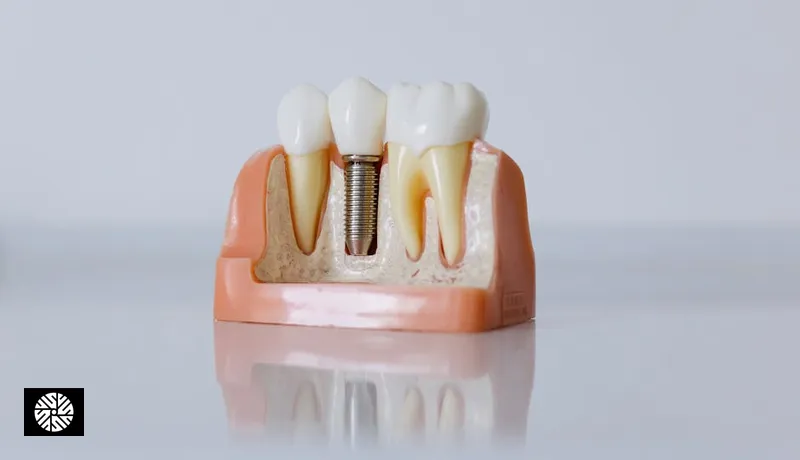
Implant brand standards. The premium clinics that serve international patients use top-tier implant systems as the default, not the upsell. Straumann (Swiss) and Nobel Biocare (Swedish) dominate the international-facing market. Astra Tech and Zimmer also appear. These are the same systems used at top US and European clinics. Cheaper Korean and Israeli brands exist in Taiwan, but reputable international-facing clinics quote them only as a transparent alternative, not as the bait-and-switch you sometimes see in Turkey or border-town Mexico.
Lab and digital workflow. Many international-facing clinics in Taipei have in-house CAD/CAM labs. Same-day or next-day crowns from a digital scan are common. This matters for travelers because it compresses timelines that would take 2–3 weeks of back-and-forth in a country still relying on outsourced lab work.
Our quality of dental care in Taiwan deep-dive walks through specific accreditations, technology, and how to validate a clinic's claims.
Procedure timing — what's same-trip vs multi-trip
This is the question that catches most first-time dental tourists off guard. Some procedures finish in a single trip. Others fundamentally cannot, because the human body needs months to heal between phases.
| Procedure | Trip pattern | Total timeline |
|---|---|---|
| Single implant (2-stage) | 2 trips: placement + crown | 4–6 months osseointegration between |
| Single implant (immediate-load) | 1 trip possible in select cases | 2–3 weeks; case selection critical |
| Full-mouth All-on-4 | 2 trips: surgery + temp, then final | 1–2 weeks initial + 4–6 month healing + return |
| Porcelain veneers | 1 trip | 2 visits, 1–2 weeks apart |
| Crowns | 1 trip (often same-day with CAD/CAM) | 3–7 days |
| Invisalign | Initial trip + remote management | 6–18 months total; aligners shipped |
| Whitening | 1 trip | 1–2 sessions in a week |
The big one to understand is the 4–6 month osseointegration window for implants. The titanium implant must fuse with the jawbone before it can carry a crown's chewing load. Skipping this — except in carefully selected immediate-load cases — leads to implant failure. No amount of clinic expertise overrides bone biology. Plan accordingly.
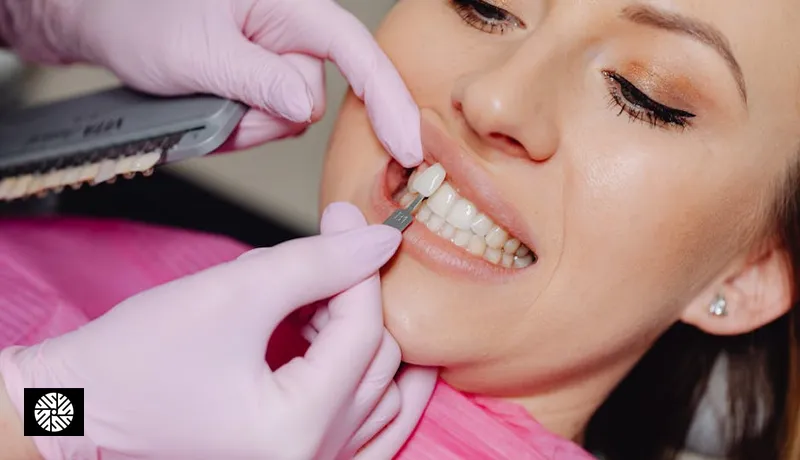
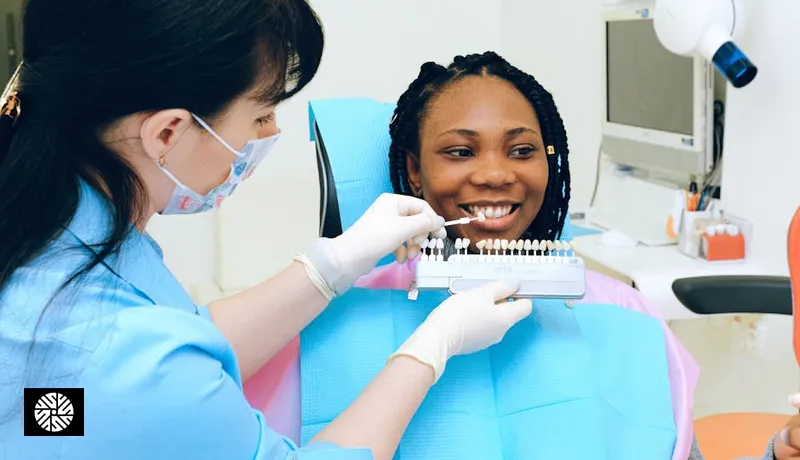
Veneer cases, by contrast, finish reliably in a 10–14 day trip. Two visits: prep + temporaries on day 1, final cementation 7–10 days later. Most travelers combine veneer trips with regional travel in between. See our veneers guide for the full schedule.
Patient profile — who comes for dental tourism in Taiwan
From clinic-side data and patient interviews, four groups dominate the inbound flow:
- Uninsured and under-insured Americans. The largest single segment. Often working professionals between jobs, gig workers, or those whose dental insurance caps fail to address a major restoration need. Implant patients especially.
- Complex restoration cases. Patients who need full-mouth rehabilitation involving multiple implants, bone grafts, and prosthetics. These are six-figure cases at home; the math justifies international travel.
- Retirees and snowbirds. 60+ patients on Medicare, which famously does not cover most dental work. Many already travel internationally and find Taiwan an easy add-on.
- Overseas Taiwanese and second-generation diaspora. Combine family visits with dental work. Often have linguistic ease that lets them work with mid-tier clinics that don't market internationally.
A smaller but growing segment: cosmetic-veneer patients in their 30s and 40s who could afford US prices but want premium results without the smile-makeover sticker shock.
Combining dental + screening or aesthetics — what works
The honest answer: usually it does not work well to combine, and you should plan separate trips.
Dental + medical screening is the most asked-about combination. The challenge is that screening typically requires fasting, contrast agents, and a relaxed schedule the day of and after. Implant surgery requires healing time, possibly antibiotics, and a soft-food diet for several days. Stacking them in the same week fights itself. If you do combine, do screening first (day 1–2), then begin dental work after results are reviewed.
Dental + aesthetic medicine is even harder to stack. Many aesthetic procedures use peri-oral injections (lip filler, jawline contouring with Botox or filler), which interact with dental work — both timing and tissue inflammation. Veneer cementation requires clean dry lips and gums; recent lip filler complicates that. Most experienced concierges separate these by 2–4 weeks minimum.
Dental + tourism is fine and often great. Veneer patients especially have a free week between visits to explore the country. See our Taipei travel guide for ideas. Keep alcohol moderate and avoid hard or sticky foods that risk dislodging temporaries.
What this overview links to
This article is the entry point. The deep dives go further on specific procedures, costs, and clinical detail:
- Dental Implants in Taiwan: Cost, Quality, and Process — the implant-specific deep dive: brands, surgical phases, and what to expect across two trips.
- Veneers and Crowns in Taiwan — porcelain veneers and ceramic crowns; case selection, materials, and the 10-day completion path.
- Teeth Whitening in Taiwan — in-clinic vs at-home, results expectations, sensitivity management.
- Dental Care Cost Comparison: Taiwan vs USA vs Japan vs Korea — the cost spreadsheet treatment, with regional Asian comparisons added.
- Quality of Dental Care in Taiwan — accreditations, technology, training, and how to evaluate a clinic.
- Invisalign and Orthodontics in Taiwan for International Patients — the remote-management workflow and timeline planning.
To start a treatment plan or get a written quote, browse our dental services and partner providers. Most clinics respond to email inquiries within 1–3 business days with a preliminary plan based on X-rays you provide.
Dental tourism in Taiwan is not a discount play — it is a quality-and-value play. If you compare it on price alone against Mexico or Turkey, you will pick the cheaper option and sometimes regret it. If you compare it on outcomes-per-dollar, especially for complex cases, Taiwan stands up to the best dental tourism markets in the world. That is why the patient flow keeps growing.
Sources & Further Reading
FAQ
Mexico is cheaper on headline price (often 60–70% off USA versus Taiwan's 50–70%), and is the obvious choice for US patients who can drive to Tijuana or Los Algodones. Taiwan's edge is quality consistency, transparent pricing, and the use of premium implant brands like Straumann and Nobel Biocare as standard rather than upsells. For complex full-mouth cases where revision risk is the bigger cost driver, Taiwan often wins on total cost of ownership. For a single straightforward implant, Mexico is usually the more pragmatic call.
Veneers and crowns. Both finish reliably in a 10–14 day trip with two clinic visits and free time in between. Whitening also fits a short trip easily. Single implants using immediate-load protocols can sometimes be completed in one trip in carefully selected cases, but most implant work — and all full-mouth All-on-4 — requires two trips with a 4–6 month healing window between, due to bone osseointegration biology that you cannot shortcut.
Some plans will reimburse based on the procedure code, regardless of country, up to the plan's annual cap. PPO plans tend to be more flexible than HMO plans. You will need to submit itemized invoices in English with US procedure codes (the Taiwan clinic should provide these on request). Even partial reimbursement is worth pursuing — but do not assume coverage; call your insurer with the specific CDT codes before the trip.
For top international-facing clinics, yes. The dental schools (NTU, Chang Gung, Taipei Medical) train to international standards, premium clinics use Straumann or Nobel Biocare implants as default, and many dentists hold US, Japanese, or European fellowship credentials. The variability between clinics is wider than in the USA, so the clinic you choose matters more than in the USA. Stick to clinics with documented international patient volume and clear written quotes.
Start with the procedure-specific deep dives — implants, veneers, or Invisalign — depending on what you need. Then read the cost comparison and the quality of care guides. Once you have a shortlist of clinics, request written quotes from at least 2–3, with line items for implant brand, abutment, crown material, sedation, and lab fees. Send your panoramic X-ray and recent dental records along with the inquiry; reputable clinics will respond with a preliminary plan within 1–3 business days.
Usually no. Dental surgery requires healing time and a soft-food diet, while screening days require fasting and a clear schedule. Aesthetic peri-oral procedures (lip filler, jawline Botox) interact with dental work both in timing and tissue inflammation. If you must combine, do medical screening first, then begin dental work; separate aesthetic and dental procedures by 2–4 weeks. Dental + leisure tourism, on the other hand, combines well — veneer patients often have a free week between visits to explore Taiwan.
For a single implant case, expect $1,900–$3,800 dental + $1,500–$2,500 travel and lodging from the US for a one-week trip = roughly $4,000–$6,000 total versus $5,000+ in the US for the procedure alone. For a full-mouth All-on-4 (one arch, two trips), expect $20,000–$25,000 dental + $4,000–$6,000 travel/lodging across both trips = $24,000–$31,000 total versus $35,000+ at home. For veneers (10 teeth, one trip), expect $9,600–$16,000 dental + $2,000–$3,000 travel = $12,000–$19,000 versus $18,000–$25,000 at home.