Blog
Blog
Exploring Taiwan's Temples and Landmarks

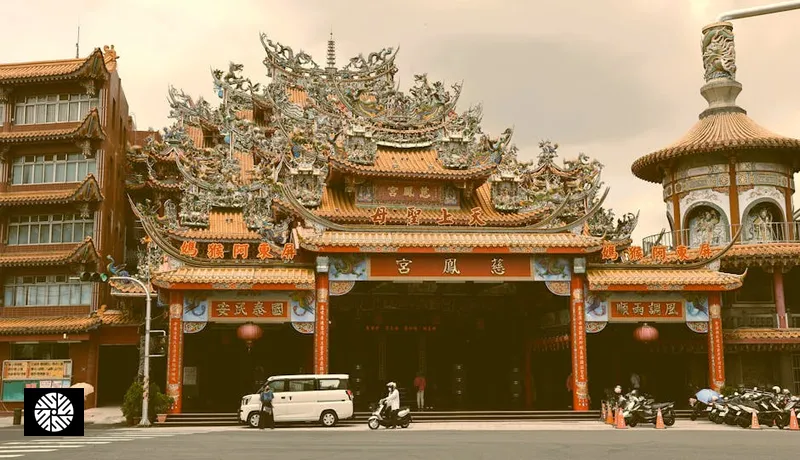
Quick answer: Taiwan has more than 12,000 temples — most of them free, open from dawn to dusk, and welcoming to respectful visitors. The essential ones for travelers are Taipei's Longshan, Bao'an, Confucius, and Xingtian temples; Tainan's centuries-old shrines; and the nine-day Dajia Mazu pilgrimage. This guide covers the must-see temples and landmarks, what you're actually looking at, and basic visiting etiquette.
Taiwan is one of the most temple-dense places on earth. The island has more than 12,000 registered temples, and Tainan alone — a city of about 700,000 people — counts over 1,600 of them. For travelers used to thinking of religious sites as quiet museums, Taiwan's temples are a different kind of experience: working, smoky, social, intensely alive. They are also among the easiest cultural doors a foreign visitor can walk through, because almost all of them are free, open from dawn to dusk, and welcoming to anyone who behaves with basic respect.
This guide is written with two kinds of readers in mind. The first is the curious traveler who wants to understand what they're looking at — why a temple has both Buddhist and Taoist deities sharing the same hall, what the throwing of crescent-shaped wooden blocks means, why an entire city stops for nine days to escort a sea goddess down the highway. The second is the medical-tourism visitor who's coming to Taiwan for a health screening or specialist consultation and wants to spend the recovery days doing something more meaningful than hotel-room Netflix. Temples and historical landmarks turn out to be a perfect pairing for that recovery layer — quiet, walkable, deeply human, and almost never physically demanding.
Why temples matter to Taiwan's identity
Taiwan has full constitutional religious freedom, and the result is one of the most pluralistic spiritual landscapes in Asia. Buddhism, Taoism, folk religion, Confucian rites, Christianity, Islam, and indigenous animist traditions all coexist openly, and most Taiwanese people don't see a sharp line between Buddhist and Taoist practice — the same family will burn incense at a Mazu temple in the morning and chant a Buddhist sutra in the evening. This blending, called Buddhist-Taoist syncretism, is the single most important thing to understand before stepping into a temple. The fierce-looking warrior figure on one altar, the seated Buddha on the next, and the sea goddess in the rear hall are not competing — they're all considered helpful in different domains of life.
Temples are also the original community centers. Until very recently, they were where you went to settle disputes, find out the news, watch opera, eat vegetarian food during festivals, and meet a marriage matchmaker. That role hasn't completely disappeared. Walk into Longshan Temple at 7 a.m. on a Tuesday and you'll see retirees doing tai chi in the forecourt, families leaving offerings of pineapples and oranges, and businesspeople in suits stopping by before work to ask for a good week.
Taipei's temple essentials — Longshan + Bao'an + Confucius + Xingtian
If you only have one temple day in Taipei, build it around four sites that sit on or near MRT lines and tell four different stories.
Longshan Temple (founded 1738) in the Wanhua district is the busiest and most famous. It was built by Fujianese settlers and survived bombing in WWII; the main hall is dedicated to Guanyin, the bodhisattva of compassion, but the rear halls house dozens of folk deities including Mazu and Yue Lao, the matchmaker god whose altar is permanently surrounded by hopeful singles. Come at sunset to catch the evening chanting — it's hypnotic.
Bao'an Temple, in the Dalongdong neighborhood, won the UNESCO Asia-Pacific Heritage Award for cultural conservation in 2003 — the first time a temple in Taiwan received that honor. The carvings, painted ceiling panels, and stone reliefs are some of the finest traditional craftsmanship on the island, and because the temple is slightly off the tourist track, you can usually photograph the architecture without crowds in the frame. The complex is dedicated to Baosheng Dadi, the god of medicine — a fitting stop for anyone in Taiwan for healthcare reasons.
Taipei Confucius Temple, right across the street from Bao'an, is a contrast in tone. Where Bao'an is loud with incense and color, the Confucius Temple is austere, classical, and quiet. There are no images of Confucius himself — only spirit tablets — and the architecture follows the Song-dynasty model of a Chinese academy. Visit during the September 28 ceremony honoring Confucius's birthday if your dates align.
Xingtian Temple (1968), dedicated to Guan Gong (the deified general from the Three Kingdoms era, patron of merchants, police, and anyone who values loyalty), is the most modern of the four but also one of the most spiritually active. It famously banned the burning of paper money and the offering of meat in 2014 to reduce pollution and waste, which makes it one of the cleanest temple environments in the city. Free fortune-telling — using divination blocks and bamboo sticks numbered to interpretive verses — is a core part of the experience, and the temple's blue-robed volunteers will help foreigners through the process if you're polite about asking.
If you have an extra hour, Mengjia Qingshan Temple near Longshan honors Qingshan Wang, a guardian deity, and hosts one of Taipei's most theatrical annual processions in late November.
Tainan — Taiwan's 400-year spiritual capital
Tainan was Taiwan's capital for over 200 years, founded as a Dutch trading post in 1624 and turned into the seat of the Ming-loyalist kingdom by Koxinga in 1661. That layered history is why Tainan has more temples per capita than almost anywhere else in the world — the 1,600+ temples in a city of 700,000 average out to one temple for every 440 residents.
The Tainan Confucius Temple, built in 1665, is the oldest Confucian temple in Taiwan and the place where the imperial examination system was administered on the island. Entry is around NT$50. Just south of it sits Anping Fort (originally Fort Zeelandia, built by the Dutch East India Company in 1624), Taiwan's earliest European structure — the brick walls and old cannons make for a different kind of historical photograph than a temple does. Entry is around NT$70. The nearby Koxinga Shrine commemorates the Ming general who pushed the Dutch out and is one of the few sites where you can see Taiwanese national mythology fully on display.
For active temple culture, head to the Tainan Grand Mazu Temple, the official Mazu temple of the old Ming kingdom, and the City God Temple (Cheng Huang Miao), which oversees moral judgment in folk belief — its eerie hanging plaque reading "You're here at last" greets every visitor with a memorable cosmic reminder. A two-day Tainan trip combining temples, Anping Fort, and the city's famous food scene is one of the highest-density cultural experiences Taiwan offers.
Mazu (媽祖) culture and the Dajia pilgrimage
If you only learn one piece of Taiwanese folk religion, learn Mazu. She was, according to tradition, a Fujianese woman named Lin Moniang who lived in the 10th century and saved sailors during storms. After her death she was deified as the goddess of the sea, and Chinese settlers brought her statues across the Taiwan Strait — meaning every major Mazu temple on the island has a "mother statue" lineage tracing back to a specific Fujianese original. There are over 800 Mazu temples in Taiwan today.
The most spectacular Mazu event is the Dajia Mazu Pilgrimage, a 9-day, roughly 340-kilometer walking procession that escorts the Mazu statue from Dajia Jenn Lann Temple in Taichung down through several counties and back. UNESCO recognized it as one of the world's three largest religious events, alongside the Vatican's Christmas Mass and the Hajj. Over 100,000 people walk at least part of the route, and millions more come out to watch, kneel beneath the passing palanquin (a traditional way to receive blessings), and feed the pilgrims. The 2026 procession is scheduled to begin in mid-April; exact dates are set each year through divination at the home temple, so check the official Dajia Jenn Lann announcements close to the date.
A second major Mazu pilgrimage, the Baishatun pilgrimage from Miaoli, is even longer (around 400 km) and uniquely follows no fixed route — Mazu's palanquin "decides" the path each year. Both events fall in the third lunar month.
Buddhist mega-complexes — Foguangshan + Dharma Drum Mountain
Taiwan is also home to some of the most important modern Buddhist organizations in the Chinese-speaking world, and two of them have built mountain complexes that double as remarkable pieces of contemporary architecture.
Foguangshan Buddha Memorial Center, near Kaohsiung, is anchored by an enormous seated bronze Buddha that stands 108 meters tall (counting its base) — currently the largest of its kind. The complex includes eight pagodas, a museum, vegetarian restaurants, and meditation halls, all set out on a clean, modern campus that's free to visit and easy to access from Zuoying HSR station via shuttle bus. Plan half a day.
Dharma Drum Mountain, in Jinshan on the north coast about 90 minutes from Taipei, is the headquarters of the Chan (Zen) school founded by Master Sheng Yen. The architecture is the opposite of Foguangshan's grandeur — minimalist, gray, contemplative — and the campus offers introductory meditation experiences for visitors. It pairs well with the nearby Yehliu Geopark or Beitou hot springs for a one-day north-coast loop.
Aboriginal sacred sites — Smangus, Lalashan, Bunun harvest
Taiwan's 16 officially recognized indigenous tribes have spiritual traditions that long predate the arrival of Han Chinese settlers, and a small number of community-managed sites welcome respectful outside visitors.
Smangus, often called "the dark village" because it had no electricity until 1979, is an Atayal community in Hsinchu's mountains famous for its ancient cypress grove — some trees are 2,500 years old. Visits are managed by the village's collective economy and require advance booking and an overnight stay. Lalashan, near Taoyuan, has another grove of giant red cypresses on Atayal traditional land. The Bunun tribe in the central mountains is known for the Ear-Shooting Festival and harvest rituals, and several Bunun villages offer cultural homestays. Closer to Taipei, Wulai is an accessible Atayal cultural area with hot springs, a small museum, and craft shops.
The single most important rule for visiting any indigenous site: ask before photographing people, ceremonies, or sacred trees, and assume the answer is no until told otherwise. Don't touch slate carvings, woven banners, or ritual objects. Buy directly from the community where possible — it's the most concrete way of supporting them.
Etiquette for foreign visitors — how to bai-bai respectfully
Bai-bai (拜拜) is the catch-all verb for the traditional ritual of greeting a deity — a small bow with hands together, often with three sticks of incense. Foreigners are welcome to participate, but you don't have to. Watching respectfully is completely fine.
A few practical rules:
- Dress modestly. Shoulders covered, knees covered. No swimwear, no spaghetti straps. A light scarf in your bag solves this.
- Photography. Architecture, exterior, courtyards: almost always fine. Main altar close-ups: usually fine but check for posted signs. People praying: ask, or don't shoot. Indigenous ceremonies: ask the host community first.
- Silence. Speak quietly. Phones on silent. No flash near altars.
- Direction of movement. Enter through the right-side door (looking from outside) and exit through the left. The center door is reserved for deities.
- Don't point. Pointing at deities, statues, or altars with a finger is rude — gesture with an open hand instead.
- Donations. Boxes are usually near the entrance. NT$20–100 is normal and entirely optional. No one tracks who gives.
- Don't step on the threshold. Step over it. The raised wooden bar at the doorway is symbolic and stepping on it is considered bad manners.
- Menstruating visitors. Some traditional temples have signs asking women not to approach the main altar during menstruation. This is a folk-belief restriction, not enforced — follow your own conscience.
Lukang historical district — central Taiwan's Lukang Tianhou Temple + old town
Lukang, in Changhua county, was Taiwan's second-largest port during the Qing dynasty and is now the best-preserved old town on the island. The narrow lanes, red-brick walls, and traditional craft shops (lanterns, fans, tin-work) feel less curated than Tainan's old streets and more like a town that simply kept living in its old shell.
The anchor is Lukang Tianhou Temple, one of Taiwan's most important Mazu sanctuaries. The temple holds a 400-year-old Mazu statue brought directly from the original Meizhou shrine in Fujian, and the courtyards fill with pilgrims year-round. Combine the temple with Lukang Longshan Temple (different from Taipei's), the Nine Turns Lane, and the local oyster omelets and ox-tongue pastries for a one-day trip. Lukang is reachable as a day-trip from Taichung HSR (about 40 minutes by bus) or as a longer detour from Taipei.
Pairing temple tours with screening trips
Most New Dawn Health screening packages involve fasting morning, scans and bloodwork, and an early lunch — leaving most afternoons free, plus a recovery day or two after the main exam. Temples and historical landmarks are an unusually good fit for these windows because they're low-impact, walkable, and emotionally restorative without being physically demanding.
- Tainan temple day via HSR. Taipei to Tainan is 90 minutes on the high-speed rail. Leave at 8 a.m. after your screening morning, hit the Confucius Temple, Anping Fort, and the Grand Mazu Temple in a loop, eat your way through Tainan's night market, and be back in Taipei before 11 p.m. — a full cultural day with zero physical strain. See our Taipei first-time guide for HSR logistics.
- Half-day Beitou + Putu Temple. If you have a recovery afternoon and want to stay in Taipei, take the MRT to Xinbeitou, soak in a public hot-spring bath, and walk the hill up to the small Beitou Putu Temple. Quiet, green, and a perfect post-procedure restoration.
- Taipei walking circuit. Bao'an Temple → Confucius Temple → Dalongdong's noodle shops → MRT to Xingtian Temple → MRT to Longshan Temple at sunset. About 5 hours, all flat, all MRT-connected.
- Lukang day from Taipei. HSR to Taichung, 40-minute bus to Lukang, Tianhou Temple and old town, return same day. Better as a recovery-day trip than as something tacked onto a screening morning.
- Northern nature + temple combo. Pair Dharma Drum Mountain with Yehliu's coastal rocks for a full day — see our natural spots guide and eco-tourism overview.
For the broader case for combining wellness and culture in Taiwan, our piece on why Taiwan is Asia's hidden wellness destination goes deeper.
Practical visitor info — fees, hours, photography
The good news is that almost all functioning temples in Taiwan are free. The few exceptions are heritage-classified sites with formal museum operations.
| Site type | Typical hours | Entry fee |
|---|---|---|
| Working temples (Longshan, Bao'an, Xingtian, Mazu temples) | 5:00 a.m. – 10:00 p.m. (varies) | Free |
| Confucius temples (heritage) | 8:30 a.m. – 5:30 p.m., closed Mondays | NT$25–50 |
| Anping Fort, Koxinga Shrine, fortified historical sites | 8:30 a.m. – 5:30 p.m. | NT$50–150 |
| Buddhist mega-complexes (Foguangshan, Dharma Drum) | 9:00 a.m. – 6:00 p.m. | Free |
| Outdoor altars, roadside shrines | 24/7 | Free |
| Indigenous community sites (Smangus, Lalashan) | By appointment | Variable, often homestay-based |
Peak times are weekend afternoons, the first and fifteenth of each lunar month, and the days around major festivals. If you want quieter conditions for photography or reflection, weekday mornings before 9 a.m. are almost always calm.
Top temples by region
| Region | Must-visits | Known for |
|---|---|---|
| Taipei (north) | Longshan, Bao'an, Confucius, Xingtian, Mengjia Qingshan | Folk syncretism, urban access, free fortune-telling |
| North Coast | Bali Eight Gods, Beitou Putu, Yangmingshan Lin Family Mansion, Dharma Drum Mountain | Quiet hillside settings, Zen Buddhist tradition |
| Central Taiwan | Sun Moon Lake Wenwu Temple, Lukang Tianhou Temple, Lukang old town | Lakeside settings, Qing-era port heritage |
| Tainan (south-central) | Confucius Temple (1665), Anping Fort, Koxinga Shrine, Grand Mazu, City God | Oldest temple density in Taiwan, 400-year history |
| Kaohsiung (south) | Foguangshan Buddha Memorial Center, Lotus Pond temples, Sanfeng Temple | Modern Buddhist mega-complexes |
| Taichung + central plain | Dajia Jenn Lann Temple (Mazu pilgrimage start) | Annual UNESCO-recognized pilgrimage |
Major religious festivals — when they happen
| Festival | When (lunar / approximate) | Where |
|---|---|---|
| Lunar New Year temple visits | Lunar 1/1 (late Jan – mid Feb) | Nationwide — Longshan especially busy |
| Lantern Festival | Lunar 1/15 (mid-Feb) | Pingxi sky lanterns, Taipei lantern displays |
| Mazu's birthday + Dajia pilgrimage | Lunar 3/23 (late Apr – early May) | Dajia (Taichung) — 9-day procession |
| Ghost Month / Mid-Summer | Lunar 7 (Aug) | Keelung Ghost Festival especially notable |
| Confucius's birthday rite | September 28 | Taipei + Tainan Confucius Temples |
| Mengjia Qingshan Festival | Lunar 10/22 (late Nov) | Wanhua, Taipei — night procession |
Taiwan's temples reward slow visitors. They aren't designed to be checklisted — the smell of incense, the rhythm of wooden divination blocks hitting stone, the murmur of an old woman explaining her grandson's exam to a deity, the sudden bright clap of firecrackers in the courtyard: these are the things you remember. Build at least one temple morning into your trip, even if your main reason for being in Taiwan is medical. The contrast between the quiet of a screening clinic and the layered, lived-in noise of a 280-year-old temple is, in its own way, one of the most honest portraits of contemporary Taiwan you can get.
Sources & Further Reading
FAQ
Longshan Temple in Wanhua is the classic choice — founded in 1738, MRT-accessible, and active from dawn to evening with chanting, divination, and folk worship all happening at once. If you want a quieter, architecturally outstanding alternative, Bao'an Temple (UNESCO Asia-Pacific Heritage Award winner) and the adjacent Confucius Temple in Dalongdong make a great pairing. For one day, do all three.
The Dajia Mazu pilgrimage, a 9-day, ~340-kilometer walking procession from Dajia Jenn Lann Temple in Taichung, is held around Mazu's birthday in the third lunar month — typically mid-April for 2026. Exact dates are determined each year by divination at the home temple, so check Dajia Jenn Lann Temple's official announcements close to the date. UNESCO recognizes it as one of the world's three largest religious events, and over 100,000 people walk part of the route.
Architecture, exteriors, and courtyards are almost always fine to photograph. Interior altars are usually fine but check for posted signs and avoid using flash. Never photograph people praying or in personal worship without asking. At indigenous community sites, ask the host community first — assume the answer is no until told otherwise. Putting your phone away entirely during the busiest devotional moments is a respectful default.
No. Almost all working temples in Taiwan are free, and donations are entirely optional. If you want to leave something, donation boxes are usually near the main entrance and NT$20–100 is a normal range. No one tracks who gives. Confucius temples and fortified historical sites like Anping Fort do charge formal entry (NT$25–150), which is separate from donations.
Many working temples stay open until 9 or 10 p.m., and some — including Longshan and Xingtian — are particularly atmospheric in the evening when the chanting and incense are at their thickest. Outdoor altars and roadside shrines are accessible 24/7. Heritage-classified sites with museum operations (Confucius temples, Anping Fort, Koxinga Shrine) typically close at 5:30 p.m. and are closed on Mondays.
Yes — three good options. (1) Tainan via HSR (90 minutes each way) for the 1665 Confucius Temple, Anping Fort, and the Grand Mazu Temple — the highest-density cultural day in Taiwan. (2) Lukang via Taichung HSR + bus (about 2.5 hours each way) for Lukang Tianhou Temple and the best-preserved Qing-era old town on the island. (3) Dharma Drum Mountain in Jinshan (about 90 minutes by bus) paired with Yehliu Geopark for a north-coast Zen Buddhist + nature loop.