
Here's the thing nobody warns you about before a trip to Taiwan: the ear-nose-throat doctor is probably the most useful specialist you've never thought to visit. Back home, a sore throat or a blocked ear means a long wait for a GP appointment, and the word "ENT" sounds like something you'd only see after a referral and three months of paperwork. In Taiwan it's the opposite — the 耳鼻喉科 (ěr bí hóu kē, ear-nose-throat) clinic is a neighborhood fixture, often a storefront on the ground floor of an ordinary building, and it's where locals go first for a cold, a cough, a blocked ear, or a throat that's been scratchy since the flight in. No referral, walk in off the street, often seen within the hour. Once you understand how the process works, it's genuinely faster and simpler than waiting for an urgent-care slot in a Western city.
This is the ENT guide in our process-first series for foreigners getting care in Taiwan. If you haven't read the overview yet, start with our complete guide to seeing a doctor in Taiwan — it covers the whole system. This piece zooms into ears, noses, and throats: ear infections, sinusitis, sore throats, the airplane-and-diving ear-pressure problems travelers run into constantly, nosebleeds, and the one situation where dizziness is not an ENT problem at all but a 119 emergency. Let's walk through it.
Why ENT is Taiwan's surprise walk-in specialty
In most Western countries, you climb a ladder: GP first, then a referral, then maybe an ENT specialist weeks later. Taiwan flattens that ladder. You can walk directly into an ENT clinic with no referral — direct specialist access is a defining feature of the system. Because ENT clinics are everywhere and treat the everyday stuff (colds, coughs, congestion, throat and ear complaints), they function for many locals as the de facto first stop when something above the neck goes wrong.
What surprises a lot of Westerners is the kit. A typical Taiwanese ENT clinic has an endoscope and a proper examination chair, so the doctor can actually look up your nose and down your throat in seconds rather than guessing. Many also do a quick suction of congested sinuses on the spot, and some have a nebulizer station where you sit for a few minutes inhaling medicated mist for an inflamed throat or airway. It's hands-on, fast, and aimed at getting you comfortable that same visit.
One important money note up front: as a short-term visitor, you almost certainly don't have a National Health Insurance (NHI) card, so you'll be paying out of pocket — what's called 自費 (zìfèi), self-pay. Taiwan does not offer free healthcare to tourists. The good news is that even at full self-pay rates, ENT care here is inexpensive by Western standards, and the process is the same one locals use every day.
Step 1 — Pick the right place: clinic vs hospital vs ER
For the overwhelming majority of ENT complaints, the answer is a clinic (診所, zhěnsuǒ). Look for the characters 耳鼻喉科 on the sign — once you can recognize those three characters, you'll start noticing these clinics on practically every block. A neighborhood ENT clinic handles sore throats, ear infections, sinus infections, blocked ears, nosebleeds, and the run-of-the-mill cold-that-won't-quit. It's the cheapest and fastest option, and it's the right call for nearly everything in this article.
Go to a hospital ENT department instead when the problem is more involved — persistent symptoms that need imaging, a suspected complication, hearing loss that came on suddenly, or anything your clinic doctor refers onward. Hospitals also run the International Patient Centers with reliable English, which we'll come back to. For how the tiers fit together, our guide to Taiwan's hospital tiers, from clinics to medical centers lays out who does what.
Then there's the emergency room (急診, jízhěn), and the line here matters. Most ENT issues are not emergencies. But a few are: a nosebleed that won't stop after 20 minutes of correct pressure, a high fever with severe one-sided throat pain and difficulty swallowing or breathing, an object stuck in the throat, or — the big one — sudden severe dizziness with neurological signs, which we'll cover in its own section because it can be a stroke. If any of those apply, skip the clinic. Our emergency room guide for foreigners walks through the ER process, and remember that in Taiwan you call 119 for an ambulance, not 911.
Step 2 — Register at the 掛號 counter
Walk in and find the 掛號 (guà hào) counter or kiosk — this is registration, and it's your first stop in every Taiwanese clinic and hospital. Some larger places have a touchscreen kiosk; smaller clinics have a person at a desk. Either way, the drill is the same.
On a first visit you fill out a short registration form — basic stuff, and they'll want your passport for ID since you don't have an NHI card. Tell them you're self-pay (自費); if you can't say it, writing or showing the characters works fine, and the staff deal with this constantly. They register you, and you're in the queue. That's it — no referral letter, no prior paperwork, no appointment needed for a walk-in clinic.
A practical tip: bring both a card and cash. Smaller neighborhood clinics are often cash-only, while hospitals take cards. And if you're hoping to claim this on travel insurance later, mention at registration that you'll want an itemized receipt and a diagnosis certificate — it's easier to flag now than to chase down afterward.
Step 3 — Take a number and watch the board
After registering you'll get a number — either printed on your registration slip or as a separate ticket. Then you wait, and you watch the call-up display: a digital board (or a small screen near the doctor's door) showing the number currently being seen. It's in Mandarin, but it's just digits ticking upward, so it's easy to follow visually. When your number comes up, you go in.
Waits at a walk-in ENT clinic are usually short, though they swing with the time of day — evenings and the start of a cold season get busier. Some clinics let you register online or by app and show you your queue position, so you can grab a coffee and come back. Don't wander too far, though; if you miss your number you may have to wait for the doctor to circle back.
Step 4 — See the doctor (it's quick)
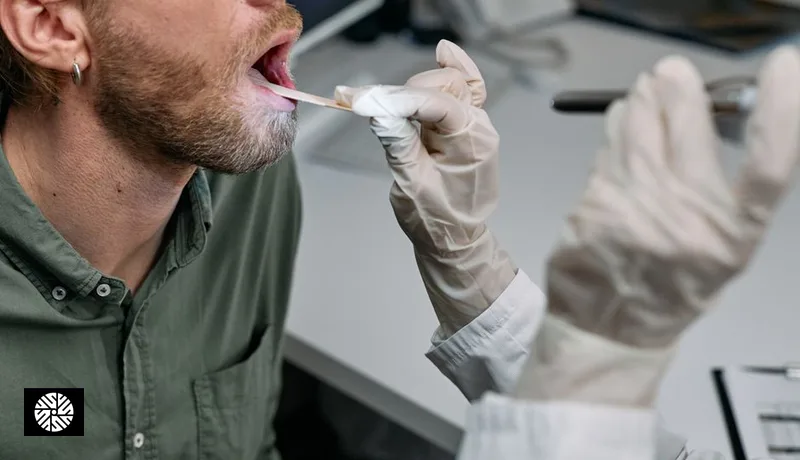
Taiwanese consultations are efficient — often strikingly short by Western standards. The doctor will look in your ears with an otoscope, peer up your nose, check your throat, and frequently use that endoscope to get a proper look. For an ENT complaint this hands-on examination tends to be fast and genuinely informative; they can see what's going on rather than working from your description alone.
English varies. At neighborhood clinics it's hit-or-miss — some doctors speak it well, others very little, but staff are patient and used to foreigners. A translation app on your phone is your best friend. Before you go in, it helps to have a few things ready to show: where it hurts, how long it's been going on, your temperature if you've checked it, any medications you take, and — critically — any drug allergies. A clear photo or typed list beats fumbling through a translation in real time. If you specifically need English, the hospital International Patient Centers are the safer bet (see below).
Step 5 — Tests and procedures, usually the same visit
One of the nicer things about the Taiwanese system is how much happens in a single visit. For ENT, that often means the doctor does a small procedure right there: suctioning out a congested nose or ear, a few minutes on the nebulizer for an inflamed throat or airway, or packing a stubborn nosebleed. If they suspect something needing more — a hearing test, a deeper look, imaging for a sinus problem that won't clear — that's when they may send you to a hospital ENT department, but for everyday complaints you're typically examined, treated, and prescribed all in the one appointment.
Step 6 — Pay at 批價, collect meds at 領藥
Here's the part that trips up first-timers: you see the doctor before you pay. The order is consultation first, payment after. When you're done with the doctor, head to the 批價 (pī jià) cashier to settle the bill. As a self-pay patient this covers your registration, the consultation, and any procedures done.
Then collect your medication at the 領藥 (lǐng yào) pharmacy window — usually right there in the clinic or hospital. The pharmacist hands over your meds, frequently pre-sorted into labeled packets by dose and time of day, which makes them easy to follow even when the label is in Chinese. Taiwanese clinics tend to be generous prescribers for colds and throat issues; you may walk out with several items. Keep every receipt and the medication labels if you plan to file an insurance claim back home.
For a fuller walk-through of this whole flow with the queue-and-pay rhythm, see our guide to seeing a doctor in Taiwan — once you've done the 掛號 → number → doctor → 批價 → 領藥 loop once, every clinic in the country works the same way.
What it costs as a self-pay foreigner
Prices vary a lot by where you go, so treat these as approximate ranges and confirm on site — don't hold me to an exact figure. A neighborhood ENT clinic visit as a self-pay foreigner is genuinely cheap; a simple consultation with a basic prescription tends to land toward the lower end of the self-pay range. A specialist visit at a hospital, especially through an International Patient Center with the registration, consultation, and service fees broken out separately, runs roughly NT$1,500–5,000 (about US$45–155), with anything extra — a procedure, a hearing test, imaging, medication — billed on top. Simpler clinic visits sit well below that.
Two more cost notes. If you need a diagnosis certificate for insurance, expect a small extra fee (often a couple hundred NT). And medication here is frequently far cheaper than what you'd pay at home — one of the quiet perks of getting sick in Taiwan rather than back in the US.
English-speaking options
If language is a worry, you have a reliable fallback: the major hospitals run International Patient Centers (sometimes called international medical centers) with English-speaking staff who coordinate registration, the doctor visit, and billing for you. Most major medical centers have these desks, with transparent self-pay pricing. You'll pay more than at a corner clinic, but you remove the language friction entirely — worth it if your problem is anything beyond a basic sore throat. The American Institute in Taiwan also publishes a directory of major hospitals you can use to find one near you.
Flight and diving ear problems (barotrauma)
This is the traveler's classic, and it's worth its own section because so many people land in Taiwan — or come up from a dive off Kenting or Green Island — with an ear that won't sort itself out. The medical name is barotrauma: an injury caused by a pressure difference between the air space inside your ear and the pressure outside, when your Eustachian tube (the little channel that equalizes your middle ear) can't keep up. On a plane it bites hardest during descent; for divers, it's typically on the way down, the "middle ear squeeze."
You'll know it as ear fullness, muffled hearing, pain, sometimes ringing or mild dizziness that lingers after the flight or dive. Some prevention basics that authorities like the Cleveland Clinic and the CDC consistently recommend:
- Stay awake during descent on a plane so you can actively equalize, rather than sleeping through landing.
- Swallow, yawn, and chew gum on takeoff and landing — these open the Eustachian tube and even out the pressure.
- Try the Valsalva maneuver: pinch your nostrils shut, close your mouth, and gently blow to push air into the Eustachian tubes. Gently — not forcefully.
- If you're congested, an oral decongestant or nasal spray taken 30–60 minutes before takeoff or a dive can help (check it's safe for you first).
- Don't fly or dive with a heavy cold, sinus infection, or bad allergies if you can avoid it — congestion is what blocks equalization in the first place.
Most barotrauma settles on its own. But if it doesn't — ongoing pain, blocked or reduced hearing, fluid, or any sense the eardrum was injured — an ENT clinic is exactly the right place, and divers who suspect ear barotrauma should stop diving and get it looked at. A Taiwanese ENT can examine the eardrum directly and tell you whether it's healing or needs treatment. It's a five-minute look that saves a lot of worry.
When dizziness is an ENT issue — and when it's a 119 emergency
This is the most important section in this article, so read it even if you skim the rest. Dizziness and vertigo are sometimes an inner-ear (ENT) problem — and sometimes a sign of a stroke, which is a 119 emergency. Telling them apart can save a life, and the broad rule of thumb is about what comes with the dizziness.
Common inner-ear causes — things an ENT or a neurologist manages, not emergencies — include BPPV (brief spinning triggered by head movements), vestibular neuritis (an inflamed balance nerve, often after a virus), and Ménière's disease (vertigo with ear fullness and hearing changes). These can be miserable, but they're treatable on a normal clinic timeline.
The picture that should make you call 119 immediately is sudden, severe dizziness plus neurological signs. Doctors use the mnemonic BE FAST:
- B — Balance: sudden loss of balance or coordination.
- E — Eyes: sudden vision changes, double vision, or loss of vision.
- F — Face: facial drooping on one side.
- A — Arms: weakness or numbness, especially on one side of the body.
- S — Speech: slurred, garbled, or strange speech.
- T — Time: any of these, and it's time to call for help right now.
Vertigo that arrives with slurred speech, one-sided weakness or numbness, facial droop, double vision, a severe sudden headache, or trouble walking is not a wait-for-the-clinic situation — it needs emergency evaluation, because it may be a stroke or a TIA. Call 119 (Taiwan's number for ambulance and fire — not 911). If language is a barrier in the moment, Taiwan also runs a 24-hour foreigner assistance line at 0800-024-111 that can connect you to emergency services. When in doubt, treat sudden severe dizziness with any of those warning signs as an emergency and let the ER sort it out.
Common scenarios on your trip
"My throat's been killing me since I landed." Classic dry-cabin-plus-new-germs combo. Walk into an ENT clinic, get examined, and you'll likely leave with throat medication and possibly a few minutes on the nebulizer. Cheap, fast, sorted.
"My ear's been blocked since the flight and won't clear." Probable barotrauma. Try gentle equalizing (swallowing, yawning, careful Valsalva); if it persists more than a day or two, or there's pain or muffled hearing, see an ENT to check the eardrum.
"I think I've got a sinus infection." Facial pressure, thick congestion, maybe a low fever. ENT clinic — they can look inside your nose, suction it, and prescribe. Far quicker than waiting it out.
"My kid woke up screaming with an earache." Ear infections are bread-and-butter for ENT clinics, and many also see children comfortably. Walk in. For more on kids specifically, our guide to seeing a pediatrician in Taiwan is the better deep-dive.
"My nose started bleeding and won't stop." Sit up, lean slightly forward, and pinch the soft part of your nose firmly for a solid 10–15 minutes without peeking. Most nosebleeds stop with correct pressure. If it's still going strong after about 20 minutes, is very heavy, or follows a head injury, that's an ER trip.
"I came up from a dive and my ear hurts." Stop diving. Don't go back down on it. See an ENT to check for middle-ear barotrauma before you fly home, since flying on an injured ear can make it worse.
The throughline across all of these: Taiwan's ENT clinics are built for exactly this kind of everyday above-the-neck trouble, the access is direct and the cost is low, and the same six-step process — register at 掛號, take a number, see the doctor, pay at 批價, collect meds at 領藥 — carries you through. Learn it once and you've learned it for every clinic in the country. If you want the wider map of how Taiwanese healthcare fits together, loop back to our complete doctor guide, and if your symptoms ever cross into the severe-and-sudden territory above, don't overthink it — call 119.
Sources & Further Reading
- National Health Insurance Administration (Taiwan) — official English site
- American Institute in Taiwan — local emergency numbers and hospital information
- Cleveland Clinic — ear barotrauma (airplane ear): symptoms, prevention, and treatment
- CDC Yellow Book — scuba diving, ear/sinus barotrauma, and dive-related injuries
- Johns Hopkins Medicine — dizziness and vertigo: when it's an emergency
- New Dawn Health — How to See a Doctor in Taiwan: Complete Guide for Foreigners
- New Dawn Health — Emergency Room in Taiwan: A Guide for Foreigners
- New Dawn Health — Taiwan's Hospital Tiers: From Clinics to Medical Centers
This article is general information for travelers, not medical advice. Prices are approximate and change; confirm with the clinic and your insurer. For sudden severe dizziness with neurological symptoms, treat it as an emergency — call 119.
US / UK terms and the closest Taiwan context
Read this first: These are comparison aids, not claims that coverage, credentials, or care pathways are equivalent. Europe is not one health system; UK examples below refer specifically to NHS England.
PCP / primary care provider; GP / general practitioner
- What it means there
- In the US, a primary care provider may provide prevention, common-illness care, and care coordination. In NHS England, a registered GP commonly coordinates access to non-emergency specialist care.
- Closest Taiwan context
- The closest starting point is a community clinic or family medicine department (基層診所/家庭醫學科).
- Do not treat as equivalent
- Taiwan does not use one universal PCP or GP gatekeeping model. NHI promotes community-first, tiered care, but its referral policy does not make a referral a universal prerequisite to every hospital visit.
- What to ask
- Ask whether this visit is the right first contact, whether direct specialist registration is accepted, and whether a referral changes the appointment or NHI copayment.
Referral
- What it means there
- A US plan, especially an HMO, may require a PCP referral for coverage. In NHS England, specialist hospital care is generally accessed through a GP referral.
- Closest Taiwan context
- Taiwan uses a referral form and two-way referral process (轉診/雙向轉診) when clinical needs call for another facility or level of care.
- Do not treat as equivalent
- A US insurance referral, an NHS clinical access route, and a Taiwan NHI referral do not create the same rights or payment result. Taiwan NHI says referral need not proceed one hospital level at a time and does not universally prohibit direct hospital visits.
- What to ask
- Ask who issues the referral, its validity period, the named facility and department, whether registration is arranged, and what happens to the copayment.