
When you fall ill in Taiwan, the first question isn't really "which doctor?" — it's "which kind of place?" Taiwan sorts its hospitals and clinics into four official tiers, from the corner clinic on your street to the giant teaching hospital downtown. Locals navigate this map instinctively; visitors usually don't even know it exists, so they default to the biggest, most intimidating hospital for a problem a neighborhood clinic could have solved in twenty minutes. Understanding the four tiers — and the gentle pricing system Taiwan uses to steer people through them — is the single best way to get faster care for less money. This is that map.
If you haven't yet decided what type of care you need (emergency vs. family medicine vs. a specialist), start with our complete guide to seeing a doctor in Taiwan. Once you know the type, this article tells you which tier of facility to walk into. That same guide walks through the mechanics once you're inside — registration, paying, collecting medicine.
The four tiers in 60 seconds
Taiwan's National Health Insurance (NHI) system organizes care into a four-level hierarchy. Each level is meant to handle a different complexity of problem, and the lower levels are designed to be your first stop:
- Primary clinics (基層診所) — Small neighborhood practices, often a single doctor and a few staff. This is primary care: colds, stomach bugs, minor injuries, skin problems, prescription refills, routine follow-ups. There are tens of thousands of them, they're everywhere, and they're the fastest way to see a doctor.
- District / local hospitals (地區醫院) — Small community hospitals offering basic inpatient beds and common specialties. The step up from a clinic when you need a little more than a single GP can offer, but not a major center.
- Regional hospitals (區域醫院) — Larger hospitals with a broad range of specialties, surgery, and more advanced imaging. Serious-but-common problems land here.
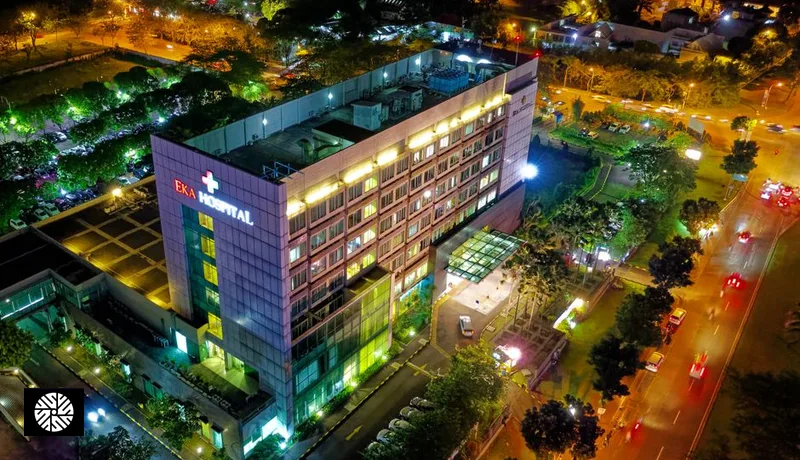
- Medical centers (醫學中心) — The top tier: large teaching-and-research hospitals. They handle the most complex cases, rare conditions, major surgery, and cutting-edge treatment, and they train the country's doctors.
The mental model is a pyramid: a very wide base of clinics for everyday illness, narrowing up to a small number of medical centers for the hardest cases. The system works best when most people enter at the bottom and only move up when they actually need to.
The surprise: there's no referral gate
Here's what trips up anyone coming from a country with gatekeeping GPs (the UK, Canada, much of Europe): in Taiwan, you are not required to get a referral to see a specialist or to visit a higher-tier hospital. You can, in theory, walk into a top-tier medical center and register directly for the cardiology or dermatology department without a family doctor sending you there. Taiwan tried to build a strict referral system, but it was never fully enforced, and patient free choice remains the reality.
That freedom is genuinely convenient — if you know you need an orthopedist, you can just go see one. But it also means the big hospitals fill up with people who didn't need that level of care, which is exactly the problem the next piece of the system is designed to nudge against.
But there's a price nudge
Because Taiwan can't force you to start low, it prices you toward starting low. For NHI members, the out-of-pocket copayment you pay at registration is higher at bigger hospitals and higher still if you skipped the referral. Go straight to a medical center without a referral and you pay the most; start at a clinic and you pay the least. The 2025 outpatient copayment schedule looks roughly like this:
| Facility tier | Copay with referral | Copay without referral | Emergency copay |
|---|---|---|---|
| Medical center (醫學中心) | NT$170 | NT$420 | NT$750 |
| Regional hospital (區域醫院) | NT$100 | NT$240 | NT$400 |
| District hospital (地區醫院) | NT$50 | NT$80 | NT$150 |
| Primary clinic (基層診所) | NT$50 | NT$50 | NT$150 |
There's a matching copay on medicines (capped at NT$300 even at the top tiers), so the whole structure quietly rewards seeing a clinic doctor first and only escalating with a referral. It's a soft gate made of money rather than rules — and for residents, it works.
One crucial caveat for visitors: those numbers are NHI member copayments. As a short-term foreign traveler you almost certainly won't have an NHI card, so you don't pay these copays at all — you pay the hospital's self-pay (自費) rate, which is a different and higher figure. The table above isn't your bill. What it does tell you is something useful anyway: the relative effort and cost of each tier, and why the smart move — for locals and tourists alike — is usually to start at a clinic.
Why you should usually start at a clinic
For the overwhelming majority of travel-health problems — a cold that won't quit, traveler's diarrhea, a UTI, an allergic flare, a sprained ankle, a rash — a primary clinic is the right tier. Three reasons:
- Speed. Clinics have short queues and no labyrinth to navigate. You can often be seen, treated, and out the door with medication in under an hour. A medical center can eat half your day.
- Simplicity. One desk, one doctor, one pharmacy window — far less overwhelming than a multi-building hospital campus, especially in a language you don't read.
- Cost. Even on a self-pay basis, a small clinic visit is the cheapest tier of care. You're not paying for a teaching hospital's overhead to treat a sore throat.
Taiwan has a clinic on practically every block, many with a visible specialty on the sign — 耳鼻喉科 (ENT), 皮膚科 (dermatology), 小兒科 (pediatrics), 牙科 (dental). Because there's no referral gate, you can walk straight into the relevant specialty clinic for your problem without going through a GP first. That combination — dense, specialized, walk-in clinics — is Taiwan's secret weapon for fast everyday care.
When to go straight to a bigger hospital
Skipping the clinic and heading to a regional hospital or medical center is the right call when the problem clearly outmatches a small practice:
- Serious or worsening symptoms — chest pain, severe abdominal pain, high fever that won't break, anything frightening. (If it's a true emergency, don't pick a tier at all — go to the nearest ER or call 119; see our emergency room guide.)
- Advanced imaging or testing — MRI, CT, specialized scans that a clinic simply doesn't have.
- Complex or rare conditions, major surgery, or a problem that needs several specialties coordinating.
- You want English-language infrastructure — major medical centers run International Medical Service centers staffed to guide foreign patients through registration, translation, and billing. For a complicated issue far from home, that support can be worth choosing a top-tier hospital outright.
A reasonable rule of thumb: clinic first for anything routine; regional hospital or medical center when the problem is serious, needs imaging, or needs a specialist a clinic can't provide.
Emergency care has its own tier pricing
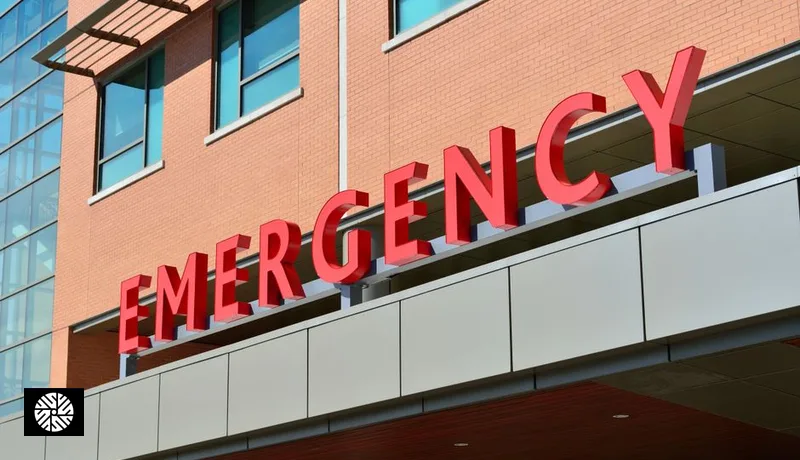
Emergency rooms exist at the hospital tiers (not at small clinics), and they carry their own copayment that also rises with hospital size — roughly NT$750 at a medical center's ER versus NT$150 at a district hospital, for NHI members. The policy intent is the same: discourage using a top-tier ER for non-urgent problems. But emergencies are the one situation where you should ignore tier optimization entirely. If it's urgent, go to the nearest capable ER — speed beats savings. Our ER walkthrough covers triage levels, costs, and what to expect.
What this means for foreign travelers
You won't pay the NHI copays above, but the tier system still shapes your best move in three practical ways:
- Default to a clinic for routine illness — it's the fastest, cheapest, least stressful tier, and self-pay clinic prices in Taiwan are still a fraction of Western costs.
- Choose a medical center deliberately when you want English-speaking international patient support or you have a genuinely complex problem. The higher self-pay cost buys you infrastructure built for foreigners.
- Keep every itemized receipt at whatever tier you visit — it's what your travel insurer reimburses against. Ask for an English diagnosis letter if you'll file a claim.
Families traveling with children can apply the same logic; our guide to healthcare for kids in Taiwan maps the pediatric side of these tiers. And if you're combining treatment with a trip, the affordability that makes this whole system attractive is the same reason medical tourism to Taiwan has taken off.
Quick reference: which tier, when
Routine illness or minor injury → primary clinic (基層診所). Cheapest, fastest, walk in. Needs basic inpatient care or a common specialty → district or regional hospital. Complex, rare, needs MRI/CT, or you want English international support → medical center (醫學中心). Urgent or frightening → nearest ER / call 119, and forget about tiers. No referral is required to move up, but a clinic-first habit saves you time and money at every level.
Sources & Further Reading
- National Health Insurance Administration, Ministry of Health and Welfare — hospital hierarchy and outpatient/emergency copayment schedule (nhi.gov.tw).
- The Commonwealth Fund, International Health Care System Profiles — "Taiwan" (referral system and tiered cost sharing).
- Peer-reviewed analyses of Taiwan's NHI referral policy and hospital-tier utilization (PubMed Central / National Library of Medicine).
- Individual hospital self-pay billing information for patients without NHI.
- New Dawn Health — How to See a Doctor in Taiwan and the emergency room guide.
This article is general information for travelers, not medical advice. Copayment figures are NHI-member rates and apply to insured residents, not self-pay visitors; all prices are approximate and change over time — confirm current rates with the facility. In an emergency, call 119 or go to the nearest emergency room.
US / UK terms and the closest Taiwan context
Read this first: These are comparison aids, not claims that coverage, credentials, or care pathways are equivalent. Europe is not one health system; UK examples below refer specifically to NHS England.
PCP / primary care provider; GP / general practitioner
- What it means there
- In the US, a primary care provider may provide prevention, common-illness care, and care coordination. In NHS England, a registered GP commonly coordinates access to non-emergency specialist care.
- Closest Taiwan context
- The closest starting point is a community clinic or family medicine department (基層診所/家庭醫學科).
- Do not treat as equivalent
- Taiwan does not use one universal PCP or GP gatekeeping model. NHI promotes community-first, tiered care, but its referral policy does not make a referral a universal prerequisite to every hospital visit.
- What to ask
- Ask whether this visit is the right first contact, whether direct specialist registration is accepted, and whether a referral changes the appointment or NHI copayment.
Referral
- What it means there
- A US plan, especially an HMO, may require a PCP referral for coverage. In NHS England, specialist hospital care is generally accessed through a GP referral.
- Closest Taiwan context
- Taiwan uses a referral form and two-way referral process (轉診/雙向轉診) when clinical needs call for another facility or level of care.
- Do not treat as equivalent
- A US insurance referral, an NHS clinical access route, and a Taiwan NHI referral do not create the same rights or payment result. Taiwan NHI says referral need not proceed one hospital level at a time and does not universally prohibit direct hospital visits.
- What to ask
- Ask who issues the referral, its validity period, the named facility and department, whether registration is arranged, and what happens to the copayment.