
Here's the thing nobody warns you about before traveling to Taiwan with kids: the healthcare for children is genuinely excellent and remarkably affordable, but the process of getting it is completely unlike what you're used to back home. There's no calling a pediatrician's office days ahead for an appointment, no insurance pre-authorization, no referral hoops. You just — walk in. And the first time your toddler spikes a fever at 9pm in a hotel room far from home, that unfamiliarity can feel terrifying. So let's demystify it. Once you've done it once, seeing a pediatrician (小兒科, xiǎo ér kē) in Taiwan is faster and simpler than almost any Western clinic, and the people staffing these clinics are very, very good at treating sick kids.
This guide walks you through the whole thing — where to take a sick child, how to register, how to judge when an illness is genuinely urgent, what to expect at the pharmacy, and the common scenarios that trip up traveling parents. For the broader mechanics of the system that apply to adults and kids alike, our complete guide to seeing a doctor in Taiwan is worth a read alongside this one.
Where to take a sick child: clinic vs hospital vs ER
Taiwan has a dense network of small neighborhood pediatric clinics (小兒科診所), and for the vast majority of sick-kid situations, that's exactly where you want to be. These are walk-in, no-appointment-needed clinics — often a single pediatrician with a couple of nurses — and they handle the daily bread-and-butter of childhood illness: fevers, coughs, colds, ear pain, rashes, vomiting, the works. They're everywhere, they're fast, and they're cheap. Many are open well into the evening and on weekends precisely because that's when children get sick.
Here's how to think about the three tiers — and our guide to Taiwan's hospital tiers goes deeper if you want it:
- Pediatric clinic (診所): Your default. Fever, ear infection, rash, mild vomiting or diarrhea, a cold that won't quit, a routine vaccine. Quick, inexpensive, and the doctor sees children all day long.
- Hospital outpatient (醫院): Step up to a regional hospital or medical center's pediatric department when something needs more — blood tests, X-rays, a specialist opinion, or an illness that isn't getting better. No referral is required to walk into a hospital outpatient clinic in Taiwan, though wait times are usually longer than at a small clinic.
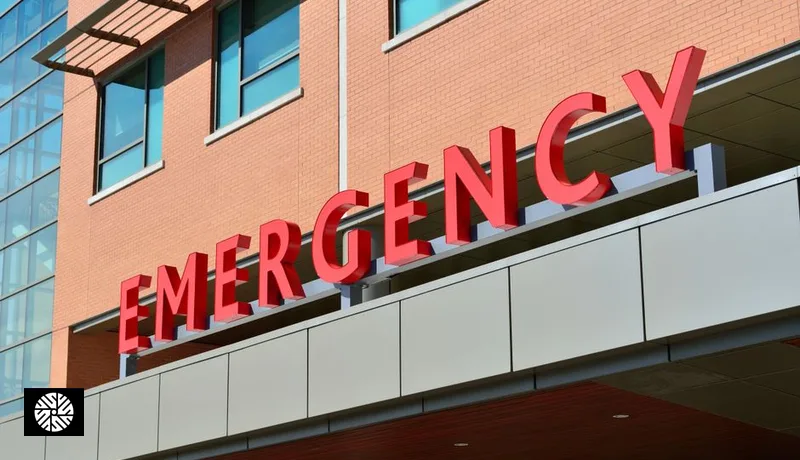
- Emergency room (急診): For the genuinely urgent — the red flags we'll cover below. Larger hospitals have a dedicated pediatric ER. This is where you go for trouble breathing, a seizure, an infant who's seriously unwell, or anything where your gut says this can't wait.
A useful instinct: a child who is miserable but still drinking, responsive, and recognizably themselves can almost always wait for a regular clinic. A child who seems profoundly different — limp, hard to rouse, struggling to breathe — is an ER situation. When you're unsure, you are always allowed to get them seen; no one in Taiwan will think you overreacted by bringing in a sick child.
Step 1: Register at the 掛號 counter
When you arrive at a clinic, the first stop is the 掛號 (guà hào) counter — registration. This is the equivalent of checking in, and it happens before you see anyone clinical. Larger clinics and hospitals sometimes have a self-service kiosk, but with a foreign child and no local health card, you'll want the human counter.
Because short-term visitors don't have a Taiwan National Health Insurance (NHI) card, your child is a self-pay (自費, zì fèi) patient — more on what that costs in a moment. On a first visit, the staff will have you fill out a short registration form with your child's basic details. Bring the child's passport — it's the simplest way to give them an accurate name, date of birth, and ID number. Hand over the passport, fill in the form (staff will help, and a translation app smooths any gaps), and you're registered.
Step 2: Take a number and watch the board
After registering you'll get a number — sometimes a printed ticket, sometimes just a number the staff tell you. Then you wait, and you watch the digital call-up board on the wall, which displays the number currently being seen. The board is in Mandarin, but it's fundamentally visual — you're matching the digits on your ticket to the digits on the screen, so you don't need to read Chinese to use it. If you genuinely can't tell when it's your turn, show your ticket to a nurse and they'll point you in. At a small clinic the wait is often just a handful of patients; at a busy hospital it can be much longer, which is part of why clinics are the better bet for routine sick-kid visits.
Step 3: See the doctor
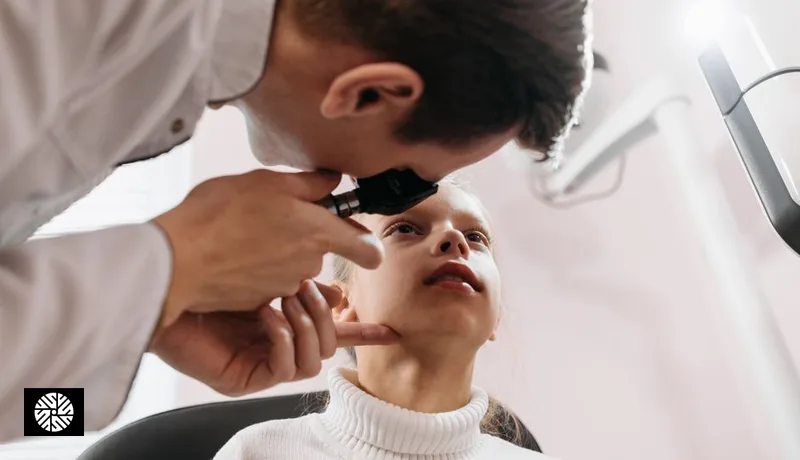
When your number comes up, you go in. Taiwanese pediatric consultations are efficient and focused — the doctor examines your child, asks about symptoms, and forms a plan, usually within a few minutes. Don't mistake the brevity for inattention; these doctors see an enormous volume of childhood illness and are extremely sharp at it.
English ability varies a lot by doctor. In big-city clinics and hospital pediatric departments you'll often find a doctor who speaks workable English; in a small neighborhood clinic you might not. A translation app on your phone is your friend here — type or speak your child's symptoms, how long they've been going on, any allergies, and any medications they already take. It also helps to tell the doctor your child has been traveling and where you've come from, since recent travel can change what an illness might be. The CDC specifically advises mentioning travel history when a child gets sick, especially with a fever, after a trip.
Step 4: Tests, if needed — usually same visit
If the doctor wants a test — a rapid strep or flu swab, a urine sample, bloodwork, or an X-ray at a hospital — it typically happens right then, in the same visit. There's no scheduling a separate appointment at a separate lab on a separate day. For straightforward results, the doctor often reviews them with you before you leave. This same-visit efficiency is one of the quiet superpowers of Taiwan's system and a big reason an unwell child gets answers fast.
Step 5: Pay afterward, then collect medicine
Here's the part that feels backwards to Westerners: you see the doctor first and pay after. Once the consultation is done, you head to the 批價 (pī jià) cashier to settle the bill, then to the 領藥 (lǐng yào) pharmacy window to pick up any medications. In many clinics the pharmacy is a window right there in the same building — no separate trip to an outside drugstore.
For self-pay foreign visitors, costs are reasonable but vary by tier. A simpler clinic visit for a routine childhood illness is at the lower end; a specialist consultation or a hospital visit with tests runs roughly NT$1,500–5,000 (about US$45–155), depending on the facility and what's done. These figures are approximate and change — always confirm the price on site. Bring a card and some cash (small clinics may prefer cash), your child's passport, and your travel insurance details. Critically, keep every itemized receipt — your insurer will need them to reimburse you, and Taiwanese clinics are good about providing detailed paperwork if you ask.
Pediatric medicine in Taiwan is dispensed thoughtfully for small patients. Rather than handing you adult pills, the pharmacy commonly prepares medications as syrups or powders measured to your child's weight — the powders are usually mixed into a little water or juice. The pharmacist will explain dosing; if there's a language gap, ask them to write the timing and amount down, or use your translation app to confirm.
Reading the room: when is it urgent, and when is it the ER?
This is the part every traveling parent really wants answered, and it's also the part where honesty matters most: no blog can tell you the exact temperature or the exact age that means "go now." Children are individuals, and a number on a thermometer matters far less than how your child looks and behaves. The single most reliable instrument you have is your own sense that something is wrong. If your gut says your child is seriously unwell, act on it.
That said, pediatric authorities broadly agree on a set of red flags that warrant urgent or emergency care. Treat these as general guidance, not rigid rules — and when any of them appear, lean toward getting help fast:
- Trouble breathing — fast or labored breathing, struggling for each breath, ribs pulling in, or a child too breathless to speak or cry. The American Academy of Pediatrics lists severe breathing difficulty as a reason to call emergency services.
- Persistent lethargy or unresponsiveness — a child who is unusually hard to wake, floppy, "out of it," not alert when awake, or who can't be consoled or comforted at all.
- A fever in a very young infant — both the AAP and the NHS advise that a fever in a baby in the first few months of life should be assessed by a health professional right away, even if the baby otherwise seems okay. With the smallest babies, don't wait it out.
- Signs of dehydration — no wet diaper or no urine for many hours, a dry mouth, crying without tears, sunken eyes, or a child too weak or drowsy to drink. The younger the child, the faster dehydration can set in.
- A stiff neck or a rash that doesn't fade — a stiff or painful neck, sensitivity to light, or a rash of red or purple spots that does not blanch (fade) when you press a glass against it. The AAP flags a rapidly spreading bruise-like or "blood spot" rash as a call-emergency-services situation.
- A seizure — any seizure in a child who has never had one warrants prompt medical attention; the AAP says to call emergency services if a seizure lasts more than about five minutes, if the child has trouble breathing or turns blue, or if they have several in a row.
Beyond these, trust the softer signals too: a child who is getting worse rather than better, who won't drink anything, who has severe unrelenting pain, or who simply seems frighteningly different from their normal self. None of these requires you to diagnose anything — they're just your cue to get a doctor's eyes on your child. In Taiwan, the emergency number is 119 for an ambulance — not 911. If you're facing a true emergency, our guide to the emergency room in Taiwan for foreigners covers exactly what to expect when you get there.
Pharmacy and medication for kids — and the foreign-prescription trap
One thing that genuinely surprises traveling families: Taiwanese pharmacies will not fill a prescription written by a doctor in another country. The prescription your pediatrician back home wrote, or a script from your home country's hospital, can't simply be handed over a Taiwan pharmacy counter and filled. If your child needs a prescription medication while you're here, you'll need to see a doctor in Taiwan — which, as we've covered, is quick and inexpensive — and have them write it locally.
The practical takeaways for medicating kids in Taiwan:
- Bring a supply of any regular medication your child takes, ideally enough for the whole trip plus a buffer, in its original labeled packaging. For ongoing prescriptions, carry a copy of the prescription or a doctor's letter listing the drug's generic name and dose — not to fill it here, but so a Taiwan doctor can match it if you need a refill.
- Pediatric over-the-counter basics are widely available at pharmacies (look for the 藥局/藥房 signage) and at clinics, but brand names and formulations differ from what you know. When in doubt, have a pharmacist or doctor recommend the right product and dose for your child's age and weight rather than guessing from a familiar-looking box.
- Never improvise dosing from adult medicine. The reason Taiwan's clinics dispense weight-based syrups and powders is that children's dosing is genuinely different — and the AAP cautions parents to be careful with children's medicine dosing generally. Let a professional set the dose.
- For fever or pain comfort while you arrange a visit, the standard children's options are acetaminophen and ibuprofen in pediatric formulations — but match them to your child and follow the label or a pharmacist's guidance, and see a doctor if you're at all unsure.
Common scenarios when you're traveling with kids
A few situations come up again and again for families on the road in Taiwan. Here's how they typically play out:
- The evening fever. Your child spikes a temperature after dinner. If they're still drinking, responsive, and themselves, a walk-in pediatric clinic — many open late — is the move, either that evening or first thing the next morning. Comfort measures and fluids in the meantime. Escalate sooner for a very young baby, or if any red flag appears.
- The ear that hurts. Ear pain, often worse at night and sometimes following a cold, is classic in kids. A clinic can examine the ear and decide on treatment. Notably, the AAP points out that most childhood ear infections resolve on their own and doctors may wait a couple of days before prescribing antibiotics, so don't be alarmed if pain relief is the first recommendation rather than an immediate antibiotic. For ear, nose, and throat troubles specifically, our guide to seeing an ENT doctor in Taiwan walks through that path.
- Vomiting and diarrhea. Tummy bugs are one of the most common illnesses kids pick up while traveling, and the real risk isn't the bug — it's dehydration. The priority is keeping fluids going in small, frequent sips. Watch closely for the dehydration red flags above, and get a young child or a baby seen promptly, especially if they also have a fever or simply can't keep fluids down.
- The mystery rash. Most childhood rashes are harmless and viral, but a couple are not. The reassuring rule of thumb the NHS and AAP both use: a rash of spots that does not fade when you press on it — combined with an unwell child — is an emergency, full stop. Otherwise, a clinic visit is fine for sorting out the everyday rashes.
- Routine vaccines. Taiwan's clinics and hospitals can administer routine childhood vaccines, but timing for travelers matters and you generally want to plan ahead, not improvise mid-trip. The CDC recommends seeing your child's own doctor or a travel-medicine clinic at least a month before you leave home, because some travel vaccines aren't suitable for very young children and others need time to take effect. Measles is the headline concern: the CDC advises that infants 6–11 months old receive an early dose of the MMR vaccine before international travel, with the normal two-dose schedule still given on time after the first birthday. Sort vaccines out before departure where you can; if a question comes up while you're in Taiwan, a pediatric clinic or hospital can advise.
For destination-specific contacts, English-speaking practitioners, and family-focused logistics in the capital, our Taipei kids' healthcare resources page is a handy companion to keep bookmarked before you travel.
The bottom line for parents
Getting a sick child seen in Taiwan is, once you've done it, almost startlingly easy: find a pediatric clinic, register at 掛號 with your child's passport, take a number, see the doctor, pay at 批價 afterward, and collect weight-appropriate medicine at 領藥 — no appointment, no referral, no insurance gauntlet. Keep the bigger picture in mind, though: bring your child's passport, a card and cash, your insurance details, and a supply of their regular medication, since Taiwan won't refill a foreign prescription. Watch your child rather than the thermometer, know the red flags, and remember that 119 — not 911 — summons help in an emergency. Above all, trust your instincts. Taiwan's care for children is genuinely first-rate, and the people in those clinics will be glad you brought your little one in.
Sources & Further Reading
- American Academy of Pediatrics (HealthyChildren.org) — Fever: When to Call the Pediatrician
- American Academy of Pediatrics (HealthyChildren.org) — When to Call Emergency Medical Services for Your Child
- American Academy of Pediatrics (HealthyChildren.org) — Signs of Dehydration in Infants & Children
- NHS — High temperature (fever) in children
- CDC Travelers' Health — Traveling with Children
- New Dawn Health — How to See a Doctor in Taiwan: A Complete Guide for Foreigners
- New Dawn Health — The Emergency Room in Taiwan: A Guide for Foreigners
- New Dawn Health — Taipei Kids' Healthcare Resources
This article is general information for traveling parents, not medical advice. Prices are approximate and change; confirm with the clinic and your insurer. Trust your instincts — if a child seems seriously unwell, seek care promptly; in an emergency call 119.
US / UK terms and the closest Taiwan context
Read this first: These are comparison aids, not claims that coverage, credentials, or care pathways are equivalent. Europe is not one health system; UK examples below refer specifically to NHS England.
PCP / primary care provider; GP / general practitioner
- What it means there
- In the US, a primary care provider may provide prevention, common-illness care, and care coordination. In NHS England, a registered GP commonly coordinates access to non-emergency specialist care.
- Closest Taiwan context
- The closest starting point is a community clinic or family medicine department (基層診所/家庭醫學科).
- Do not treat as equivalent
- Taiwan does not use one universal PCP or GP gatekeeping model. NHI promotes community-first, tiered care, but its referral policy does not make a referral a universal prerequisite to every hospital visit.
- What to ask
- Ask whether this visit is the right first contact, whether direct specialist registration is accepted, and whether a referral changes the appointment or NHI copayment.
Referral
- What it means there
- A US plan, especially an HMO, may require a PCP referral for coverage. In NHS England, specialist hospital care is generally accessed through a GP referral.
- Closest Taiwan context
- Taiwan uses a referral form and two-way referral process (轉診/雙向轉診) when clinical needs call for another facility or level of care.
- Do not treat as equivalent
- A US insurance referral, an NHS clinical access route, and a Taiwan NHI referral do not create the same rights or payment result. Taiwan NHI says referral need not proceed one hospital level at a time and does not universally prohibit direct hospital visits.
- What to ask
- Ask who issues the referral, its validity period, the named facility and department, whether registration is arranged, and what happens to the copayment.