Quick answer: Yes — the U.S. State Department keeps Taiwan at Travel Advisory Level 1, "Exercise Normal Caution" — its lowest advisory level. Living costs are moderate by developed-Asia standards: average consumption spending in 2025 was NT$36,654 per person per month in Taipei, NT$28,844 in Kaohsiung and NT$25,038 in Tainan, against a national average of NT$28,513. National Health Insurance opens to foreign residents after six months of registered residence, or from the first day of employment. Before that, a self-pay screening with New Dawn Health runs $299 to $3,499.
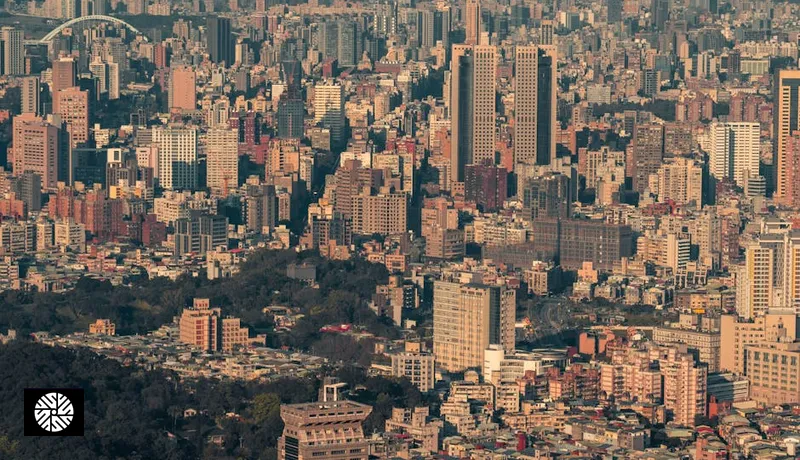
Is Taiwan safe? For anyone weighing a move or a long stay, it is usually the first question — and the honest answer is yes. The U.S. State Department, through the American Institute in Taiwan, places Taiwan at Travel Advisory Level 1, the same tier it gives Japan and most of Western Europe. Safety is only part of the story: Taiwan pairs it with moderate living costs, a universal healthcare system, a vibrant democracy, and a visa regime that has widened doors to foreign talent. This guide is for people seriously weighing a move — digital nomads thinking past the visa-free stamp, families exploring international schools, retirees evaluating Asia, and Gold Card holders wondering what life on the ground actually looks like.
If you're still in the orientation stage, our Taiwan overview and cost-of-living guide for 2026 give you the broader frame. This piece zooms in on the practical questions — what a month costs, what NHI covers and when, which visa fits, and what healthcare costs before your insurance card arrives.
How much does it cost to live in Taipei, Kaohsiung, or Tainan?
The single biggest variable in your monthly budget is which city you choose. Taiwan's government runs an annual Survey of Family Income and Expenditure, and its per-city figure for average monthly consumption expenditure per person is the most reliable answer available — it counts housing, food, transport, healthcare, and everything else a household actually spends.
| City |
Consumption spending per person (NT$/month, 2025) |
Disposable income per person (NT$/year, 2025) |
| Taipei City |
36,654 |
584,444 |
| New Taipei City |
30,364 |
489,545 |
| Taichung City |
29,797 |
440,598 |
| Kaohsiung City |
28,844 |
436,964 |
| Taoyuan City |
27,136 |
433,001 |
| Tainan City |
25,038 |
386,976 |
| National average |
28,513 |
449,951 |
Read the table as a ranking, not a budget. Taipei is the most expensive city in Taiwan by this measure, and Tainan the cheapest of the six special municipalities — a Tainan resident spends about two-thirds of what a Taipei resident spends. Your own number moves mostly with rent: an older walk-up far from an MRT station and a new doorman building in Da'an are not the same city financially.
Two structural facts help foreigners specifically. Local food is cheap and everywhere, so eating out is not the budget line it is in Tokyo or Singapore. And healthcare, once you are in National Health Insurance, largely stops being a monthly variable at all.
What do people actually earn in Taiwan?
Local pay is modest by Western standards but stretches further against the cost base above. The same government survey reports average disposable income per person of NT$584,444 a year in Taipei and NT$449,951 nationally in 2025 — that is income after tax and social insurance, per person rather than per household.
Foreign professionals rarely sit on that curve. Gold Card holders, international-company transfers, and remote workers paid in US dollars or euros are typically well above the local market, which is the arbitrage that draws many of them here in the first place: earn at a Western rate, spend at a Taipei rate.
Is Taiwan safe, and what about the war question?
Is Taiwan one of the safest countries in Asia? We will only point to official measures, and the clearest one is this: the U.S. State Department's advisory for Taiwan sits at Level 1 — "Exercise Normal Caution" — which is its lowest level, and it has stayed there through the news cycles of the last several years. Violent crime is rare and gun violence is essentially nonexistent under strict firearm laws.
What this looks like day-to-day:
- Walking home alone late at night in any major city is genuinely safe. Convenience stores are open around the clock and act as informal safe spaces.
- Lost wallets and phones get returned. Neighborhood police boxes (派出所) handle returns as routine work.
- Solo female residents consistently describe Taiwan as one of Asia's most comfortable places to live alone.
- Petty theft exists in tourist zones — night markets, transit hubs — but at low rates.
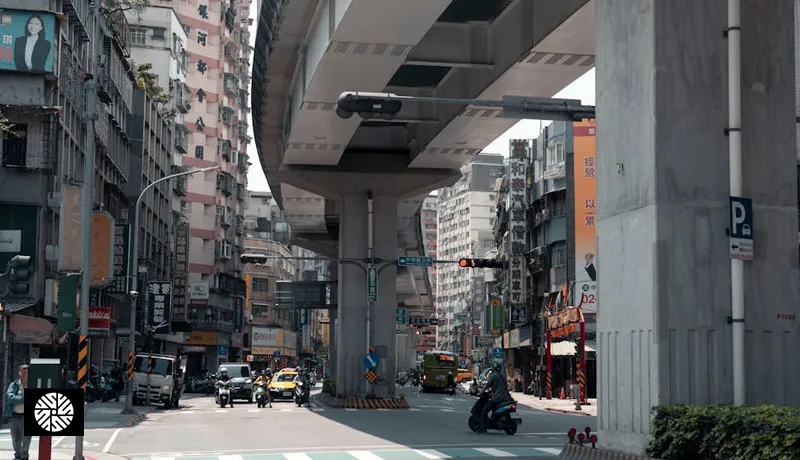
The cultural baseline of consideration and rule-following makes the public sphere feel notably calm. Road behavior in Taipei is more orderly than in most large Asian cities, though scooter traffic still requires attention.
What about the risk of war? It is the most-searched safety concern about Taiwan, so it deserves a straight answer. Cross-strait tension with mainland China is a recurring topic in international news, but it has not translated into disruption of daily life — schools, businesses, transit, and tourism all operate normally, and the U.S. advisory level reflects that. Most residents treat it the way Californians treat earthquakes: a known background condition, not a daily worry.
How do earthquakes and typhoons affect daily life?
Taiwan sits on the Pacific Ring of Fire and in the western Pacific typhoon corridor. Both are real considerations and both are well-managed by local infrastructure. For a deeper treatment, see our earthquake preparedness guide.
Earthquakes: Modern buildings are engineered to a national seismic design code. Most quakes are minor and barely noticed. The largest recent event, off Hualien in April 2024, was magnitude 7.4 and caused regional disruption, but nationwide infrastructure kept running. Keep a small emergency kit — water, flashlight, charger — and know your building's safe spots. Earthquake early warnings push to every phone automatically.
Typhoons: The Central Weather Administration issues sea and land warnings ahead of every approaching storm, and city governments declare typhoon days that close offices and schools. Keep a couple of days of food and water, secure balcony items, and avoid coastal and mountain travel while a warning is in force.
For long-term residents, both risks are manageable with basic preparation.
Who qualifies for National Health Insurance, and when?
Taiwan's National Health Insurance is one of the most cited reasons people stay long-term. Article 9 of the National Health Insurance Act sets the rule for foreigners: someone holding a resident certificate must have established a registered domicile in Taiwan for at least six months to enrol — unless they have a regular employer in Taiwan, in which case enrolment starts with the job.
Premiums are payroll-style — a percentage of insured salary, split with the employer where there is one — so what you pay tracks your income rather than a flat quote. What NHI covers is broad:
- Doctor visits and specialist consultations, with a small copayment per visit
- Hospitalization
- Most prescription medications
- Dental basics, vision exams, mental health, maternity care
- Major surgeries and chronic disease management
For appointment booking, English-speaking clinics, and the NHI card mechanics, see our complete doctor guide for foreigners.
What NHI does not cover is the self-pay tier: executive health checkups, advanced imaging done for screening rather than diagnosis, and elective procedures.
What are your healthcare options before NHI starts?
If you're on a tourist stamp, visa-free entry, or in your first six months of residence, NHI isn't available yet. Three practical options:
- International health insurance: Cigna Global, IMG, Allianz, and SafetyWing all sell plans covering Taiwan. Most Gold Card holders bridge their first six months this way, then switch to NHI.
- Cash-pay at private clinics: Walk-in GP and specialist care is available without insurance, at published self-pay rates.
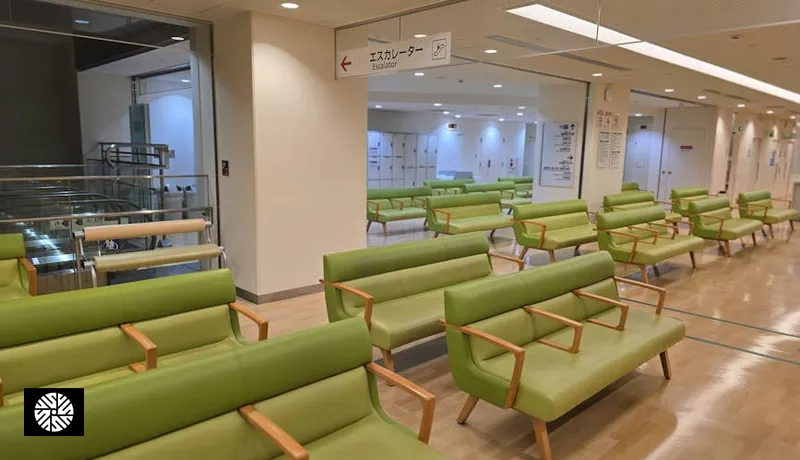
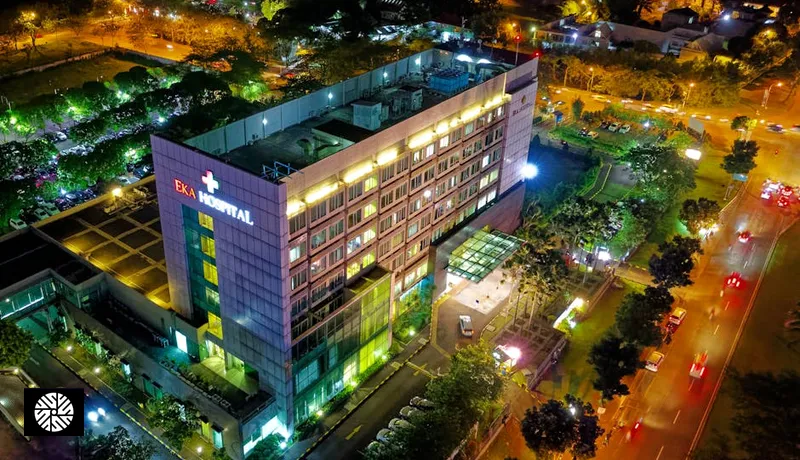
- Hospital international departments: Taipei Veterans General Hospital, National Taiwan University Hospital, MacKay Memorial and Beitou Health Management Hospital all run international patient desks with English support and transparent self-pay pricing.
What does a self-pay health check cost for non-residents?
A screening checkup is self-pay whether or not you have NHI, so it is one cost you can price precisely before you arrive. These are New Dawn Health's prices at our partner hospitals in Taipei, in US dollars, booked and paid up front:
| Package |
Type |
Price (USD) |
| Convenient |
Holistic exam |
$299 |
| Essential |
Holistic exam |
$699 |
| Light |
Full-body scan |
$1,399 |
| Premium |
Holistic exam |
$1,699 |
| Complete |
Full-body scan |
$1,699 |
| Plus |
Full-body scan |
$3,099 |
| Advanced |
Holistic exam |
$3,499 |
Single tests can be booked on their own instead of a package: a DEXA body-composition and bone-density scan is $109, a comprehensive blood work panel $249, a heart calcium score CT $209, and a single-region MRI without contrast $310. Full inclusions and current availability are on our packages page.
Two practical notes for new arrivals. Screening is not urgent care — if you are sick, use a clinic or an emergency room, not a checkup. And a baseline taken in your first year is worth more than a perfect one taken in your fifth, because the value of these panels is the trend line you build across them.
Which visa pathway fits you?
Taiwan has liberalized its visa regime to attract foreign talent. The Employment Gold Card is the headline program: it bundles work permit, resident visa, ARC, and re-entry permit into one card, valid for up to three years, with no employer sponsor required.
| Pathway |
Who it is for |
Employer sponsor needed? |
| Employment Gold Card |
Qualified professionals in the designated fields — science and technology, economy, finance, education, culture and arts, sport, law, architecture, national defense and others — or high earners |
No |
| Entrepreneur Visa |
Founders with an approved business plan, funding, or accelerator backing |
No |
| Investor Visa |
Approved investment in a Taiwan business |
No |
| Education Visa |
Students accepted to an accredited university or Mandarin program |
No (school admission instead) |
| Marriage / JFRV |
Spouses of Taiwan citizens; leads to permanent residency eligibility |
No |
| Employment (sponsored) |
Anyone with a job offer from a Taiwan employer meeting the statutory thresholds |
Yes |
The Gold Card is the most popular route for remote workers and independent professionals precisely because it does not tie you to a single employer. Current thresholds, fees, and processing times change; the Taiwan Employment Gold Card office and the Bureau of Consular Affairs publish the authoritative versions in English, both linked below.
Taipei, Kaohsiung, or Tainan — which city suits you?
Taipei is the default for most newcomers: the highest density of English speakers, the international school options, the most diverse food scene, the startup and tech community, and the largest expat social infrastructure. Tianmu, Da'an, and Xinyi concentrate the international community. The climate is humid subtropical — mild winters, hot summers, regular rain.
Kaohsiung has surged as a livable alternative: a warmer climate, lower spending across the board than Taipei, an MRT system, a growing design and tech scene, and a more relaxed pace. The expat community is smaller but tight-knit, and beach and outdoor access (Kenting, Cijin Island) is a genuine perk.
Tainan is the cultural and historic heart of Taiwan — dense temple culture, the country's best traditional food, and a slower, more intimate scale. It is also the cheapest of the six municipalities by consumption spending. The trade-off is fewer international school options and more Mandarin required in daily life.
How does Taiwan treat LGBTQ+ residents?
Taiwan was the first place in Asia to legislate marriage equality: the Act for Implementation of J.Y. Interpretation No. 748 was enacted on 24 May 2019 and lets two people of the same sex register a permanent union with the household registration office. Later amendments widened it further, including joint adoption and recognition of cross-national same-sex couples.
Pride Taipei is one of Asia's largest pride marches. The cultural climate in Taipei especially is accepting in day-to-day life — same-sex couples hold hands publicly, LGBTQ+-owned businesses thrive, and major employers have visible inclusion policies.
For LGBTQ+ expats considering Asia, Taiwan stands out in the region as a place where legal status, social acceptance, and community infrastructure all align.
What are the school options for expat families?
If you're moving with kids, international school is usually the largest line in the family budget, and Taiwan's options cluster in Taipei. Each school publishes its own current tuition schedule — check it directly rather than trusting a secondhand figure.
- Taipei American School: the flagship US-curriculum K–12 school, with a strong college placement record.
- Taipei European School: British, French, and German sections on one campus.
- Taipei Japanese School: Japanese curriculum, primarily serving Japanese expatriate families.
- Morrison Academy: Christian, with campuses in Taipei, Taichung, and Kaohsiung.
- Taiwan public schools: free, but Mandarin-immersion.
Public school is a viable choice for families with younger children willing to embrace Mandarin immersion — the pedagogy is solid, the environment is safe, and your child will emerge bilingual. For high schoolers arriving without Mandarin, international school is generally the realistic path.
Should you keep an annual screening as a long-term resident?
One pattern we see consistently among long-term expats: even after settling in and gaining NHI access, many keep an annual baseline screening at a private hospital. The reasoning is twofold. NHI is excellent for episodic care but is not built around asymptomatic preventive screening. And an annual comprehensive checkup gives you a longitudinal data set you can carry across countries if you ever leave.
Beitou Health Management Hospital is the destination of choice for many of our long-term-resident clients. The model — a half-day to full-day comprehensive screening with English support, cardiology, gastroenterology, advanced imaging, and detailed reporting — suits busy professionals who want to compress a year's preventive care into one visit.
For what's included and how to prepare, see our full-body checkup cost guide, our screening services, and our provider list.
What is the bottom line on moving to Taiwan?
Taiwan's pitch for long-term residents is unusually balanced: a cost base well below Tokyo or Singapore, a universal healthcare system you can join after six months, a safety baseline the U.S. government rates at its lowest advisory level, and visa pathways that meet foreign professionals halfway. The trade-offs — earthquake and typhoon exposure, geopolitical attention, a Mandarin learning curve outside Taipei — are real and manageable.
Sources
- Directorate-General of Budget, Accounting and Statistics, Executive Yuan — Survey of Family Income and Expenditure statistical tables: average monthly consumption expenditure per person by city, 2025 (accessed 2026-09-08)
- Directorate-General of Budget, Accounting and Statistics, Executive Yuan — Average disposable income per person by city, 2025 (accessed 2026-09-08)
- American Institute in Taiwan (U.S. Department of State) — Taiwan Travel Advisory: Level 1, Exercise Normal Caution (accessed 2026-09-08)
- Ministry of Justice, Laws & Regulations Database — National Health Insurance Act, Article 9 (accessed 2026-09-08)
- Ministry of Justice, Laws & Regulations Database — Act for Implementation of J.Y. Interpretation No. 748, enacted 24 May 2019 (accessed 2026-09-08)
- United States Geological Survey — M 7.4, 15 km S of Hualien City, Taiwan, 3 April 2024 (accessed 2026-09-08)
- National Development Council — Taiwan Employment Gold Card: stay for up to 3 years (accessed 2026-09-08)
- Bureau of Consular Affairs, Ministry of Foreign Affairs — visa and entry information (accessed 2026-09-08)
- Central Weather Administration — typhoon and earthquake warnings (accessed 2026-09-08)
- U.S. Centers for Disease Control and Prevention — Travel health information for Taiwan (accessed 2026-09-08)
 Blog
Blog