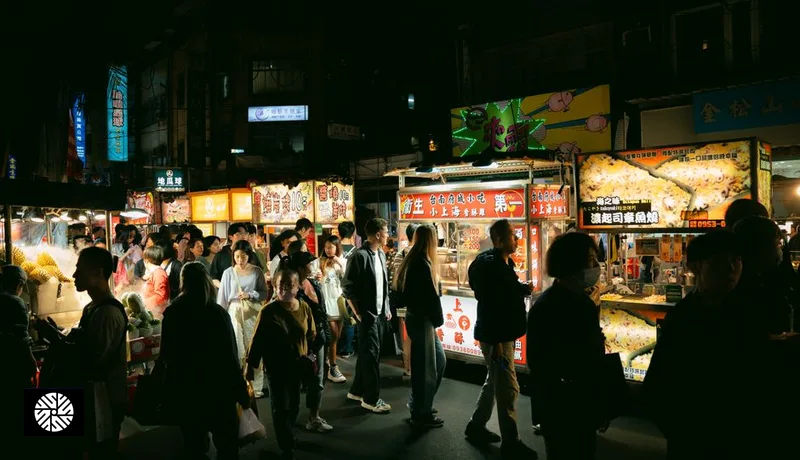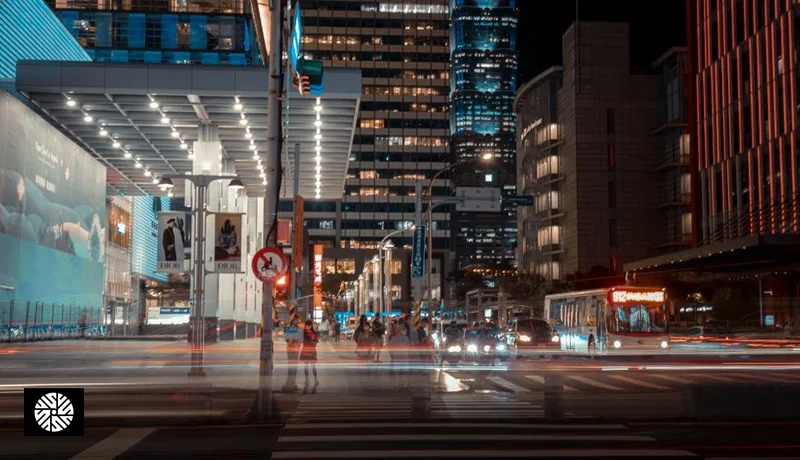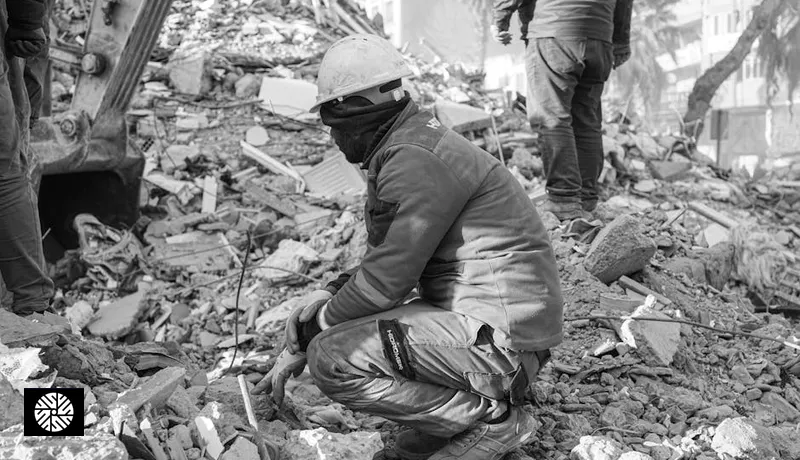

If you're flying into Taiwan for a health screening trip, a long weekend in Taipei, or a deeper East Coast adventure, the question of earthquakes will probably cross your mind. It's a fair concern. Taiwan really is one of the most seismically active places on Earth. But the gap between "seismically active" and "actually dangerous to a tourist" is enormous, and most travelers leave with nothing more than a brief jiggle in a hotel lobby and a story to tell.
This is the practical guide we wish more people had before they came: what the geology actually looks like, what the 1999 Chi-Chi earthquake did to Taiwan's building code, what to do if the floor moves, and what a major quake would mean for your morning at the hospital. For broader trip planning, pair this with our Where is Taiwan primer and the Taiwan weather guide.
Why does Taiwan have so many earthquakes?
Taiwan sits at the junction of two tectonic plates. The Central Weather Administration (CWA) puts it plainly: eastern Taiwan is located right on the junction between the Eurasian plate and the Philippine Sea plate, and most of the island's earthquakes happen there, out at sea. That collision is what built the island. The Central Mountain Range splitting Taiwan top to bottom is the surface expression of the ongoing crash, and mountains get pushed up in jolts, not gracefully.
The whole island also lives on the western edge of the Pacific Ring of Fire, the same horseshoe of seismic and volcanic activity that runs through Japan, the Philippines, Indonesia, and the U.S. West Coast. The CWA's own numbers: between 1991 and 2004 its network recorded an average of 18,649 earthquakes a year, of which about 1,047 were felt. Since 1900 the CWA counts 96 earthquakes that caused disasters. So the vast majority are too small to interrupt your coffee, a few a year make a chandelier swing, and truly destructive events are rare.
One useful mental model: Taiwan's seismic activity is comparable to Japan's, and so is its engineering response. If you'd happily travel to Tokyo, you should be just as comfortable in Taipei.
Is there an earthquake season in Taiwan?
No. Taiwan has a typhoon season; it does not have an earthquake season. Earthquakes here are produced by the continuous collision of the Eurasian and Philippine Sea plates that the Central Weather Administration describes above, and plate convergence does not pause for the calendar. That is why the CWA reports Taiwan's seismicity as an annual count — the yearly averages quoted above — rather than by month or by season. Practically, there is no safer month to book a screening trip on seismic grounds, and no month to avoid.
What changed in Taiwan's building code after 1999?
Modern Taiwan's relationship with earthquakes was reshaped by a single date: September 21, 1999. The Chi-Chi earthquake, magnitude 7.7 by the USGS, struck central Taiwan and killed at least 2,297 people. Most of the deaths were in older, unreinforced concrete buildings that pancaked. The country's response was a rewrite of construction standards.
The Ministry of the Interior amended its Building Seismic Design Code on 29 December 1999 in direct response to Chi-Chi, revising the horizontal ground-acceleration coefficients by seismic zone and the vertical seismic-force rules, and the code has been revised repeatedly since; the current edition dates from 1 March 2024. The same code assigns every building a use-importance factor. The top category, factor 1.5, is for buildings that "must keep functioning after an earthquake disaster to relieve the public", and it explicitly lists teaching hospitals, regional hospitals, government hospitals, fire and police stations, and schools designated as shelters. A hospital only counts if it has emergency and surgical capability. In plain terms: the hospital you'd use for a screening is designed to a higher seismic load than the hotel you sleep in.
Skyscrapers went further. Taipei 101's famous gold sphere, a 660-tonne tuned mass damper about 5.5 metres across, hangs near the top of the tower and is visible from the observatory. Its main job is taming wind sway, with a bumper ring that limits the swing during rare typhoons or large earthquakes.
What this means for you as a traveler: a hotel built or substantially renovated after the 1999 code change was engineered for major seismic events. Older buildings, the pre-1999 walk-ups in older neighborhoods, are the weak link, and retrofit programs have been working through that inventory for two decades.
Which major earthquakes have hit Taiwan since 1999?
Four events tell most of the story. Magnitudes and impact figures below are from the USGS event pages; the CWA reports a separate local magnitude (7.2 for the 2024 quake), which is why you'll see two numbers in the news.
| Date | Magnitude (USGS) | Location | Impact (USGS) |
|---|---|---|---|
| Sept 21, 1999 | 7.7 (Chi-Chi) | Nantou, central Taiwan | At least 2,297 killed, 8,700 injured; defining event for the modern code |
| Feb 6, 2018 | 6.4 | Hualien | 17 killed, 285 injured, 67 missing; many buildings collapsed in Hualien |
| Sept 18, 2022 | 6.9 | Taitung | 1 killed, 171 injured; roads, bridges and rail damaged in the Hualien-Taitung area |
| Apr 3, 2024 | 7.4 (Hualien) | Hualien (offshore) | At least 17 killed by rockfalls, including 10 hikers in Taroko; at least 1,145 injured |
The 2024 Hualien event is the most relevant comparison for current travelers. It was the strongest earthquake to hit Taiwan since Chi-Chi, and the death toll was a tiny fraction of 1999. The fatalities were caused by rockfalls along trails and highways in Taroko Gorge, not by collapsing urban buildings. Taipei swayed visibly, and videos of office workers gripping desks went viral, but the city's transit, hospitals, and skyscrapers all came through without structural damage. That outcome is what a quarter-century of seismic engineering investment is supposed to deliver.
How dangerous are Taiwan earthquakes for a tourist?
Here's the part most safety articles dance around: as a tourist, your risk from a Taiwan earthquake is very low. Tourist deaths from earthquakes are exceedingly rare, even during major events. The 2024 Hualien fatalities were concentrated in remote terrain, rockfall onto hikers, vehicles and a mine, not in hotels or city centers.
The natural hazard that disrupts more travelers is typhoons, not earthquakes. A strong late-summer typhoon will routinely cancel flights, close attractions, and rearrange itineraries for days. Earthquakes, by contrast, mostly produce a few seconds of unsettling motion, and then everyone goes back to ordering bubble tea.
None of this is reason to be cavalier; drop, cover, hold on still applies. But the calibration matters. A modern Taipei hotel during an earthquake is a safe place to be.
How will I get an earthquake alert in Taiwan?
Taiwan operates one of the world's most sophisticated earthquake early warning (EEW) systems. The principle is simple: seismic waves travel slower than electronic signals, so if sensors near the epicenter detect a strong quake, the network can push an alert to phones further away before the shaking arrives. The CWA's Seismological Center says a moderate earthquake on land can be resolved within 10 seconds, with the warning sent out immediately through the Public Warning System, TV interruptions, and its own software; detailed intensity reports follow about 2 minutes later.
For tourists, the most important thing to know: you don't need to install anything. The Public Warning System, run by the National Communications Commission, sends earthquake alerts to mobile phones free of charge whenever the CWA detects or forecasts a magnitude 5 or greater quake, and it uses cell broadcast rather than SMS. That is why the alert arrives with a special sound and vibration that an ordinary text never triggers, and why it reaches every compatible handset in the cell's coverage area at once. A local SIM or eSIM is the surest way to be on the network when it fires.
If you want more detail, the official source is the CWA, formerly the Central Weather Bureau, whose app is in both the iOS and Android stores. Independent apps offer push notifications and historical maps, but the official broadcast is enough for almost everyone.
What should I do during an earthquake?
The international consensus protocol is Drop, Cover, Hold On:
- Drop to your hands and knees before the shaking knocks you down.
- Cover your head and neck. Get under a sturdy desk or table if available; otherwise crouch against an interior wall away from windows.
- Hold On to whatever is sheltering you and ride it out.
A few Taiwan-specific notes:
- Stay indoors if you're indoors. Running outside during shaking is one of the most common ways people get hurt; falling glass and signage are real hazards near building exits.
- Avoid elevators. Many modern Taiwanese elevators have seismic sensors that stop at the nearest floor and open the doors, but you don't want to be inside one finding out.
- In a hotel room: the bed is reasonable cover for the head if you can't reach a sturdy table; stay away from the window wall.
- On the MRT or HSR: hold on to a pole or seat. Trains slow on EEW alerts, and operators inspect lines before resuming service.
- Driving: pull over away from overpasses, signs, and overhead wires. Stay in the vehicle with hazards on.
How quickly does Taiwan reopen after an earthquake?
One of the more reassuring things about Taiwan is how fast normal life resumes. Critical systems are designed for inspection-and-restart, not for week-long outages.
| System | Typical post-quake status |
|---|---|
| Taoyuan / Songshan airports | Brief inspection pause, usually back online the same day |
| Taipei MRT | Pauses on the alert; tunnels are inspected, then service resumes |
| High Speed Rail (HSR) | Track inspection first; service resumes in stages |
| Hospitals | Keep operating on backup power; imaging may pause for equipment checks |
| Electricity / water | Localized outages possible near the epicenter; Taipei rarely loses utilities for long |
| Mountain trails (Taroko etc.) | Closed for rockfall inspection; can be days to weeks, or longer, for full reopening |
What happens to my hospital appointment after an earthquake?
If you're flying in for a screening or consultation, the practical question isn't "could there be an earthquake" but "if one happens, what does my morning look like?" Two rules govern the answer. The building code above designs hospitals to keep functioning after a quake. And a Ministry of Health and Welfare regulation, the Hospital Emergency Disaster Response Measures and Inspection Regulations, requires every hospital to keep a written disaster response plan covering prevention, preparation, response and recovery, to run at least one full emergency drill and one tabletop exercise every year, and to submit the records to the local health authority, which inspects the plan annually.
So in practice the disruption is brief. Backup generators pick up any power interruption. The most likely delay is to imaging: MRI and CT scanners may go offline after meaningful shaking while technicians run alignment and calibration checks, and a morning scan may slide to the afternoon. Full-day or multi-day delays only follow truly destructive events, and even the strongest quake since 1999 did not produce one in Taipei.
Our coordination team will reach out if anything affects your appointment and reschedules with the hospital on your behalf. Our Light package, a radiation-free full-body MRI with a low-dose lung CT and two ultrasounds, is $1,399; see all packages and prices, and the full-body checkup cost guide for what a booking includes.
Is the east coast riskier than Taipei?
Taiwan's seismicity isn't uniform. The east coast, Hualien and Taitung, sits directly on the plate junction and, per the CWA, is where most earthquakes occur, mostly out at sea. The 2024 quake was offshore Hualien; the 2018 and 2022 events struck the same east-coast belt. If you're hiking Taroko Gorge or driving the East Rift Valley, you're in higher-activity terrain, and rockfall on mountain roads is a real, though manageable, risk.
The west coast, Taipei, Taichung, Tainan and Kaohsiung, sits on the same plate system but usually feels quakes as far-field shaking from east-coast or offshore epicenters. Taipei sits in a sediment-filled basin that can amplify long-period shaking, which is why a big Hualien quake is felt strongly in Taipei even though the city isn't on the fault. The trade-off is more warning time, because the seismic waves have further to travel, and modern infrastructure that handles the shaking well.
For most international patients this means a screening trip based in Taipei is in the lower-activity zone. A combo trip that adds Hualien hiking puts you in higher-activity terrain at still very low absolute risk. Build the itinerary around the experiences you want, not around fault maps.
What should my travel insurance cover?
Standard international travel insurance generally covers earthquake-related disruption, such as cancelled flights, hotel rebookings and missed prepaid tours, but the wording varies enormously between policies. Things to verify before you fly:
- Natural disaster trip interruption: does the policy explicitly include earthquakes, or only named storms and weather events?
- Trip delay coverage: what minimum delay has to pass before benefits trigger?
- Medical evacuation: if a remote area becomes inaccessible after landslides, does the policy cover ground or air evacuation?
- Pre-existing condition waivers: often required if you're traveling for medical reasons, and usually must be added within a set window after the first trip deposit.
- Cancel For Any Reason (CFAR): the most flexible tier; it lets you cancel without an official advisory, in exchange for a partial rather than full refund.
One practical note: travel advisories from your home country's foreign ministry usually only flag Taiwan after truly significant events, and the presence or absence of an advisory is what most insurers use to judge quake-related claims. Keep screenshots of any advisory issued during your travel window.
Should earthquake risk change your travel plans?
Taiwan is in an earthquake-active region. Building condition, location, the quake itself, current warnings, and facility operations all affect risk; a modern hotel or hospital reduces it but does not remove it. Check current CWA and local-authority information, follow facility instructions, and keep travel plans flexible.
If you want to plan with both eyes open, pair this guide with our Taipei travel guide and the weather guide, then book your screening through our services page or browse partner providers when you're ready to commit.
Sources
- Central Weather Administration Seismological Center — FAQ 15: What is the frequency of earthquake occurrence in Taiwan? (accessed 2026-09-08)
- Central Weather Administration Seismological Center — FAQ 17: Why do most earthquakes occur in the east of Taiwan? (accessed 2026-09-08)
- Central Weather Administration Seismological Center — Missions: earthquake early warning (accessed 2026-09-08)
- USGS — M 7.7, 21 km S of Puli, Taiwan, 1999-09-20 (Chi-Chi) event page (accessed 2026-09-08)
- USGS — M 6.4, 18 km NNE of Hualien City, Taiwan, 2018-02-06 event page (accessed 2026-09-08)
- USGS — M 6.9, 90 km E of Yujing, Taiwan, 2022-09-18 event page (accessed 2026-09-08)
- USGS — M 7.4, 15 km S of Hualien City, Taiwan, 2024-04-03 event page (accessed 2026-09-08)
- National Science and Technology Center for Disaster Reduction — 0403 花蓮規模7.2地震及地質分析說明 (accessed 2026-09-08)
- Legislative Yuan — 我國建築物之耐震、危老重建及都市更新計畫實施成效探討 (2020-07-01) (accessed 2026-09-08)
- Ministry of the Interior — 建築物耐震設計規範及解說 (Building Seismic Design Code and Commentary), §2.8 用途係數, amended 2024-03-01 (accessed 2026-09-08)
- Ministry of Health and Welfare, via the Laws & Regulations Database — 醫院緊急災害應變措施及檢查辦法, Articles 3 and 11 (accessed 2026-09-08)
- Executive Yuan — Earthquake alerts help citizens take precautions (2016-05-03) (accessed 2026-09-08)
- Taipei City Government — How can I distinguish a Disaster Alert Cell Broadcast Service message (CBS / PWS) from a prank SMS? (accessed 2026-09-08)
- Taipei 101 — Observatory features: the tuned mass damper (accessed 2026-09-08)
Frequently asked
Should I avoid Taiwan because of earthquakes?
No. The Central Weather Administration's network recorded an average of 18,649 earthquakes a year between 1991 and 2004, about 1,047 of them felt, and the CWA counts 96 disaster-causing earthquakes since 1900 — almost all of them pass unnoticed. Tourist fatalities are rare even in major quakes. Taiwan amended its Building Seismic Design Code after the 1999 Chi-Chi earthquake and has revised it repeatedly since, most recently on 1 March 2024. Typhoons disrupt more travel plans than earthquakes do.
What's the best earthquake app for Taiwan?
You don't need one. The Public Warning System, run by the National Communications Commission, sends earthquake alerts to mobile phones free of charge whenever the CWA detects or forecasts a magnitude 5 or greater quake. It uses cell broadcast rather than SMS, which is why the alert arrives with a sound and vibration an ordinary text never triggers. The official CWA app adds detail if you want it.
Will my screening morning be delayed if there's a quake?
Major delays are rare. Hospitals run on backup power, and Taiwan's seismic design code puts teaching, regional and government hospitals in its top importance class, factor 1.5 — buildings that must keep functioning after an earthquake. Every hospital also has to run at least one emergency drill and one tabletop exercise a year under Ministry of Health and Welfare rules. The usual disruption is imaging: an MRI or CT may pause for alignment and calibration checks, so a morning scan can slide to the afternoon. Our coordination team reaches out if anything affects your appointment.
Is Taipei 101 safe in an earthquake?
It is engineered for it. Taipei 101 carries a 660-tonne tuned mass damper about 5.5 metres across, suspended near the top of the tower and visible from the observatory. Its main job is taming wind sway; eight hydraulic dampers and a bumper ring limit the sphere's swing to 150 centimetres during rare typhoons or large earthquakes.
Which Taipei hotels are safest in an earthquake?
Taiwan amended its Building Seismic Design Code on 29 December 1999 in direct response to Chi-Chi, revising the seismic-zone horizontal acceleration coefficients and the vertical seismic-force rules, and the code has been revised repeatedly since; the current edition dates from 1 March 2024. A hotel built or substantially renovated after that change was engineered for major seismic events. Pre-1999 walk-up guesthouses are the weak link if seismic safety is a concern.
Will travel insurance cover earthquake-related delays?
Standard travel insurance usually covers earthquake-disrupted flights, hotels and prepaid bookings, but check that the policy names earthquakes and not only "named storms". Verify the trip-delay threshold, the medical evacuation terms for remote areas, and whether Cancel For Any Reason is available. Save screenshots of any official travel advisory issued during your trip window.