If you searched "Prenuvo cost," here is the number: $2,499 for the whole-body scan — the published price when we last verified it in May 2026. That buys roughly an hour in an MRI scanner, a radiologist-written report, and your images in Prenuvo's app. It does not buy several things people assume are included: a sit-down with a physician, any bloodwork, or the follow-up imaging if the scan finds something.
This article breaks down what the $2,499 covers, what it doesn't, why your insurance almost certainly won't help — and what the same money, or $1,100 less, buys at a partner hospital in Taiwan.
What Prenuvo's $2,499 Actually Buys
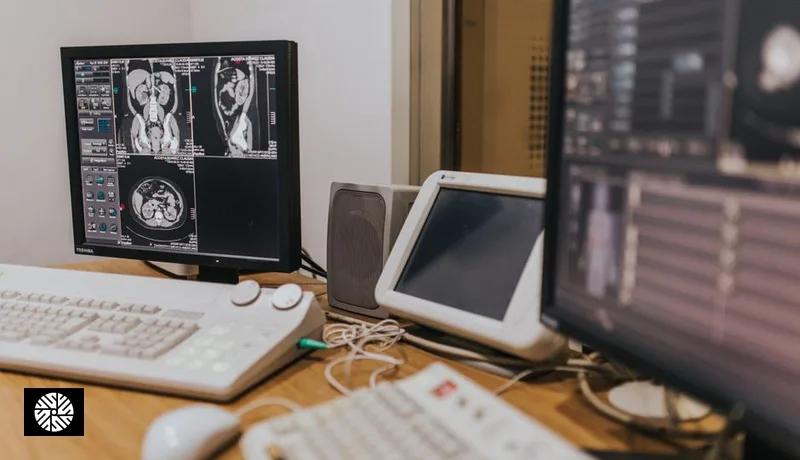
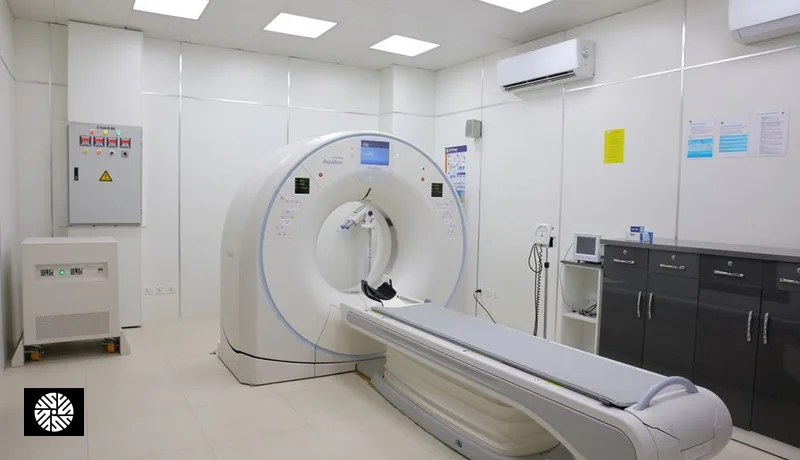
Prenuvo's core product is a whole-body MRI, head to ankle, taking about an hour in the scanner. As with any screening MRI, there is no ionizing radiation and, in the standard screening protocol, no contrast injection. Prenuvo operates its own clinics, so the experience is standardized across locations. Every scan is read by a radiologist, and when we last compared the services in detail, reports were arriving in about one to two weeks through Prenuvo's app — we cover the head-to-head in our Prenuvo vs Ezra vs Taiwan comparison.
Prenuvo also sells shorter and regional scans, plus bundled tiers that add bloodwork and body-composition analysis — its Enhanced package listed at $3,999 when we last checked in May 2026. Prices vary by location and change periodically, so confirm the current figure on Prenuvo's own site before you budget.
To be fair to the product: for a US-based, no-travel-required whole-body MRI with a polished consumer experience, Prenuvo is arguably the category leader. The question this article asks is narrower — what does the money actually buy, and is there a better price for the same medicine?
What's Not in the Price
Three gaps matter more than the sticker.
- A physician consultation. Historically, Prenuvo's base price bought a radiologist's written report — not a scheduled conversation with a doctor who walks you through it. Offerings change, so check what the current base tier includes, but budget on the assumption that interpreting the report and deciding what to do next is on you and your own physician.
- Follow-up imaging and workup. Whole-body screening MRI can produce incidental findings. Some may lead to additional imaging, specialist review, or procedures to clarify their significance. Those costs are separate unless the written service terms state otherwise.
- Bloodwork. The base scan includes no laboratory testing. Biomarkers live in the higher-priced bundled tiers.
Depending on your state and how the service is classified locally, taxes and location-based pricing differences can also move the final figure — another reason to treat $2,499 as the starting point rather than the out-the-door number.
Will Insurance, HSA, or FSA Cover It?
No — plan on paying cash. Elective whole-body screening MRI in an asymptomatic adult has no covered indication under standard US insurance: it is not recommended by the USPSTF, it maps to no reimbursable screening benefit, and insurers classify it as elective. That is true for Prenuvo, for Ezra, and for every competitor in the category.
HSA and FSA money is the genuinely gray zone. Whether a preventive whole-body scan counts as qualified medical care under IRS Publication 502 depends on facts about your situation, and getting it wrong has tax consequences. Rather than re-explain the mechanics here, we walk through the Pub 502 logic — and where whole-body screening sits inside it — in our guide to why Americans now fly to Taiwan for a full-body MRI. The same logic applies whether the scan happens in Manhattan or Taipei.
The practical takeaway: whatever you pay for a whole-body MRI, in the US or abroad, treat it as an out-of-pocket purchase and compare prices accordingly.
The Taiwan Math: Full-Body MRI from $1,399
Through New Dawn Health, a full-body MRI at a partner hospital in Taiwan comes in three packages (prices current as of July 2026):
- Light — $1,399 (about 2 hours): full-body MRI covering the head, neck, abdomen, pelvis, and whole spine, plus a thyroid ultrasound, an abdomen ultrasound, and a doctor's debrief of your results before you leave.
- Complete — $1,699 (about 2.5 hours): the mid-tier, extended protocol.
- Plus — $3,099 (about 4 hours): the most comprehensive full-body MRI bundle on the menu.
Every package includes a written English report and a physician consultation, and the scheduling process is built for international visitors — a coordinator confirms preparation details and the exact contents of your visit when you book. The exam itself follows the general standard for full-body screening MRI; the specific protocol is set by the attending physician at the partner hospital.
Add-ons are where the Taiwan pricing gets hard to match. Because MRI is a poor tool for lung nodules and coronary calcium, the two highest-value additions are CT-based — and in Taiwan they cost less than a typical US copay dispute: a Low-Dose Lung CT, a Heart Calcium Score CT ($209 as a standalone exam), a Comprehensive Blood Work Panel ($249), and a DEXA bone-density scan ($109) can all be attached to an MRI package. For what full pricing looks like across exams, see our breakdown of Taiwan checkup cost guide, or browse the live catalog on our packages page. If you want the clinical background on what a full-body MRI can and cannot see, our full-body MRI explainer covers it.
Prenuvo vs Taiwan, Side by Side
| |
Prenuvo Whole-Body |
NDH Full-Body MRI Light |
NDH Full-Body MRI Plus |
| Price |
$2,499 (as of May 2026) |
$1,399 |
$3,099 |
| Scan scope |
Whole-body MRI, head to ankle, ~1 hr in scanner |
Full-body MRI: head, neck, abdomen, pelvis, whole spine (~2 hr visit) |
The most comprehensive 4-hour bundle; coordinator confirms full contents at booking |
| Ultrasounds |
Not included |
Thyroid + abdomen ultrasounds included |
Bundle contents confirmed at booking |
| Doctor consult |
Historically not in the base price (verify current tier) |
Physician debrief included |
Physician debrief included |
| Add-on options |
Bloodwork and body-composition tiers at higher price points |
Low-Dose Lung CT, Heart Calcium Score CT, Blood Panel, DEXA |
Low-Dose Lung CT, Heart Calcium Score CT, Blood Panel, DEXA |
Read the table honestly and two things stand out. First, the Light package at $1,399 delivers the core of what most Prenuvo buyers are actually purchasing — a broad screening MRI plus a professional read — and adds two ultrasounds and a face-to-face physician debrief, for $1,100 less. Second, Prenuvo's scanner-time advantage is real: one hour versus two. If minimizing time in the bore matters to you, that is a legitimate point in Prenuvo's favor.
The Honest Trade-Off: You Have to Get to Taipei
The Taiwan number only works if you are willing to board a plane. Round-trip economy fares from the US West Coast to Taipei have typically run $700–$1,200 (published fare ranges as of mid-2026), and the flight is 12–14 hours each way. Stack the Light package plus a mid-range fare and you land near $2,100–$2,600 — roughly a wash with Prenuvo's scan alone, before hotels.
So when does the trip make sense?
- It makes sense if you were going to Asia anyway — visiting family, a work trip, a vacation you can anchor a screening morning to. Then the marginal cost of the scan really is $1,399, and the add-ons (lung CT, calcium score, bloodwork, DEXA) turn one visit into a screening program that would cost several times more assembled piecemeal in the US.
- It makes sense if you want the wider package anyway: the Plus tier, or an MRI package stacked with CT and lab add-ons, buys scope no single US scan matches at the price.
- It doesn't make sense if you need imaging promptly for a symptom (that is diagnosis, not screening — see your doctor), if you can't take the days off, or if long-haul travel is itself a dealbreaker. A scan you actually book beats a cheaper one you keep postponing.
Practical planning — timing, what a screening-anchored itinerary looks like, how English-language logistics work — is covered in our health-screening guide for US travelers.
Where to Go From Here
If you are set on a US scan, start with our Prenuvo vs Ezra comparison — the two leaders sell noticeably different products at very different prices. If the Taiwan route is on your list, our roundup of Prenuvo alternatives in 2026 maps the full field, and the packages page shows live pricing for every tier and add-on. When you book, a coordinator confirms preparation, exact package contents, and scheduling around your travel dates — so the only math left is the fare.
 Blog
Blog