
Few countries pack as many distinct hot spring chemistries into a small footprint as Taiwan. The sulfurous, steam-veiled valley of Beitou sits on Taipei’s northern edge; the alkaline “beauty water” of Wulai is a short drive away; Guanziling in the Tainan hills is the only mud spring in the country. For wellness travellers building a trip around advanced health screening with leading Taiwan hospitals, a mineral soak is the recovery ritual that rounds out a screening visit. This guide covers the major hot spring regions, what the official water data says about each one, the safety rules the Tourism Administration publishes, and how to slot a soak around a screening morning.
What counts as a hot spring in Taiwan?
Taiwan sits at the convergent boundary between the Philippine Sea Plate and the Eurasian Plate, on the circum-Pacific belt — the geology that feeds hot springs across the island. The label is not marketing. Taiwan’s national hot spring standard, issued on 22 July 2005, requires water at the natural source or orifice to be at least 30 degrees Celsius and to meet at least one water-quality threshold: total dissolved solids above 500 mg/L, bicarbonate, sulfate or chloride ion above 250 mg/L, free carbon dioxide above 250 mg/L, or total sulfide above 1 mg/L. Water below 30 degrees Celsius qualifies as a cold spring only if it carries more than 500 mg/L of free carbon dioxide.
Commercial bathing began with the Japanese merchant Gengo Hirata, who opened Taiwan’s first hot spring hotel in Beitou in 1896. The Beitou Public Bath House followed in 1913 and was once the largest public bathhouse in East Asia; after decades of neglect it reopened in 1998 as the Beitou Hot Spring Museum, the first museum in Taiwan saved by its own community. The Japanese bath ritual stayed with it — the pre-soak shower, the gender-separated pool, the cypress tub. For broader context on Taiwan as a recovery-travel destination, see our piece on why Taiwan is Asia’s hidden wellness destination.
Why is Beitou the easiest hot spring to pair with a screening?
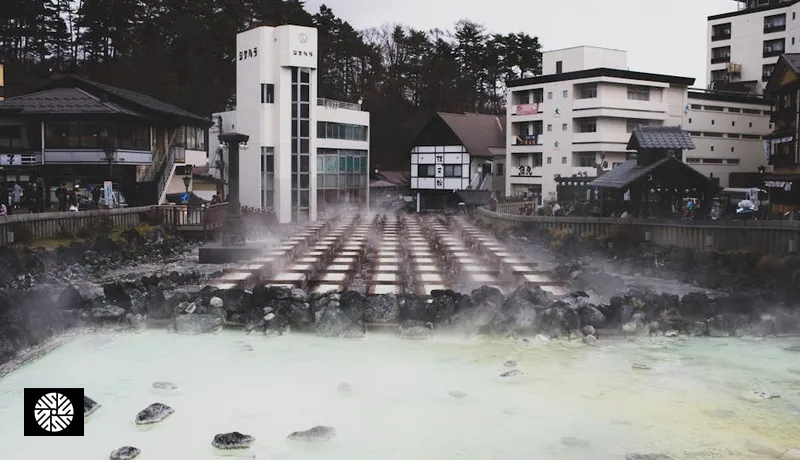
Beitou (北投) is the most accessible thermal valley in Taiwan, reached from central Taipei on the MRT Danshui Line and the New Beitou branch line. It is also where Beitou Health Management Hospital sits — one of our screening partner hospitals — so a fasting screening in the morning and a private cypress tub in the afternoon are a walk apart, not a drive apart.
New Beitou’s water comes in three varieties: green sulfur, white sulfur and iron oxide. The springs run between 37 and 40 degrees Celsius, with pH values from 2.5 to 6.2 — acidic by hot spring standards, and the reason green sulfur water is not drinkable. Villa 32, on Zhongshan Road in the middle of the valley, draws on the white and green sulfur springs Beitou has been known for a century and sets an age limit: its own hot spring page states that “all guests must be above the age of 16”. Thermal Valley, one of Beitou’s spring heads, is where the green sulfur water and the mineral hokutolite are found.
Which Taiwan hot spring region should I choose?
Every figure below is the Tourism Administration’s published water data for that spring area.
| Region | Spring type | Water data |
|---|---|---|
| New Beitou, Taipei | Green sulfur, white sulfur, iron oxide | 37–40°C, pH 2.5–6.2 |
| Yangmingshan — Lengshuikeng | White sulfur, milky | Around 40°C |
| Yangmingshan — Macao | White and green sulfur | Around 70–75°C |
| Wulai, New Taipei | Alkaline sodium bicarbonate | About 80°C at source |
| Jiaoxi, Yilan | Neutral sodium bicarbonate | Around 64°C, pH 7.5 |
| Taian, Miaoli | Alkaline sodium bicarbonate | 47°C, pH 8.48 |
| Guanziling, Tainan | Mud, alkaline carbonate sulfur | Around 75°C |
| Jhihben (Zhiben), Taitung | Alkaline carbonate | Over 100°C at source |
Wulai (烏來) sits in a steep valley that was Atayal hunting ground for over three centuries; the name comes from the Atayal “Uraikirofu”, steaming springs. Its water is clear, odourless alkaline sodium bicarbonate, known locally as beauty spring water. Volando Urai Spring Spa & Resort runs a Kurhaus bathhouse there with an outdoor hot spring, indoor cold and hot pools, a spa pool and a sauna. It is a naked bath in the Japanese tradition with separate men’s and women’s areas, children under 12 are not admitted, it opens 10:00 to 23:00 with last admission at 22:00, and it closes every Wednesday.
Yangmingshan, on the volcanic terrain north of Taipei, is not one spring but several. The primary source is white sulfur with green sulfur secondary, concentrated on the western foothill of Mt. Shamao. Lengshuikeng is the milky, cooler one — “lengshui” means cool water — while Macao runs far hotter at source. Yangmingshan suits travellers who want a soak attached to a hiking day rather than a hotel day.
Guanziling (關子嶺) above Tainan is the only mud spring in Taiwan and one of the country’s top four hot spring areas alongside Beitou, Yangmingshan and Sichongxi. The alkaline carbonate sulfur mud is dense and slippery, and it is suitable for soaking only, not for drinking. Nearby, the Water and Fire Spring vents natural gas and spring water from the same cliff cracks, so a lit flame burns above running water.
Jiaoxi (礁溪) in Yilan is the sulfur-free option: a neutral sodium bicarbonate spring, clear and without the eggy smell, carrying sodium, magnesium, calcium and potassium carbonate ions. It is the easiest region to reach from Taipei for a single night away.
Jhihben (知本), 17 kilometres southwest of Taitung City, is an alkaline carbonate spring in a river valley with waterfalls and a forest recreation area; it was first developed with public baths and guesthouses during the Japanese era. Taian (泰安) in Miaoli was found by Indigenous people in 1908, developed as a police sanatorium in the Japanese era, and renamed from Hushan to Taian in 1978. Its water is the mildest of the group at pH 8.48.
Who should not soak in a hot spring?
The Tourism Administration publishes its own bathing cautions, and they are stricter than most visitors expect. Bathing is inadvisable for pregnant women, elderly people with mobility difficulties, and children under the age of three. People with infectious diseases should not enter, and neither should women who are menstruating. Anyone with a chronic condition — heart disease, lung disease, high blood pressure, diabetes, or another circulatory disorder — should bathe only in accordance with a doctor’s instructions. Do not enter after drinking alcohol, on an empty stomach, or after a heavy meal, and rest first if you have just hiked or exercised hard.
Two specific hazards are worth naming. Bathing while sleep-deprived or mentally exhausted can reduce blood flow to the brain, which the Tourism Administration calls hot spring shock syndrome. And going straight from a hot spring into a sauna risks damage to the corneas.
How long should one soak last?
The official guidance is to stay immersed no longer than 15 minutes at a time. Do not immerse above heart level. Drink enough water before and after. Rinse off between two different springs so you do not carry one water’s minerals into another. If you feel any discomfort while bathing, tell the staff immediately rather than waiting it out.
Do I need a swimsuit, or is it nude bathing?
It depends on the pool. For open-air hot spring areas the Tourism Administration’s guidance is to change into the swimsuit or bathrobe and slippers provided in the dressing room, and a swimsuit is required for springs in a stream. Traditional indoor bathhouses are the opposite: Volando Urai’s Kurhaus, for example, is a naked bath with separate men’s and women’s areas. Hotels with a private in-room spring tub leave it to you. In every case, shower thoroughly in the dressing room first, remove makeup, keep towels out of the water, and do not wash your face or hair in the pool.
Can I combine a hot-spring trip with a health screening?
Yes, and Beitou is what makes it easy. Our screening packages start at $299 with the Convenient package, and the full range is on our packages page. A screening morning at Beitou Health Management Hospital ends early enough that the afternoon is free for the valley’s bath houses, so the soak costs you no extra travel day.
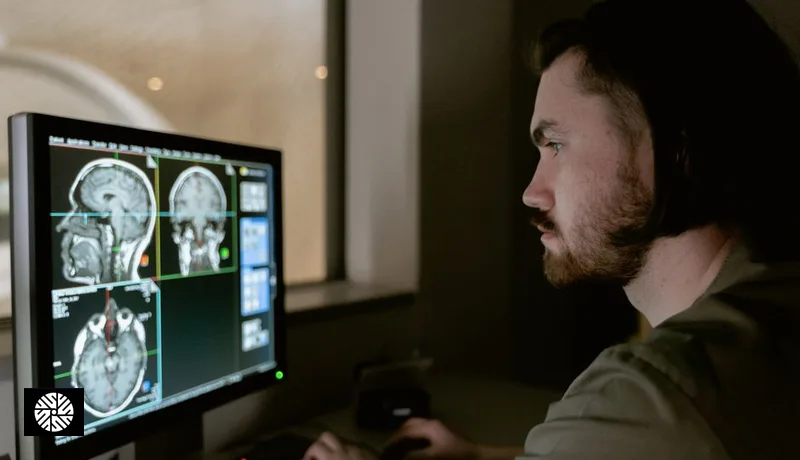
On imaging: a diagnostic scan leaves no residual effect that interacts with thermal bathing, so a morning MRI or CT does not rule out a soak the same evening. The exception is intravenous contrast — if you received it, allow a rest and hydration window before heat immersion, and tell your screening physician you plan to bathe. If your screening turns up a cardiovascular or blood pressure finding, follow the Tourism Administration rule above and get your doctor’s instructions before soaking at all.
A workable four-day shape:
- Arrive and check into a Beitou hot spring hotel; skip the tub that night if you are fasting the next morning.
- Fasting screening at Beitou Health Management Hospital, light lunch, an afternoon soak, an early night.
- Preliminary results with the screening physician, then move to Wulai or Jiaoxi for a completely different water chemistry.
- Final results discussion, then onward travel.
New Dawn Health can coordinate the screening appointment, transport and timing so the soak lands after the scans, not before them.
Sources
- Tourism Administration, Republic of China (Taiwan) — Hot Springs in Taiwan: Introduction and Taiwan's Standard Definition of Hot Springs (accessed 2026-09-08)
- Tourism Administration, Republic of China (Taiwan) — Hot Springs in Taiwan: Prepare, bathing etiquette and cautions (accessed 2026-09-08)
- Tourism Administration, Republic of China (Taiwan) — New Beitou Hot Spring Area Intro (accessed 2026-09-08)
- Tourism Administration, Republic of China (Taiwan) — Yangmingshan Hot Spring Area Intro (accessed 2026-09-08)
- Tourism Administration, Republic of China (Taiwan) — Wulai Hot Spring Area Intro (accessed 2026-09-08)
- Tourism Administration, Republic of China (Taiwan) — Jiaosi (Jiaoxi) Hot Spring Area Intro (accessed 2026-09-08)
- Tourism Administration, Republic of China (Taiwan) — Taian Hot Spring Area Intro (accessed 2026-09-08)
- Tourism Administration, Republic of China (Taiwan) — Guanzihling Hot Spring Area Intro (accessed 2026-09-08)
- Tourism Administration, Republic of China (Taiwan) — Jhihben Hot Spring Area Intro (accessed 2026-09-08)
- Beitou Hot Spring Museum, Taipei City — museum and Beitou Public Bath House history (accessed 2026-09-08)
- Villa 32 — Hot Spring (accessed 2026-09-08)
- Volando Urai Spring Spa & Resort — Kurhaus facility (accessed 2026-09-08)
Frequently asked
Are hot springs safe for everyone?
Most healthy adults are fine with standard precautions. Avoid immersion if you are pregnant, have uncontrolled heart disease or hypertension, are running a fever, or have open wounds. Keep each immersion to the Tourism Administration’s 15-minute limit, hydrate before and after, and exit immediately if you feel dizzy or develop palpitations.
Which Beitou hot spring is best for first-timers?
The open-air public bath in Beitou Hot Spring Park is the cultural introduction, in the valley where commercial bathing in Taiwan began; the 1913 bath house beside it is now the Beitou Hot Spring Museum rather than a working bath. For a first private soak, Spring City Resort and Hotel Royal Beitou have rooms with in-suite tubs. Villa 32 and The Gaia are the premium boutique options, and both are walking distance from Beitou Health Management Hospital — the natural pairing for a screening-plus-recovery itinerary.
What are the tattoo policies at Taiwan hot springs?
Policies vary by venue. Older Beitou public bath houses sometimes restrict visible tattoos based on traditional Japanese-derived norms. Modern boutique resorts including Villa 32, Volando, The Gaia, and Silks Place Yilan generally have no tattoo restriction. If your private suite has its own tub, the policy is moot. When booking, confirm directly if this matters to you.
Can I do a hot spring on the same day as an MRI or CT scan?
Yes. Diagnostic imaging including MRI, CT, and PET-CT produces no residual physiological effect that interacts with hot spring bathing, and many screening patients soak the same evening as a morning scan. The one caveat: if you received intravenous contrast and have a history of contrast reactions, give yourself a few hours of observation and hydration before immersing in heat.
How long should I soak in a hot spring?
The Tourism Administration’s guidance is to stay immersed no longer than 15 minutes at a time, and not to immerse above heart level. Take a cool-down break between immersions, rinse off if you move between two different springs, and drink water before and after. If you feel any discomfort while bathing, tell the staff immediately rather than waiting it out.
Which Taiwan hot spring is best for couples?
For pure romantic atmosphere, Volando Urai Spring Spa in Wulai (cantilevered villas above a cypress gorge) and Villa 32 in Beitou (only five villas, all with private outdoor tubs) are the standout picks. Silks Place Yilan in Jiaoxi offers a more urban-luxe couple experience with private in-room tubs and an excellent food program. The Gaia Hotel in Beitou is the strong mid-premium option that combines couple-friendly suites with walking access to Beitou Health Management Hospital.