
If you are flying into Taiwan for a vacation, a business trip, or a health screening package, the questions sound mundane but matter on day one: How much cash should I bring? Where should I exchange it? Will my credit card actually work at the hospital? Should I be tipping anyone? This guide is the practical version of that conversation, with every rate quoted from the Bank of Taiwan board rather than from memory.
Taiwan is an easy country to handle financially. ATMs are dense and English-friendly, contactless payments are standard in the cities, and the paperwork around cash is light. The places travelers still lose money are narrow and avoidable, and a screening trip adds one more question — how the hospital bill itself gets paid — which we answer with our own numbers below.
What does NT$ (NTD) mean?
NT$ is short for the New Taiwan Dollar, the currency of Taiwan. You will see it written three ways for the same thing: the symbol NT$ on price tags and menus, the abbreviation NTD in banking, and the ISO 4217 code TWD on exchange boards and in payment systems. The "New" is historic — it distinguishes today's dollar from the one it replaced — and the notes and coins are issued by the Central Bank of the Republic of China (Taiwan).
What is Taiwan's currency, and what is it worth today?
The local currency is the New Taiwan Dollar, written NT$, NTD, or TWD, and called 新台幣 (xīn tái bì) in Mandarin. It is issued by the Central Bank of the Republic of China (Taiwan). Notes and coins are marked in Arabic numerals, so denominations are readable without any Chinese.
On 8 September 2026 the Bank of Taiwan board quoted NT$31.81 to one US dollar for cash and NT$31.59 for spot (the rate behind wires and card settlement). That gap is the honest cost of holding paper: buying banknotes is slightly worse than paying by card, every time.
Bank of Taiwan selling rates, 8 September 2026
| Currency | Cash selling (NT$) | Spot selling (NT$) | Quick mental math |
|---|---|---|---|
| USD | 31.81 | 31.59 | NT$ ÷ 32 ≈ US$ |
| EUR | 37.15 | 36.83 | NT$ ÷ 37 ≈ EUR |
| JPY (per yen) | 0.2085 | 0.2070 | NT$ × 4.8 ≈ JPY |
| CNY | 4.764 | 4.724 | NT$ ÷ 4.8 ≈ RMB |
| GBP | 43.60 | 42.89 | NT$ ÷ 44 ≈ GBP |
| AUD | 23.13 | 22.84 | NT$ ÷ 23 ≈ AUD |
These are one day's quotes, not a forecast. The Bank of Taiwan board is public and updates through the day — check it the morning you exchange, and use the same page to sanity-check any rate a counter offers you.
Where should you exchange money in Taiwan?
The Western rule that "airport rates are the worst" does not transfer cleanly to Taiwan. Counters at Taoyuan International Airport (TPE) and Kaohsiung (KHH) are run by full-service banks, not third-party kiosks, so they quote off the same published board as a city branch.
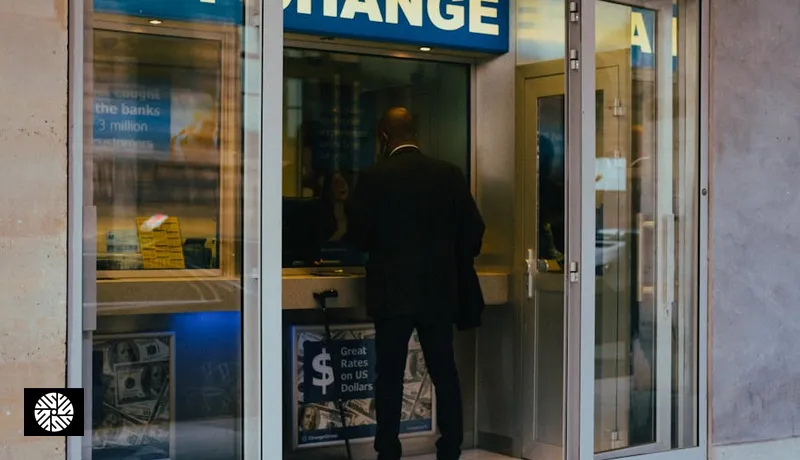
At the airport, look for Bank of Taiwan (台灣銀行), Mega International Commercial Bank (兆豐國際商銀), and Taishin International Bank (台新銀行), which staff counters in the arrival and departure halls at TPE. Expect a small fixed handling fee per transaction; ask for it before you hand over cash, because it is the part that varies.
At bank branches in Taipei and other cities, the same banks plus CTBC (中國信託) and First Commercial Bank handle foreign exchange on weekdays. Bring your passport — it is required, not optional. Rates track the published board, so branch and airport land in the same place.
Hotels are the worst option. Five-star front desks will usually exchange USD for guests, but they set their own spread well below the bank board. Use them only for a small emergency amount.
Do not buy NT$ before you fly if you live in the US, UK, or most of Europe. NT$ is a thin currency at Western retail counters and the spread reflects that. Compare any home-country quote against the Bank of Taiwan board before accepting it; arriving with your home currency and exchanging on the ground is almost always cheaper.
How do you avoid ATM and card fees in Taiwan?
For most travelers the best move is to skip cash exchange almost entirely and pull NT$ from an ATM. Taiwan's ATM network is dense, reliable, English-menued, and settles near the interbank rate rather than a counter's cash rate.
The cost that hides is your own bank's, not Taiwan's: a foreign transaction percentage plus a flat per-withdrawal fee, both set by your home institution. Read your account's fee schedule before you fly, then take fewer, larger withdrawals rather than many small ones.
Accounts travelers commonly use for this, all of which publish their own fee terms:
- Charles Schwab Investor Checking (US): no foreign transaction fee, and ATM fees are rebated worldwide.
- Fidelity Cash Management Account (US): reimburses ATM fees domestically and internationally, no foreign transaction fee.
- Capital One 360 Checking (US): no foreign transaction fee on the debit card; out-of-network ATM fees are not reimbursed.
- Wise: mid-market conversion with a stated spread, plus a monthly free-withdrawal allowance that varies by region.
- Revolut: free ATM withdrawals up to a monthly cap that depends on your plan tier.
A credit card on a "no foreign transaction fee" tier (Chase Sapphire, Capital One Venture, AmEx Platinum) handles purchases well but should not be used at an ATM — a cash advance accrues interest from day one.
Withdrawal limits are set per transaction by the machine's bank and per day by yours, so a large withdrawal may need splitting. Convenience-store ATMs in 7-Eleven and FamilyMart accept international cards and are everywhere, but they can add their own surcharge on top of your bank's; ATMs inside Bank of Taiwan, Mega, or Cathay United branches are the cheaper default when one is nearby.
Where do credit cards work in Taiwan?
Taiwan is more cash-friendly than Hong Kong or Singapore and less cash-dependent than Japan. The pattern is simple: anything resembling a chain or a registered business takes plastic; anything family-run or street-level often does not.
| Venue | Visa / Mastercard | AmEx | JCB / UnionPay | Cash needed? |
|---|---|---|---|---|
| International hotels | Yes | Yes | Yes | No |
| Major hospitals | Yes | Usually | Yes | Optional |
| Department stores / malls | Yes | Yes | Yes | No |
| Mid-tier restaurants | Yes | Often | Yes | Sometimes |
| Convenience stores | Yes (chip + tap) | Yes | Yes | No |
| Local breakfast shops | No | No | No | Yes |
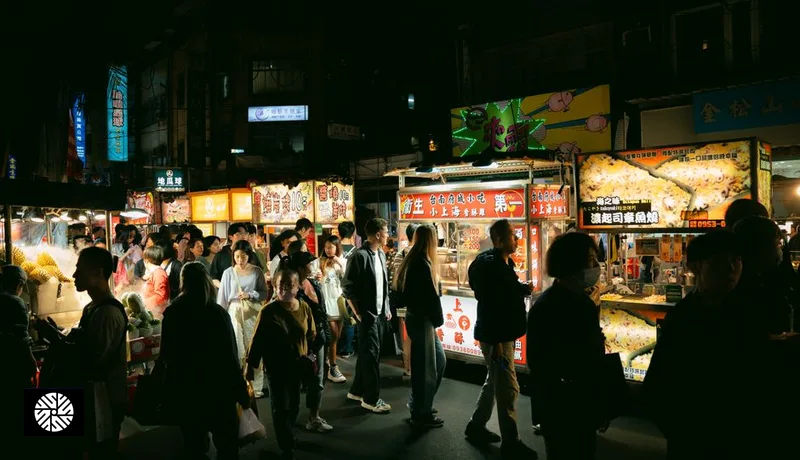
| Night markets | Rare | No | Sometimes | Yes |
| Taxis | Some | Rare | Some | Recommended |
| Uber / app rides | Yes (in app) | Yes | Yes | No |
| Pharmacies (chains) | Yes | Usually | Yes | No |
Visa and Mastercard are the safe defaults, accepted essentially everywhere that takes cards at all. AmEx is near-universal at hotels, hospitals, and large retailers but spotty at independent restaurants. JCB and UnionPay are strong because of regional travel patterns; many terminals that "take card" are JCB-branded first.
Which mobile payments work in Taiwan?
LINE Pay has the widest coverage, because LINE is Taiwan's dominant messaging app and payments ride on that installed base. It works at chain restaurants, convenience stores, and many hospitals.
JKO Pay (街口支付) is the largest homegrown wallet and reaches exactly where international cards do not: small restaurants, breakfast shops, night market stalls. It needs a local account, so it suits long stays rather than a one-week trip.
Apple Pay and Google Pay work at any contactless terminal that takes Visa, Mastercard, or AmEx, which covers modern points of sale in Taipei, Taichung, Tainan, and Kaohsiung. For a short trip this is the simplest setup: load your home card, tap, and settle at your card's normal rate.
Outside the major cities, wallet coverage thins fast. In rural townships and small coastal towns, cash and EasyCard are still the defaults.
What is an EasyCard and where does it work?
The EasyCard (悠遊卡, yōuyóu kǎ) is the most useful thing you can buy on your first day. It is a contactless stored-value card built for the Taipei MRT that has become the default way to pay for small things nationwide.
Where to buy: any MRT station service counter, 7-Eleven, FamilyMart, Hi-Life, or OK Mart. You pay a one-off card fee and then load value on top; top up with cash or a card at any convenience store counter.
Where it works beyond the MRT:
- All MRT systems (Taipei, Taoyuan, Kaohsiung, Taichung)
- Most city buses across Taiwan
- Taiwan Railway (TRA) regional and intercity trains
- YouBike public bicycles
- 7-Eleven, FamilyMart, Hi-Life, OK Mart purchases
- Many Starbucks, McDonald's, and MOS Burger locations
- Some taxis (look for the EasyCard sticker on the door)
- Vending machines and self-service laundries
- Parking meters and parking lots in Taipei
On a screening trip, one card covers the taxi to the hospital, the coffee afterwards, the MRT to dinner, and the YouBike ride along the river — without counting coins or handing over a card for a small purchase.
How do you pay for a health screening in Taiwan?
This is where most New Dawn Health visitors actually start. Medical care is priced and billed differently from the rest of your trip, so the currency advice above mostly does not apply to it.
What hospitals accept. Taiwan's large hospitals — including the partners in our network of providers — take Visa, Mastercard, JCB, and UnionPay from self-pay international patients, usually AmEx as well, and cash in NT$. Some will take USD or JPY cash at their own counter rate, which is worse than a bank's; if you are paying at the hospital, pay by card. International wire transfer in advance is the other route hospitals accept, and it is worth arranging only when your card limit will not cover the visit.
How it works when you book through us. You reserve online with a US$100 refundable deposit, charged in US dollars to your card at checkout — that holds the visit and starts your questionnaire and concierge call. The remaining balance is billed in US dollars too, through a payment link we send before your visit, so there is no on-the-day currency conversion and nothing to carry in cash. Add-ons you choose later move the balance, never the deposit. A handful of listed services show no price because the clinic bills you directly on the day; those are the exception, and they are marked as such.
What the screening itself costs. Our published prices run from US$299 for Convenient and US$699 for Essential, through US$1,399 for the Light full-body scan and US$1,699 for Complete and Premium, up to US$3,099 for Plus and US$3,499 for Advanced. Single items are priced the same way — a US$109 DEXA scan, for example. The current list is on our packages page; those are the figures your card is charged, in dollars.
For everything else on the trip — hotel, taxis, meals, the night market — a no-foreign-transaction-fee credit card plus an EasyCard covers almost all of it, with a modest cash reserve for street food and small shops that you can top up at any bank ATM. If you are flying in for a full-body MRI or a multi-day workup, tell us in advance and we will confirm the payment route before you board.
Can tourists claim a tax refund in Taiwan?
Yes. Foreign visitors can reclaim the business tax on qualifying retail purchases through the Tax Refund Shopping (TRS, 退稅) scheme, and the process is quicker than most European equivalents. The thresholds — the minimum same-day spend at one authorised store, the length of stay that keeps you eligible, and the window in which the goods must leave Taiwan — are set by the Ministry of Finance and published on the official TRS portal linked in the sources; check them there before you shop, because they are the part that changes.
What does not change is the shape of it. Medical care, hotel stays, services, and food eaten in Taiwan are excluded; the refund covers goods you carry home unused. Look for the TRS — Tax Refund Shopping sticker on storefront windows: department stores such as Shin Kong Mitsukoshi and SOGO, large electronics chains, and most boutiques in tourist districts are enrolled. At checkout, show your passport and ask for the refund form. At the airport, visit the TRS counter before checking your bags so officers can inspect the goods; refunds are paid in NT$ cash or credited to your card.
Do you tip in Taiwan?
No. Tipping is not part of Taiwanese culture. Walking out of a noodle shop having paid exactly the printed price is normal and correct, and cash left on a table will often bring a server chasing you down the street to return it.
The exceptions are narrow:
- Premium and hotel restaurants add a service charge automatically — look for "服務費" on the menu. That is the tip; nothing further is expected.
- Hotel housekeeping and bellhops: optional at international hotels, appreciated, not expected. Locals usually leave nothing.
- Concierge: a small note for genuinely above-and-beyond help, such as a last-minute booking or hospital coordination. Not for routine requests.
- Taxi drivers: round up if you want to; drivers will otherwise hand back the exact change.
- Hospital staff: never. Nurses, technicians, and doctors are not tipped in Taiwan and it reads as awkward. A sincere thank-you is the right move.
How much cash can you bring into Taiwan?
Taiwan sets declaration thresholds for New Taiwan Dollars, foreign currency, Chinese yuan, gold, and other high-value items carried in or out. They are published by the Customs Administration, Ministry of Finance, and they are revised from time to time, so read the current figures on the Customs page linked in the sources rather than trusting a number in a travel article.
Two things are worth knowing regardless of the amounts. Declaring is a reporting requirement, not a tax — nothing is charged on the money itself. And failing to declare can cost you the excess plus a fine. For a normal screening trip, where the hospital bill is paid by card and daily spending comes off an ATM, you will not come close to any of the thresholds.
Small practical notes
- Bank hours: weekdays only, closed on weekends and public holidays. Airport foreign exchange counters keep flight hours instead, which is why an arrival-day exchange is easy even on a Sunday.
- Hospital ATMs: Taipei Veterans General, NTUH, Chang Gung Memorial, and Taichung Veterans General all have ground-floor ATM lobbies that accept international cards — useful if an unexpected charge comes up.
- Receipts and the lottery: every receipt carries a uniform invoice number entered in a national lottery, and tourists can claim the smaller prizes at any 7-Eleven. It explains why locals keep every slip.
- Card declines: if your bank's fraud system flags a foreign transaction, a quick app login or text reply usually clears it. Set a travel notice before you fly.
- Currency on departure: spend down NT$ before flying out. Coins cannot be exchanged abroad and small notes get poor rates outside Taiwan. Airport shops and the Bank of Taiwan counter are both good for emptying your wallet.
What is the simplest money setup for a screening trip?
A no-foreign-transaction-fee credit card for hotels, restaurants, and stores; a fee-rebating ATM card from Schwab, Fidelity, Wise, or Revolut for cash; an EasyCard bought on day one for transit and small purchases; and a modest NT$ reserve pulled from a bank ATM on arrival. Skip home-country exchange, skip hotel exchange, and check the Bank of Taiwan board before you accept any quoted rate. The screening itself sits outside all of that — it is charged to your card in US dollars, deposit first, balance before the visit.
For the rest of the trip planning — visa rules, language, where to stay near the major hospitals — see our Taiwan orientation guide and the cost-of-living overview. If you are comparing Taiwan with other medical destinations, the health-screening guide for travelers walks through the clinical and financial reasoning before you book. When you are ready, browse screening packages or partner hospitals.
Sources
- Bank of Taiwan — Foreign currency exchange rates (accessed 2026-09-08)
- Central Bank of the Republic of China (Taiwan) — Currency Issuance (accessed 2026-09-08)
- Customs Administration, Ministry of Finance — Travelers: Anti-Money Laundering (cross-border currency declaration and reporting) (accessed 2026-09-08)
- Ministry of Finance — e-Tax Refund service for foreign travellers (TRS) (accessed 2026-09-08)
- Bureau of Consular Affairs, MOFA — Visa and entry information (accessed 2026-09-08)
- Taipei Rapid Transit Corporation — Fares and EasyCard use on the Taipei MRT (accessed 2026-09-08)
- EasyCard Corporation — Card purchase, top-up and acceptance (accessed 2026-09-08)
Frequently asked
Is it better to bring USD cash or use ATMs in Taiwan?
For most travelers, ATMs win. Pulling NT$ from a Taiwanese bank ATM settles near the interbank rate, which is better than any cash counter. The cost that hides is your own bank's: a foreign transaction percentage plus a flat per-withdrawal fee, both set by your home institution and published in its fee schedule. The fix is an account built for travel — Charles Schwab Investor Checking, Fidelity Cash Management, Wise or Revolut all publish their own terms. Bring a small amount of USD as backup, but plan to do most of your cash conversion at ATMs in Taiwan.
Do hospitals in Taiwan accept American Express?
Taiwan's large hospitals — including the partners in our network of providers — take Visa, Mastercard, JCB and UnionPay from self-pay international patients, usually American Express as well, plus cash in NT$. Visa and Mastercard are the safest assumption. For a large package it is worth confirming AmEx acceptance with the hospital in advance and carrying a Visa or Mastercard as backup. An international wire in advance is the other route hospitals accept, and it is worth arranging when your card limit will not cover the visit.
Should I tip my Taiwanese taxi driver?
No tipping is expected. Taiwan is not a tipping culture. Round up if you want to, but most locals pay the exact meter amount and drivers will otherwise hand back the exact change. The same applies to ride-hailing apps like Uber and 55688: pay what the app charges and that is the full transaction.
Can I wire-transfer the screening payment before arriving in Taiwan?
You do not need to. When you book through New Dawn Health you reserve with a US$100 refundable deposit charged in US dollars at checkout, and the balance is billed in US dollars through a payment link before your visit — so there is no on-the-day conversion and nothing to carry in cash. A wire straight to the hospital is the alternative route hospitals accept, and it is worth arranging only when your card limit will not cover the visit; your own bank sets the wire fee, so check its schedule before you choose.
What is the daily ATM withdrawal limit at Taiwan banks?
Two limits apply and only one of them is Taiwanese. The ATM caps a single transaction; your daily total is set by your home bank rather than by the machine, so check with your card issuer before you fly. Convenience-store ATMs at 7-Eleven and FamilyMart work with international cards but can add their own service fee on top of your home bank's, so for the lowest cost per withdrawal use ATMs inside Bank of Taiwan, Mega International or Cathay United branches, and take fewer, larger withdrawals rather than many small ones.
Where can I claim my Taiwan tax refund (TRS) before flying home?
At the TRS counter in the departures area of the international airports, including Taoyuan (TPE), Kaohsiung (KHH) and Taipei Songshan (TSA). Go before you check your bags, because customs officers may ask to inspect the goods. Bring your passport, the refund forms from each authorised store and the original receipts; refunds are paid in NT$ cash or credited to your card, less a handling fee. The thresholds — minimum spend, length of stay, and the window in which the goods must leave Taiwan — are set by the Ministry of Finance and published on the official TRS portal, which is where to read them rather than in a travel article.