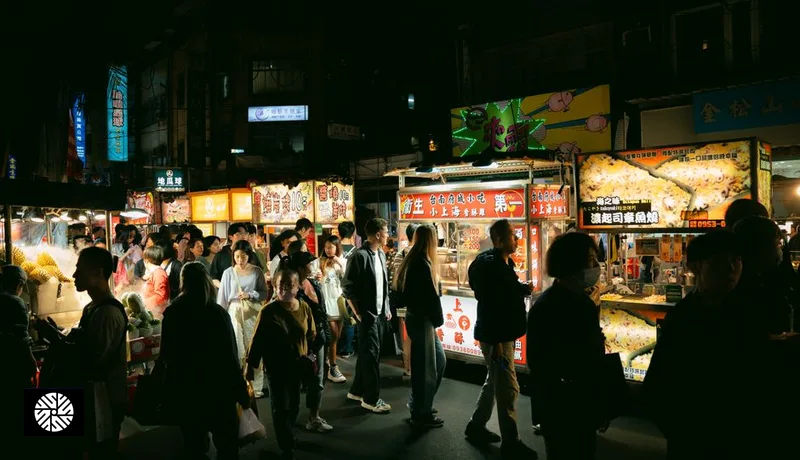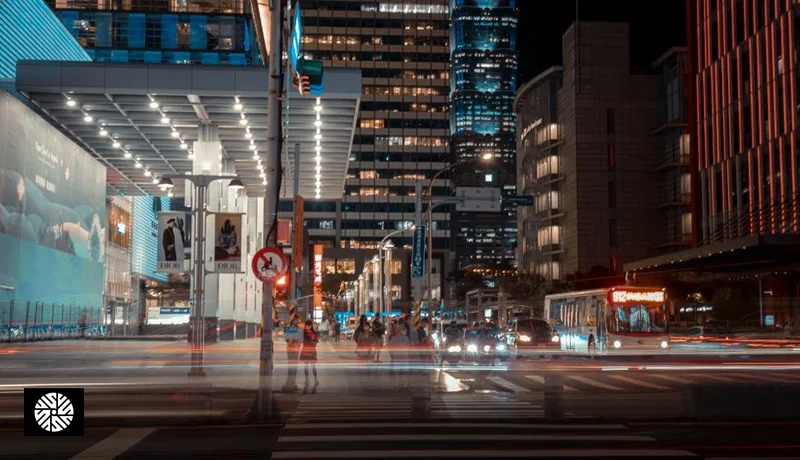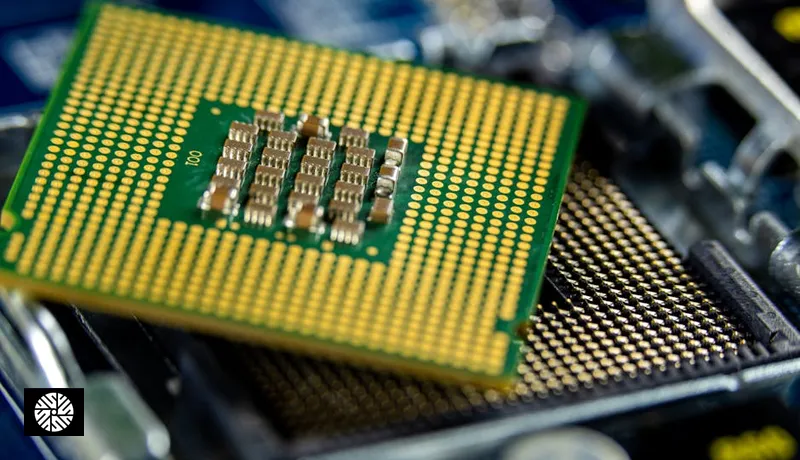

If you have ever opened a smartphone, used a laptop, driven a modern car, or — yes — had an MRI scan, there is a very good chance a piece of Taiwan was involved. The island of roughly 23 million people is the quiet engine room of global technology, producing the chips, devices, and components that power daily life around the world. For business travelers and curious visitors, understanding Taiwan's tech ecosystem is part of understanding why the country punches so far above its weight — including in AI-driven health screening.
This guide walks through the companies, places, and habits that define Taiwan's tech identity, with a closing focus on how that same engineering culture is now reshaping medical AI — particularly in radiology and preventive screening.
TSMC and the semiconductor backbone
Taiwan Semiconductor Manufacturing Company, almost universally known as TSMC, is the single most important chip foundry on the planet. Founded in 1987 by Morris Chang in Hsinchu, TSMC pioneered the "pure-play foundry" model — manufacturing chips designed by other companies rather than competing with its own designs. That model now dominates the industry. Apple, NVIDIA, AMD, Qualcomm, MediaTek, and Broadcom all rely on TSMC for their most advanced silicon.
The numbers are staggering. TSMC produces well over 90 percent of the world's most advanced semiconductors — chips manufactured at the 3-nanometer and 5-nanometer process nodes. Its market capitalization sits comfortably above 200 billion US dollars (often well above, depending on the day), making it one of the most valuable companies in Asia. The company operates a constellation of fabrication plants ("fabs") across Taiwan, with the crown jewels in Hsinchu, Tainan, and Taichung Science Parks.
This concentration also makes TSMC a geopolitical fulcrum. The 2022 US CHIPS and Science Act, the rise of Chinese domestic foundries like SMIC, and recurring discussions about semiconductor supply-chain resilience all orbit around what happens in Taiwan. The April 2024 Hualien earthquake — magnitude 7.4 — briefly halted production at several fabs and reminded the world how interconnected modern life is with this small island. TSMC is now expanding overseas (Arizona, Kumamoto in Japan, Dresden in Germany), but the technology and talent remain rooted in Taiwan.
For visitors, the everyday takeaway is simple: when you see "Taiwan" on a luggage tag, you are arriving in the place where the silicon brains of the modern world are forged.
Hsinchu Science Park — Asia's Silicon Valley
About 70 kilometers southwest of Taipei sits Hsinchu Science Park, established in 1980 as Taiwan's first government-backed technology cluster. It now hosts roughly 600 companies and 175,000 employees across semiconductors, optoelectronics, biotechnology, and precision machinery. Annual revenue from the park alone exceeds 1.5 trillion New Taiwan dollars — a figure that rivals the entire GDP of mid-sized countries.
Comparisons to Silicon Valley are inevitable but only partially accurate. Hsinchu is denser, more vertically integrated, and more focused on hardware. Where Palo Alto and Mountain View are about software, ad-tech, and consumer apps, Hsinchu is about turning sand into chips and chips into the world's electronics. The park is anchored by TSMC, UMC (United Microelectronics), MediaTek, and Realtek, with hundreds of suppliers and equipment vendors clustered around them.
Visitors can tour parts of the park and the on-site Hsinchu Science Park Exploration Hall, which traces the history of Taiwan's chip industry through interactive exhibits. National Tsing Hua University and National Yang Ming Chiao Tung University sit immediately adjacent — together they produce a steady stream of engineers who staff the fabs. A day trip from Taipei via Taiwan High Speed Rail takes about 35 minutes door to door, making Hsinchu accessible even on a tight business schedule. See our guide to getting around Taiwan for transit details.
Beyond TSMC — MediaTek, Foxconn, Acer, ASUS, HTC
Taiwan's tech identity extends well beyond TSMC. The wider ecosystem is what makes the island indispensable.
| Company | What they make | Approx. headcount | Market cap (USD) |
|---|---|---|---|
| TSMC | Advanced semiconductor foundry (3nm, 5nm, 7nm) | ~76,000 | 700B+ |
| Foxconn / Hon Hai | Electronics manufacturing (iPhone assembly, servers) | ~800,000 (global) | 90B+ |
| MediaTek | Smartphone SoCs, Wi-Fi, IoT chips | ~22,000 | 75B+ |
| ASE Technology | Largest IC packaging and testing house globally | ~94,000 | 25B+ |
| ASUS | Laptops, motherboards, ROG gaming hardware | ~17,000 | 15B+ |
| Acer | Laptops, monitors, medical AI subsidiary | ~7,500 | 3B+ |
| HTC | VR (Vive), legacy smartphone heritage | ~3,000 | ~1B |
MediaTek, headquartered in Hsinchu, is the world's second-largest smartphone chip designer after Qualcomm — its Dimensity series powers a huge portion of mid-range and premium Android phones globally. Foxconn, formally Hon Hai Precision Industry, is the world's largest contract electronics manufacturer; somewhere between half and three-quarters of every iPhone ever made passed through a Foxconn line. ASE Technology handles the equally critical back-end work of packaging and testing the chips that TSMC produces.
On the consumer side, Acer and ASUS are household names in laptops and PC components. ASUS's ROG (Republic of Gamers) sub-brand is a global force in gaming hardware. HTC, once a smartphone giant, has reinvented itself around virtual reality through the Vive line. Together, these companies form an ecosystem where chip design, fabrication, packaging, assembly, and finished consumer goods all happen within a few hours' drive of each other.
Internet and connectivity — what to expect daily
Taiwan's everyday digital infrastructure is among the best in the world, and visitors feel it immediately. Fixed-line broadband is dominated by Chunghwa Telecom, with Taiwan Mobile and Far EasTone rounding out the major carriers. Fiber-to-the-home is widespread, and gigabit residential plans are standard in Taipei and other major cities.
5G coverage went nationwide in stages from 2020 onward and now blankets all major urban areas plus most of the high-speed rail corridor. Speed tests routinely show 300–800 Mbps on cellular in central Taipei. Visitors can buy a tourist SIM at Taoyuan or Songshan airports for a few hundred New Taiwan dollars per week, or activate an eSIM in advance — Chunghwa, Taiwan Mobile, and Far EasTone all support major eSIM resellers like Airalo and Holafly.
Public Wi-Fi is genuinely useful, not the usual airport-only token gesture. The government-run iTaiwan service offers free Wi-Fi at MRT stations, train stations, government buildings, hospitals, and many tourist sites — registration is free with a passport number. Most cafes, convenience stores, and shopping malls also offer free Wi-Fi without strings attached. For an American or European visitor used to spotty coverage, the experience can feel like time travel forward.
Mobile pay culture — LinePay, JKO, Apple Pay
Mobile payments in Taiwan are growing fast but remain refreshingly fragmented. Cash and the EasyCard contactless transit card are still the most universally accepted payment methods. That said, mobile pay options for visitors look like this:
| Option | Tourist-friendly? | Where it works |
|---|---|---|
| Apple Pay | Yes — works with foreign cards | Most chain retail, MRT, taxis with card readers |
| Google Pay | Yes — works with foreign cards | Same coverage as Apple Pay |
| LINE Pay | Limited — typically needs Taiwan ID | Wide acceptance among locals |
| JKO Pay (街口) | No — requires local bank account | Night markets, small merchants |
| EasyCard | Yes — buy at any MRT station | Transit, 7-Eleven, FamilyMart, many shops |
For a typical business traveler, the practical answer is: rely on Apple Pay or Google Pay with a foreign credit card, top up an EasyCard for transit and convenience stores, and keep some cash for night markets and small vendors. LINE Pay dominates among locals because LINE itself — owned by Japan's LY Corporation — is the default messaging app, but it expects a Taiwan-issued credit card or bank account.
Made-in-Taiwan brands you didn't realize
Some of Taiwan's tech and consumer exports are so quietly ubiquitous that visitors rarely connect them to the island.
Bubble tea was invented in Taichung in the 1980s — both Chun Shui Tang and Hanlin Tea Room claim the original recipe, and the dispute even went to court. Today there are over 5,000 bubble tea shops worldwide; the chewy tapioca pearl drink is one of Taiwan's most successful soft-power exports. Brands like Sharetea, CoCo, Gong Cha, and Tiger Sugar all originated here.
Giant, the world's largest bicycle brand by revenue, is headquartered in Taichung. Founded in 1972, it now produces millions of bikes per year for export under both its own name and as an OEM for Trek, Specialized, and Scott. Merida, Taiwan's other major bike maker, also calls Taichung home. Taiwan as a whole accounts for roughly half of the world's premium bicycle exports by value — the precision-machining culture of the chip industry has cousins in the bicycle frame and component industry.
Look closer and you find Taiwan inside more devices than you'd guess: Realtek's networking chips in routers and laptops, Novatek's display drivers in TVs and monitors, Phison's controllers in SSDs and USB drives, and Innolux and AU Optronics making LCD panels for everything from phones to airline seat-back screens.
Taiwan's AI ecosystem — startups, academic centers, applications
Taiwan's hardware dominance is now spilling into artificial intelligence. Several institutions form the spine of the local AI scene:
- AppWorks — the largest startup accelerator and venture fund in Greater Southeast Asia, headquartered in Taipei. Its founder Jamie Lin is a public advocate for AI-first startup building.
- Taiwan Startup Stadium — a government-backed program connecting Taiwan startups to global accelerators.
- NTU AI Research Center — National Taiwan University's hub for foundational AI research, with strengths in computer vision and natural language processing.
- Chang Gung Memorial Hospital AI initiatives — one of Asia's most active deployments of AI in clinical workflows.
- Acer Medical and ASUSTeK's medical division — corporate spinouts pursuing FDA and TFDA-cleared AI medical software.
- Sequoia Capital, GGV, and other global VCs — increasing presence as Taiwan AI startups scale.
The strategic logic is clear: Taiwan already designs and manufactures the AI accelerator chips (via TSMC and MediaTek) that power global AI workloads. The next leap is building the AI applications that run on top — and healthcare is one of the highest-value targets.
Medical AI specifically — Taiwan's locally-trained edge
This is where Taiwan's tech identity intersects most directly with what New Dawn Health does every day. AI-assisted radiology — algorithms that read mammograms, lung CT scans, chest X-rays, and brain MRIs alongside human radiologists — has become a routine part of high-end screening in Taiwan. Several factors give the local ecosystem a real edge:
The NHI dataset. Taiwan's single-payer National Health Insurance system covers 99 percent of the population and has produced one of the world's most complete longitudinal health datasets since 1995. With proper de-identification and ethics oversight, this dataset is a goldmine for training medical AI models on a population-scale cohort — including imaging, lab values, prescriptions, and outcomes.
Locally trained models on Asian-representative imaging. Many Western-trained radiology AI models underperform on Asian patient anatomy and disease presentation patterns — for example, the higher prevalence of dense breast tissue in East Asian women, or the different baseline rates of certain liver and gastric findings. Models trained on Taiwanese imaging data tend to generalize better across the broader East Asian population.
Tight integration with hospital workflows. Major Taiwanese hospital groups — Chang Gung, Taipei Veterans General, NTU Hospital, Taichung Veterans General — have run real-world AI radiology deployments for years, not just pilot studies. The result is mature, refined integrations rather than science-project demos.
For a deeper dive into how this affects screening accuracy, see our companion article on how AI health screening in Taiwan redefines accuracy in Asia. Our screening services and the partner hospitals we work with all incorporate AI second-read on imaging where it adds clinical value.
Daily-life tech — what visitors actually use
For travelers and short-term residents, Taiwan's tech surface area shows up in small, pleasant ways throughout the day:
- EasyCard on the MRT, buses, YouBike rentals, and 7-Eleven checkouts — one card, taps everywhere.
- e-Receipts at major retailers like Eslite, Carrefour, and PX Mart — your purchases are automatically entered into the national receipt lottery, which awards real cash prizes monthly.
- 7-Eleven and FamilyMart kiosks ("ibon" and "FamiPort") — print event tickets, top up your phone, ship packages, and pay utility bills, 24/7.
- Hospital online booking — most major hospitals offer English-language web and app booking, plus QR-code check-in at kiosks. See our everyday life guide for what to expect.
- Telemedicine — adoption surged during COVID and remains strong for follow-up consultations. International patients sometimes do post-screening review video calls with their Taiwan physician from home.
- Free public Wi-Fi on the MRT, in cafes, and at iTaiwan hotspots throughout the country.
The cumulative effect is a country that simply works — your phone has signal, your card taps, your appointment is on time, your receipt is digital. For visitors coming from places where any one of these can be hit-or-miss, Taiwan feels like a soft tech showcase.
Tech-tourism: visiting Hsinchu, factory tours, semiconductor museum
For business travelers and engineers curious about the chip industry up close, Taiwan offers more access than most chip-making nations.
Hsinchu Science Park Exploration Hall (新竹科學園區探索館) walks through the history of the park, sample fab equipment, and the science behind lithography. Entry is free, and English signage is available on most exhibits. Combine it with a campus walk through National Tsing Hua University.
The National Science and Technology Museum in Kaohsiung covers semiconductors, optoelectronics, and Taiwan's broader industrial history — useful context for engineers visiting the southern fabs (TSMC's Fab 18 and Fab 22 are in Tainan).
Direct factory tours of TSMC, ASE, and other major fabs are not generally available to the public — these are highly secured environments. However, business visitors with formal engagements can sometimes arrange escorted visits through their host company. For a less restricted experience, several second-tier fabs and packaging firms participate in industry open-house events organized by SEMI Taiwan, typically in March and September around SEMICON Taiwan.
Taipei itself hosts COMPUTEX every June — one of the world's largest computing trade shows, where ASUS, MSI, Acer, and the entire ecosystem unveil new products. If your visit aligns with COMPUTEX, you can walk a single hall and see more new hardware in three hours than you'd see online in three months.
For the fundamentals of where Taiwan sits and how to get around, see where is Taiwan and our transit guide.
The bigger picture
Taiwan's tech story is not just TSMC, and not just Hsinchu. It is a forty-year compound interest accumulation: a national commitment to engineering education, government-backed industrial parks, ruthless precision in manufacturing, and a culture that treats process improvement as a daily obligation. The result is an island that quietly underpins most of modern digital life — and is now turning that same engineering muscle toward AI-driven medicine.
For visitors, the practical experience is one of seamless infrastructure: fast networks, reliable transit, English-friendly hospital tech, and increasingly intelligent diagnostic services. For the medically curious, it is an opportunity to experience screening that is not just convenient and affordable, but technically at the global frontier — informed by the same engineering culture that made the chips in your phone.
At New Dawn Health, we work alongside hospital partners that integrate locally trained medical AI into routine screening — particularly in radiology, cardiology, and metabolic risk assessment. Whether you are a business traveler stopping through Taipei or specifically planning a screening trip, the same engineering ecosystem that built the world's chips is also working on your scan.
Sources & Further Reading
- CDC — Travel health information for Taiwan
- Taiwan Bureau of Consular Affairs — visa and entry
- Taiwan Tourism Bureau — official travel resources
- Central Weather Administration of Taiwan
- Taiwan High Speed Rail — official site
- Taipei Metro (MRT) — official
Frequently asked
Can I tour TSMC?
Direct public tours of TSMC fabrication plants are not available — these are tightly secured environments with strict cleanroom protocols. Business visitors with formal engagements may be able to arrange escorted visits through their host company. For chip-curious travelers, the Hsinchu Science Park Exploration Hall offers free exhibits on the history and science of Taiwan's semiconductor industry, with English signage. SEMICON Taiwan (typically September) and COMPUTEX (June) are also good ways to meet the ecosystem in person.
What is the best mobile carrier for tourists in Taiwan?
The three major carriers — Chunghwa Telecom, Taiwan Mobile, and Far EasTone — all offer excellent coverage and 5G nationwide. Chunghwa generally has the broadest rural coverage. You can buy a tourist SIM at Taoyuan or Songshan airports starting from a few hundred NTD per week with unlimited data, or activate an eSIM in advance through Airalo, Holafly, or similar resellers. For most visitors any of the three carriers will be more than fast enough; pick based on price and the SIM kiosk closest to your arrival gate.
Is Apple Pay accepted everywhere in Taiwan?
Apple Pay and Google Pay are widely accepted at chain retailers, department stores, MRT stations, and many restaurants — and they work with foreign-issued credit cards. Smaller merchants, traditional markets, and night-market stalls still prefer cash or EasyCard. The practical strategy for visitors is to use Apple/Google Pay where possible, top up an EasyCard for transit and convenience stores, and carry some cash for street vendors. LINE Pay and JKO Pay dominate among locals but typically require a Taiwan-issued credit card or bank account.
Can I visit Hsinchu Science Park?
Yes, the park itself is open and accessible — it is a real working district with restaurants, hotels, and public roads. The Hsinchu Science Park Exploration Hall is free, family-friendly, and offers a substantive overview of Taiwan's chip industry. National Tsing Hua University and National Yang Ming Chiao Tung University sit immediately adjacent and are pleasant to walk through. Hsinchu is about 35 minutes from Taipei via Taiwan High Speed Rail, making it a comfortable half-day trip. Individual company facilities (TSMC, UMC, MediaTek) are not open to drop-in visitors.
How does Taiwan's AI medicine compare to the US or Korea?
Taiwan has three structural advantages: a near-universal NHI dataset spanning thirty years that supports population-scale model training, locally-trained imaging models that better fit East Asian anatomy and disease prevalence patterns, and mature hospital integrations that go beyond pilot projects. The US leads in regulatory volume (FDA-cleared algorithms) and Korea has produced strong global players like Lunit, but Taiwan's combination of dataset, demographic representation, and hospital adoption makes its AI radiology particularly accurate for Asian patients. For a deeper comparison, see our article on AI health screening accuracy in Asia.
What is iTaiwan free Wi-Fi and how do I use it?
iTaiwan is the government-run free public Wi-Fi service available at MRT stations, train stations, government buildings, hospitals, libraries, and many tourist sites across the country. Visitors can register with a passport number either online before arrival or at registration counters in major airports and tourist information centers. Once registered, your device will auto-connect at any iTaiwan hotspot. Speeds are generally good for browsing, messaging, and maps; for video calls you may prefer a SIM or eSIM data plan.